How to Get Rid of Fupa in 2026 | A Complete Guide
FUPA (fat upper pubic area) is a common body concern that can affect people after weight changes, pregnancy, aging, or changes in skin elasticity.
While it is not possible to target fat loss from only one specific area, improving overall fitness, maintaining a balanced diet, and choosing suitable body contouring options can help improve appearance and confidence.
In this article, we discuss different approaches to reducing the appearance of FUPA, including effective exercises, lifestyle changes, non-invasive treatments, and surgical procedures.
We explain how methods such as core strengthening, cardio routines, nutrition improvements, CoolSculpting, liposuction, tummy tuck, and other treatments work, helping readers understand realistic options and make informed decisions.
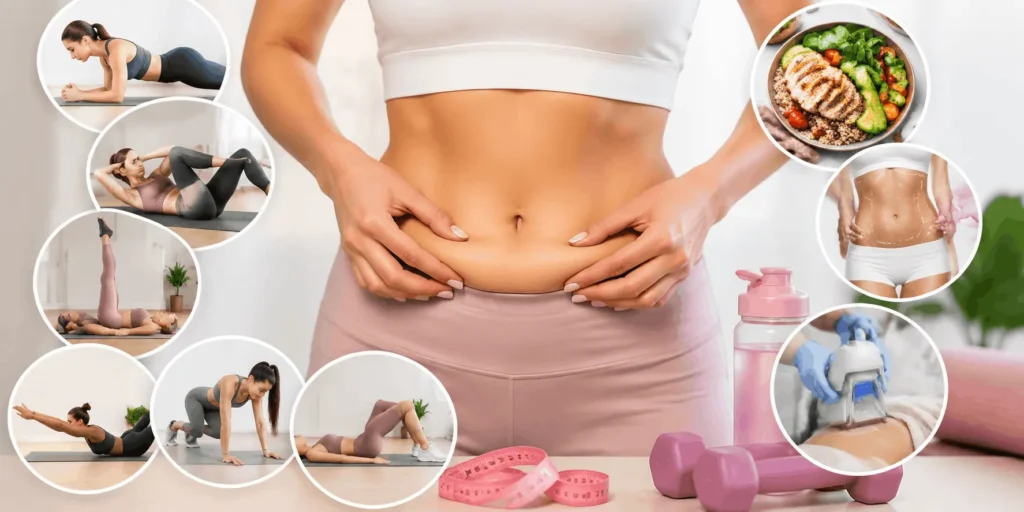
Exercises to Get Rid of Fupa
Forearm Plank
The forearm plank is a core-strengthening exercise that targets the abdominal muscles, lower back, shoulders, and glutes while placing minimal movement through the spine.
Although it cannot specifically reduce FUPA fat, strengthening your core can improve trunk stability, posture, and muscle endurance, which may help the lower abdomen appear firmer over time when combined with overall fat loss.
To perform the exercise, begin on your forearms and knees with your elbows directly beneath your shoulders. Extend your legs behind you, balance on your toes, and keep your body in a straight line from your head to your heels.
Tighten your abdominal muscles, avoid letting your hips sag or rise too high, and breathe normally. Hold the position for 20 to 30 seconds initially, then gradually increase the duration as your strength improves while maintaining proper form.
Bicycle Crunches
Bicycle crunches are a bodyweight exercise that strengthens the rectus abdominis, obliques, and hip flexors while improving core coordination.
They do not burn fat specifically from the FUPA area, but they can help build abdominal muscle endurance as part of a balanced exercise program combined with regular physical activity and a calorie-controlled diet.
To perform the movement, lie on your back with your knees bent and your hands lightly supporting your head without pulling on your neck. Lift your shoulders slightly off the floor, extend one leg while bringing the opposite knee toward your chest, and rotate your torso so your opposite elbow moves toward the bent knee.
Alternate sides in a slow, controlled motion, keeping your lower back stable and focusing on proper form rather than speed or high repetitions.
Leg Raises
Leg raises are a bodyweight exercise that strengthens the lower abdominal muscles, hip flexors, and core stabilizers while improving control of the pelvis and trunk.
Although they cannot reduce fat specifically from the FUPA area, they can help develop core strength and muscle endurance when combined with regular exercise and overall body fat reduction.
To perform the exercise, lie flat on your back with your legs together and your hands by your sides or placed under your hips for added lower back support. Keeping your legs as straight as your flexibility allows, slowly lift them until they are nearly perpendicular to the floor, then lower them in a controlled manner without letting your lower back arch excessively.
Focus on slow, controlled repetitions rather than momentum, and stop if you experience lower back discomfort or lose proper form.
Roll-Ups
Roll-ups are a controlled core exercise that strengthens the abdominal muscles, hip flexors, and muscles that support spinal movement while also improving flexibility through the back and hamstrings.
They do not specifically reduce FUPA fat, but they can contribute to better core strength, posture, and movement quality as part of a well-rounded fitness routine.
To perform the exercise, lie on your back with your legs extended and your arms reaching overhead. Engage your core and slowly lift your upper body, rolling up one vertebra at a time until you reach a seated position, then continue reaching toward your toes as far as your flexibility allows.
Reverse the movement with the same slow control until you return to the starting position. Prioritize smooth, controlled motion over speed, and avoid using momentum to complete each repetition.
Superman Pose
The Superman pose is a bodyweight exercise that strengthens the lower back, glutes, hamstrings, and core stabilizing muscles, helping improve spinal stability and posture.
While it does not reduce fat specifically from the FUPA area, a stronger posterior chain supports better movement and complements a balanced strength-training routine.
To perform the exercise, lie face down with your arms extended overhead and your legs straight behind you. Engage your core, glutes, and lower back to slowly lift your arms, chest, and legs a few inches off the floor while keeping your neck in a neutral position.
Hold the position for a few seconds, then lower yourself with control. Focus on quality rather than height, avoid excessive arching of the lower back, and stop if the movement causes pain instead of normal muscle effort.
Burpees
Burpees are a full-body exercise that combines strength and cardiovascular training, making them an effective way to increase heart rate and improve overall fitness.
They do not target fat loss from the FUPA area specifically, but they can help increase calorie expenditure as part of a structured exercise program and balanced diet that supports overall body fat loss.
To perform a burpee, begin standing with your feet shoulder-width apart, lower into a squat, place your hands on the floor, and jump your feet back into a plank. If comfortable, perform a push-up, then jump your feet back toward your hands and stand up, finishing with a small jump if your fitness level allows.
Move with controlled technique, maintain a neutral spine, and modify the exercise by stepping your feet instead of jumping if you are new to burpees or have joint concerns.
Bridge Pose
The bridge pose is a low-impact exercise that strengthens the glutes, hamstrings, core, and lower back while improving pelvic stability. It does not reduce FUPA fat directly, but it helps build strength in the muscles that support the pelvis and trunk, making it a useful addition to a balanced fitness routine.
Some healthcare professionals may recommend modified bridge exercises during postpartum rehabilitation, but anyone recovering from a cesarean delivery, vaginal birth, or abdominal surgery should follow their healthcare provider’s guidance before resuming exercise.
To perform the movement, lie on your back with your knees bent and feet flat on the floor, hip-width apart. Tighten your core and glutes, then lift your hips until your body forms a straight line from your shoulders to your knees.
Pause briefly, lower your hips with control, and repeat while avoiding excessive arching of the lower back.
The Hundred
The Hundred is a foundational Pilates exercise that strengthens the deep core muscles while improving breathing control, muscular endurance, and trunk stability.
Although it cannot reduce fat specifically from the FUPA area, it helps develop core strength that supports better posture and overall abdominal function as part of a comprehensive fitness program.
To perform the exercise, lie on your back, lift your head and shoulders slightly off the floor, and engage your abdominal muscles without straining your neck.
Raise your legs to a comfortable angle while extending your arms alongside your body, then pulse your arms in small, controlled movements as you inhale and exhale in a steady rhythm. Beginners can keep their knees bent or feet on the floor to reduce difficulty.
Focus on maintaining controlled breathing, keeping your lower back supported, and stopping if you cannot maintain proper form.
Lifestyle Changes to Get Rid of FUPA
Create a Sustainable Cardio Routine
A consistent cardio routine can support overall fat loss by increasing daily energy expenditure and improving cardiovascular fitness. While cardio cannot reduce fat specifically from the FUPA area, lowering overall body fat may gradually reduce fat stored in the lower abdomen.
Instead of exercising sporadically, create a weekly routine that matches your fitness level and schedule. Activities such as brisk walking, cycling, swimming, jogging, or low-impact aerobics are effective options because they can be performed regularly with a lower risk of burnout.
Aim to meet the recommended 150 minutes of moderate-intensity or 75 minutes of vigorous-intensity aerobic activity each week, and combine cardio with strength training and a balanced diet for the best long-term results.
A routine you can maintain consistently is more effective than occasional high-intensity workouts.
Be Mindful of What You Eat
Your eating habits play a major role in reducing overall body fat, which is necessary if you want to decrease fat in the FUPA area. No specific food can burn fat from one part of the body, but maintaining a balanced, calorie-controlled diet can support gradual and sustainable weight loss.
Focus on whole, minimally processed foods such as vegetables, fruits, lean proteins, whole grains, legumes, nuts, and healthy fats, as these provide nutrients that support overall health and help keep you full for longer.
Limit foods that are high in added sugars, refined carbohydrates, saturated fats, and highly processed ingredients because they can make it easier to consume excess calories.
Staying well hydrated and choosing nutrient-dense meals consistently is more effective than following restrictive or short-term diets for lasting results.
Manage Stress with Yoga or Meditation
Chronic stress can affect eating habits, sleep quality, and physical activity, all of which influence body weight over time.
Although stress alone does not directly cause FUPA fat, persistently elevated stress hormones, such as cortisol, may contribute to increased fat storage in some people when combined with excess calorie intake and other lifestyle factors. Practicing stress-management techniques can support overall health and make it easier to maintain healthy habits.
Activities such as yoga, meditation, deep breathing exercises, or mindful walking may help reduce stress and improve emotional well-being when practiced consistently.
Aim to include a few minutes of relaxation in your daily routine alongside regular exercise, adequate sleep, and a balanced diet. Managing stress is not a direct treatment for FUPA, but it can support long-term weight management and a healthier lifestyle.
Noninvasive Procedures to Get Rid of FUPA
CoolSculpting
CoolSculpting is a non-surgical body contouring treatment that uses controlled cooling, a process known as cryolipolysis, to target and destroy fat cells beneath the skin.
It is FDA-cleared for treating certain areas of the body, but not everyone is a suitable candidate, so a consultation with a qualified healthcare provider is essential.
The procedure is designed to reduce localized fat that remains despite a healthy diet and regular exercise, rather than treat obesity or replace weight-loss strategies.
After treatment, the body gradually removes the damaged fat cells through natural metabolic processes, and visible changes typically develop over several weeks to a few months.
Some people require multiple treatment sessions to achieve their desired result. Common temporary side effects include redness, swelling, bruising, numbness, and tenderness at the treatment site, while rare complications should be discussed with your provider before treatment.
Non-Surgical Fat Reduction Treatments
Several non-surgical body contouring treatments are available for people who want to reduce small, stubborn fat deposits without undergoing surgery.
Depending on the technology used, these procedures may rely on controlled cooling, heat, radiofrequency, laser energy, or ultrasound to damage fat cells, which the body gradually removes over time.
They are intended for body contouring rather than significant weight loss and generally work best for individuals who are close to their target weight but have localized fat that has not responded to diet and exercise.
Most treatments require multiple sessions, and results develop gradually over several weeks or months. Although recovery time is usually shorter than with surgical procedures, temporary side effects such as redness, swelling, bruising, tenderness, or numbness can occur.
A qualified healthcare provider can determine which treatment, if any, is appropriate based on your goals and medical history.
Morpheus8 Body
Morpheus8 Body is a minimally invasive body contouring treatment that combines microneedling with radiofrequency (RF) energy to remodel deeper layers of the skin and underlying tissue.
Unlike treatments that primarily target fat cells, Morpheus8 Body is commonly used to improve skin laxity, texture, and firmness by stimulating collagen and elastin production.
Some providers may also use it to complement fat reduction treatments in areas with mild skin looseness, including the lower abdomen or upper pubic region, but results vary depending on the amount of excess fat and skin.
Most people require a series of treatment sessions, with improvements developing gradually over several weeks as new collagen forms. Temporary redness, swelling, and mild tenderness are common after treatment.
A consultation with a qualified healthcare professional is important to determine whether Morpheus8 Body is appropriate for your goals and skin condition.
Surgical Solutions to Get Rid of FUPA
Monsplasty (Pubic Lift)
Monsplasty, also called a pubic lift, is a surgical procedure that reduces excess fat, skin, or both from the mons pubis to create a flatter, more proportionate contour above the genital area.
It is typically considered when a prominent pubic mound persists despite weight loss or causes physical discomfort, hygiene concerns, or difficulty with certain activities or clothing.
Depending on the individual’s anatomy, the procedure may involve removing excess tissue, tightening the overlying skin, and, in some cases, reinforcing the underlying tissues for additional support.
Monsplasty is often performed alongside procedures such as an abdominoplasty (tummy tuck) to achieve a smoother transition between the lower abdomen and the pubic area.
Because it is a surgical procedure, it requires anesthesia, involves a recovery period, and leaves a scar that is usually positioned where it can be concealed by underwear.
As with any surgery, potential risks and benefits should be discussed with a board-certified plastic surgeon, and maintaining a stable weight can help preserve long-term results.
Liposuction
Liposuction is a surgical procedure that removes localized fat deposits using a thin tube called a cannula, which is inserted through small incisions beneath the skin.
For people with a prominent FUPA caused primarily by excess fat, liposuction may improve the contour of the mons pubis when diet and exercise have not produced the desired result.
It is generally best suited for individuals who are close to their target weight and have good skin elasticity, as the procedure removes fat but does not tighten loose skin or repair weakened abdominal muscles.
If significant skin laxity is present, a surgeon may recommend combining liposuction with procedures such as monsplasty or abdominoplasty for more comprehensive contouring. Recovery varies by individual and may involve temporary swelling, bruising, and discomfort.
A consultation with a board-certified plastic surgeon is essential to determine whether liposuction is an appropriate option based on your anatomy, medical history, and treatment goals.
Abdominoplasty (Tummy Tuck)
Abdominoplasty, commonly known as a tummy tuck, is a surgical procedure that removes excess abdominal skin and fat while tightening weakened or separated abdominal muscles to create a firmer abdominal contour.
It is often considered after significant weight loss or pregnancy when loose skin and muscle separation cannot be improved through diet and exercise alone. Although the procedure primarily reshapes the abdomen, it can also improve the appearance of the FUPA by reducing excess tissue in the lower abdominal region.
In some cases, surgeons combine abdominoplasty with monsplasty or liposuction to achieve a smoother transition between the lower abdomen and the pubic area. Because it is a major surgical procedure, recovery requires several weeks, and scarring is expected, although incisions are usually placed below the bikini line where they can be concealed by underwear.
A board-certified plastic surgeon can determine the most appropriate approach based on your anatomy, health, and treatment goals.
Panniculectomy
A panniculectomy is a surgical procedure that removes excess skin and fatty tissue from the lower abdomen, most commonly after significant weight loss when an overhanging abdominal apron causes discomfort or hygiene problems.
Unlike an abdominoplasty (tummy tuck), a panniculectomy focuses on removing excess tissue and does not tighten the abdominal muscles or primarily reshape the abdomen for cosmetic purposes. By eliminating the overhanging skin, the procedure may also improve the appearance of the FUPA if the lower abdominal tissue extends over the pubic area.
In some cases, it is performed alongside other procedures, such as a tummy tuck or monsplasty, to achieve additional contouring. Recovery involves wound care, temporary activity restrictions, and permanent scarring, although the scars often fade over time.
A board-certified plastic surgeon can determine whether a panniculectomy is appropriate based on your symptoms, anatomy, and treatment goals.
Cryolipolysis (Fat Freezing)
Cryolipolysis is a non-surgical body contouring treatment that uses controlled cooling to damage targeted fat cells beneath the skin, allowing the body to gradually eliminate them through natural metabolic processes.
It is designed to reduce localized fat deposits that have not responded to a healthy diet and regular exercise, rather than serve as a weight-loss treatment. Some providers may offer cryolipolysis for the mons pubis or FUPA area after confirming that the individual is an appropriate candidate.
Results typically develop over several weeks to a few months, and more than one treatment session may be needed depending on the amount of fat being treated. Although the destroyed fat cells do not regenerate, remaining fat cells can still enlarge with future weight gain, making a stable weight important for maintaining results.
Temporary redness, swelling, bruising, numbness, or tenderness may occur, so treatment should always be performed by a qualified healthcare professional.
Conclusion
Reducing the appearance of FUPA requires realistic expectations and a consistent approach. Exercises and lifestyle changes can support overall fat loss, improve muscle strength, and enhance body shape, but they cannot specifically remove fat from one area.
For stubborn fat or loose skin that does not respond to natural methods, non-invasive treatments and surgical procedures may provide additional options. Treatments such as CoolSculpting, liposuction, monsplasty, abdominoplasty, and panniculectomy have different benefits and limitations.
Choosing the right approach depends on individual goals, anatomy, and health factors. Consulting a qualified healthcare professional can help determine the safest and most suitable solution.