
What Causes a FUPA? The Main Reasons Explained
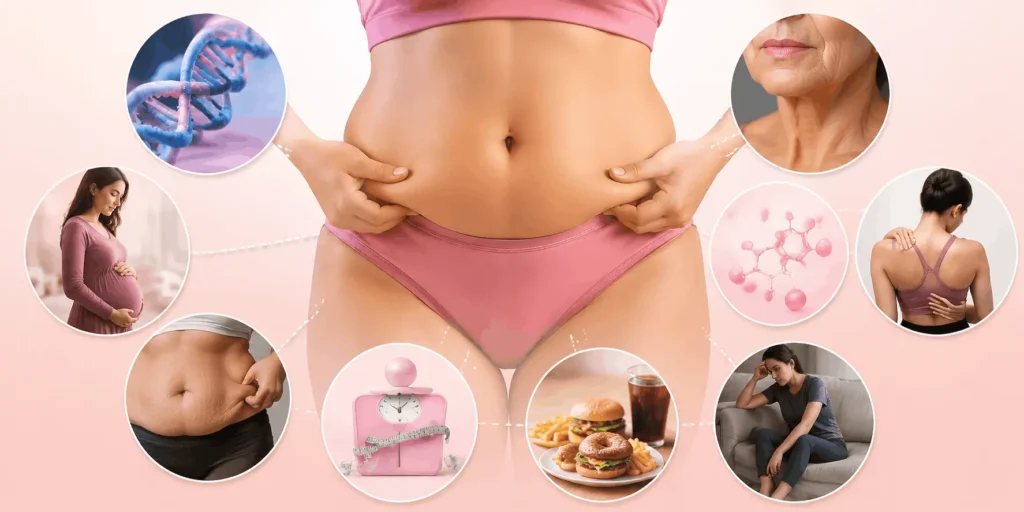
A FUPA can develop due to several factors that affect fat distribution, skin elasticity, hormones, and overall body composition.
While some people associate a FUPA only with weight gain, the reality is more complex because genetics, pregnancy, aging, lifestyle habits, and natural body changes can all influence its appearance. Our guide to hormones and genetics covers the biological side of this in more depth.
In this guide, we explore the main reasons why a FUPA may become noticeable, including how weight fluctuations, hormonal changes, stress, diet, and physical activity can affect the upper pubic area.
We also explain why some people develop a visible FUPA despite having a healthy weight and why individual body differences play an important role, covered in more depth in our guide to FUPA on a skinny person.
Understanding these causes can help you approach the topic with accurate information and realistic expectations. If you are wondering whether any of this is normal in the first place, our guide to whether a FUPA is normal answers that directly. If you are dealing with soreness or a rash rather than just appearance, our guide to pain and irritation in this area covers causes and relief.
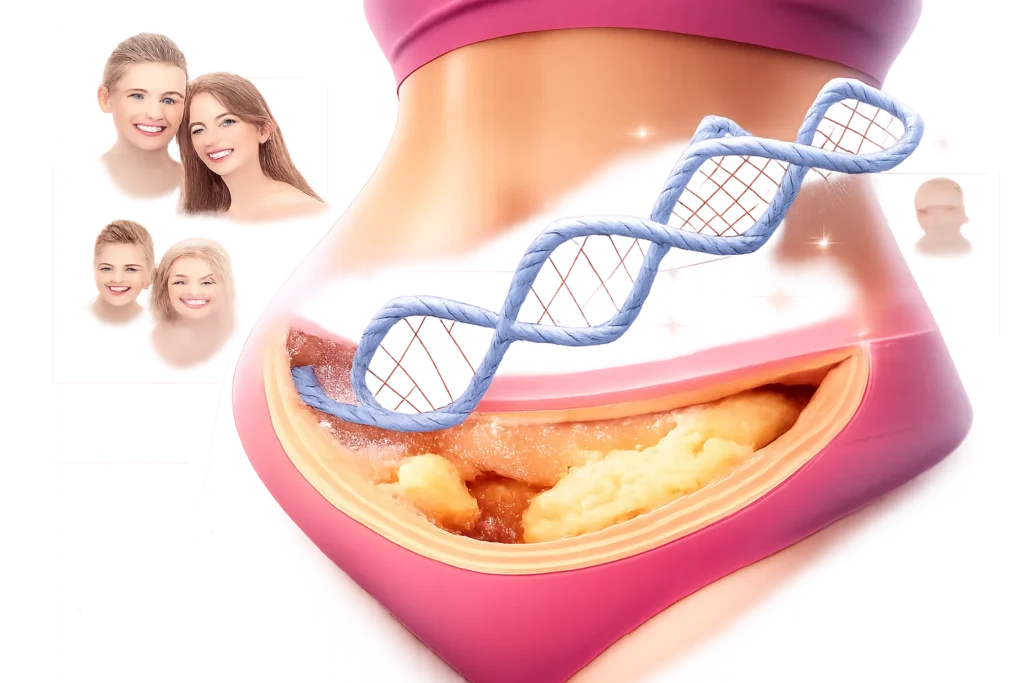
Genetics is one of the main factors that can influence whether a FUPA becomes noticeable.
Your genes help determine how your body stores and distributes fat throughout different areas, including the lower abdomen and pubic region.
Some people naturally store more fat around the mons pubis even when they maintain a healthy body weight. Your family traits can also influence your body shape, fat distribution patterns, skin elasticity, and metabolism.
Having parents or close relatives with a fuller pubic area may increase the likelihood of developing a similar appearance. However, genetics does not mean that lifestyle has no effect.
Your diet, activity level, and overall health habits can still influence your total body fat and how noticeable the area becomes.
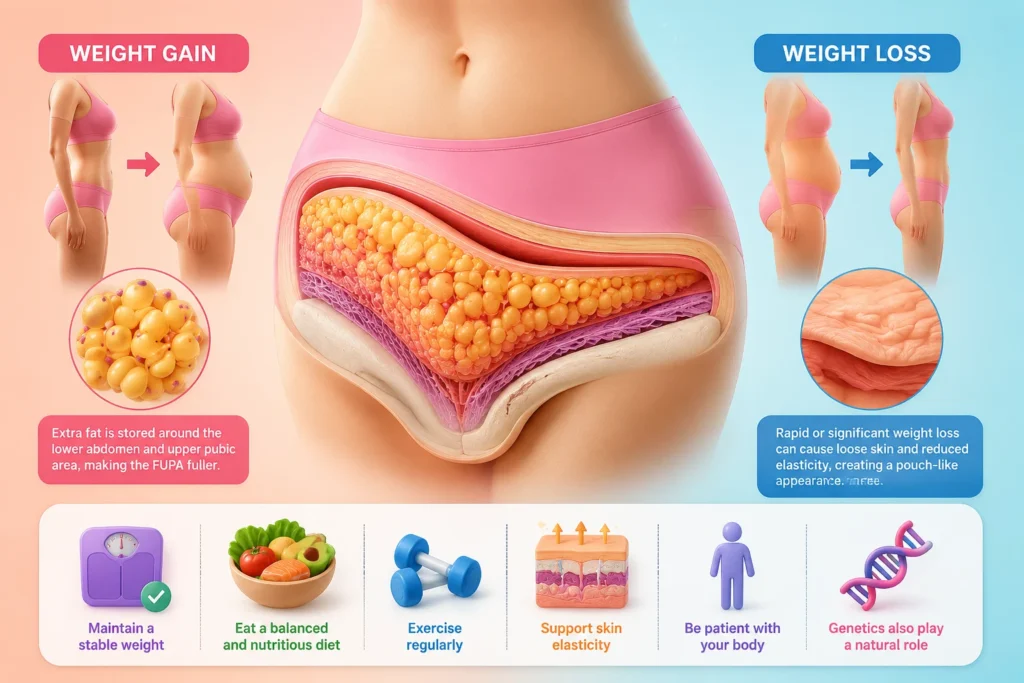
Weight fluctuations are one of the most common reasons why a FUPA becomes more noticeable, and our guide to why a FUPA can look so big works through the other explanations for sudden fullness.
When the body gains weight, it stores extra fat in different areas, and some people naturally accumulate more fat around the lower abdomen and upper pubic region.
The mons pubis can become fuller as fat cells increase in this area, especially in people who are genetically more likely to store fat around the lower body. Rapid or significant weight loss can also affect the appearance of a FUPA.
When a person loses a large amount of weight, the skin that was previously stretched may not always return completely to its original shape. Reduced skin elasticity can leave behind loose skin or a softer pouch-like appearance above the pubic bone.
Major weight changes over a short period can make these changes more noticeable because the skin and underlying tissues need time to adapt.
Maintaining a stable weight through balanced nutrition, regular physical activity, and gradual weight management may help support healthier skin elasticity and body composition.
However, even with healthy habits, genetics and previous weight changes can influence how the pubic area looks.
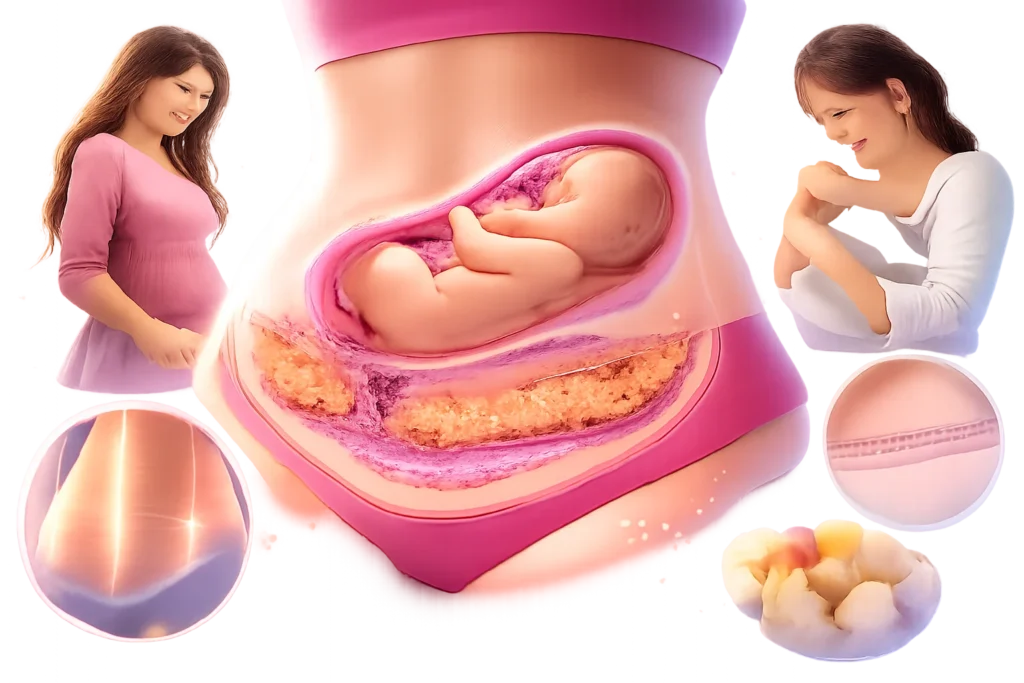
Pregnancy and childbirth are common reasons why some women notice a more visible FUPA after having a baby. During pregnancy, the body naturally gains weight and stores additional fat to support the baby’s growth and prepare for childbirth.
These changes can increase fullness around the lower abdomen and upper pubic region.As the uterus expands, the abdominal muscles and skin stretch to accommodate the growing baby.
After delivery, these tissues may not always return completely to their previous shape, which can make the pubic area appear softer or more prominent. Reduced abdominal muscle tone after pregnancy can also affect how the lower stomach and mons pubis look.
Hormonal changes during pregnancy can influence how the body stores fat and may contribute to changes in body composition.
A C-section can also affect the appearance of this area because surgical scars and changes in surrounding tissue may make the upper pubic region more noticeable.
A postpartum FUPA does not mean that something is wrong with your body. It is a common result of the physical changes that occur during pregnancy and recovery after childbirth.
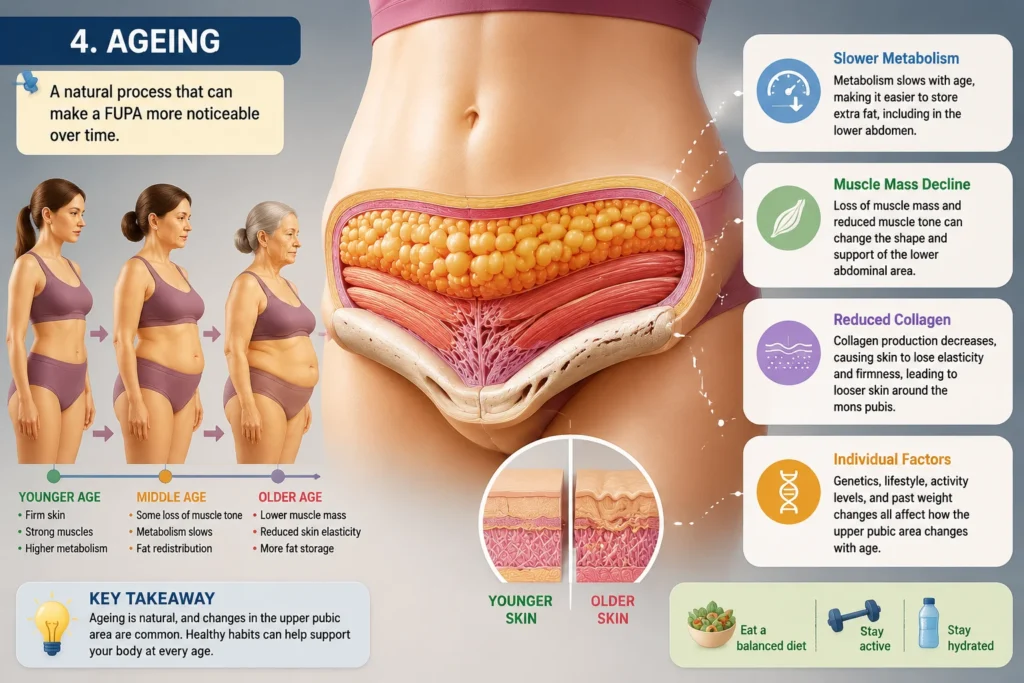
Aging is another natural factor that can make a FUPA more noticeable over time. As the body ages, several changes occur that can affect fat distribution, muscle tone, and skin firmness.
Metabolism generally slows with age, which can make it easier for the body to store extra fat, including around the lower abdomen and upper pubic region.
Aging also affects muscle mass, and reduced muscle tone can change the overall shape and support of the lower abdominal area.
As collagen production decreases, the skin gradually loses elasticity and firmness, which may lead to looser skin around the mons pubis.
These natural aging processes do not mean that everyone will develop a noticeable FUPA.
Genetics, lifestyle habits, activity levels, and previous weight changes all influence how the upper pubic area changes with age.
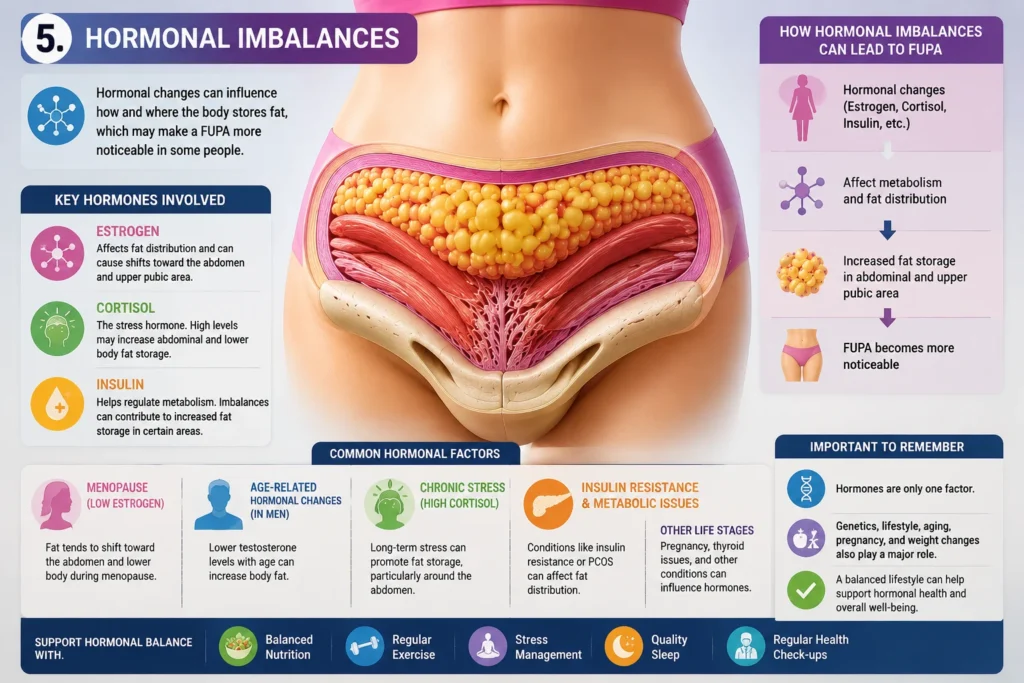
Hormonal changes can influence how and where the body stores fat, which may make a FUPA more noticeable in some people.
Hormones such as estrogen, cortisol, and insulin play important roles in regulating metabolism and fat distribution.
In women, changes in oestrogen levels, especially during menopause or other hormonal transitions, can shift fat storage patterns toward the abdomen and upper pubic area, which our guide to FUPA and the menopause covers in full.
In men, age-related hormonal changes can affect body composition and contribute to increased fat storage in certain areas.
High levels of cortisol, often linked with chronic stress, may also influence fat accumulation by affecting the body’s fat storage processes.
Hormonal conditions that affect metabolism, such as insulin-related imbalances or PCOS, may contribute to changes in body fat distribution.
However, hormones are only one factor. Genetics, lifestyle, aging, pregnancy, and weight changes also play important roles in determining how noticeable a FUPA becomes.
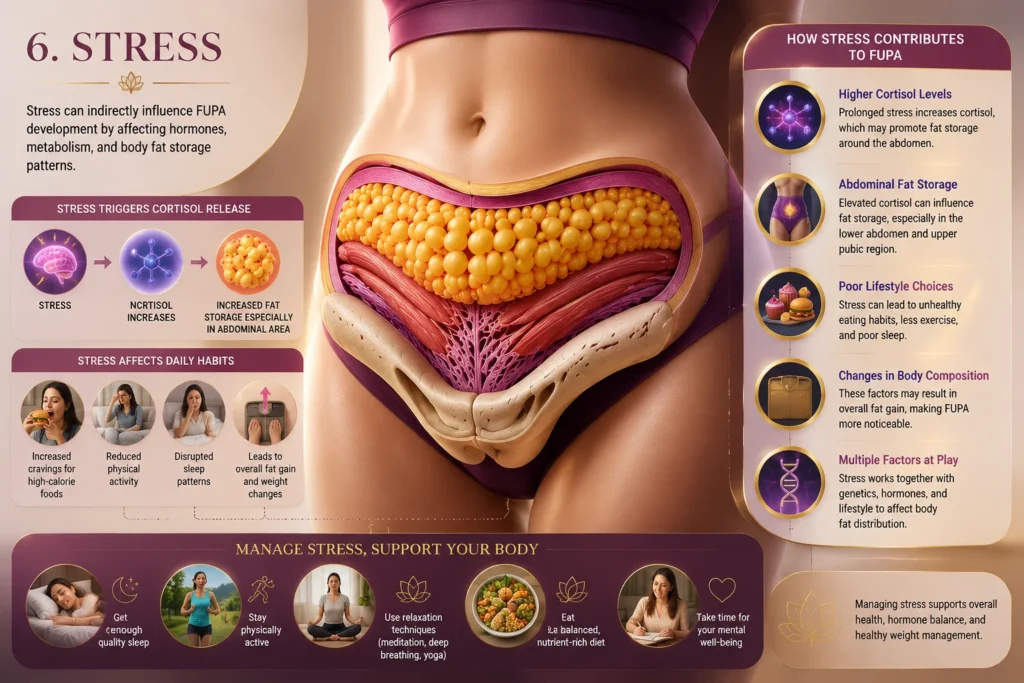
Stress can indirectly influence FUPA development by affecting hormones, metabolism, and body fat storage patterns.
When the body experiences prolonged stress, it releases higher levels of cortisol, a hormone involved in the stress response. Elevated cortisol levels may influence how the body stores fat, particularly around the abdominal region.
Chronic stress can also affect daily habits that contribute to weight changes, such as increased cravings for high-calorie foods, reduced physical activity, and disrupted sleep patterns.
These lifestyle changes may lead to overall fat gain, which can make areas like the lower abdomen and upper pubic region more noticeable.
Stress alone does not directly create a FUPA, but long-term stress combined with hormonal changes, genetics, and lifestyle factors may contribute to increased fat accumulation or changes in body composition.
Managing stress through proper sleep, physical activity, relaxation techniques, and healthy routines can support overall health and weight management.

Dietary habits can influence overall body fat levels and may contribute to a more noticeable FUPA in some individuals.
When a person regularly consumes more calories than the body uses, the excess energy can be stored as fat in different areas, including the lower abdomen and upper pubic region.
A diet high in processed foods, added sugars, and excess sodium may contribute to weight gain, water retention, and bloating, which can make the lower abdominal area appear fuller.
Foods containing high amounts of refined carbohydrates and added sugars may also affect blood sugar regulation and encourage increased calorie intake over time. However, specific foods do not directly create a FUPA on their own.
Fat storage patterns are influenced by multiple factors, including genetics, hormones, age, and lifestyle.
Maintaining a balanced diet with adequate protein, fiber, whole foods, and proper calorie intake can support healthy body composition and reduce excessive fat accumulation.
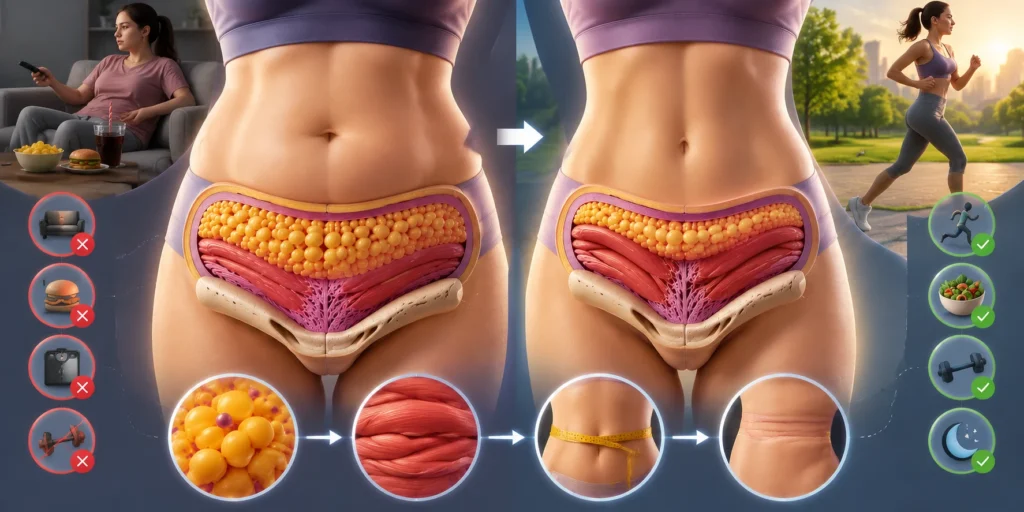
Reduced physical activity can contribute to a more noticeable FUPA by affecting overall body composition and muscle tone.
When a person has a sedentary lifestyle, fewer calories are burned through daily movement, which can contribute to gradual fat accumulation throughout the body, including the lower abdomen and upper pubic region.
A lack of strength training can also reduce muscle mass and firmness around the abdominal area, which may make existing fat or loose tissue appear more prominent.
However, inactivity does not directly create a FUPA, and active people can also have one due to genetics, hormones, aging, or natural fat distribution.
Physical activity is only one influencing factor among many, but maintaining regular movement and strength exercises can support healthier body composition and overall fitness.