
Underwear Waistbands That Roll Down: A Fit Guide
Page Contents
- Why Underwear Waistbands Roll Down
- Too Small Versus Too Large: How to Tell
- When the Rise Is Too Short
- How Torso Length and Belly Shape Affect Fit
- Why Wide Waistbands Can Still Roll
- Fabric Stretch and Elastic Recovery
- A Sitting, Bending and Walking Fit Test
- Troubleshooting Different Rolling Patterns
- When to Try Another Size, Rise or Brief Style
- Quick Underwear Fit Checklist
- Frequently Asked Questions
- Why Does My Underwear Roll Down Under My Belly?
- Does Rolling Mean My Underwear Is Too Small?
- Is High-Waisted Underwear Always Better?
- How Should an Underwear Waistband Fit?
- Can Loose Underwear Also Roll Down?
- Which Waistband Design Is Least Likely to Roll?
Underwear that stays comfortable should follow your shape without cutting across it. When underwear rolls down over belly curves, the problem usually involves rise, sizing, waistband construction, or fabric recovery rather than your body alone.
A useful underwear fit check considers where the band settles while standing, sitting, and walking. The best brief style remains secure through movement, applies comfortable pressure, and avoids creating a hard ridge across soft tissue.
This guide provides fit troubleshooting for common rolling patterns. It explains how body proportions, waistband position, garment measurements, and movement affect results, helping you choose comfortable underwear for a FUPA without assuming tighter elastic automatically offers better support.
Why Underwear Waistbands Roll Down
Waistband rolling begins when fabric tension cannot remain evenly distributed around the body. A band crossing a curved abdomen may turn outward, while excessive compression, loose material, or repeated body movement can encourage elastic folding.
The lower belly changes shape between standing and sitting, so a waistband placement that appears stable in a fitting room may shift later. Pressure points develop when narrow elastic meets a body crease or fuller area.
Rolling does not prove that somebody chose the wrong size. Construction, waistband placement, fabric tension, and individual proportions interact differently. Notice where movement begins, when discomfort develops, and whether the band folds inward or outward.
Too Small Versus Too Large: How to Tell
Underwear that is too small or too large creates different symptoms. A tight waistband may leave deep marks, restrict movement, or curl under pressure, while a loose waistband can slide down, wrinkle, and require repeated adjustment throughout the day.
Check the entire garment instead of judging its elastic alone. Fabric bunching near the front, sliding briefs, pulling at the crotch, or unstable leg openings can reveal whether width, coverage, or vertical length causes trouble.
Compare your measurements with the brand’s size chart because sizing varies. The ISO clothing-sizing committee covers body measurement and size-designation standards. Measurements are more useful than assuming identical labels fit identically across brands.
When the Rise Is Too Short
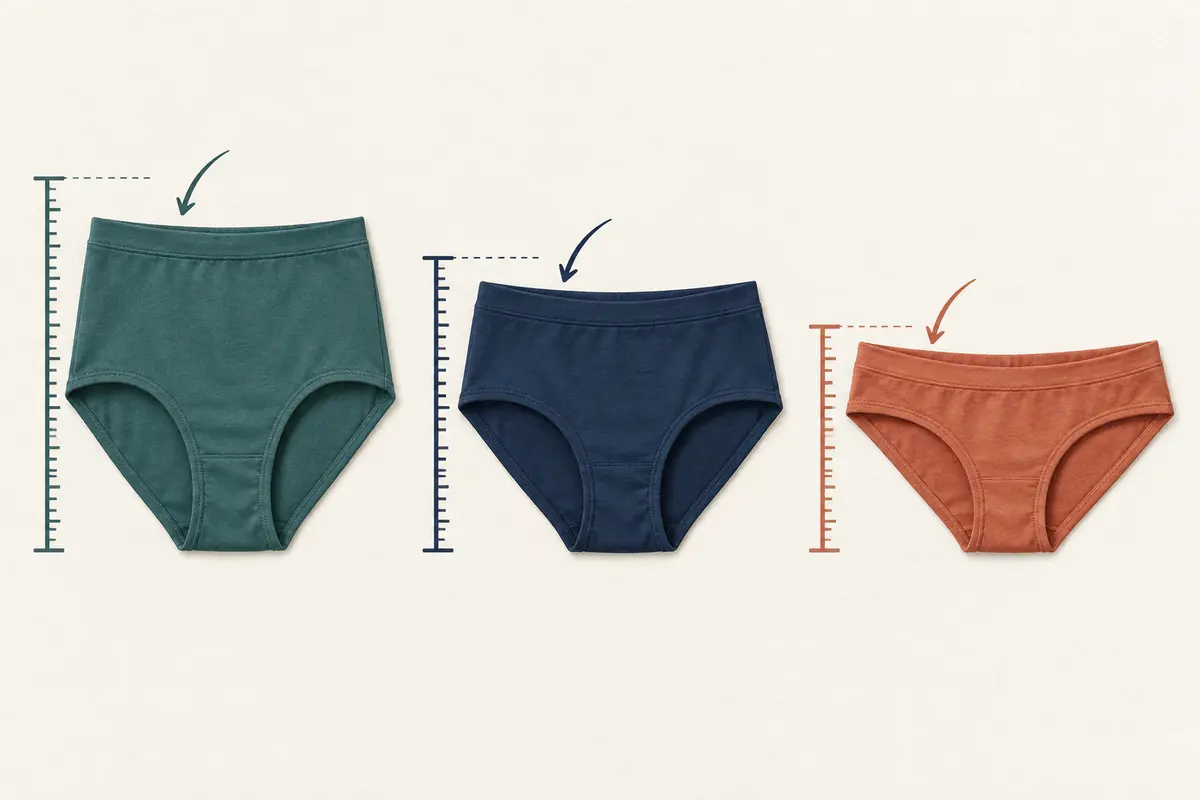
Underwear rise describes the vertical distance between the crotch seam and waistband height. When this measurement is too short, the garment stretches upward, pulls through the crotch, or drags its waistband towards the fullest lower curve.
A short rise can resemble an undersized waistband because both create tension. Check whether the band feels wide enough when lowered. If pressure eases but vertical coverage disappears, insufficient rise length is the likelier problem.
Compare brief measurements whenever retailers provide them, but remember that stretch changes the effective fit. Look for adequate coverage without pulling, a sagging crotch, or a waistband forced into an uncomfortable position while sitting.
How Torso Length and Belly Shape Affect Fit
Torso length determines how much vertical fabric a brief needs before reaching the natural waist. Two people wearing the same size may require different rises because their individual proportions and waistband destinations are not identical.
Belly shape also affects underwear stability. A band positioned across the fullest point may fold or migrate, while one resting above or below that curve can remain flat because it meets a more stable body area.
Use the seated body crease as another reference. If elastic repeatedly settles inside it, try a different rise rather than forcing the band upward. The lower abdomen should feel supported, not divided by concentrated pressure.
Why Wide Waistbands Can Still Roll
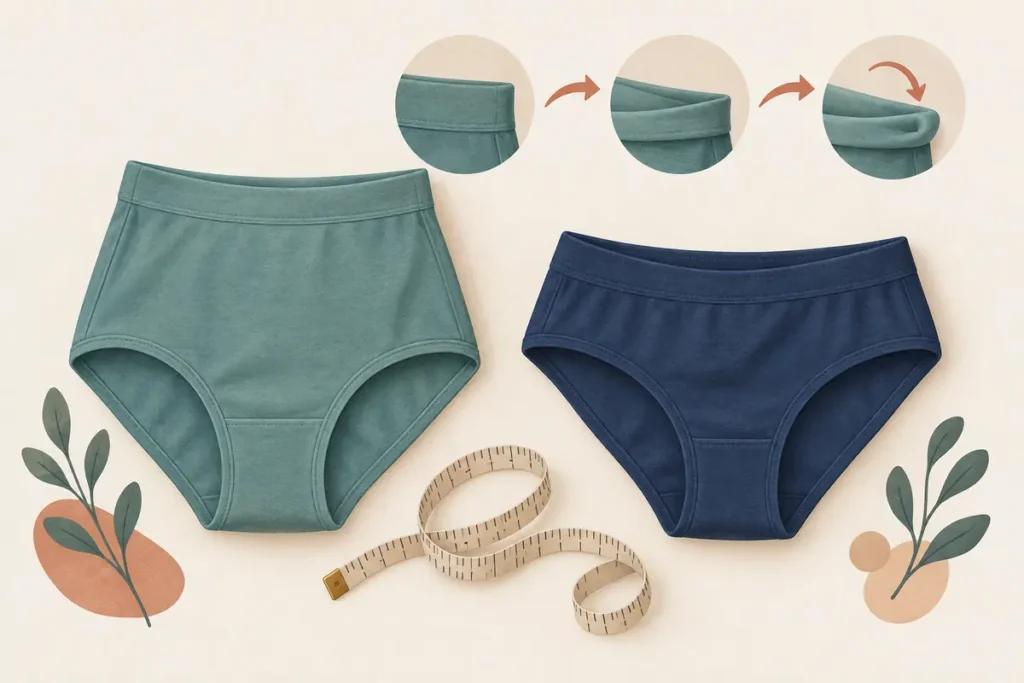
A wide underwear waistband spreads pressure across more skin, but width alone cannot guarantee stability. Soft elastic may collapse, band stiffness may resist body curves, and uneven tension can make one section roll before another.
A fold-over waistband contains extra fabric designed to turn down, so it may fold unintentionally during movement. Waistband width works best when the band remains flat, flexible, and appropriately positioned throughout sitting and walking.
Examine garment construction before buying replacements. Encased elastic, bonded layers, and reinforced edges behave differently. A supportive band should recover after stretching without becoming rigid, twisted, or loose along the front or back.
Fabric Stretch and Elastic Recovery
Fabric stretch allows underwear to accommodate movement, while elastic recovery helps it return to shape afterwards. Without adequate recovery, the garment gradually loosens, shifts downwards, and gathers even when its original size seemed appropriate.
Check fabric composition rather than assuming every stretchy brief performs equally. Elastane contributes resilience, but fibre quality, knitting method, waistband construction, heat exposure, and overall garment design also influence shape retention during repeated wear.
Repeated washing, tumble drying, and prolonged heat can weaken stretched elastic. Follow the care label and replace underwear when its waistband remains enlarged, twists permanently, or no longer lies flat after gentle washing.
A Sitting, Bending and Walking Fit Test
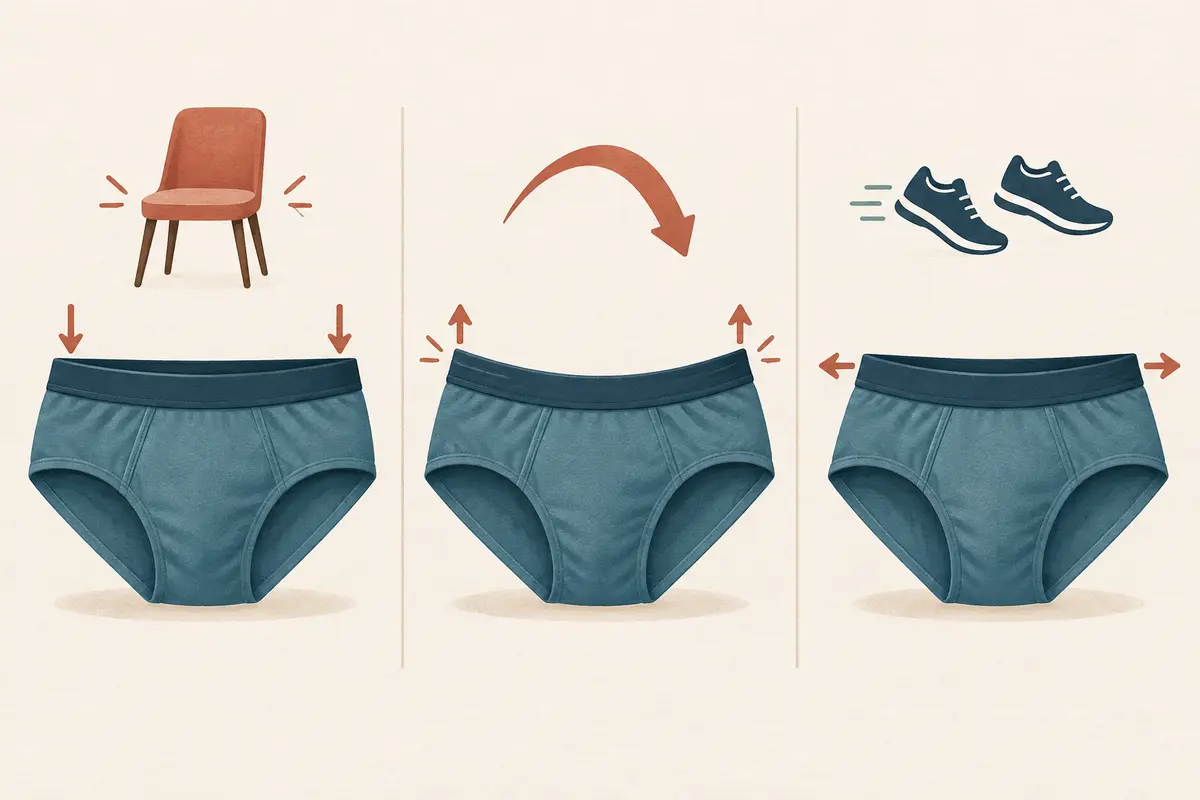
Begin the sitting underwear fit test with the waistband placed naturally, not pulled unusually high. Sit for several minutes and notice waistband movement, concentrated pressure, rolling during movement, or fabric collecting inside the crease of your abdomen.
Next, perform a bending and walking fit test. Reach, bend, climb stairs, and take longer strides. The movement test reveals digging elastic, unstable leg openings, or bands that shift whenever your torso changes position.
Judge daily comfort over realistic time, because a brief can pass a quick fitting yet fail later. Secure underwear should remain comfortable without repeated pulling, smoothing, repositioning, or immediate relief after removal.
Troubleshooting Different Rolling Patterns
Outward waistband rolling often indicates that the band is meeting a prominent curve or collapsing under pressure. Inward rolling may suggest excessive tension, soft unsupported elastic, or a front waistband repeatedly drawn into a body crease.
If only the back waistband moves, examine rear coverage and whether the crotch is pulling forward. One-sided rolling may reflect uneven garment construction, asymmetrical stretching, or a seam directing tension differently around the body.
Briefs sliding down suggest a loose band, insufficient recovery, or incompatible proportions. Crotch riding up can indicate inadequate rise or coverage. Compare each pattern instead of assuming every waistband problem requires a smaller size.
When to Try Another Size, Rise or Brief Style
Choose a larger underwear size when elastic digs, leaves lasting marks, restricts movement, or distorts the garment. Consider sizing down when the waistband gaps, slides freely, or requires constant adjustment despite adequate vertical coverage.
Changing underwear rise may solve fit problems that changing size cannot. High-rise briefs can clear a lower curve, while mid-rise briefs may suit shorter torsos. Full briefs usually offer more coverage than hipster briefs or narrower cuts.
Because brand sizing and patterns differ, the same labelled size may fit differently elsewhere. The M&S guide to knicker styles illustrates how cuts vary. Test any alternative cut while sitting, walking, and bending.
Quick Underwear Fit Checklist
A flat underwear waistband should remain level without curling, twisting, or entering a body crease. Look for a secure fit with comfortable pressure, adequate coverage, and enough vertical length to prevent pulling through the crotch area.
Check that stable leg openings stay positioned without pinching or riding upward. A cotton gusset and soft seams may improve comfort, but neither feature compensates for incorrect sizing, insufficient rise, or unstable elastic.
Complete the assessment through all-day wear before buying multiples. Reliable underwear should maintain position, allow natural movement, and avoid painful marks. For friction problems, see our guide to lower-belly chafing when walking.
Frequently Asked Questions
Why Does My Underwear Roll Down Under My Belly?
Underwear usually rolls beneath the belly when the belly curve pushes against an unsuitable waistband location. Incorrect size, uneven elastic tension, or insufficient rise length can contribute. Test another rise and size separately so you can identify which change improves stability.
Notice whether the band first folds while sitting, bending, or walking. That timing helps distinguish a waistband-position problem from elastic that has already lost its recovery.
A stable alternative should lie flat without needing to be pulled unusually high or tightened against the abdomen. Try one change at a time and assess it during normal movement.
Does Rolling Mean My Underwear Is Too Small?
Rolling can indicate tight elastic and pressure marks, but it can also result from a loose fit, weak recovery, or unsuitable rise. Use garment measurements for size diagnosis, then check whether the whole brief stays secure without digging, sliding, bunching, or pulling.
Deep marks and restricted movement point more strongly towards excessive compression. Gapping, wrinkling, or a waistband that slips before it folds can instead indicate too much room or worn elastic.
Size is only one part of the diagnosis. Check rise length, front coverage, leg openings, and fabric recovery before deciding whether to move up or down.
Is High-Waisted Underwear Always Better?
High-waisted underwear is not automatically better for everyone. It works when the natural waistline provides a stable landing point and the long rise suits your proportions. Shorter torsos or different body proportions may feel more comfortable in a properly fitted mid-rise style.
A higher band can clear the fullest lower-belly curve, but it may fold at the waist on a shorter torso. A mid-rise cut can work better when it lands on a flatter, more stable area.
The best rise is the one that stays flat while you sit and move. Comfort and stability matter more than the style name printed on the label.
How Should an Underwear Waistband Fit?
An underwear waistband should feel snug and remain level as you move. Flat elastic should create no digging or painful marks. A secure waistband supports comfortable movement without rolling, slipping, restricting breathing, or requiring repeated adjustment during ordinary daily activities.
You should be able to sit, bend, and walk without the band twisting or entering a body crease. The fabric below it should also remain smooth rather than pulling sharply through the crotch.
Temporary light impressions can occur, but persistent pain, numbness, or deep pressure marks are not signs of a good fit. Try a different size, rise, or construction.
Can Loose Underwear Also Roll Down?
Yes. Oversized underwear can develop excess fabric, while loose elastic provides insufficient support. The resulting slipping waistband may fold or slide even though it never feels tight. Compare the rise, coverage, leg openings, and waistband recovery before automatically choosing another larger size.
A loose brief may bunch at the front, gap at the waist, or move downward during walking. Worn elastic can create the same pattern even when the labelled size once fitted correctly.
If the band stretches but does not return to shape, replacement is usually more useful than another adjustment. If the elastic recovers well, compare a smaller size or different cut.
Which Waistband Design Is Least Likely to Roll?
A wide, flat waistband with stable elastic is generally less likely to collapse than narrow exposed elastic. Encased elastic and seamless construction may improve comfort, but supportive fabric, correct sizing, appropriate rise, and suitable placement ultimately determine whether any design remains flat.
Look for a band that bends with the body and returns to its original shape after stretching. Excessively soft bands may fold, while very rigid bands can create concentrated pressure.
No waistband design is roll-proof on every body. Test the complete garment through sitting, bending, and walking before buying several pairs.
3 responses