
Dresses for a FUPA: 8 Styles and the Seated Fit Test
Page Contents
- Introduction and Dress Fit
- Dress Silhouettes and Waist Placement
- Fabric, Drape and Dress Details
- Fit, Size and Trying a Dress On
- Occasions and Styling
- Bust Fit Alongside Lower-Belly Fit
- Trapeze and Gathered-Front Dresses
- Garment Measurements and Returns
- Frequently Asked Questions
- Which Dress Style Works Best for a Lower Belly?
- Can I Wear a Fitted Dress?
- Does Ruching Help?
- Should I Size Up?
- Are Wrap Dresses Comfortable?
- Do I Need Shapewear Under a Dress?
- Related Reading
Introduction and Dress Fit
The most useful dresses for a FUPA give your lower front enough room without forcing you into one silhouette. Start with where the waist seam sits, then judge how the fabric falls when you move.
A-line, wrap, empire, smock and shift dresses offer different kinds of ease. A closer fitting dress can work too. What matters is whether the bodice, skirt and any tie stay comfortable when you sit down.
This guide compares eight dress styles, explains fabric and lining choices, and gives you a practical try-on check. Use it to choose the coverage you want, whether that means a soft drape or defined shape.
Dress Silhouettes and Waist Placement
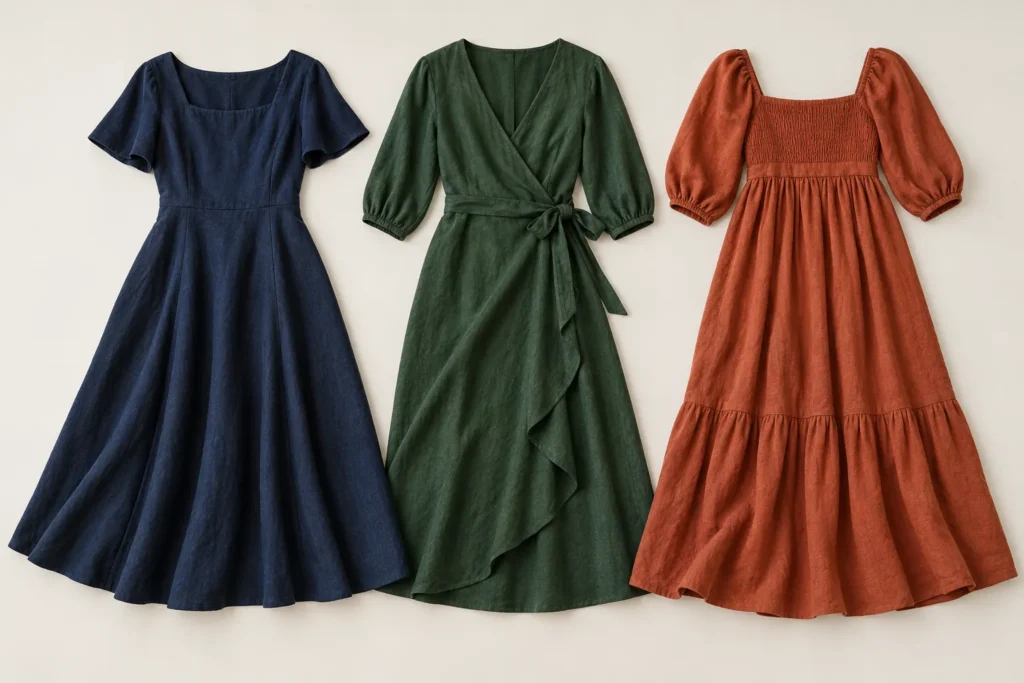
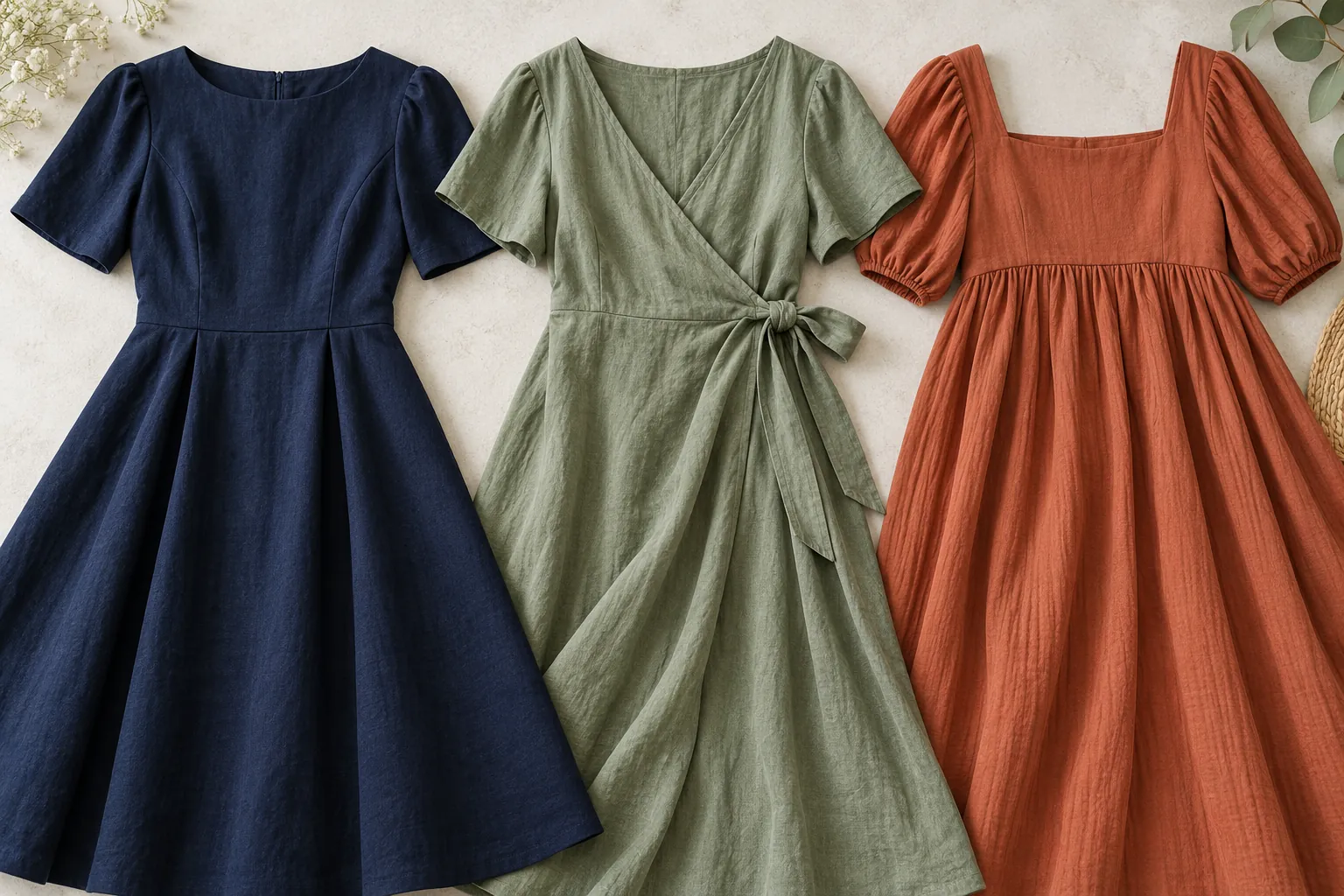
An A-line dress widens gradually below the waist, while a fit-and-flare dress has a defined bodice and full skirt. Compare where the skirt flare begins; a tight seam can still press against lower belly fullness.
A wrap dress offers an adjustable tie waist, but the knot should feel comfortable seated. An empire waist dress has a raised waistline below the bust, letting the skirt fall across the lower front comfortably.
A smock dress or shift dress provides lower abdomen coverage without a fitted waist. Check the waist seam placement and front drape on any style. Dresses for a FUPA should support personal comfort each day.
Fabric, Drape and Dress Details
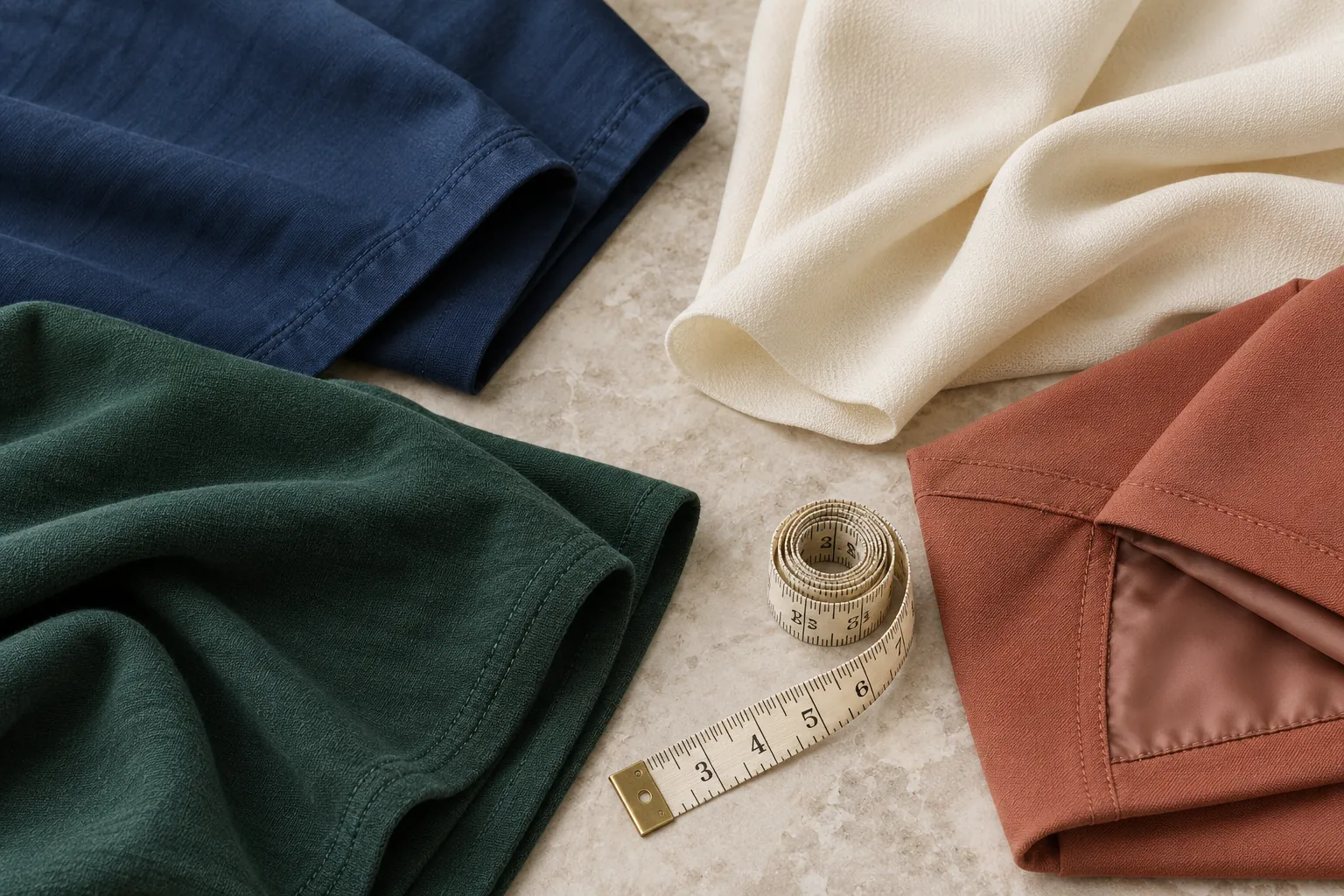
Fabric weight changes how a dress hangs. Midweight woven fabric may hold space across the front, whereas thin soft jersey follows curves. Cotton poplin feels crisp, but test it because construction differs on the hanger.
A dress lining changes transparency and movement. Side ruching, a gathered front, pleats, or a draped panel add fabric differently. Check whether each detail lies comfortably across the lower front without pulling when seated comfortably.
Vertical seams and print placement change the visual line without guaranteeing an appearance. Check opaque fabric in daylight, assess fabric cling and stretch recovery, and whether filled front pockets distort the hips in daily wear.
Fit, Size and Trying a Dress On
Start with a standing fit, then do a seated fit test in a chair. Bend and walk during the day. Notice waist pressure, a shifting wrap opening, or a digging tie position across the front.
Check bust fit, shoulder fit, and hip room together carefully. A larger size may ease pressure but loosen shoulders. Compare torso length and dress length with your clothes before deciding whether the dress fits comfortably.
For online shopping, compare garment measurements with a dress laid flat, then consult the maker's size chart. Read the return policy before ordering. Alteration options may help, but cannot fix a dress that presses uncomfortably.
Occasions and Styling
For casual dresses, choose a cut you can sit and walk in without adjustment. Work dresses must meet your dress code. Judge the garment after movement if you sit or commute during your usual routine.
Occasion dresses may include a lined midi dress or flowing maxi dress, depending on the event. With summer dresses, consider breathable fabric and opacity in daylight. Test the outfit with your planned shoes when possible.
Layering changes outline and warmth, but optional coverage remains your choice. Choose comfortable underwear without a painful edge. Let personal style guide colour, length and preferred definition without unwanted pressure or slipping throughout your day.
Bust Fit Alongside Lower-Belly Fit
A fuller bust can pull fabric up and shift the skirt. Check bodice fit from side and front. A dress should allow ordinary breathing and movement without the seam riding up with your usual bra.
The neckline affects how the top sits, while a wrap neckline may need fastening if it opens. Look for supportive construction that feels comfortably secure without a tight tie across the middle throughout your day.
Inspect the bust seam before assessing lower belly ease. If the upper section is too short, a roomy skirt may start too high. Compare another torso length or cut before changing size alone after trying.
Trapeze and Gathered-Front Dresses
A trapeze dress hangs outwards from the shoulders without a waist. Seek shoulder definition to keep it in place. Excess fabric volume may feel cumbersome, so compare cuts; looser may not help you move comfortably.
A gathered-front dress places extra material at a seam or tie. Inspect gather placement standing and sitting: gathers at the bust, waist and lower front behave differently. Choose what moves comfortably without pulling or bunching.
A shirred bodice stretches across the upper section as the skirt falls away. Check whether its lower edge presses against you seated. If it rolls or rises, try another seam, bodice length, or dress style.
Garment Measurements and Returns
For online sizing, compare flat garment measurements with your dress at matching points. Record the bust measurement, waist measurement, and hip measurement. A single size label cannot capture every proportion when buying a dress online.
Check whether measurements describe the garment or intended wearer. Stretch and ease matter. If dimensions are missing, ask the seller; a familiar size label may fit differently. Check the fabric description and stretch details too.
Read the returns policy, including deadlines and postage. Confirm the rules for altered garments before tailoring. Keep tags on during try-on, then repeat the seated check with your usual underwear and shoes before deciding carefully.
Frequently Asked Questions
Which Dress Style Works Best for a Lower Belly?
Try A-line, wrap and empire-waist cuts. The best choice leaves comfortable room at the lower front and keeps its seam in place when you sit.
Can I Wear a Fitted Dress?
Yes. Choose a fit you enjoy and check that the fabric, lining and seams stay comfortable when you sit, bend and walk.
Does Ruching Help?
Ruching adds folds and changes how fabric lies. Its effect depends on the gather position, fabric and fit, so judge the dress on your body.
Should I Size Up?
Check the bust, shoulders, waist and hips first. Another cut or torso length may solve a tight spot more effectively than a larger size.
Are Wrap Dresses Comfortable?
They can be. Test the tie and crossover while seated; neither should dig in, pull open, or require constant adjustment.
Do I Need Shapewear Under a Dress?
No. Wear it only if you prefer it and it feels comfortable. A dress that fits should not depend on uncomfortable compression.
Related Reading
For complete outfit choices, see our outfits for a FUPA guide. For broader styling options, read how to style a FUPA. If you prefer a base layer, compare fit in our shapewear guide.