
FUPA After Weight Loss: Loose Skin, Deflation and Your Options
Page Contents
- Why a FUPA Can Remain After Weight Loss
- Loose Skin, Deflation and Leftover Fat: What Is Actually There?
- The Pinch and Lie-Down Checks
- What Decides How Much Your Skin Bounces Back
- GLP-1 Medicines and Rapid Weight Loss
- Give It Time: Weight Stability Comes First
- Non-Surgical Options for Mild Loose Skin
- Surgical Options for a FUPA After Weight Loss
- Monsplasty (Mons Lift)
- Mini Abdominoplasty
- Full Abdominoplasty
- Panniculectomy
- Is Liposuction Useful Here?
- Comparing Your Options
- Can You Get Loose Skin Removed on the NHS?
- Choosing a Surgeon in the UK
- Frequently Asked Questions
- Will my FUPA go away after weight loss?
- Why does my FUPA look worse after losing weight?
- Can loose skin on a FUPA tighten on its own?
- Does Mounjaro or Wegovy cause a saggy FUPA?
- How long should I wait after weight loss before surgery?
- Is a monsplasty or a tummy tuck better for a FUPA after weight loss?
- The Bottom Line
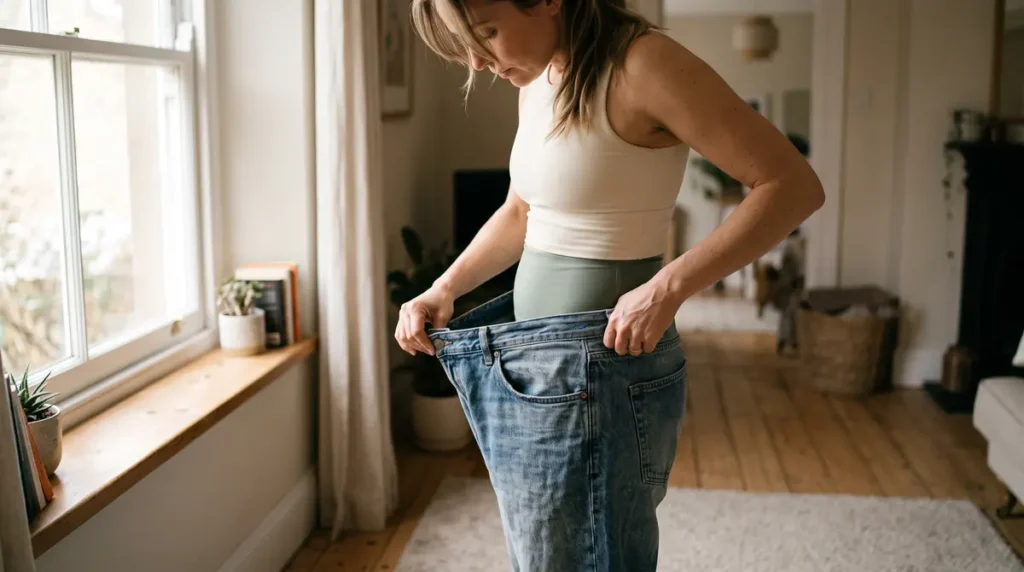
A FUPA after weight loss can feel like a poor reward for hard work. The scales have moved, yet the area over your pubic bone still looks full, soft or lower than before. In many cases the fat has shrunk but the skin has not followed. That is called skin laxity, and it behaves very differently from fat. This guide explains why the lower belly and mons pubis can deflate rather than tighten, how to tell what you are looking at, and which options exist, from patience and strength training to monsplasty, abdominoplasty and panniculectomy.
This guide is general information, not medical advice. If skin folds become sore, broken, smelly or repeatedly infected, or you notice a new lump or sudden swelling in the pubic area, speak to your GP.
Why a FUPA Can Remain After Weight Loss
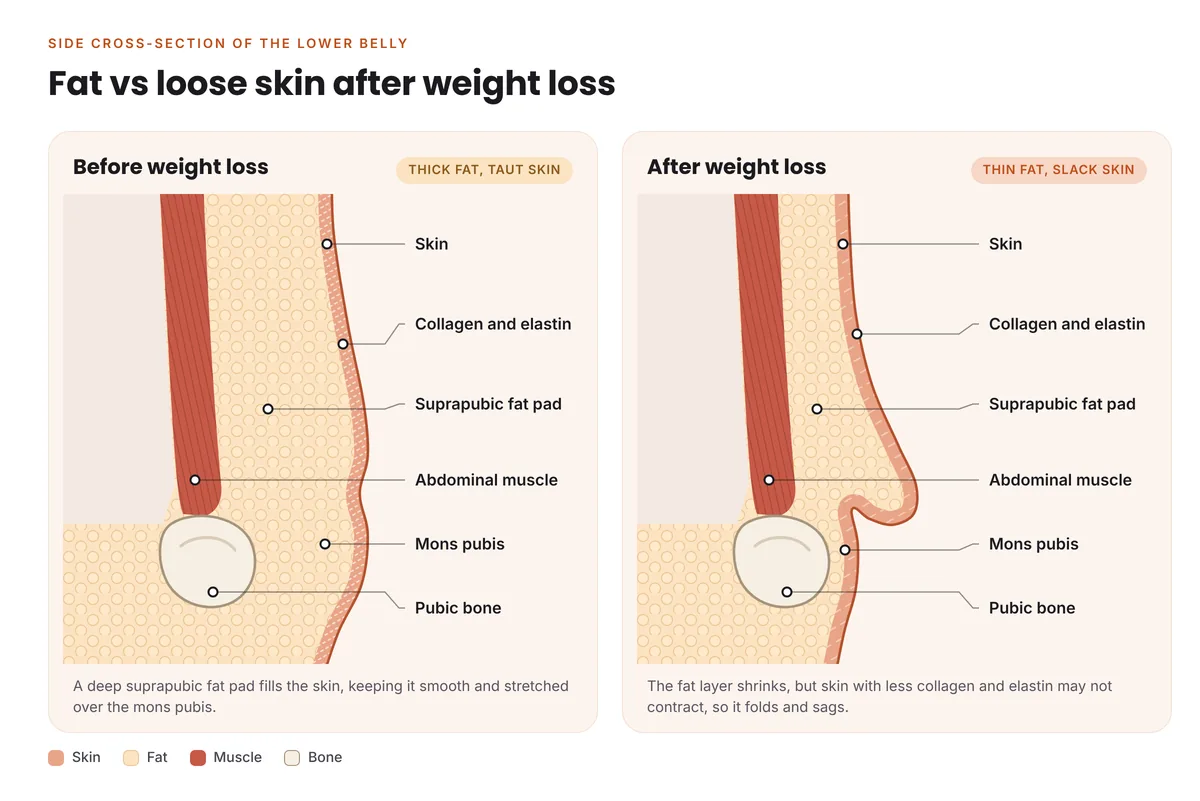
The mons pubis is the pad of fat over the pubic bone, continuous with the fat of the lower abdomen in what is called the suprapubic fat pad. Weight gain thickens this layer and stretches the skin over it. Weight loss shrinks the fat cells, but the skin has to contract on its own, and it cannot always do that.
Gravity adds to this. The lower belly is the lowest point of the abdominal wall, so spare skin from above collects there. A FUPA that was firm and rounded can become a softer, emptier fold that sits lower. People often describe it as deflated.
The lower belly is also often one of the last places to slim down. Our guide on whether a FUPA goes away covers this pattern in more detail.
Loose Skin, Deflation and Leftover Fat: What Is Actually There?
After weight loss, a FUPA is usually one of three things, or a mix of them:
- Leftover fat. The suprapubic fat pad is still thick. It feels soft but full, and a pinch picks up a deep fold.
- Deflated tissue. The fat has mostly gone, but the skin is too large for what is left underneath. The area looks flatter from the front but lower and looser from the side.
- Excess skin. Skin hangs or folds over the pubic area when you stand. A pinch picks up a thin, loose layer, and the fold may stay even when you lie down.
The fixes differ: more dieting can shrink fat, but not skin. Our comparison of loose skin vs fat in the lower belly walks through simple checks you can do at home.
The Pinch and Lie-Down Checks
Gently pinch the skin just above your pubic hairline. A thick, firm roll suggests fat. A thin, crepey layer you can pull well away from the body suggests skin. Then lie on your back: fat tends to flatten and spread, while loose skin often still creases. These checks are only a guide.
What Decides How Much Your Skin Bounces Back
Skin elasticity depends mainly on two proteins in the dermis: collagen, which gives strength, and elastin, which lets skin stretch and recoil. When skin is stretched for a long time, these fibres can become damaged and less able to recoil. Several factors affect how well yours recovers:
- How much weight you lost. Larger losses leave more skin to contract.
- How long you carried the extra weight. Skin stretched for many years usually recovers less than skin stretched for a shorter time.
- Age. Collagen and elastin production slows with age, so older skin tends to recoil less.
- Pregnancy history. Each pregnancy stretches the lower abdominal wall and the skin over it.
- Genetics. Some people simply have more resilient skin.
- Sun exposure and smoking. Both damage collagen.
- Speed of loss. Faster loss gives skin less time to adapt.
GLP-1 Medicines and Rapid Weight Loss
Weight loss injections such as semaglutide (Wegovy) and tirzepatide (Mounjaro) have changed how quickly many people lose weight. In the main clinical trials, average losses were roughly 15% of body weight with semaglutide and around 20% with the highest dose of tirzepatide, over roughly 68 to 72 weeks. That is far more than most people achieve with diet alone in the same time.
The medicines do not damage skin directly. The issue is the amount and pace of change. A large drop in fat over a year or so can leave the mons pubis and lower belly looking empty, especially after several pregnancies or in older skin.
On a GLP-1 medicine, enough protein and strength training help protect muscle while fat comes off. Our guide to protein for FUPA fat loss gives UK food ideas and daily targets. Do not change your dose or stop treatment to slow weight loss without speaking to your prescriber.
Give It Time: Weight Stability Comes First
Skin often keeps settling for months after weight loss ends. Most plastic surgeons ask that your weight has been stable for around 6 to 12 months before they assess you for skin removal.
Stability also protects your result. Further weight loss after surgery can create new loose skin, and regain can stretch the repaired area. Waiting until your BMI holds steady shows what is really left to treat.
In the meantime, these steps can help:
- Strength training two or more days a week to build muscle under the skin.
- Enough protein at each meal to protect lean tissue.
- Keeping skin folds clean and fully dry.
- Supportive, high-rise underwear for comfort and a smoother line.
- Stopping smoking, which helps skin and lowers surgical risk.
Non-Surgical Options for Mild Loose Skin
For mild laxity, some clinics offer radiofrequency or focused ultrasound, which heat the deeper skin to encourage new collagen. Results are modest, need several sessions and will not remove an overhanging fold. Fat freezing can make deflation look worse if most of the fullness is already skin. Firming creams can improve how skin feels, but there is no good evidence they visibly tighten it. For an honest look at clinic treatments, read our guide to non-surgical FUPA removal.
Surgical Options for a FUPA After Weight Loss
When the main problem is excess skin, surgery is the only reliable way to remove it. The right operation depends on where the loose tissue sits and how much there is.
Monsplasty (Mons Lift)
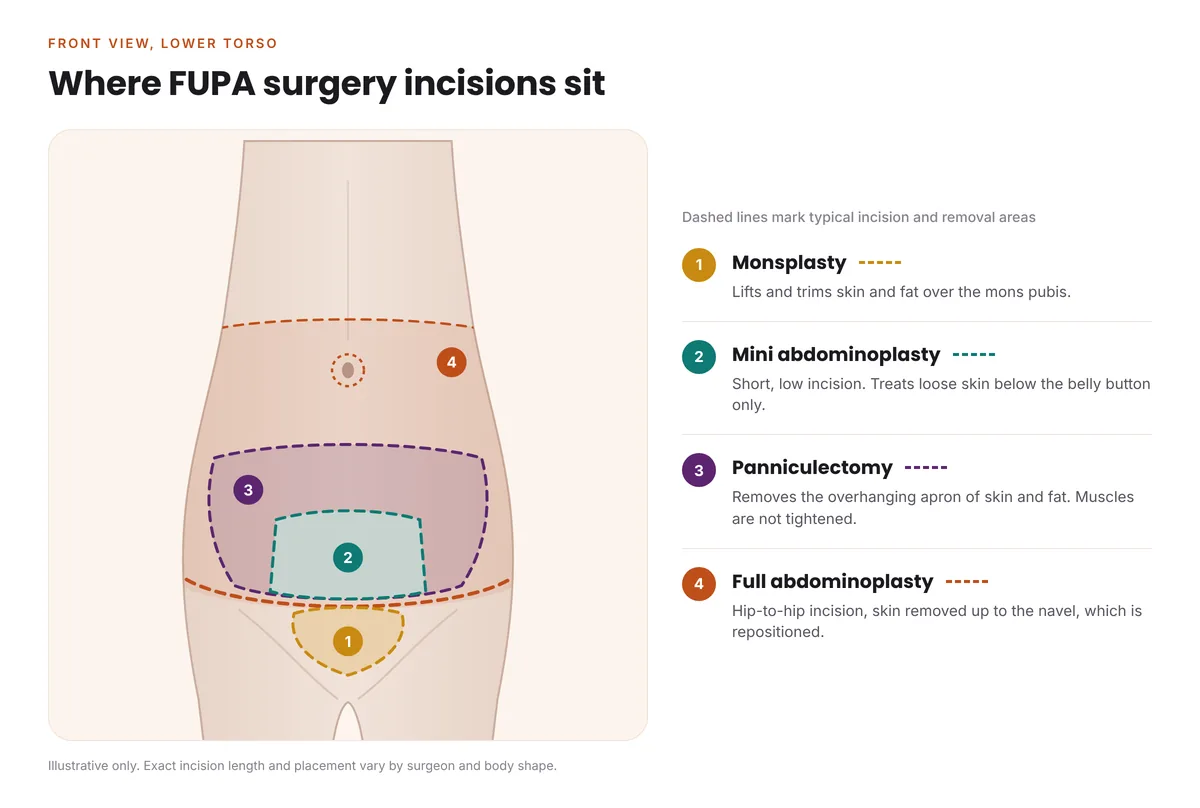
A monsplasty removes excess skin and fat from the mons pubis and lifts the area by anchoring it to deeper tissue. It suits loose tissue sitting mainly over the pubic area. Our full guide to monsplasty in the UK covers what the operation involves.
Mini Abdominoplasty
A mini tummy tuck removes a smaller section of skin below the belly button through a shorter incision. It suits mild excess skin limited to the lower belly.
Full Abdominoplasty
A full abdominoplasty removes loose skin and fat from the whole lower abdomen, repositions the belly button, and can tighten separated stomach muscles. It is often paired with a mons lift when the FUPA has dropped. The NHS notes that you will need around 4 to 6 weeks off work and exercise. Read more in our guide on a tummy tuck for a FUPA.
Panniculectomy
A panniculectomy removes the overhanging apron of skin and fat, called the panniculus, without tightening muscles or moving the belly button. It is mainly a functional operation for folds that cause rashes, infections or hygiene problems. Our article on FUPA vs apron belly explains how a panniculus differs from a FUPA.
Is Liposuction Useful Here?
Liposuction removes fat, not skin. Taking more fat from a deflated FUPA can leave the skin looser still, so on its own it rarely suits this problem.
Comparing Your Options
| Option | Best for | Removes skin? | On the NHS? | Main trade-off |
|---|---|---|---|---|
| Time, strength training and stable weight | Recent weight loss, mild laxity | No | Not applicable | Slow, partial change |
| Energy-based skin tightening | Mild, crepey skin | No | No | Modest results, repeat sessions |
| Liposuction | Leftover fat with firm skin | No | Rarely | Can make loose skin look worse |
| Monsplasty | Sagging, loose mons pubis | Yes | Rarely | Scar low on the pubic area |
| Mini abdominoplasty | Small amount of skin below the belly button | Yes | Rarely | Limited change above the scar |
| Full abdominoplasty | Loose skin across the lower abdomen | Yes | Rarely, usually cosmetic | Major surgery, hip-to-hip scar |
| Panniculectomy | Overhanging fold causing health problems | Yes | Sometimes, if strict criteria are met | No muscle repair or contouring |
Private prices vary by surgeon, clinic and region. The NHS guide to tummy tucks puts a UK abdominoplasty at about £5,000 to £10,000 before consultation and follow-up fees. Our FUPA surgery hub sets out the costs and recovery for each procedure side by side.
Can You Get Loose Skin Removed on the NHS?
Usually not. Abdominoplasty is classed as cosmetic surgery, so it is not routinely funded. Skin removal is only considered when the excess causes real health problems, and each integrated care board (ICB) sets its own rules. Local policies tend to share similar criteria. As an example, one NHS policy for abdominoplasty and panniculectomy asks for:
- a BMI between 18 and 25, held stable for at least a year, or loss of at least 75% of excess weight
- an apron of skin that hangs below the level of the mons pubis
- confirmed non-smoking status
- severe problems with daily living, such as dressing, hygiene or mobility
- recurrent severe infections under the fold that have not responded to at least 6 months of treatment
A deflated FUPA that does not hang over the pubic area is unlikely to qualify. If your fold causes ongoing rashes, infections or trouble keeping clean, tell your GP, because that history is what any funding request depends on. Your GP can check your local policy and, where it applies, submit an individual funding request.
Choosing a Surgeon in the UK
If you decide to go private, choose a surgeon on the General Medical Council specialist register for plastic surgery, and check that the clinic is registered with the Care Quality Commission. Ask how they handle the mons pubis during a tummy tuck. A good surgeon will explain risks such as wound healing problems, fluid build-up and blood clots, and will want your weight stable first.
Frequently Asked Questions
Will my FUPA go away after weight loss?
It may shrink, but it does not always disappear. Fat over the pubic bone usually reduces as your overall body fat falls. If the skin has lost elasticity, a softer or lower fold can remain even at a healthy weight.
Why does my FUPA look worse after losing weight?
The fat has shrunk faster than the skin can contract. This leaves stretched skin with less support underneath, so the area looks emptier and lower. It is common after large or rapid weight loss.
Can loose skin on a FUPA tighten on its own?
Mild loose skin can improve over several months once your weight is stable. Younger skin and smaller losses tend to recover best. Larger amounts of excess skin rarely tighten enough without surgery.
Does Mounjaro or Wegovy cause a saggy FUPA?
Not directly, but the fast and large weight loss they cause can leave loose skin. The medicines do not harm skin themselves. Strength training and enough protein help protect muscle while you lose weight.
How long should I wait after weight loss before surgery?
Most surgeons ask for a stable weight for around 6 to 12 months. This lets your skin settle and shows what tissue really remains. Some NHS policies require at least a year of stable BMI.
Is a monsplasty or a tummy tuck better for a FUPA after weight loss?
It depends on where the loose tissue sits. A monsplasty treats the pubic area alone, while a tummy tuck treats the lower abdomen. Many people with loose skin across both areas have the two procedures together.
The Bottom Line
A FUPA after weight loss is usually a mix of leftover fat and skin that has not fully contracted. Fat responds to diet and activity; loose skin does not. Let your weight settle for 6 to 12 months, protect muscle with protein and strength training, and look after any skin folds. If excess skin remains, monsplasty, abdominoplasty or panniculectomy can remove it, though NHS funding is limited to clear health problems. Speak to your GP if folds become sore or infected.