
FUPA vs Pooch: How to Tell Them Apart
Page Contents
- How to Tell Whether You Have a FUPA or a Lower Belly Pooch
- Location: FUPA vs. Lower Belly Pooch
- Appearance: FUPA vs. Lower Belly Pooch
- Causes: FUPA vs. Lower Belly Pooch
- Tissue Involved: FUPA vs. Lower Belly Pooch
- Symptoms and Health Effects: FUPA vs. Lower Belly Pooch
- Treatment Options: FUPA vs. Lower Belly Pooch
- Diagnosis: FUPA vs. Lower Belly Pooch
- Can You Have Both a FUPA and a Lower Belly Pooch?
- Prevention and Lifestyle Tips: FUPA vs. Lower Belly Pooch
- When Should You See a Healthcare Professional?
- Conclusion
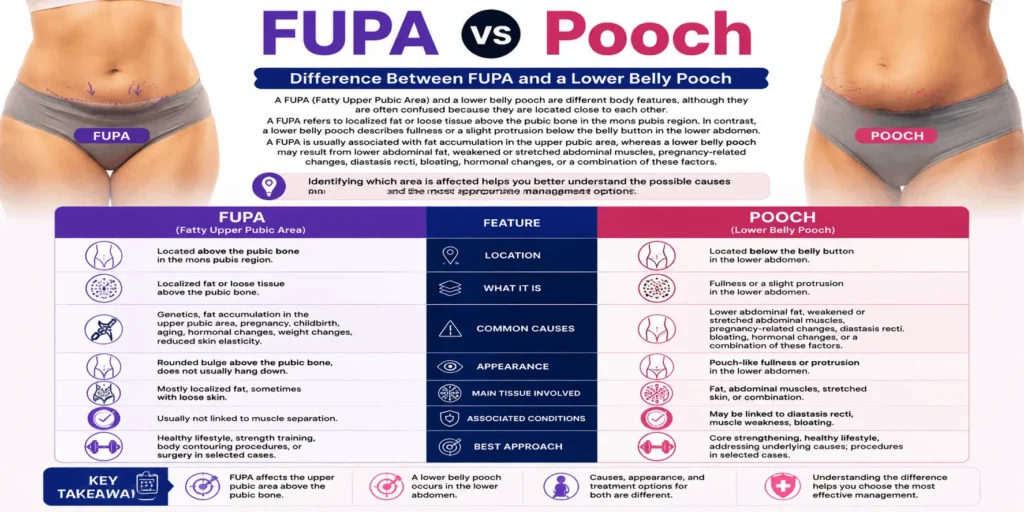
FUPA vs pooch: the main difference is where the fullness sits. A FUPA affects the area just above the pubic bone. A lower belly pooch appears higher up, below the belly button.
A FUPA usually involves fat or loose tissue over the mons pubis. Our guide to where the FUPA sits explains its location.
A lower belly pooch can involve fat, loose skin or stretched abdominal muscles. Muscle separation after pregnancy, called diastasis recti, may also play a part. Bloating can cause temporary fullness.
The wider belly fat comparison covers other features in this area. See FUPA vs apron belly for another common mix-up.
You can have both a FUPA and a pooch. This guide compares their causes, appearance and care options. The right approach depends on the cause, not just the shape.
What Is a FUPA?
FUPA stands for fat upper pubic area. It describes fat, and sometimes loose tissue, just above the pubic bone. The area includes the mons pubis, which naturally contains a pad of fat.
A FUPA usually looks like a soft, rounded bulge. Genes, pregnancy, weight changes and hormones can affect its size. Ageing and reduced skin firmness can also make it more noticeable.
A FUPA is a common body variation. On its own, it is not a medical condition. Some people want to change its appearance for comfort or personal preference.
What Is a Lower Belly Pooch?
A lower belly pooch is fullness below the belly button and above the pubic area. It involves the lower abdomen, rather than only the mons pubis.
Several factors can contribute. These include fat, loose skin, bloating and changes after pregnancy. Stretched muscles or diastasis recti can also affect its shape.
The word pooch describes an appearance, not a medical diagnosis. More than one factor may be involved.
That distinction matters when choosing care. Fat, muscle separation, loose skin and bloating each need a different approach.
How to Tell Whether You Have a FUPA or a Lower Belly Pooch
Start with the location. A FUPA sits just above the pubic bone and usually forms a soft bulge over the mons pubis.
A lower belly pooch sits higher, below the belly button. It often covers a wider area. Its appearance may change with posture, bloating or abdominal pressure.
You can have both features at once. In that case, the lower abdomen and upper pubic area may look full together.
Seek medical advice if a bulge is painful, changes quickly or includes a distinct lump. Appearance alone cannot rule out another cause.
Location: FUPA vs. Lower Belly Pooch
A FUPA sits over the mons pubis, directly above the pubic bone. The term refers to fullness in that specific area.
In contrast, a lower belly pooch sits below the belly button. It can extend across the lower abdominal wall.
These areas are next to each other, so the two features can blend visually. Some people have fullness in both.
Notice where the fullness begins and how far it extends. This helps you understand the difference, although it does not replace an assessment if you have symptoms.
Appearance: FUPA vs. Lower Belly Pooch
A FUPA usually looks like a rounded bulge above the pubic bone. The amount of fat and loose skin affects its size.
A lower belly pooch often looks broader. It spreads across the area below the belly button rather than staying around the mons pubis.
The shape and firmness of a pooch can vary. Fat, bloating, muscle separation and loose skin may all contribute.
Look at both the starting point and the width of the fullness. These details can help you tell the features apart.
Causes: FUPA vs. Lower Belly Pooch
The causes can overlap, but the two features are not identical.
A FUPA mainly involves fat around the mons pubis. Genes, weight changes, pregnancy, hormones and ageing can affect its appearance. Loose skin may also play a part.
A lower belly pooch has a wider range of possible causes. It may involve fat, stretched muscles, muscle separation or loose skin. Bloating can also make the lower abdomen look fuller.
Before choosing exercises or treatment, consider what is causing the change. A clinician can help if the cause is unclear or symptoms are present.
Tissue Involved: FUPA vs. Lower Belly Pooch
A FUPA mainly involves subcutaneous fat, which is fat beneath the skin. Some people also have loose skin around the mons pubis.
A lower belly pooch may involve several tissues. These include abdominal fat, loose skin and stretched or separated muscles. Bloating can add temporary fullness.
More than one factor may be present. For example, a person can have both loose skin and muscle separation after pregnancy.
Muscle rehabilitation may help a pooch linked to diastasis recti. However, it is unlikely to change a FUPA made mainly of fat.
Symptoms and Health Effects: FUPA vs. Lower Belly Pooch
Neither feature always causes symptoms. A FUPA on its own is often a concern about appearance rather than a medical problem.
Some people have chafing, skin irritation or discomfort in tight clothes. Finding a comfortable fit may help with everyday comfort.
A lower belly pooch may also cause no symptoms. However, muscle weakness or diastasis recti can accompany reduced core stability, back discomfort or posture changes.
Ask a healthcare professional about a painful, firm or rapidly growing bulge. Digestive symptoms alongside the bulge also need assessment. A clinician can check for other causes, such as a hernia.
Treatment Options: FUPA vs. Lower Belly Pooch
Care depends on the cause. A FUPA made mainly of fat may become smaller with overall weight loss. You cannot choose to lose fat from that area alone.
Some people consider liposuction or a pubic lift for persistent fat or loose tissue. These options need an individual consultation with a qualified surgeon.
A lower belly pooch may need a different approach. Depending on the cause, care may involve weight management, guided rehabilitation for diastasis recti or treatment for digestive problems.
Body-contouring surgery may be an option for some people after medical assessment. The shape alone does not tell you which approach is suitable.
Diagnosis: FUPA vs. Lower Belly Pooch
FUPA and pooch are descriptive terms, not formal medical diagnoses. A clinician focuses on what is causing the fullness.
An assessment usually includes a physical examination and your medical history. Fullness over the mons pubis may involve fat or loose tissue.
For a lower belly pooch, a clinician may check for fat, loose skin, bloating or muscle separation. They may also assess for a hernia if symptoms suggest one.
Imaging is not always needed. A clinician may recommend it if they suspect another condition. The aim is to address the cause, rather than appearance alone.
Can You Have Both a FUPA and a Lower Belly Pooch?
Yes. A FUPA and a lower belly pooch affect different areas, so you can have both.
For example, pregnancy or weight gain may change the fat around the pubic bone. At the same time, the lower abdomen may have loose skin, extra fat or stretched muscles.
These changes can blend together in the mirror. However, the factors behind each feature may differ.
An individual assessment can help identify the role of fat, skin and muscle separation. Care can then focus on the parts that need attention.
Prevention and Lifestyle Tips: FUPA vs. Lower Belly Pooch
You cannot always prevent either feature. Genes, ageing, pregnancy and hormones all affect body shape.
A balanced diet and regular activity can support a stable weight and help limit excess body fat. Focus on overall health rather than removing normal body variation.
Guided core rehabilitation may help abdominal function after pregnancy, including with diastasis recti. However, it does not target fat above the pubic bone.
Avoiding repeated rapid weight changes may also help limit changes in skin firmness. Seek professional guidance when symptoms or muscle separation affect what you can do comfortably.
When Should You See a Healthcare Professional?
A FUPA or lower belly pooch does not always need medical treatment. However, some changes deserve medical advice.
Seek assessment if a bulge appears suddenly, becomes painful, keeps growing or feels firm. Fever or persistent digestive problems are also reasons to get checked.
A lump that becomes more visible when you cough or strain may have another cause, such as a hernia. A clinician can assess it.
Also ask for advice about persistent muscle separation after pregnancy, skin irritation or difficulty with daily activities.
An assessment can help you decide whether you need rehabilitation, medical treatment or a specialist referral.
Conclusion
A FUPA sits above the pubic bone. A lower belly pooch appears higher up, below the belly button. You can have both at once.
Fat and loose skin can contribute to either feature. A lower belly pooch may also involve muscle separation, weakness or bloating.
Care should match the cause. Healthy habits may help with overall fat levels, while muscle changes may need guided rehabilitation.
Seek medical advice for pain, rapid changes, firm lumps or difficulty with everyday activities.