
How to Get Rid of a FUPA Naturally: What Actually Helps
Page Contents
- What Natural Approaches Can and Cannot Achieve
- The Calorie Deficit Behind Natural FUPA Loss
- Daily Movement: Walking, Strength and NEAT
- Build a Consistent Sleep Routine
- Manage Stress Without Cortisol Claims
- Alcohol, Caffeine and Everyday Habits
- Hydration and Digestive Comfort
- Separate Bloating From Body Fat
- Respond to the Cause
- Posture and Core Strength
- Hormones and Medicines
- Be Cautious With Natural Remedies
- Drinks and Supplements
- Creams, Wraps and Waist Trainers
- Natural Approaches After Pregnancy
- How Long Do Natural Approaches Take?
- Build an Approach You Can Keep
- When Lifestyle Changes Are Not Enough
- Frequently Asked Questions
- Can You Reduce a FUPA Naturally?
- Does Lemon Water or Apple Cider Vinegar Remove a FUPA?
- How Long Should Natural FUPA Reduction Take?
- Does Walking Alone Get Rid of a FUPA?
- Does Stress Make a FUPA Harder to Lose?
- Do Creams, Oils or Wraps Work?
If you want to know how to get rid of a FUPA naturally, start by separating pubic fat from loose skin and temporary abdominal bloating. Healthy eating and activity may reduce overall body fat, but they cannot choose where it comes off.
Here, “naturally” means lifestyle approaches without cosmetic procedures or weight-loss products. Our diet guide and exercise guide cover food and workouts in detail; this page focuses on the habits and expectations around them.
What Natural Approaches Can and Cannot Achieve
Some fat over the mons pubis is normal anatomy. If weight loss is appropriate, overall fat loss may reduce fullness. The amount of change depends on your starting point and individual fat distribution.
Spot reduction is not a realistic goal. Abdominal exercises build strength rather than selectively removing pubic fat. A substantial loose-skin fold may remain even after weight changes.
Improved comfort, fitness and recovery are useful outcomes in their own right. See whether a FUPA goes away for differences between fat, skin and postpartum changes.
The Calorie Deficit Behind Natural FUPA Loss
Every natural route to a smaller FUPA works through the same mechanism: a steady energy deficit, where you use slightly more energy than you eat. The body then draws on stored fat from all over, including the suprapubic fat pad.
A modest deficit of around 300 to 500 kcal a day suits most adults and matches the NHS aim of losing about 0.5 to 1 kg a week. Larger cuts tend to raise hunger, cost muscle and rarely last beyond a few weeks.
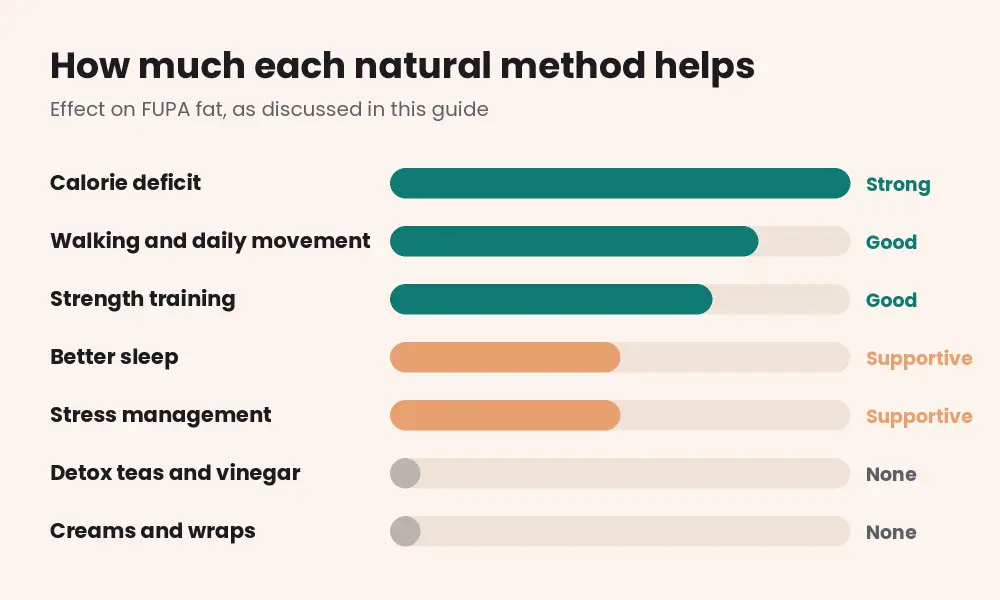
Build meals around protein, vegetables, fruit, wholegrains and pulses, which fill you up for fewer calories. Our FUPA diet plan sets out portions and swaps; the table below shows what each natural lever can realistically change.
| Natural approach | What it can change | What it cannot change |
|---|---|---|
| Calorie deficit | Overall body fat, including FUPA fat | Where fat comes off first |
| Walking and strength training | Energy use, muscle and insulin sensitivity | Spot-reduce pubic fat |
| Better sleep | Appetite control, energy and recovery | Remove fat by itself |
| Stress management | Cravings and habit consistency | Shrink a FUPA directly |
| Detox teas, creams and wraps | Nothing lasting | Fat or loose skin |
Daily Movement: Walking, Strength and NEAT
Movement raises the energy side of the deficit. Brisk walking is the easiest place to start, and building towards 7,000 to 10,000 steps a day adds up quickly. Read how walking affects a FUPA for pace and targets.
Non-exercise activity thermogenesis, or NEAT, covers everything outside workouts: stairs, standing, housework and short walks between tasks. For desk-bound people, NEAT often burns more energy across a week than the gym sessions themselves.
Add strength training two or three times a week. UK guidance recommends 150 minutes of moderate activity plus muscle-strengthening work on at least two days. Muscle supports metabolism and posture, even though it cannot burn a FUPA from one spot.
Build a Consistent Sleep Routine
Poor sleep can affect appetite, energy and your ability to keep regular habits. Improving sleep supports health, but it is not a treatment that specifically removes a FUPA.
The NHS sleep guidance says most healthy adults need around seven to nine hours, with individual variation.
Try a regular wake-up time, a quiet wind-down period and less caffeine late in the day. If sleep problems persist or affect daily life, speak to your GP.
Short nights raise ghrelin, the hunger hormone, and lower leptin, which signals fullness, so a tired day often means extra snacking. Protecting sleep is one of the simplest ways to make a calorie deficit feel manageable rather than punishing.
Manage Stress Without Cortisol Claims
Stress management can make sustainable habits easier to maintain. Choose something practical: a short walk, a breathing exercise, time with someone you trust or professional support when needed.
A visible pubic mound does not tell you that cortisol is high. Relaxation cannot target pubic fat, and you do not need a “cortisol detox”.
NIDDK healthy-living guidance includes sleep and stress management alongside eating and activity, rather than treating them as stand-alone fat-loss solutions.
Long periods of stress mostly affect a FUPA indirectly, through cravings for calorie-dense food, broken sleep and less movement. Tackling those habits does more than any supplement sold as a quick fix for stress hormones.
Alcohol, Caffeine and Everyday Habits
Alcohol adds calories that are easy to overlook: a pint of beer or a large glass of wine can hold around 200 calories or more. The NHS advises drinking no more than 14 units a week, spread over several days.
Drinking also loosens food choices and disturbs sleep, which makes the next day harder. Caffeine is fine for most people in moderation, but late cups can shorten sleep and feed the tired, hungry cycle.
Small routines matter more than willpower. Plan meals ahead, keep easy protein snacks at home, eat without screens and stop eating a couple of hours before bed. These habits make a FUPA-friendly routine feel automatic.
Hydration and Digestive Comfort
Separate Bloating From Body Fat
Gas and constipation can make the abdomen feel fuller. They are different from pubic fat, although both concerns can occur together. Drinking water does not flush fat away or reliably treat every cause of swelling.
Respond to the Cause
The NHS bloating guide suggests water, regular activity and soluble fibre such as oats when constipation is involved. A pharmacist can advise about constipation treatment.
See your GP for frequent or persistent bloating, especially with unintentional weight loss or blood in your stool. Sudden severe abdominal pain with bloating needs emergency care. Our FUPA versus bloating guide explains the distinction.
Posture and Core Strength
Body position changes how your outline looks, but a photograph cannot diagnose a posture problem. Holding your stomach in or changing pelvic position does not remove fat.
Use movement to build comfort and function. Our core exercise guide explains the limits of abdominal workouts. Seek individual advice if movements cause pain or if you are recovering from pregnancy or surgery.
There is no dependable four-to-eight-week posture routine that guarantees a flatter pubic area.
Hormones and Medicines
Do not diagnose a hormonal condition from body shape alone. If you notice unexplained weight changes or other symptoms, discuss them with your GP. Review concerns about medicines, including whether your contraception could be adding to a FUPA, with the prescriber rather than changing treatment yourself.
Do not assume contraception caused pubic fullness. The NHS combined-pill guidance explains its recognised effects and risks.
Menopause can change body composition, but that does not predict that pubic fat will shrink. Read our hormones and genetics guide for context.
Be Cautious With Natural Remedies
Drinks and Supplements
Apple cider vinegar, lemon water and detox teas are not established treatments for targeted pubic fat loss. A drink may fit your diet without being a fat-burning remedy.
The NIH weight-loss supplement factsheet reports limited evidence for many products and possible harms or medicine interactions. Green tea extract is different from drinking tea and can cause adverse effects.
Creams, Wraps and Waist Trainers
Do not rely on these products to remove pubic fat or a substantial skin fold. Temporary changes in how clothing fits are not evidence of lasting fat loss. “Natural” on a label does not establish safety or effectiveness.
Natural Approaches After Pregnancy
Postpartum recovery needs its own approach. Prioritise healing, adequate food and activity suited to your recovery rather than a deadline for losing the lower abdominal fold.
Diastasis recti means separation of the abdominal muscles. The NHS advises contacting your GP if the gap remains obvious eight weeks after birth. A physiotherapist can recommend suitable exercises.
Seek individual nutrition advice while breastfeeding if you want to change your weight. Our post-pregnancy guide covers recovery in more detail.
How Long Do Natural Approaches Take?
There is no reliable three-to-six-month timetable for pubic fat reduction. A FUPA is not proven to follow a universal “last place to lose fat” rule.
Changes in digestion, strength, weight and skin are different processes. Assess them separately. A lack of visible change does not automatically mean that you have failed or need a stricter diet.
For context, read what is realistic when you want quick results.
Build an Approach You Can Keep

- Start small: choose one food habit and one manageable activity.
- Support recovery: make room for rest and a regular sleep routine.
- Review wellbeing: notice comfort, energy and strength as well as appearance.
- Adapt the plan: seek support if it causes pain, persistent hunger or distress.
Consistency does not require perfection. A disrupted week is a reason to adjust the plan, not to compensate with extreme restriction.
When Lifestyle Changes Are Not Enough
If you have reached a suitable stable weight, further dieting may not address loose skin. If you are already lean, see our guide to FUPA on a lean body before assuming more weight loss is needed.
Muscle separation, persistent pain or a new lump deserve assessment. Normal, comfortable fullness does not need treatment.
If you are considering body contouring, compare surgery and non-surgical procedures with a qualified clinician. Their suitability and risks differ; neither is an automatic next step when lifestyle changes leave a FUPA visible.
Frequently Asked Questions
Can You Reduce a FUPA Naturally?
Overall fat loss may reduce its fat component when weight loss is appropriate. Lifestyle changes cannot target pubic fat specifically, and excess skin may remain.
Does Lemon Water or Apple Cider Vinegar Remove a FUPA?
Neither is an established treatment for targeted pubic fat loss. Choose drinks for hydration and preference rather than promises that they will melt fat.
How Long Should Natural FUPA Reduction Take?
There is no fixed deadline. Fat distribution, skin and recovery affect the outcome. Seek advice if you are unsure what is causing the fullness rather than repeatedly intensifying your diet.
Does Walking Alone Get Rid of a FUPA?
Walking helps by adding to your calorie deficit, but it rarely works alone. Pair daily walks with sensible eating and strength training for the best chance of reducing FUPA fat.
Does Stress Make a FUPA Harder to Lose?
Indirectly, yes. Stress tends to increase cravings, disturb sleep and reduce activity. Managing it makes healthy habits easier to keep, but it will not shrink a FUPA on its own.
Do Creams, Oils or Wraps Work?
No. Topical products cannot reach the fat beneath the skin. Any change is temporary compression or fluid shift, not lasting fat loss.