
How to Hide a FUPA: A Practical Styling Guide
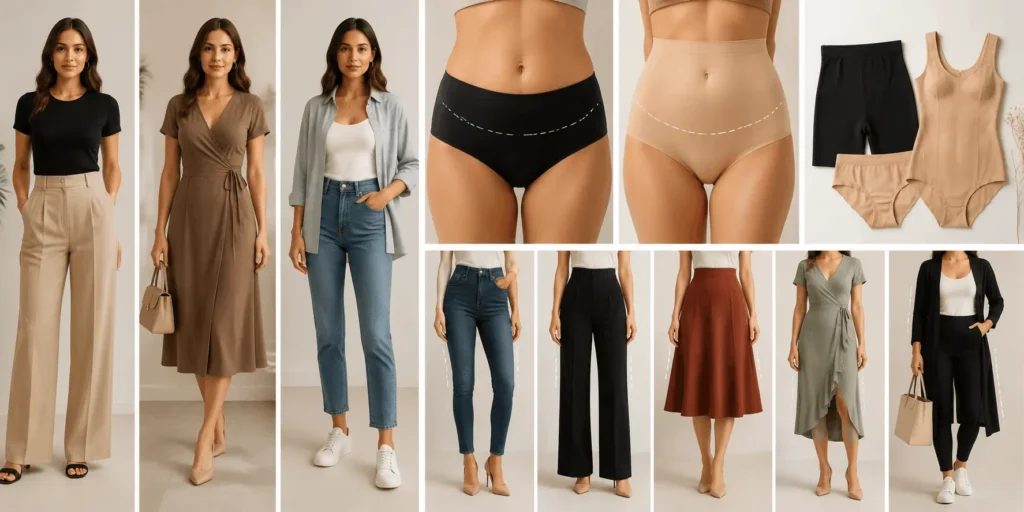
Page Contents
- 1. Choose High-Waisted Bottoms for Better Coverage
- 2. Choose Structured Fabrics Instead of Thin, Clingy Materials
- 3. Wear Darker Colors to Create a Smoother Silhouette
- 4. Choose Dark Prints and Patterns Strategically
- 5. Choose the Right Fit Instead of Oversized or Extremely Tight Clothes
- 6. Choose A-Line and Flowy Silhouettes for Better Balance
- 7. Use Layering Techniques to Create a Balanced Look
- 8. Choose Wrap Dresses and Tops for a Flattering Shape
- 9. Choose Peplum Tops to Create a Balanced Silhouette
- 10. Choose High-Rise Shapewear for Temporary Smoothing
- 11. Choose Longer Tops and Tunics for Extra Coverage
- 12. Choose the Right Underwear Style for a Smoother Appearance
- Conclusion
To understand how to hide a FUPA under clothing, start with fit, waistband height and fabric. High-waisted bottoms, structured fabrics and clothes that skim the body can make the area less noticeable. Shapewear is optional.
A FUPA is a common body feature. Clothing can change how it looks under an outfit, but it cannot remove fat or permanently change your shape.
This guide covers 12 styling choices, from A-line skirts and wrap dresses to longer tops and suitable underwear. Choose the options that feel comfortable and suit your style.
Our full outfit guide explains waistlines, dresses and layering in more detail. For beach and pool days, see our swimsuit guide for high-waisted cuts, ruching and control panels.
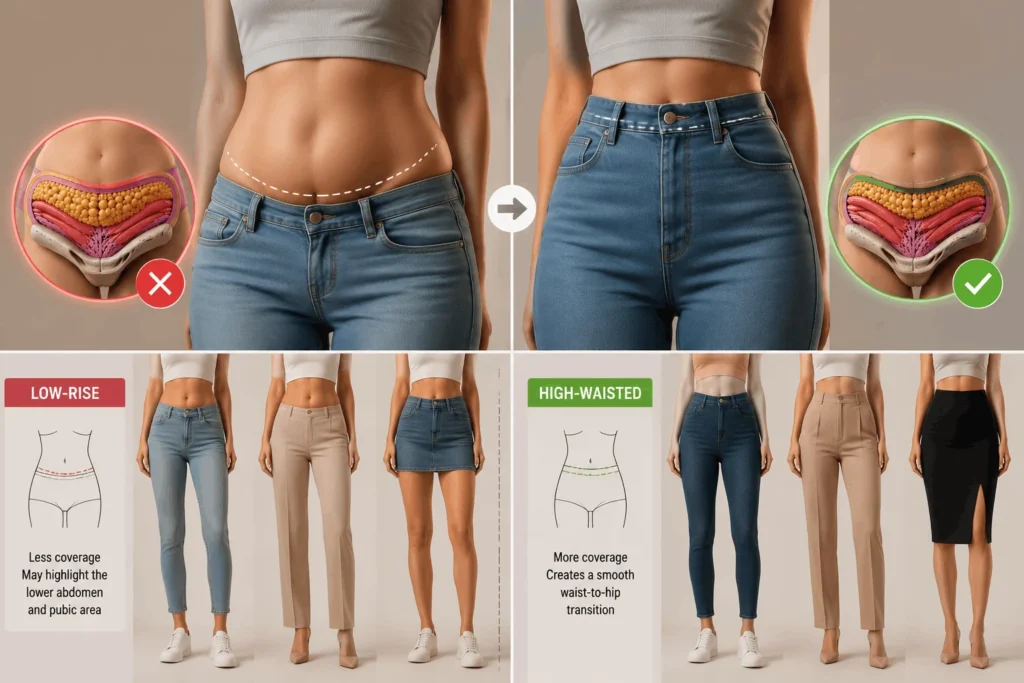
High-waisted bottoms are one of the simplest styling choices for making a FUPA less noticeable under clothing.
Jeans, trousers, skirts and leggings with a higher waistband sit above the lower abdomen and pubic area. This can create a smoother transition between the waist and hips. Our dedicated jeans guide covers rise, waistband construction and cuts that work well in more depth.
This style can provide more coverage compared with low-rise bottoms that may place attention directly on the upper pubic region.
High-waisted clothing also helps keep fabric in place and can improve overall outfit comfort. Choosing a comfortable fit is important because overly tight clothing may create unwanted pressure or emphasize areas you want to minimize.
The goal is not to change your body shape but to choose clothing that creates a balanced silhouette and helps you feel confident.
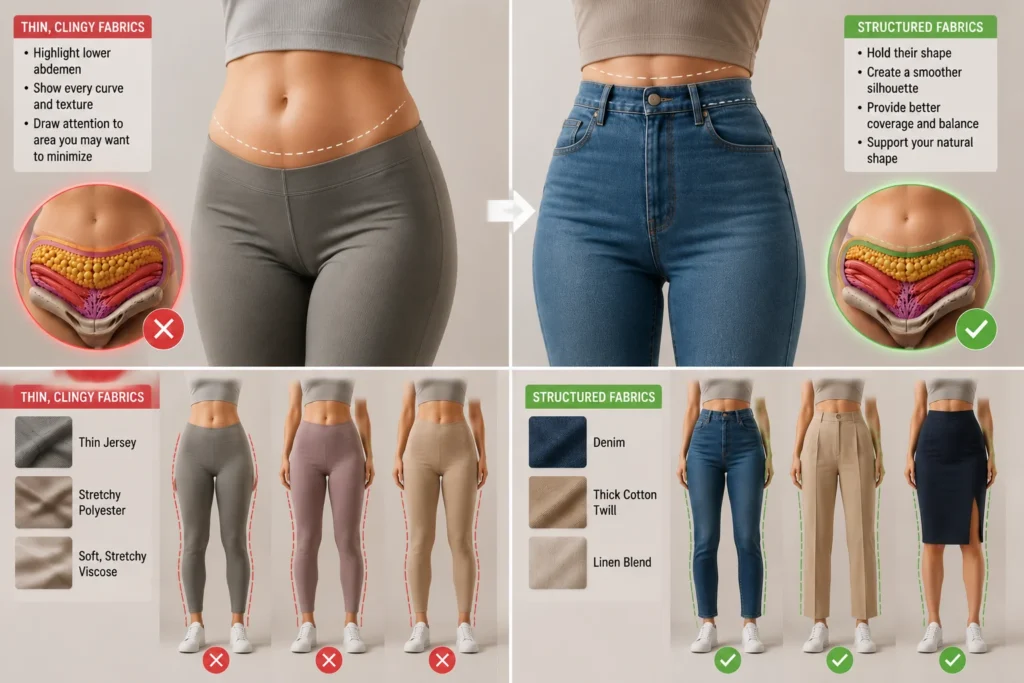
The type of fabric you wear can affect how noticeable the lower abdomen and upper pubic area appear under clothing.
Structured fabrics such as denim, thicker cotton, linen blends, and tailored materials usually hold their shape better and create a smoother overall silhouette.
Very thin, stretchy, or clingy fabrics may follow every body curve and draw more attention to areas you may prefer to keep less visible.
Choosing clothing with some structure does not hide your body completely, but it can provide better coverage and a more balanced appearance.
Soft fabrics can still be comfortable, but selecting the right thickness and fit can make a difference in how an outfit sits on your body.
The goal is to choose materials that support your natural shape while helping you feel comfortable and confident.
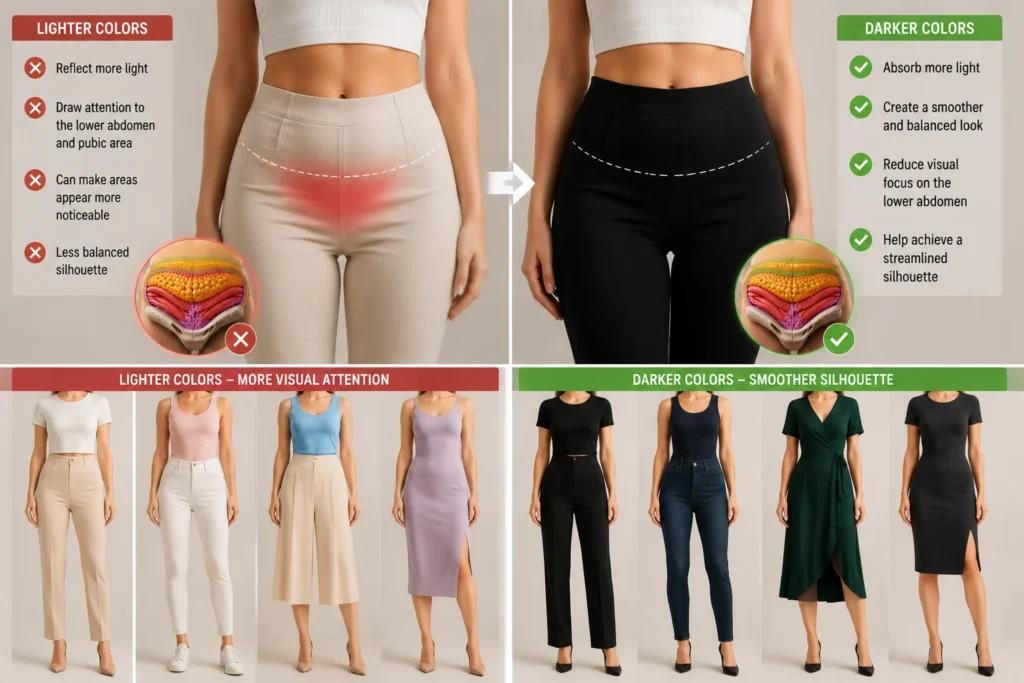
Darker colors can help make a FUPA less noticeable by creating a more balanced and streamlined appearance.
Colors such as black, navy, charcoal, and deep shades tend to reflect less light, which can reduce the visual focus on specific areas of the body.
Wearing darker bottoms or dresses can help create a smoother look around the lower abdomen and hip area. However, this does not mean that lighter colors should be avoided completely.
The fit, fabric, and overall outfit design usually have a bigger impact than color alone. Combining darker shades with well-fitted clothing can help you feel more comfortable and confident in your appearance.
The purpose of using darker colors is not to hide your body, but to create an outfit style that feels flattering and comfortable for you.
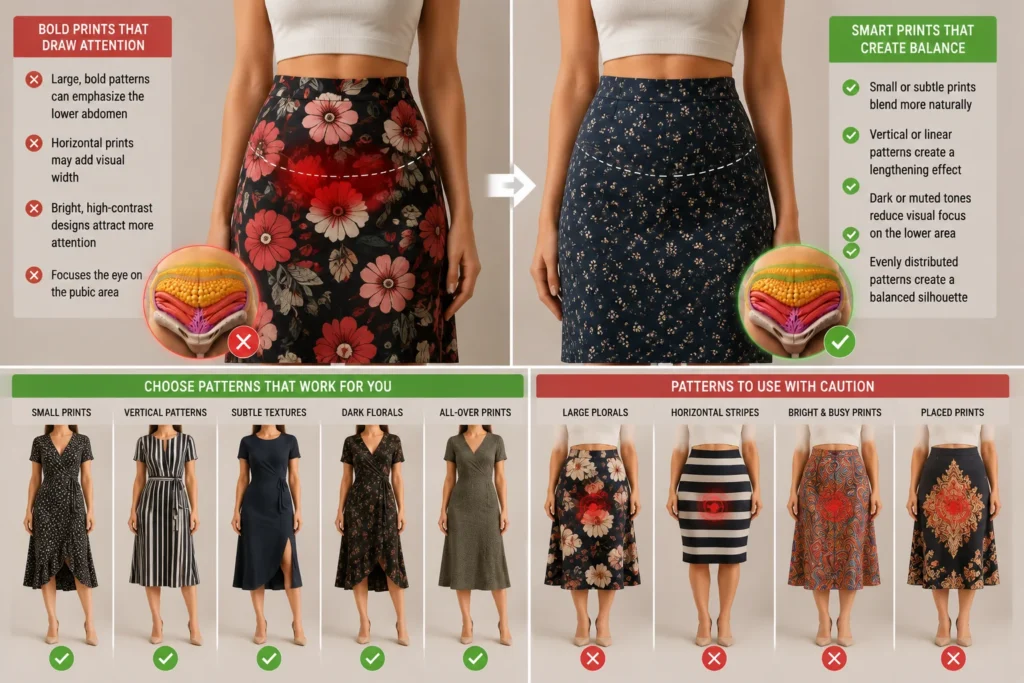
Patterns and prints can help create a balanced appearance by controlling where the eye naturally focuses.
Small prints, subtle patterns, and darker designs can reduce attention on the lower abdomen compared with large, bold patterns placed directly around the waist and pubic area.
Vertical patterns, gentle textures, or evenly distributed designs can create a more balanced visual effect throughout an outfit.
This does not mean you need to avoid all bright colors or patterns, but choosing designs that complement your body shape can improve how your clothing looks and feels.
For example, a printed dress with a balanced pattern can create a more cohesive silhouette than a single large design focused around the lower stomach.
The goal is to use fashion choices that make you feel comfortable while expressing your personal style.
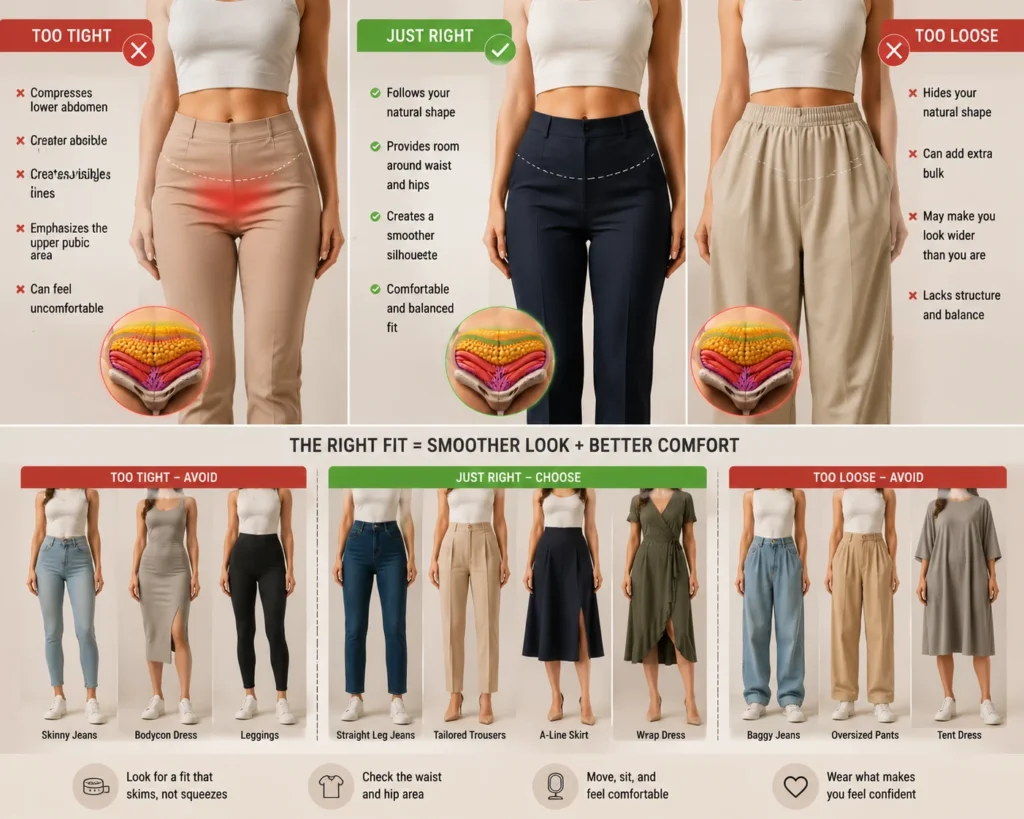
Choosing the correct clothing fit can make a FUPA less noticeable while keeping your outfit comfortable.
Extremely tight clothes may compress the lower abdomen and create visible lines or emphasize the upper pubic area.
On the other hand, very loose or oversized clothing can sometimes hide your natural shape and make the body look less balanced.
A well-fitted outfit that follows your body without squeezing it can create a smoother appearance.
Look for clothing that provides enough room around the waist and hips while maintaining a structured shape.
Tailored trousers, comfortable jeans, and dresses with a flattering fit can help create better proportions.
The goal is not to hide your body completely but to choose clothing that works with your natural shape and improves comfort.
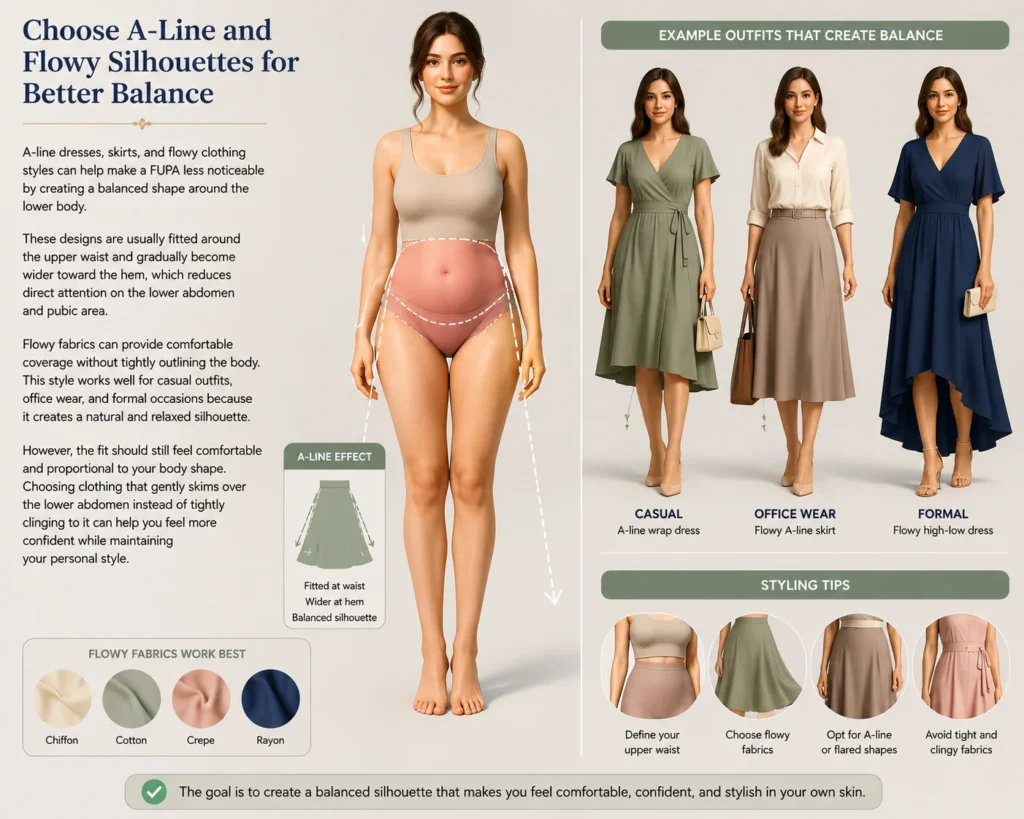
A-line dresses, skirts, and flowy clothing styles can help make a FUPA less noticeable by creating a balanced shape around the lower body.
These designs usually fit around the upper waist and widen towards the hem. This lets the fabric skim the lower abdomen and pubic area.
Flowy fabrics can provide comfortable coverage without tightly outlining the body. This style works well for casual outfits, office wear, and formal occasions because it creates a natural and relaxed silhouette.
However, the fit should still feel comfortable and proportional to your body shape.
Choosing clothing that gently skims over the lower abdomen instead of tightly clinging to it can help you feel more confident while maintaining your personal style.
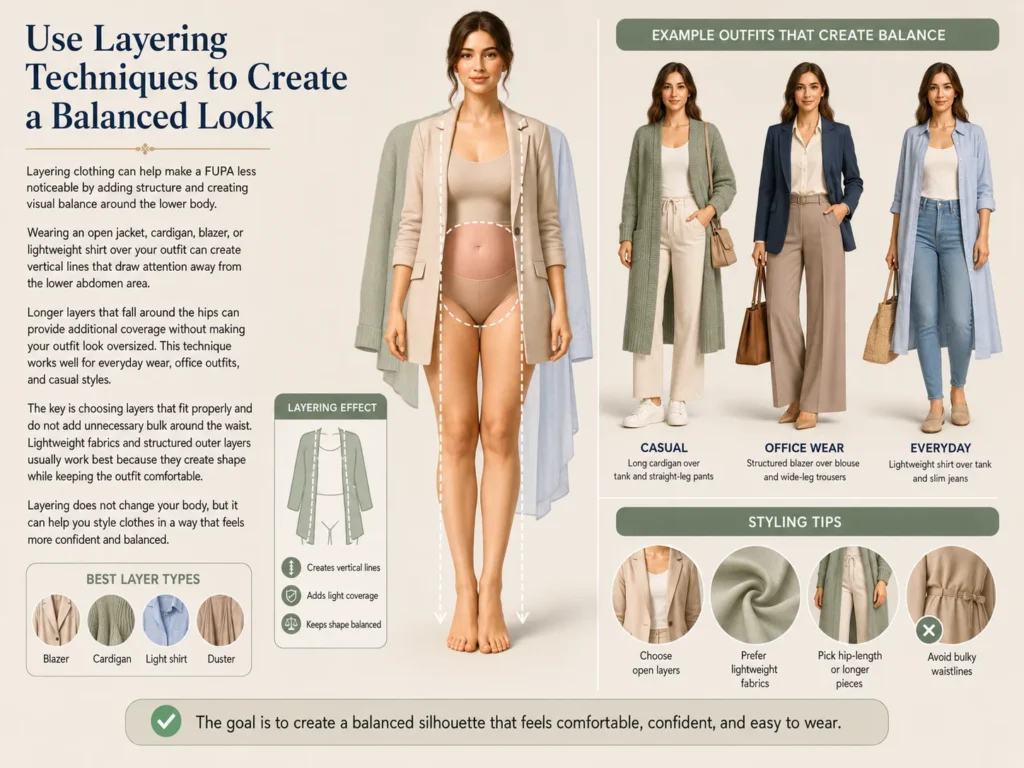
Layering clothing can help make a FUPA less noticeable by adding structure and creating visual balance around the lower body.
An open jacket, cardigan, blazer or lightweight shirt can create vertical lines. These can draw attention away from the lower abdomen.
Longer layers that fall around the hips can provide additional coverage without making your outfit look oversized. This technique works well for everyday wear, office outfits, and casual styles.
The key is choosing layers that fit properly and do not add unnecessary bulk around the waist.
Lightweight fabrics and structured outer layers usually work best because they create shape while keeping the outfit comfortable.
Layering does not change your body, but it can help you style clothes in a way that feels more confident and balanced.
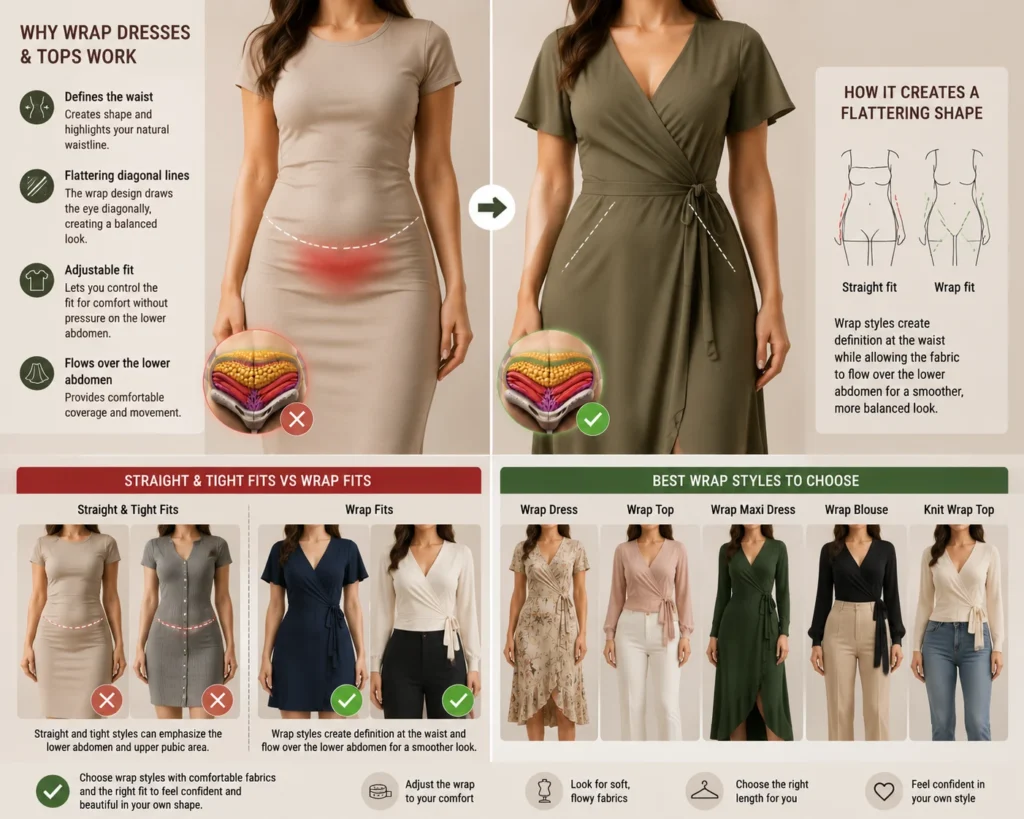
Wrap-style dresses and tops define the waist while leaving room around the lower abdomen. This can make a FUPA less noticeable.
The adjustable design of wrap clothing lets you control the fit without putting excessive pressure on the pubic area.
The diagonal lines created by the wrap style can also create a more balanced visual appearance compared with straight, tight-fitting designs.
This style works well for different body shapes because it highlights the waist while allowing the fabric to flow naturally over the lower body.
Choosing a wrap design with a comfortable fabric and proper fit can improve both appearance and confidence.
The purpose is not to hide your natural body completely, but to select clothing that creates a silhouette you feel comfortable wearing.
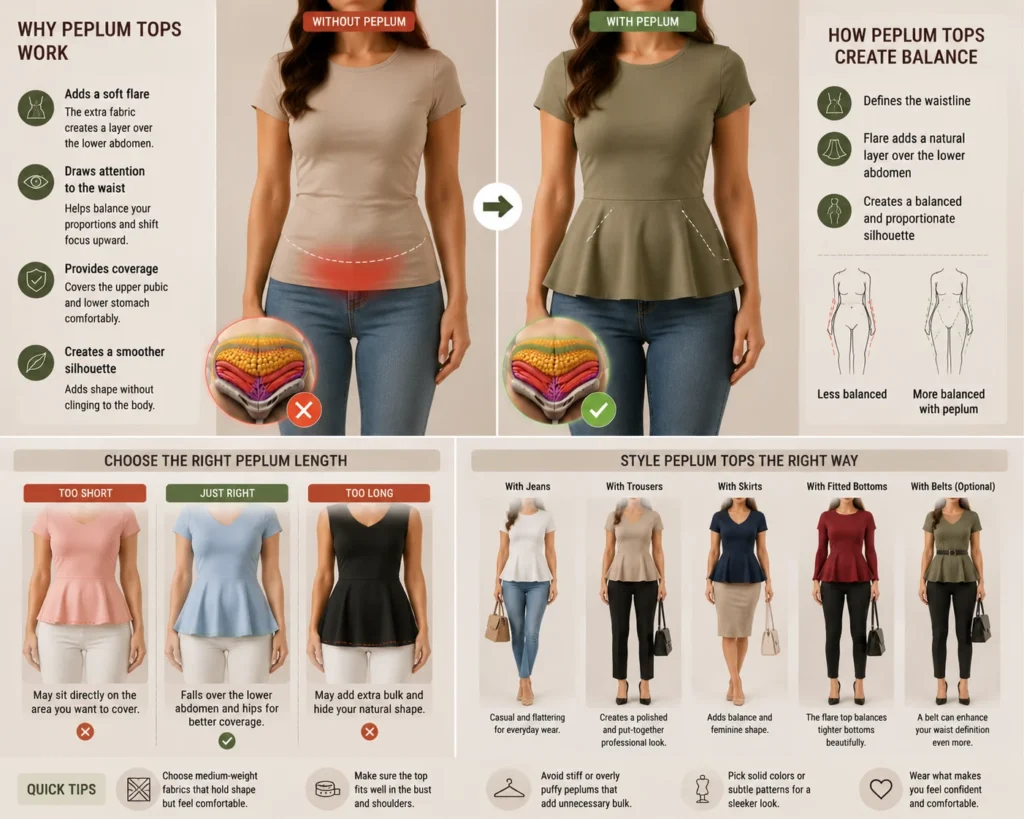
Peplum tops can help make a FUPA less noticeable by adding a gentle flare around the waist and upper hip area.
The extra fabric that extends from the waistline creates a natural layer over the lower abdomen without tightly clinging to the body.
This style can help balance your proportions by drawing attention toward the waistline rather than focusing only on the pubic or lower stomach area.
Peplum designs work well with fitted trousers, jeans, or skirts because they provide coverage while maintaining a structured look.
Check the length of a peplum top. A very short flare may sit directly on the area you want to cover.
A comfortable, well-fitted design can help create a smoother outfit shape while allowing you to feel confident.
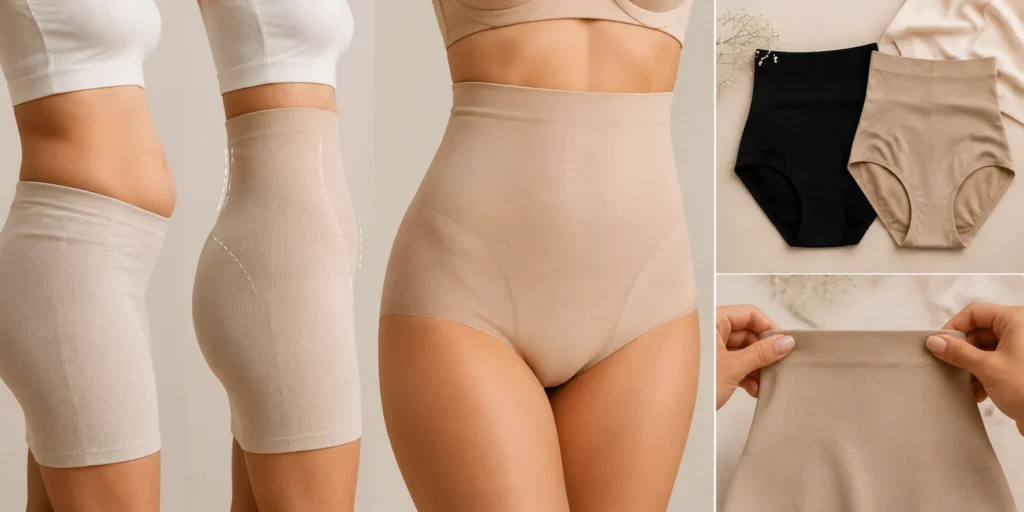
High-rise shapewear can help make a FUPA less noticeable by providing gentle compression around the lower abdomen and upper pubic area. Our guide to shapewear for a FUPA compares cuts and compression levels. Our waist trainer guide explains how that garment differs.
Unlike regular underwear, high-rise shapewear is designed to smooth the body’s natural curves and create a more even appearance under clothing.
It can be useful when wearing fitted dresses, formal outfits, or clothing made from thinner fabrics.
However, shapewear does not remove fat or permanently change your body shape.
Choosing the correct size is important because overly tight shapewear can feel uncomfortable and may create unwanted pressure.
The best shapewear should allow you to breathe, move comfortably, and support your outfit without causing discomfort.
It is a styling tool that helps create a smoother silhouette, not a solution for changing your body.
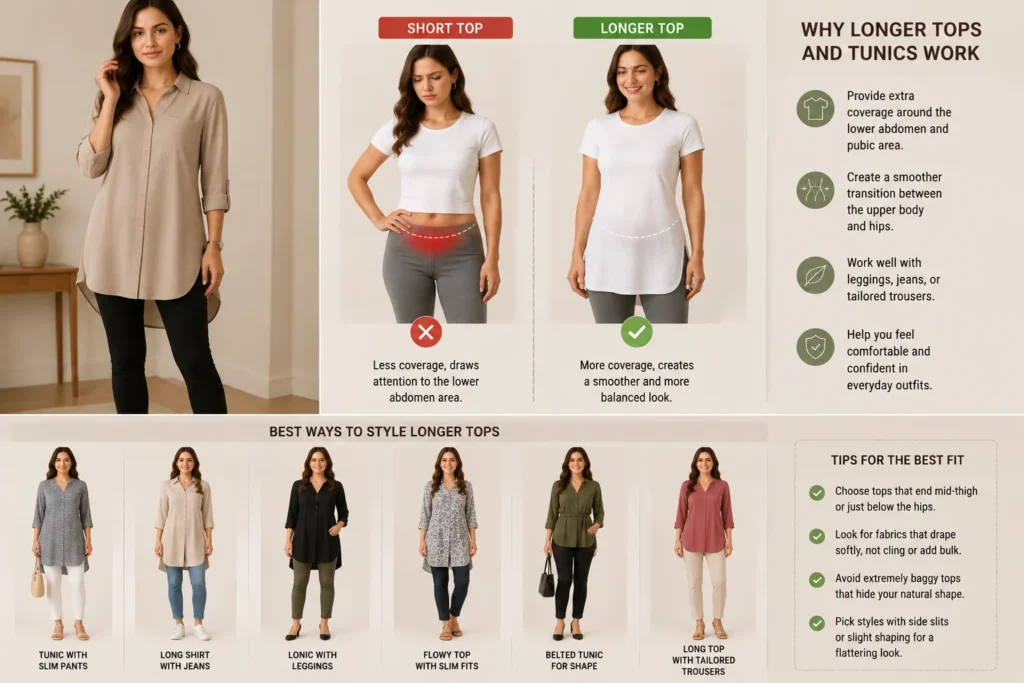
Longer tops, tunics, and shirts can help make a FUPA less noticeable by providing additional coverage around the lower abdomen and pubic area.
Tops that extend below the waistline can create a smoother transition between the upper body and hips. The extra length provides coverage around the lower stomach.
This style can work well with leggings, slim-fit trousers, or jeans because the longer length balances the overall outfit.
Choosing a fabric that drapes naturally is important because very loose or oversized tops may add unnecessary volume.
A well-fitted tunic or longer shirt should provide comfort while maintaining a structured appearance.
This styling approach does not change your body shape, but it can help you create outfits that feel more comfortable and confident in everyday situations.
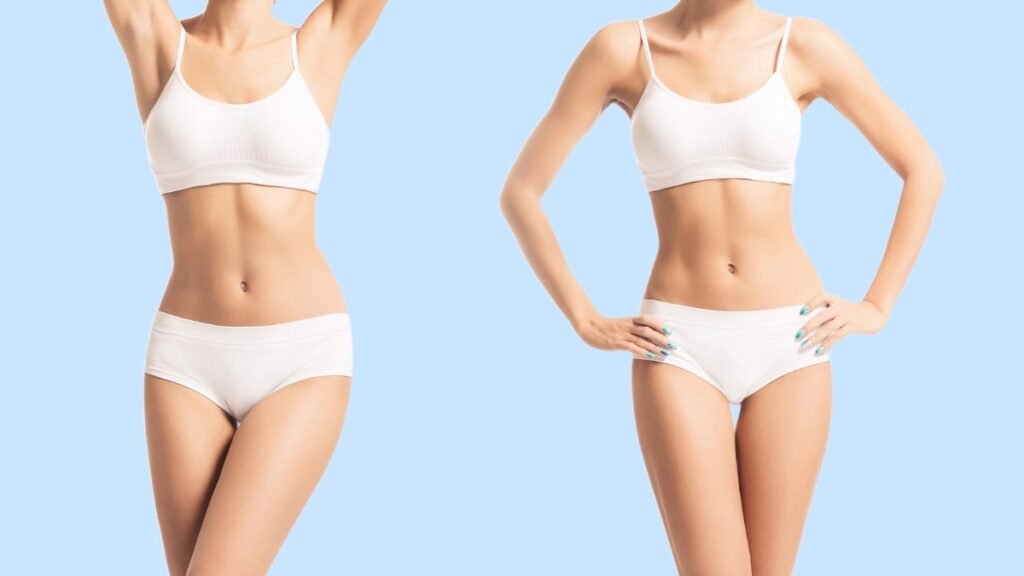
The right underwear style can help make a FUPA less noticeable by creating a smoother foundation under your clothing.
Seamless underwear, high-rise briefs, and supportive styles can reduce visible lines and prevent fabric from cutting into the lower abdomen area.
Check that your underwear fits comfortably. A tight pair may create pressure points or emphasise the area you want to make less noticeable.
On the other hand, loose underwear may not provide enough support and can affect how your clothes sit on your body.
Choosing comfortable fabrics with enough coverage can help your outfits look more balanced, especially when wearing fitted trousers, dresses, or leggings.
Underwear does not change your body shape, but the right style can improve comfort and help clothing fit more naturally.