
Work Trousers for a FUPA: Comfortable Fit Options
Page Contents
- Introduction and Daily Comfort
- Rise, Waistband and Closure
- Cut and Fabric
- Try-On, Sizing and Alterations
- Office Dress Code and Workday
- Front Fastening Versus Pull-On
- Frequently Asked Questions
- Are High-Rise Work Trousers Comfortable?
- Do Pleated Trousers Suit a Lower Belly?
- What Waistband Stays Comfortable While Sitting?
- Can Pull-On Trousers Look Smart for Work?
- Related Reading
Introduction and Daily Comfort
The right work trousers for a FUPA allow you to sit, move, and breathe comfortably. Start with lower belly comfort, then check whether the cut suits your workplace. A polished appearance should never require pressure.
Try office trousers in the positions your workday fit demands. A pair that looks smooth while standing may feel restrictive at a desk. Notice where the waistband lands and whether it shifts during the day.
For desk work, prioritise sitting comfort over a perfect standing photograph. Sit normally, lean toward the desk, and rise again. The front should stay comfortable without a fastening pressing into your lower abdomen at work.
An active job adds different demands. Check walking comfort across several minutes, including stairs if possible. Trousers should move with your hips and thighs, keep their position, and allow useful pocket access during the day.
Your office dress code sets the outer limits, but fit remains personal. A smart trouser can be soft, structured, or somewhere between. Choose the combination that works through your actual shift, not a label alone.
Rise, Waistband and Closure
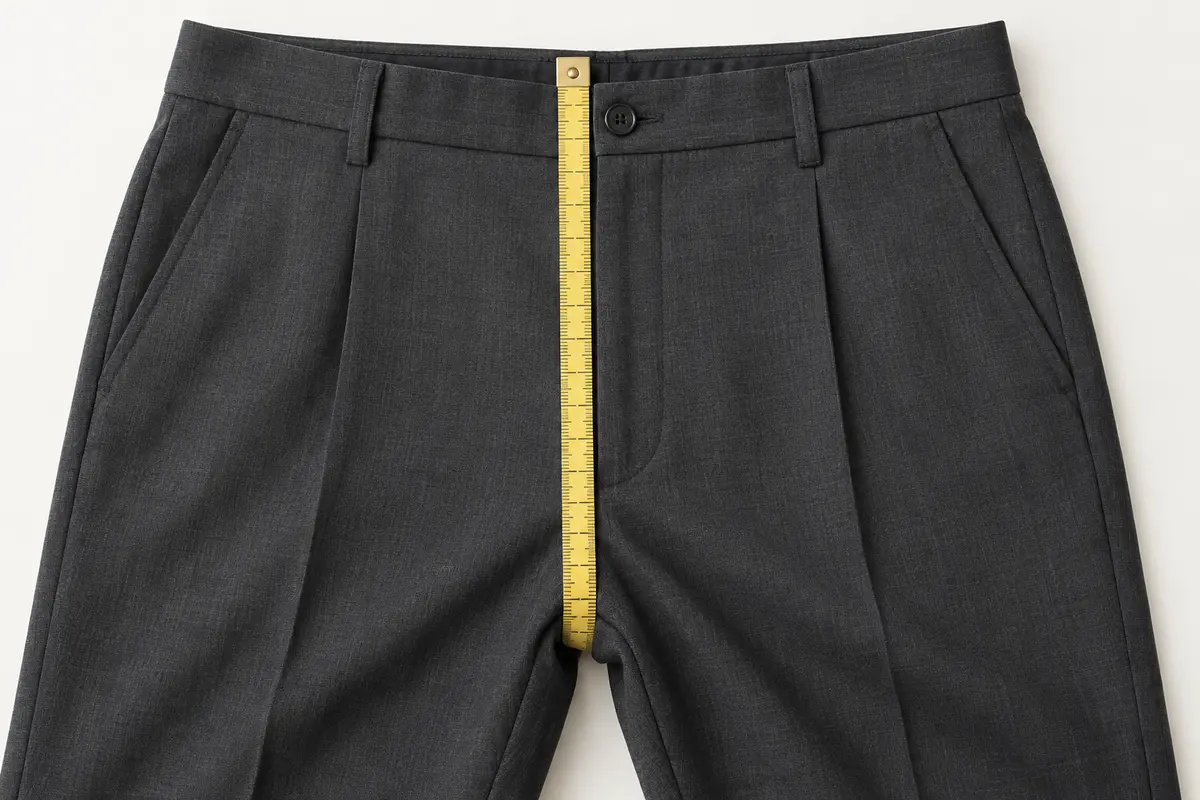
The front rise describes the distance from the crotch seam to the top of the waistband. Compare that measurement with where you want the band to sit; the same labelled rise fits different torsos differently.
A high rise may sit above a lower belly curve, while a mid rise can suit a shorter torso. Neither is automatically comfortable. Judge waistband placement while seated, because body shape changes with posture throughout.
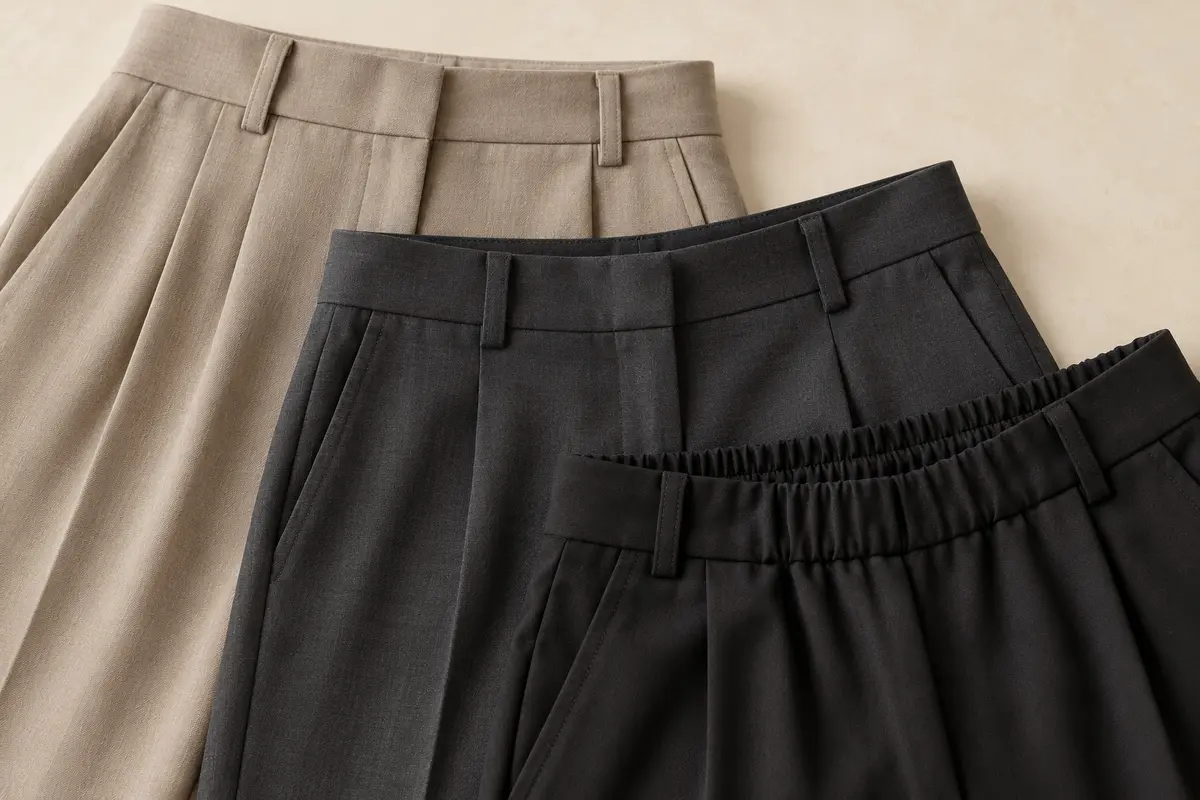
A soft waistband can spread pressure more gently than a narrow rigid edge. A contoured waistband may also follow the waist, although a cut that fits the hips can still leave a waist gap behind.
Look for pressure points at the front fastening and along the band. A rigid hook-and-bar closure may press when you lean forward. Check whether the front fastening stays flat without pulling the fabric sideways uncomfortably.
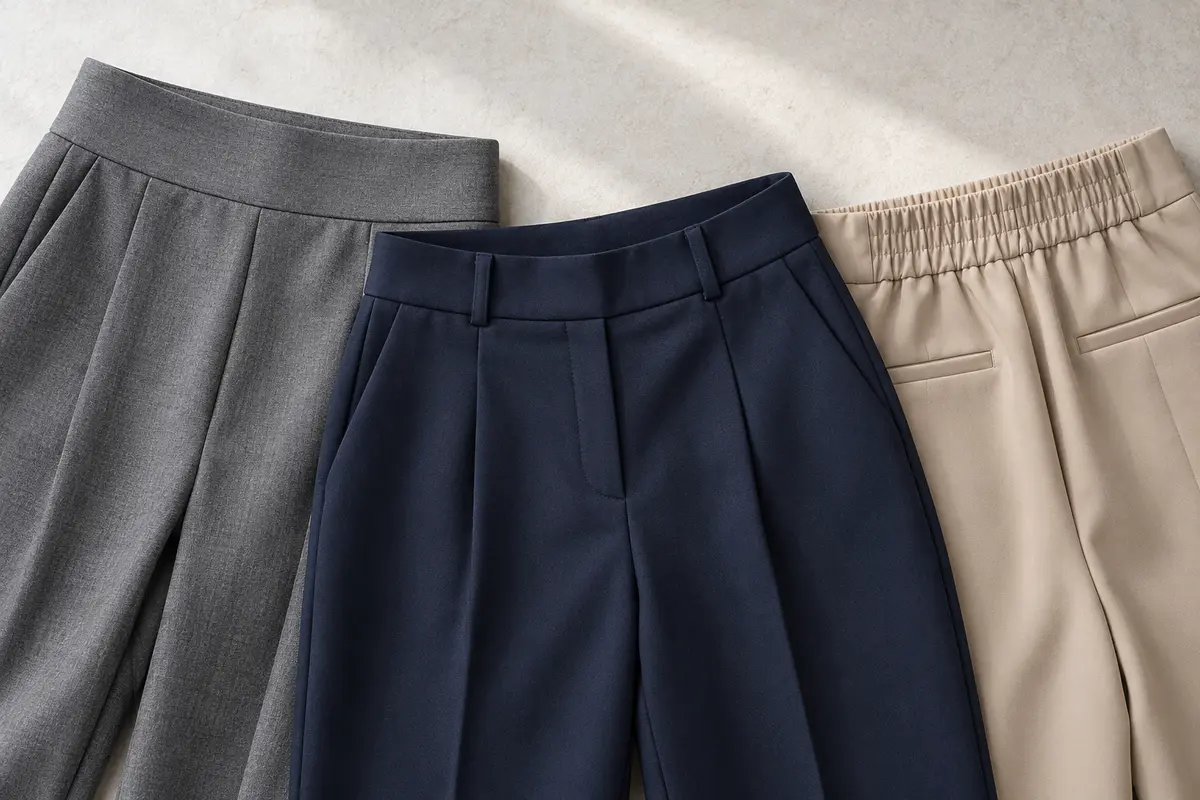
An elastic back offers some give without changing the trouser front. Pull-on trousers remove a hard closure altogether. Neither design guarantees comfort; check whether the band rolls, slips, or feels tight after sitting at work.
Cut and Fabric
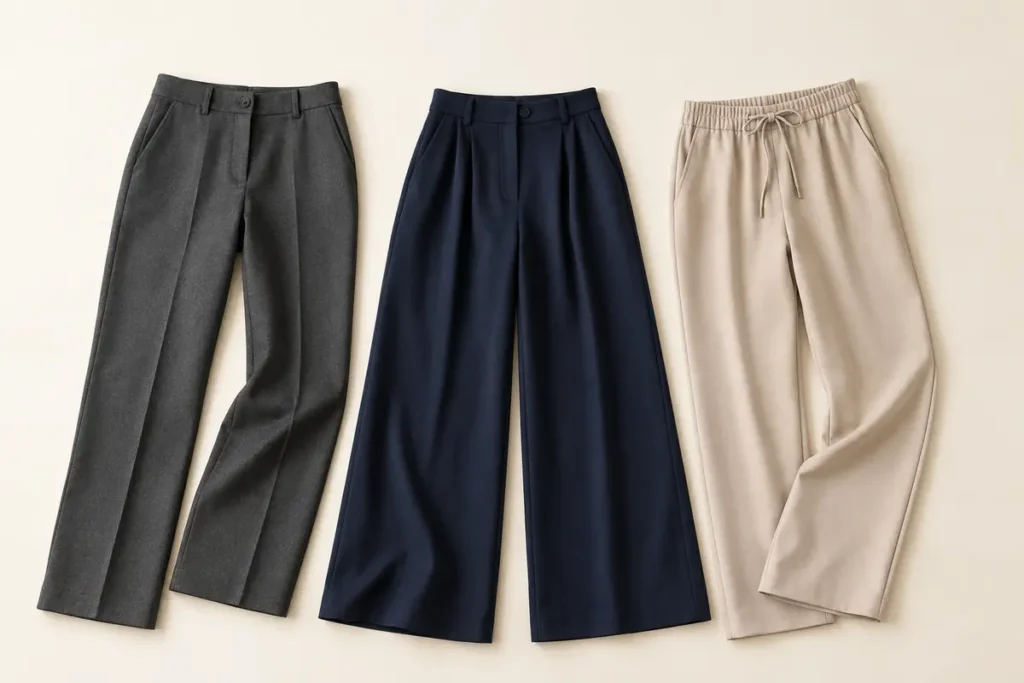
Straight leg trousers create a line from hip to hem without needing a tight thigh. Wide leg trousers provide more room below the hips. The better choice depends on your proportions and preferred office silhouette.
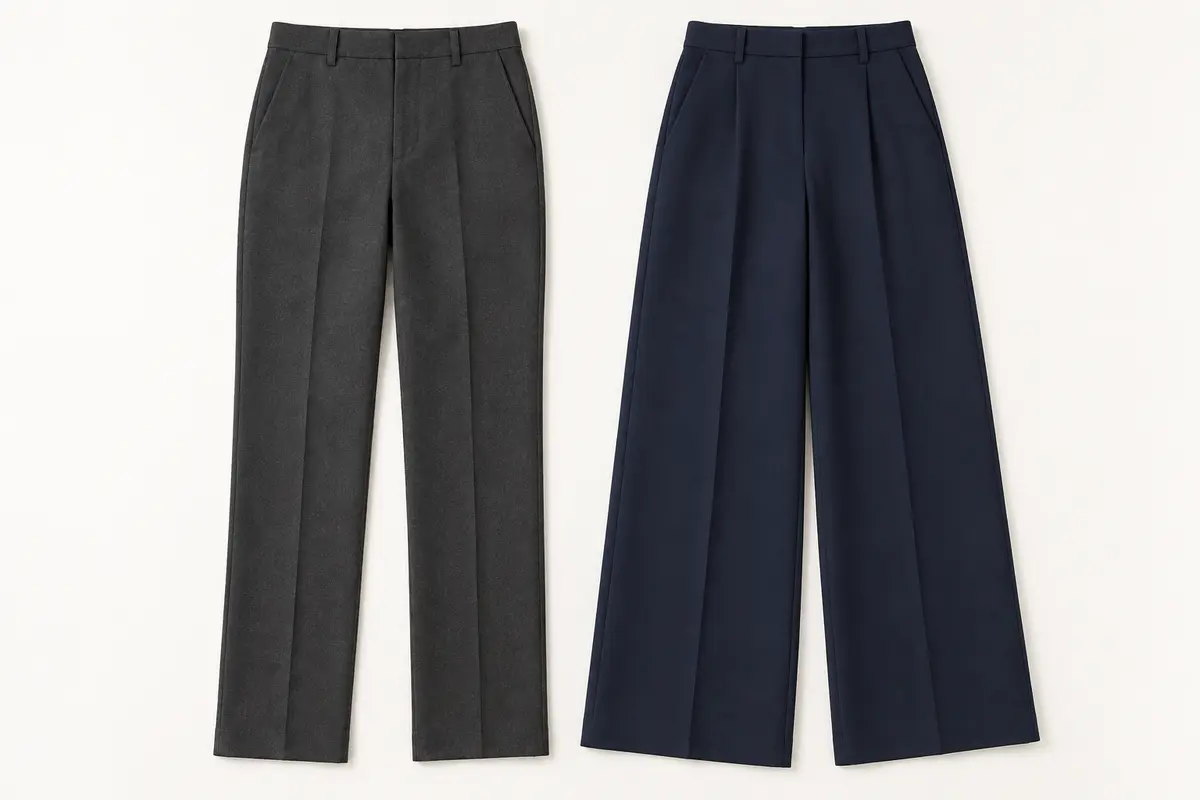
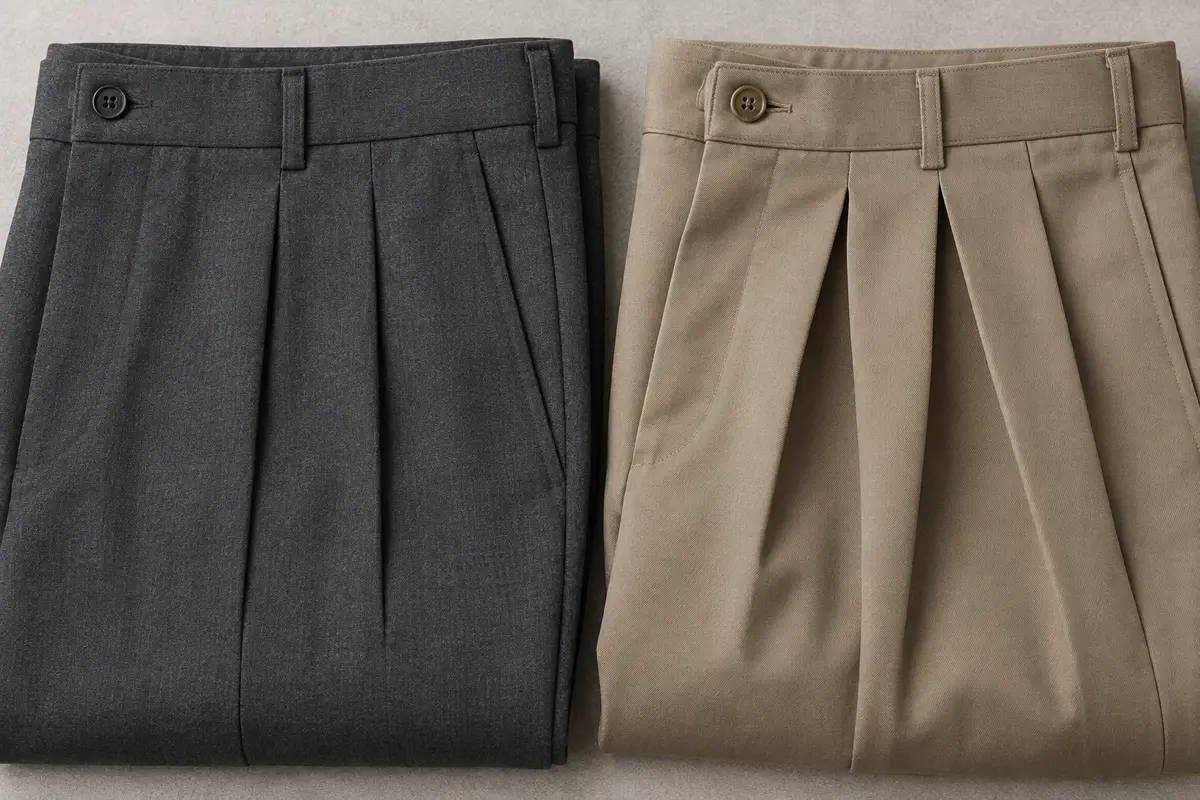
Relaxed pleats can add space at the front, but they should fall closed while standing. If they pull open, check hip room and thigh room before assuming the waist alone is too small at rest.
Ponte fabric can give a smooth, flexible look, while stretch crepe often suits a dressier finish. Check the actual garment in daylight; fibre names alone do not establish how substantial or comfortable it feels beforehand.
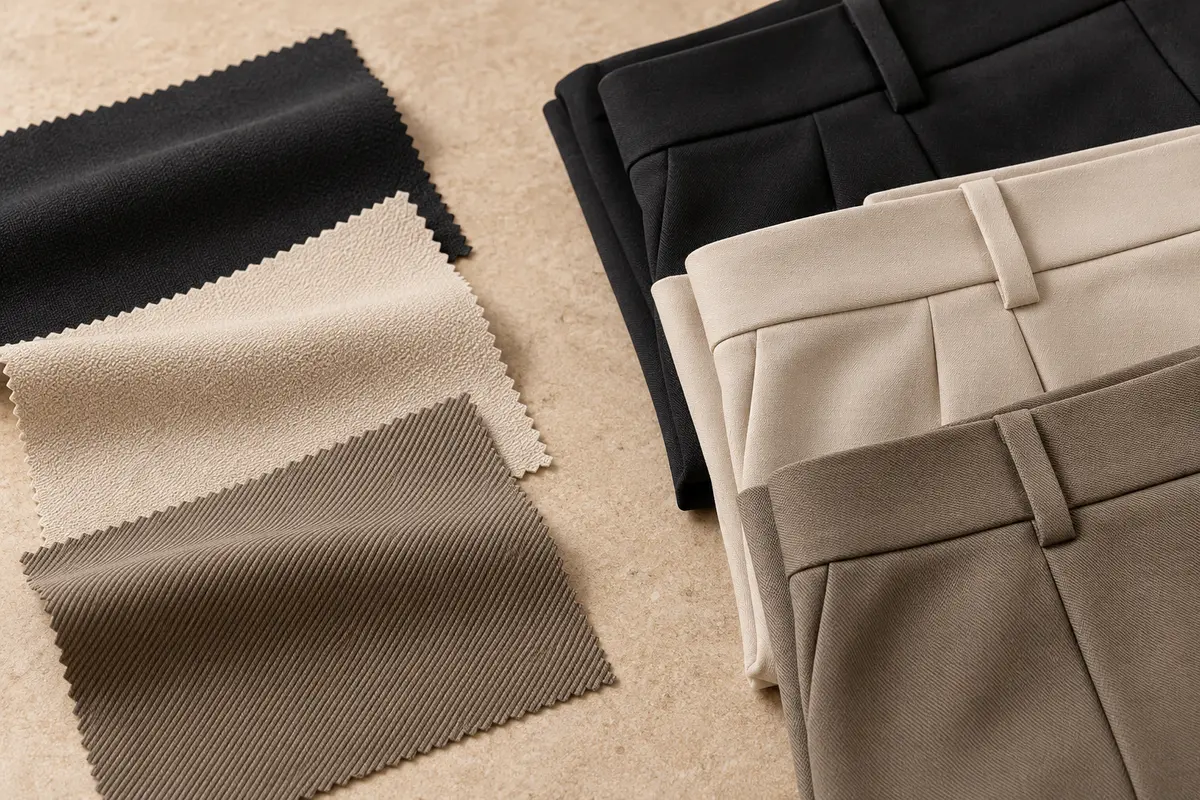
A mid-weight twill can hold a clear outline without feeling like stiff denim. Assess fabric drape over the front and seat. Look for folds that move naturally rather than persistent pulling across the lower abdomen.
Good stretch recovery helps fabric return after sitting. A structured fabric can appear neat, but excessive stiffness may press at the waist. Bend and stand several times to judge comfort and shape together at work.
Try-On, Sizing and Alterations
Start with a seated fit test on an ordinary chair. Bend forward as you would at a desk, then stand up. Notice waistband pressure, new creases, and whether the closure needs adjusting afterward during wear.
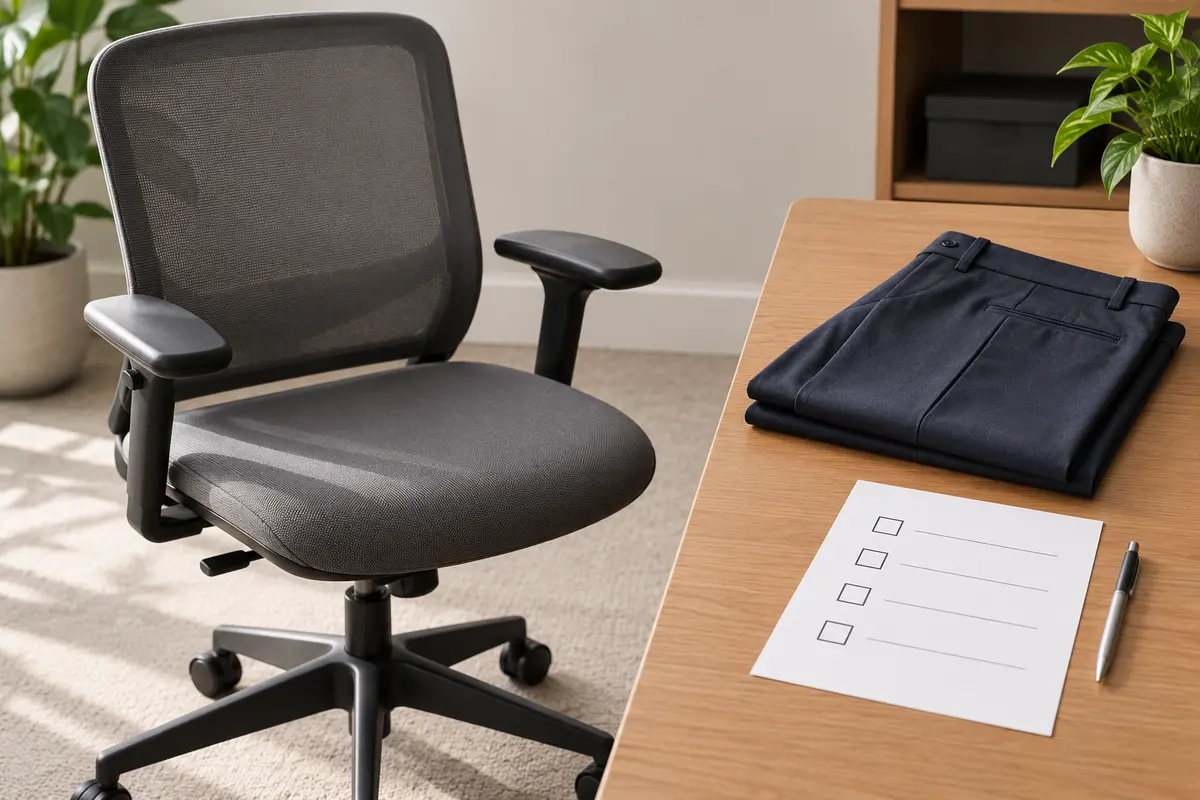
Watch for pleats pulling open, sliding, or gaping around the waist and seat. Each points to a different fit issue. Repeat the movement test after walking so you can distinguish a wrinkle from persistent strain.
Take a relaxed waist measurement and hip measurement, then compare both with the brand size chart. Read the listed garment measurements when available. A single dress size cannot describe rise, hips, and torso length accurately.
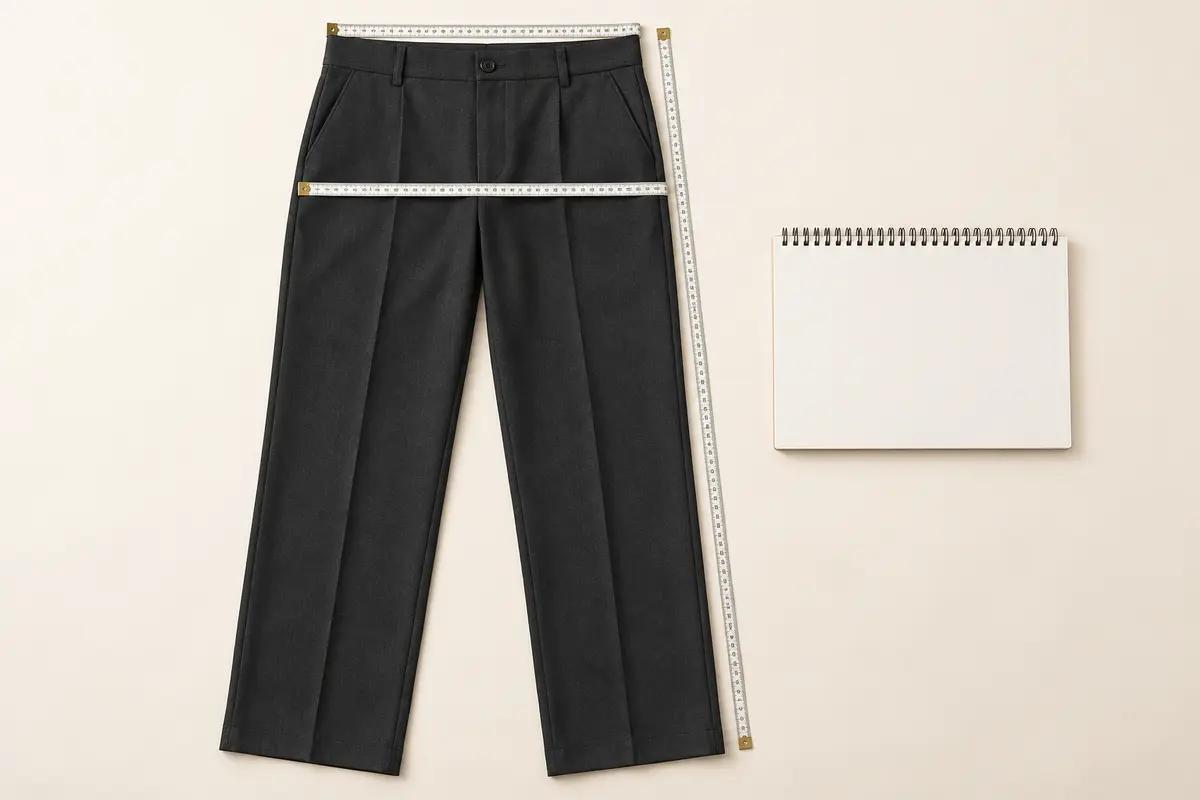
Check trouser length with the shoes you expect to wear. Hem adjustment is simpler than changing the cut through the hips. Ask whether waist tailoring would solve a back waist gap without tightening the front.
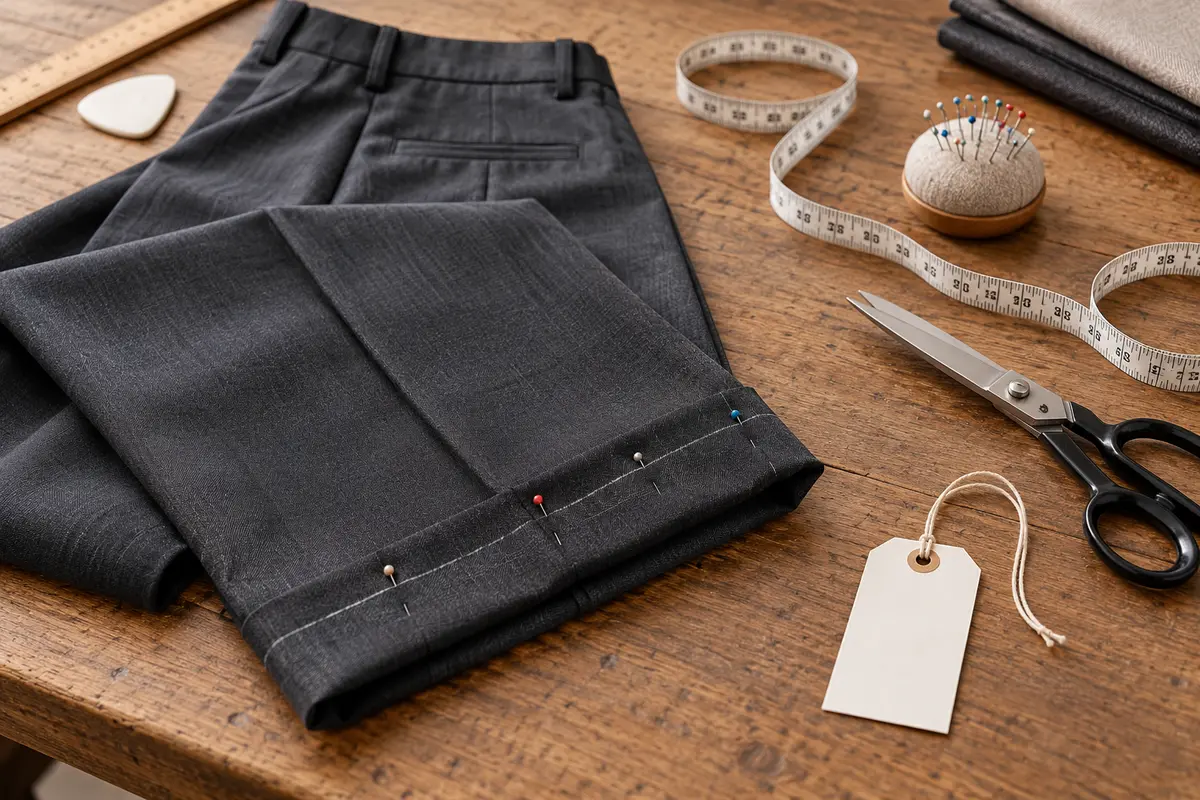
Before buying, check front fit in a mirror and from a seated position. Confirm the return policy, especially for altered garments. Keep a pair only when the waist, seat, and leg work together comfortably throughout.
Office Dress Code and Workday
For business casual, a clean pull-on design may look as suitable as conventional tailored trousers. The deciding details are the fabric, crease, hem, and workplace expectations. Test comfort against the activities your job requires daily.
A commute can expose fit problems missed in a fitting room. Walk, sit on transport, and climb steps if relevant. Pay attention to whether the band creeps down or the front begins pressing after movement.
Long desk sitting calls for freedom at the front and enough room through the seat. An active shift needs secure placement and movement. The same cut may succeed in one setting and fail in another.
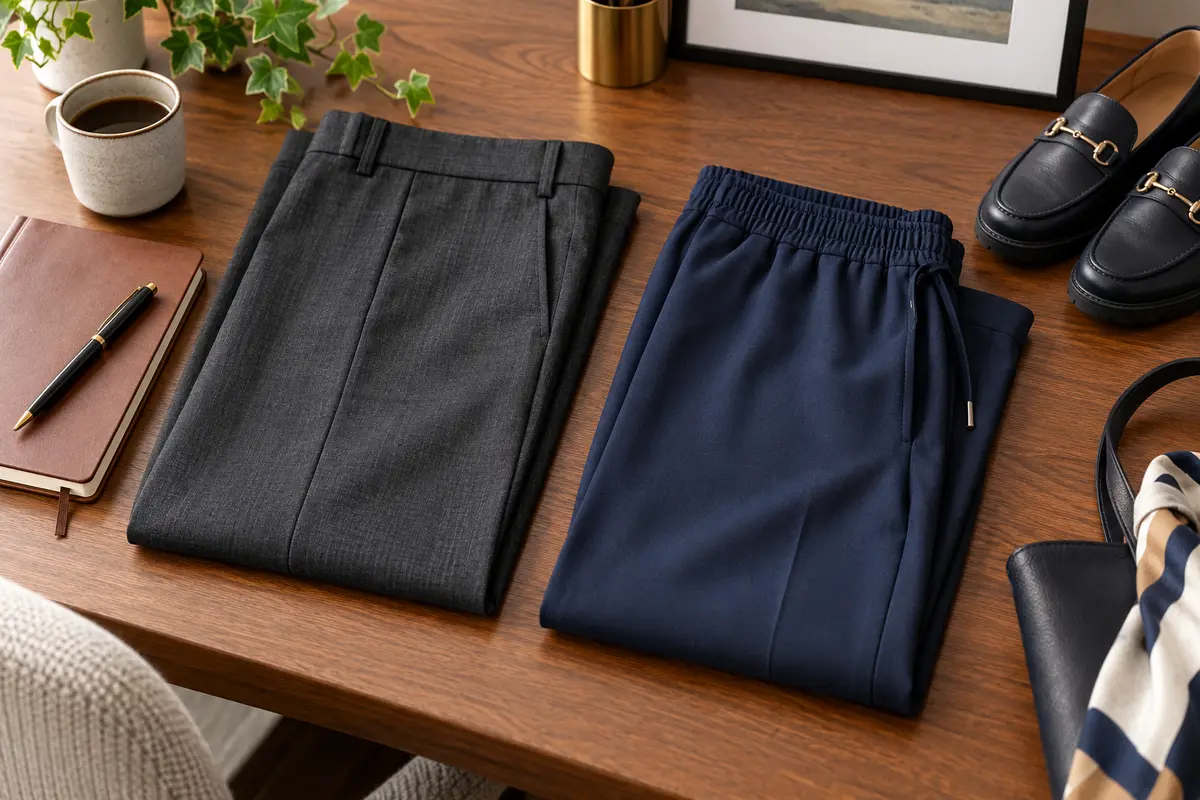
Useful pockets should not pull open or add uncomfortable bulk when filled. A clean front can suit formal settings, but concealed stretch may matter more for comfort. Check both with your everyday essentials safely inside.
A polished silhouette depends on fit and care, not squeezing the body. Choose breathable fabric where workplace temperature or movement makes it useful. A neat trouser remains practical only when you can wear it comfortably.
Front Fastening Versus Pull-On
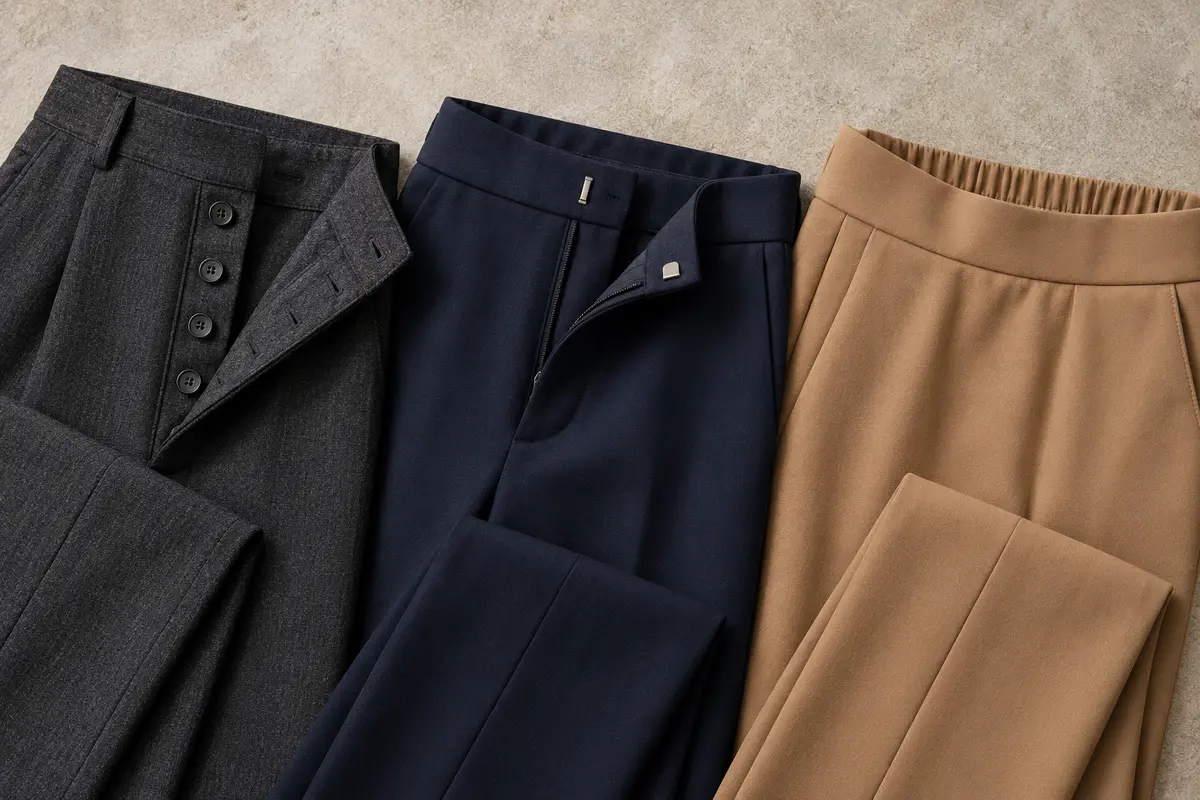
A button closure can be easy to adjust but may protrude under a thin top. A hook closure looks flatter on some tailored trousers. Check both while sitting, when pressure at the centre front increases.
Hidden elastic at the back or side can provide room while preserving a tailored appearance. Try the trouser through normal movement. If the front still digs in, extra stretch elsewhere may not solve the problem.
Pull-on construction removes a hard fastening and can simplify dressing. Look for a secure band that stays level without constant adjustment. The fabric and cut determine whether the finished trouser meets your office requirements consistently.
With elastic-back trousers, inspect the seat as well as the waist. Too much spare fabric may bunch behind you; too little may pull across the front. Check fit after sitting for several minutes at work.
A smooth front panel may reduce visible bunching, but it should not cause front pressure. Run a finger comfortably beneath the waistband while seated. If it pinches or limits movement, compare another rise or size.
Frequently Asked Questions
Are High-Rise Work Trousers Comfortable?
High-rise trousers can feel comfortable when the band rests above a sensitive curve and the torso has enough length. The label alone cannot tell you where the waistband will land on your particular body precisely.
Measure the garment's front rise when that information is available. Compare it with a pair you already own. A taller rise can help some people, while others find that it reaches their ribs at home.
Sit for a few minutes before deciding. A band that looks smooth while standing may fold or press when seated. Check the front closure, back gap, and whether you can breathe and lean comfortably freely.
If the waist feels tight but the hips fit, sizing up may create loose fabric elsewhere. Compare another cut or a stretch-backed design. Do not assume that greater compression will make the trouser stay put.
Choose the rise that remains secure without digging through your normal day. Mid-rise and high-rise labels vary between brands, so treat them as starting points and rely on the garment's actual fit throughout a workday.
Do Pleated Trousers Suit a Lower Belly?
Pleats can give the front extra room and let fabric fall away from the lower abdomen. They work best when the waistband fits and the pleats lie naturally rather than staying pulled apart when standing.
Stand sideways and look at where each pleat begins. If it opens sharply at the hip, the top of the trouser may be too narrow. Another size or cut could sit more comfortably at first.
Sit and check whether the folds accommodate movement without creating pressure. A generous leg cannot compensate for a rigid waistband. The useful test covers the entire garment, especially the waist and upper hip while seated.
Single pleats may look quieter than multiple folds, but the result depends on fabric and tailoring. Try different designs rather than assuming one style suits everyone. Keep the pair that allows natural movement for you.
If pleats pull continuously, avoid treating that as a flaw in your body. It is information about the garment. Compare hip width, rise, and waistband shape, then decide whether alterations are realistic for you personally.
What Waistband Stays Comfortable While Sitting?
A comfortable seated waistband rests where your body can bend without a hard edge pressing into it. Some people prefer a broad soft band; others find a shaped waistband or partial elastic more stable overall.
Sit upright, lean forward, and stand again. Notice whether the band rolls, slides, or leaves a painful pressure point. A band that moves slightly is different from one that needs constant readjustment throughout your shift.
Do not judge comfort by stretch alone. Elastic can still feel tight if the garment is short in the rise or narrow through the hips. Check the whole cut before changing sizes during wear too.
If a closure presses directly into the lower abdomen, try a side fastening or pull-on style. Check whether that alternative stays secure as you move; removing a front hook does not fix every fit issue.
Try the trousers for minutes if the shop allows it. For online purchases, compare measurements with a comfortable pair and check returns. Your seated comfort matters more than how the band looks on a hanger.
Can Pull-On Trousers Look Smart for Work?
Yes, pull-on trousers can suit many workplaces when their fabric, cut, and finish match the dress code. Look at the complete outfit rather than treating the absence of a button as a casual signal automatically.
A smooth front, neat hem, and substantial fabric can support a tailored appearance. Obvious drawstrings or thin clingy material may read differently. Your workplace's requirements determine which details are suitable for the day at work.
Check the waistband beneath the top you usually wear to work. It should stay in place without rolling. Then examine the trouser from the side and back after sitting and standing again during normal movement.
A straight or wide leg can pair with a blouse, knit, or jacket. Choose the combination that fits your role and comfort needs. No one silhouette is automatically the correct office choice for everyone equally.
If your workplace requires formal suiting, compare pull-on trousers made from matching suiting fabric. Verify the actual policy and garment details before buying. Comfort and professional presentation can both guide a practical decision for you.
Related Reading
For everyday denim, see our jeans fit guide. For complete work outfits, see our outfit guide.