
Outfits for a FUPA: What to Wear and What to Avoid

Page Contents
- Start With Comfort and Placement
- Waistlines and Hems
- Combine Tops, Bottoms and Dresses
- Fabric and Layers
- Colour, Print and Personal Style
- Outfit Ideas for Different Days
- Underwear and Optional Shapewear
- Common Fit Problems to Recheck
- Frequently Asked Questions
- What Waistline Works Best With a FUPA?
- Can I Wear a Fitted Dress?
- Should I Tuck a Top In?
- Do Prints or Dark Colours Hide a Lower Belly?
- Does Layering Help?
- Do I Need Shapewear?
An outfit for a FUPA should feel comfortable while you sit, walk and go about your day. If you want the lower front to look less prominent, pay attention to where seams and hems land, how fabric falls, and whether you keep adjusting the clothes.
This guide brings tops, bottoms, dresses and layers together. There is no required silhouette or need to disguise your body. Start with the fit you like, then test the complete outfit in the positions and activities that matter to you.
For garment-specific detail, use our jeans fit guide, work trousers guide, leggings guide and new dress fit guide and gym clothes guide. This page focuses on how those pieces work together.
Start With Comfort and Placement
A FUPA usually describes fullness over the upper pubic area. Some people use the term for the lower abdomen more broadly. The location matters for clothing: a seam that feels fine standing may press or shift when you sit. See our guide to the term if you want to distinguish the areas.
Check the outfit seated as well as standing. Bend forward, rise, walk a little and notice where the waistband, top hem and any dress seam settle. A comfortable outfit should not need constant pulling or leave a painful pressure point.
Your preference may change by occasion. Use comfort and the amount of coverage you want as your starting points, then compare pieces in the same outfit.
Waistlines and Hems
High, mid and lower rises are labels, not guarantees. Their position changes with torso length and the garment’s actual measurements. A higher rise may rest above a lower belly curve for one person and fold against the ribs for another.
| Placement | What to check |
|---|---|
| Raised dress seam | Does the skirt fall comfortably from below the bust? |
| Natural-waist seam or tie | Does it stay comfortable and level when seated? |
| Mid or high-rise bottom | Does the band stay in place without digging or rolling? |
| Lower-rise bottom | Does the band press at the front or expose a gap as you move? |
Look at where a top or jacket ends, too. A hem can draw attention to a particular line, but there is no universal correct length. Try the same outfit tucked, untucked and partly tucked to see which arrangement feels and looks right to you.
Combine Tops, Bottoms and Dresses
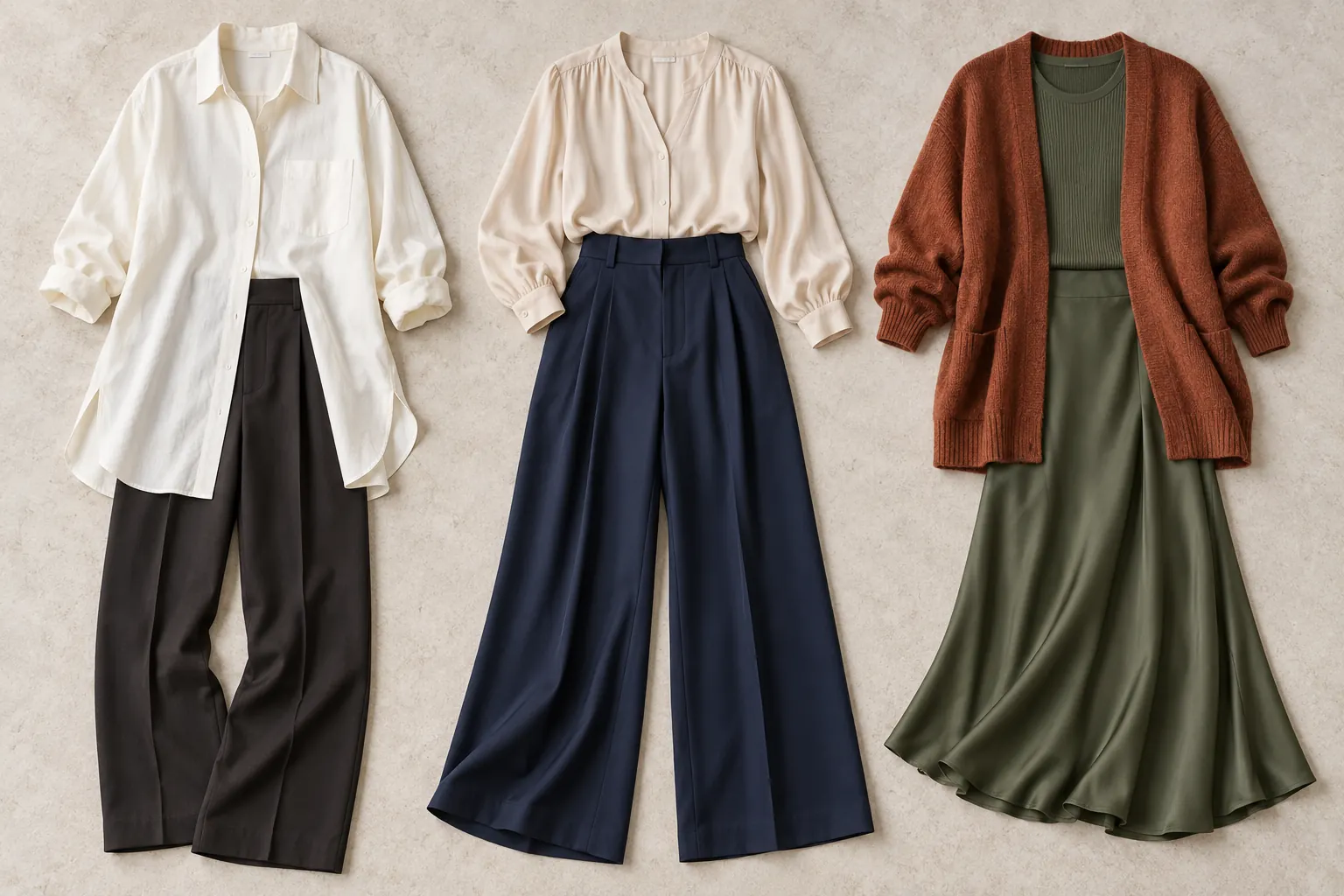
An open shirt, longline top or softly structured layer can change the outline of an outfit. A shorter top can work just as well if you prefer it. Check how the pieces overlap when you sit; a top that looks tidy standing may bunch above the waistband.
For bottoms, compare rise, closure, hip room and seated comfort. Wide-leg trousers, straight-leg jeans and leggings each behave differently. The separate guides cover garment measurements and movement checks, so choose the bottom that suits your routine rather than a fixed body-shape rule.
A-line, wrap, empire, shift and softly gathered dresses offer different amounts of room at the front. A fitted dress is also an option. For seam placement, fabric weight and a seated try-on test, see Dresses for a FUPA; this outfit guide keeps the wider picture in view.
Fabric and Layers
Fabric weight, lining, cut and stretch recovery work together. A thin fabric may follow the body closely, while a heavier one may hold more shape. Neither result is automatically better. Check opacity in daylight and movement after sitting rather than relying on the fibre name alone.
An open cardigan or jacket can add warmth and another line to an outfit. Choose its length for comfort, weather and the look you want. A rigid jacket or a heavy layer can feel restrictive even when its outline looks smooth in a photograph.
Try the full outfit with the underwear, shoes and bag you normally use. A waistband or pocket can shift once you add everyday items. If a piece needs repeated adjustment, compare another cut, size or fabric before assuming the entire style is unsuitable.
Colour, Print and Personal Style
Similar tones can create a continuous colour line; contrast can define separate pieces. Prints, stripes and texture change what stands out, but their effect depends on scale, placement, light and the whole garment. Choose colours you enjoy rather than treating black or small prints as requirements.
Photographs can help you compare options, but inspect them in ordinary light and from several angles. A single posed image cannot show how a garment feels while moving. Your preferred amount of coverage is a personal styling choice, not a measure of whether an outfit works.
If a colour or pattern appeals to you, start there and adjust the fit around it. A comfortable piece you enjoy wearing will be more useful than an outfit assembled to meet a rigid rule.
If you are deciding between two fabrics, wear each for a few minutes rather than judging by how it hangs on a rail. Movement often reveals bunching or a seam that sits awkwardly.
Outfit Ideas for Different Days
Work: Try trousers that stay comfortable at a desk with a blouse, knit or jacket that suits your dress code. Test the waistband seated and check the closure after standing. The work trousers guide goes deeper into cuts and alterations.
Everyday: Pair jeans or leggings with a top that stays where you want it while walking. A partly tucked or untucked shirt may feel easier than a tight tuck. Compare denim in our jeans guide and movement in the leggings guide.
Events: A dress, co-ordinated separates or a skirt outfit can all work. Check the waist seam, lining and sitting comfort before committing. Our dress guide compares eight styles without requiring shapewear or a particular hemline.
After pregnancy: Fit can change over time, so reassess what feels comfortable rather than assuming your former size or cut will work now. For body changes and when to seek medical advice, use our separate post-pregnancy guide.
Underwear and Optional Shapewear
The same base layers can feel different under trousers and dresses. Put on the complete outfit to check whether seams show, the waistband shifts or the fabric catches.
Underwear should feel comfortable beneath the outfit you choose. Compare rise, leg openings, seams and fabric rather than assuming one style is necessary. Our underwear guide covers those fit decisions in detail.
Shapewear is optional. If you prefer it, check its size and movement while seated and walking; it should not cause painful pressure or make breathing uncomfortable. See our shapewear guide for the specific fit checks.
If a base layer is uncomfortable, change it or leave it out. An outfit should work with the level of support and coverage you actually want.
Common Fit Problems to Recheck
- A waistband that digs in or rolls when seated.
- A top hem that needs constant tugging.
- A dress seam or tie that shifts to an uncomfortable position.
- Fabric that becomes sheer, pulls across the hips or bunches after movement.
- A jacket or layer that restricts your arms or feels too warm for the day.
These signs tell you something about the garment’s fit. Try a different rise, seam position, fabric weight or size, and keep the combination that works for your actual day. You do not need to follow every styling suggestion to dress comfortably.
Repeat the seated check after any alteration or size change. Small changes in rise or hem position can affect how all the pieces sit together.
If the outfit stays comfortable and suits your day, you have found a useful combination. Keep what works and change only the piece that causes a problem.
Frequently Asked Questions
What Waistline Works Best With a FUPA?
The one that stays comfortable and in place when you sit and move. Compare actual rise and seam placement rather than relying on a high- or mid-rise label.
Can I Wear a Fitted Dress?
Yes. Check the fabric, lining and seam position while sitting and walking. Our dress guide explains the options.
Should I Tuck a Top In?
Try tucked, partly tucked and untucked versions. Choose the one that stays comfortable and gives the outline you prefer.
Do Prints or Dark Colours Hide a Lower Belly?
They can change the look of an outfit, but there is no guaranteed effect. Fabric, fit and placement matter too.
Does Layering Help?
It can change the outline and add coverage if you want it. Check that the extra layer still feels comfortable for your day.
Do I Need Shapewear?
No. It is optional. Choose a dress or outfit that fits comfortably first, then use a base layer only if you prefer one.