
Best Jeans for a FUPA: Rise, Fit and What to Avoid
Page Contents
- Introduction and Fit Problem
- Rise, Waistband and Waist Gap
- Denim Fabric, Stretch and Recovery
- Cuts and Silhouettes
- Seated Try-On, Sizing and Alterations
- Front Details and Wash
- Product and Postpartum Considerations
- Frequently Asked Questions
- What Rise Is Best for a FUPA?
- Are Skinny Jeans a Bad Choice?
- Why Do My Jeans Dig In?
- Does Denim Weight Matter?
- Should I Wear Shapewear Under Jeans?
- Do Maternity or Postpartum Jeans Help?
Introduction and Fit Problem
The best jeans for a FUPA are the pair that stays comfortable through real movement. Lower belly fullness can change how a waistband sits, so assess the whole garment rather than its labelled size alone.
Start with waistband placement and seated comfort. A band may look level while standing but press into a curve when sitting. Try a normal chair, then notice pressure, sliding, gaping, and breathing comfort during wear.
Different body proportions affect jeans fit, even within one clothing size. Your personal preference matters too: some people want structure, while others value flexibility. Use fit checks to choose, without treating concealment as a requirement.
Rise, Waistband and Waist Gap
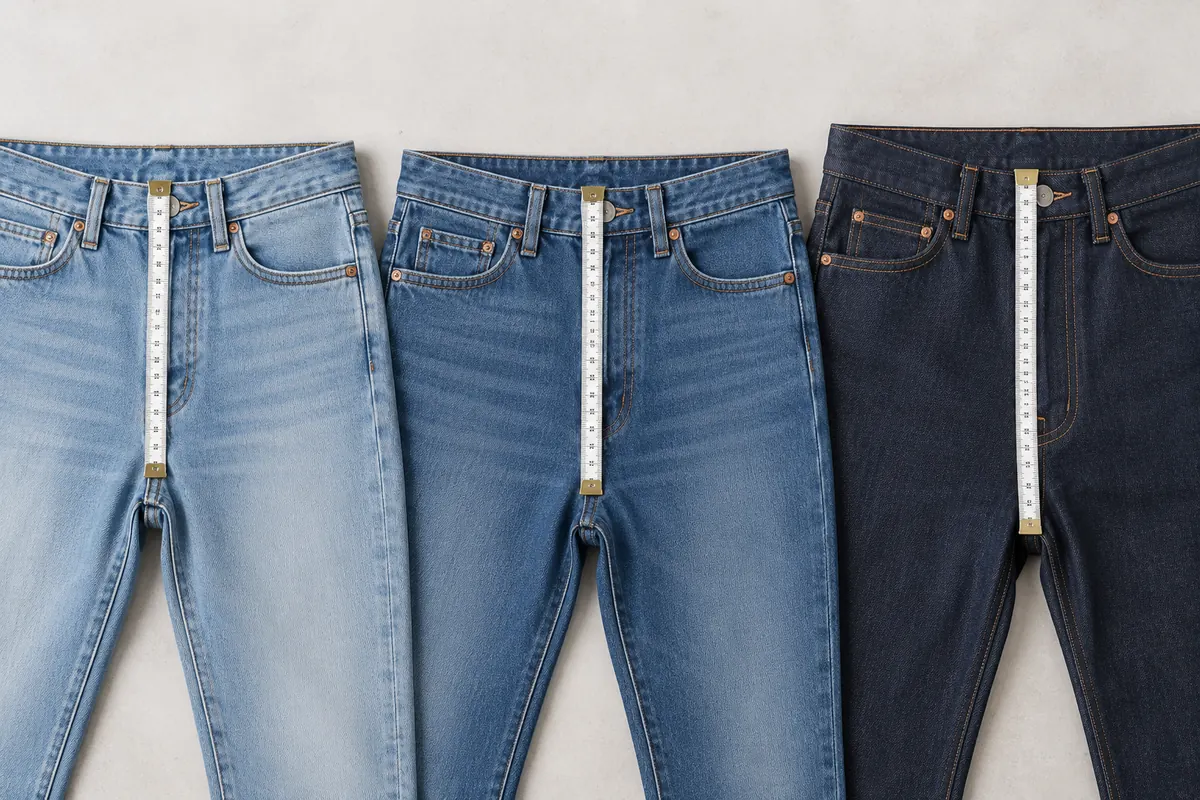
The front rise usually measures from the crotch seam to the top of the band. High-rise jeans may clear a lower curve, while mid-rise jeans can suit a shorter torso if their edge sits comfortably.
A contoured waistband follows the waist more closely than a straight strip, but a waist gap can still appear. Check the back waistband and front closure together; fixing one area should not create pressure elsewhere.
Find where the band lands relative to your natural waist and belly curve. Compare waist-to-hip measurements, the garment’s rise measurement, and waistband pressure while seated. Labels alone cannot predict how the cut behaves on you.
Denim Fabric, Stretch and Recovery
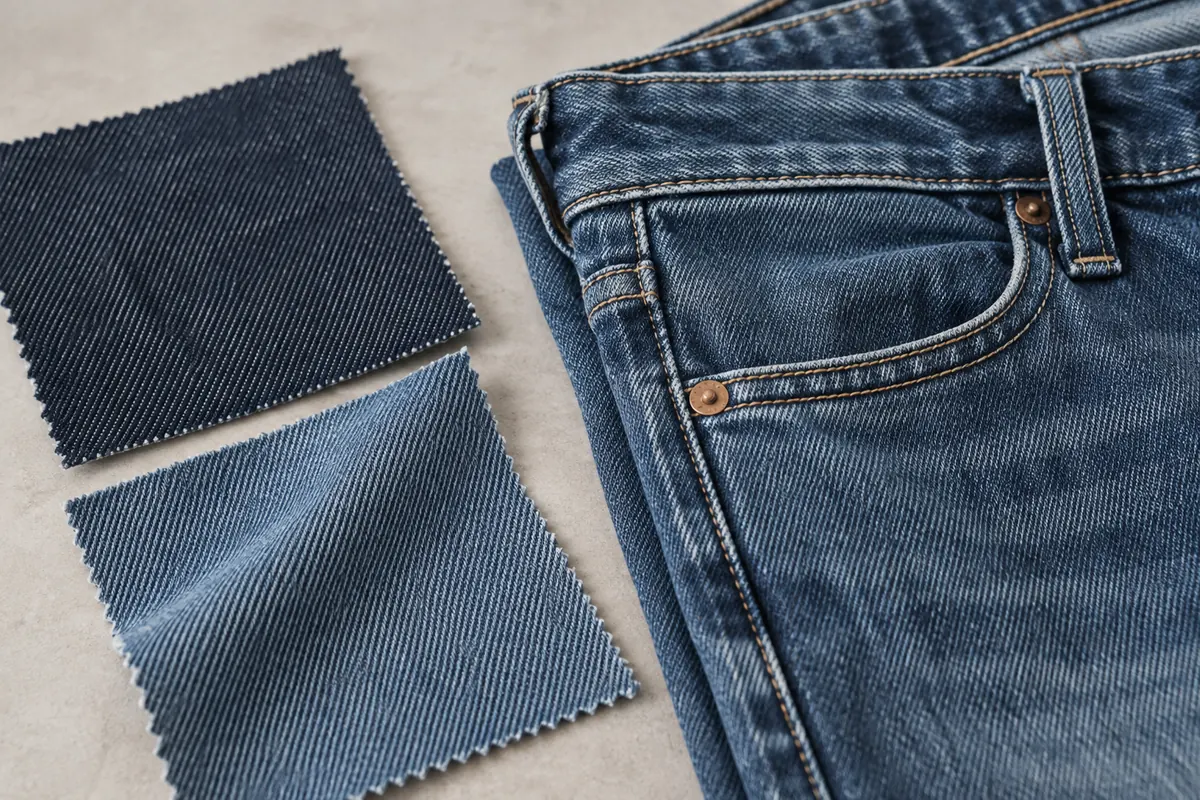
Denim weight affects feel and drape, but no single weight suits everyone. Stretch denim gives more movement than rigid denim; the right choice depends on the cut, daily activity, and how the waistband feels seated.
Check elastane content as one fabric detail, then assess fabric recovery directly. After sitting and walking, the knees and seat should not feel unexpectedly loose. A fibre percentage alone cannot guarantee durability or lasting comfort.
Look for shape retention after movement, including seat bagging or knee bagging. Consider fabric drape over the front and follow the care label, since washing and drying can alter how a pair fits over time.
Cuts and Silhouettes
Straight-leg jeans offer an even line below the hip, while wide-leg jeans provide more room through the leg. Bootcut jeans balance a different silhouette. None is automatically more comfortable at the waist during everyday wear.
Skinny jeans can work when their rise and fabric suit you. A relaxed fit or tapered leg changes room below the hip, but the leg opening does not fix a waistband that digs in uncomfortably.
Assess hip fit and thigh room alongside the waist. A pair should allow sitting and walking without pulling at the crotch or knees. Choose the cut that supports your personal style and comfort through movement.
Seated Try-On, Sizing and Alterations
Begin with a standing fit check, then perform a seated fit test for several minutes. Notice front pressure, fly pulling, and an unexpected back gap. A waistband that looks smooth standing may behave differently seated.
Add a bending test and walking test. Move as you normally would, checking whether the band slides, the back drops, or the front pinches. Repeat the checks with the usual shoes and layers you expect.
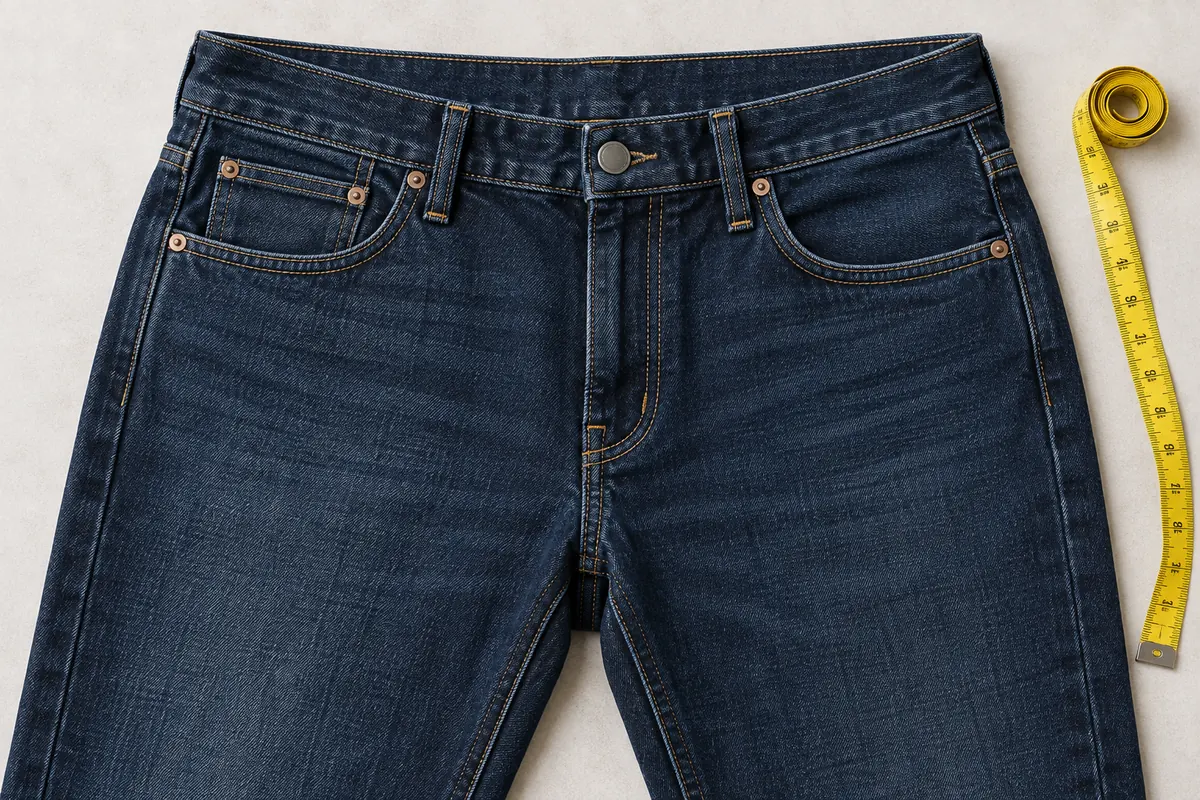
Compare the retailer’s size chart with your waist measurement and hip measurement. If hips fit but the waist gaps, ask whether tailoring or a centre-back alteration would preserve comfortable front room without adding front pressure.
Front Details and Wash
Check front pockets while seated, not only while standing. Pocket bags that bunch can add unwanted pressure or visible bulk. Put a hand inside each pocket to see whether its lining lies flat during movement.
A longer fly length may distribute closure details differently, while a prominent front seam can draw attention to the centre. Inspect the actual garment; these construction details vary even between jeans with similar rise labels.
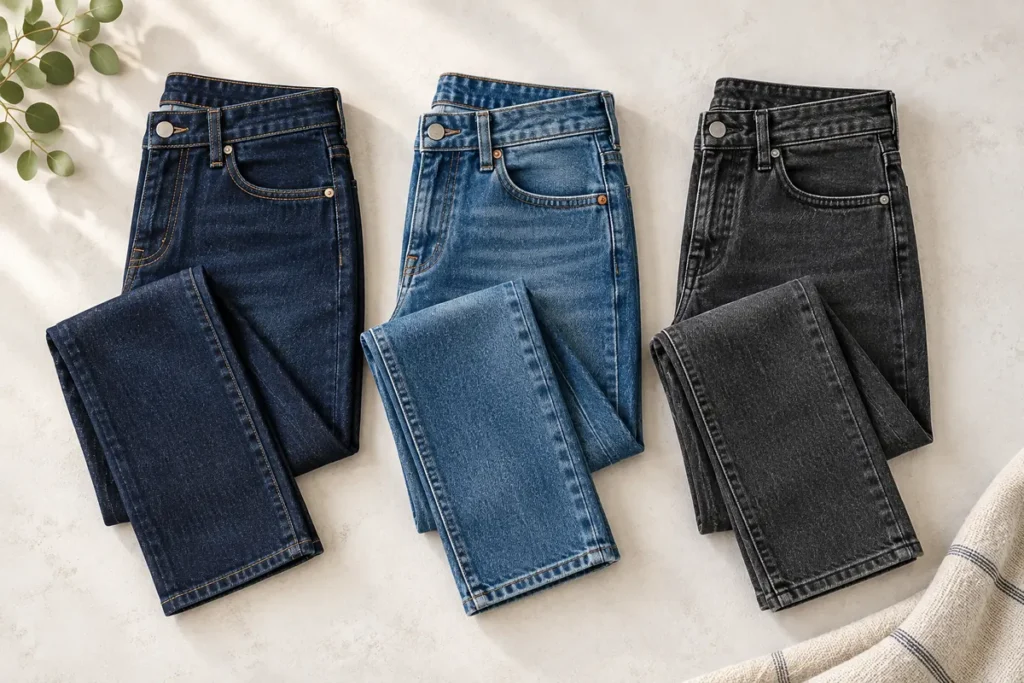
Whiskering, distressing, and contrast stitching create deliberate focal points. A dark wash offers a quieter appearance if preferred. Treat visual emphasis as a styling choice rather than a rule about which bodies should wear denim.
Product and Postpartum Considerations
Before naming a specific pair, check UK availability, current product specifications, size range, and return policy on the retailer’s website. Fit differs between styles, so a product description cannot replace an actual movement test in practice.
Postpartum jeans may offer a soft waistband while measurements change. For scar comfort after a caesarean birth, avoid clothing that rubs a healing wound and follow your maternity team’s advice about clothing during early healing.
Choose by individual fit, not a label promising tummy control. If denim presses on a sore area, a looser option may be more comfortable. Seek clinical advice for worsening wound pain or other concerning symptoms.
Frequently Asked Questions
What Rise Is Best for a FUPA?
There is no universal rise height. The useful waistband position depends on where the band settles when you sit and move. Measure a comfortable pair you already like and compare its front rise with alternatives.
Your torso length changes how a high rise feels. One person’s natural waist can be another person’s ribcage. Check the band while seated, because a standing mirror view does not establish your actual sitting comfort.
Choose your preferred rise after testing pressure and stability. The band should not cut into a tender crease or require repeated pulling. If two rises work, compare fabric feel and personal style during normal movement.
Are Skinny Jeans a Bad Choice?
Skinny jeans are not automatically unsuitable. Check the waistband first, then assess denim stretch through the knees and seat. A close leg cut can be comfortable when the fabric moves without excessive pressure during movement.
Compare leg fit while sitting and walking. If the knees pull or the crotch drags, another size or cut may work better. Waistband comfort still matters more than the name of the silhouette in use.
Your personal preference determines how fitted you want the leg. Some people like a close silhouette; others prefer roomier denim. Test the pair’s actual movement, coverage, and pressure instead of relying on a blanket rule.
Why Do My Jeans Dig In?
A tight waistband may press into the abdomen when you sit, even if the legs fit. Check the front rise and closure location. Painful marks or restricted breathing are reasons to try another suitable pair.
Notice seated pressure and any waist gap together. A larger size can relieve the front but loosen the back, while a smaller size can worsen pressure. Check both areas before deciding what to change first.
A size mismatch is one possibility, but proportions and construction matter. Try an alternative cut with different waistband shaping. If the hips fit well, carefully ask a tailor whether a modest waist adjustment is feasible.
Does Denim Weight Matter?
Fabric weight affects how jeans feel, hang, and move. Yet denim structure also depends on weave, cut, and finishing. Do not assume an ounce figure alone predicts comfort or smoothing on your body while seated.
Assess stretch recovery by sitting and walking before judging the pair. Look for a waistband that stays clearly level and knees that keep their shape. Check the care instructions before relying on a new fit.
Consider breathability and movement comfort for the weather and activity. Heavy fabric can feel restrictive, while lighter fabric may drape differently. Choose the pair that remains comfortable for your actual day and its everyday demands.
Should I Wear Shapewear Under Jeans?
Shapewear under jeans is optional. If you use it, assess layering comfort while seated. Added fabric can change how a waistband fits, so try the complete outfit rather than judging each garment separately at home.
Check seams and waistband overlap for rubbing or rolling. A snug underlayer should not force you into jeans that are too tight. Remove or change any layer that causes pain or breathing discomfort in practice.
For optional smoothing, choose a level of support you find comfortable. Jeans can fit well without another garment beneath them. If you prefer shapewear, repeat the same sitting, bending, and walking checks together when worn.
Do Maternity or Postpartum Jeans Help?
Maternity jeans and postpartum jeans have different panel designs, so test their actual fit. An adjustable waistband may accommodate changing measurements, but no single design fits every body or stage equally well during everyday movement.
After a caesarean birth, scar sensitivity can make a firm waistband uncomfortable. NHS guidance advises loose, comfortable clothing during wound recovery. Follow your care team’s instructions and avoid a band that directly rubs the wound.
Later, choose whichever jeans feel comfortable during ordinary movement. There is no deadline for returning to standard denim. If discomfort increases or the wound looks concerning, seek advice from your midwife or clinician when needed.