
Loose Skin vs Fat in the Lower Belly: How to Tell What May Be Going On
Page Contents
- What Is Loose Skin, and What Is Lower-Belly Fat?
- Can You Tell the Difference at Home?
- Why Does the Lower Belly Change?
- What Can Change, and What Helps With Comfort?
- Frequently Asked Questions
- Can I Have Loose Skin and Fat at the Same Time?
- Does a Pinch Test Tell Me Which One I Have?
- Will Exercise Remove Loose Lower-Belly Skin?
- Will Losing More Weight Remove the Fold?
- Sources and further reading
A lower-belly fold can contain loose skin, subcutaneous fat, or both. Its appearance alone cannot confirm the tissue involved. This guide compares the possibilities, explains what may change, and shows when an assessment is useful.
What Is Loose Skin, and What Is Lower-Belly Fat?
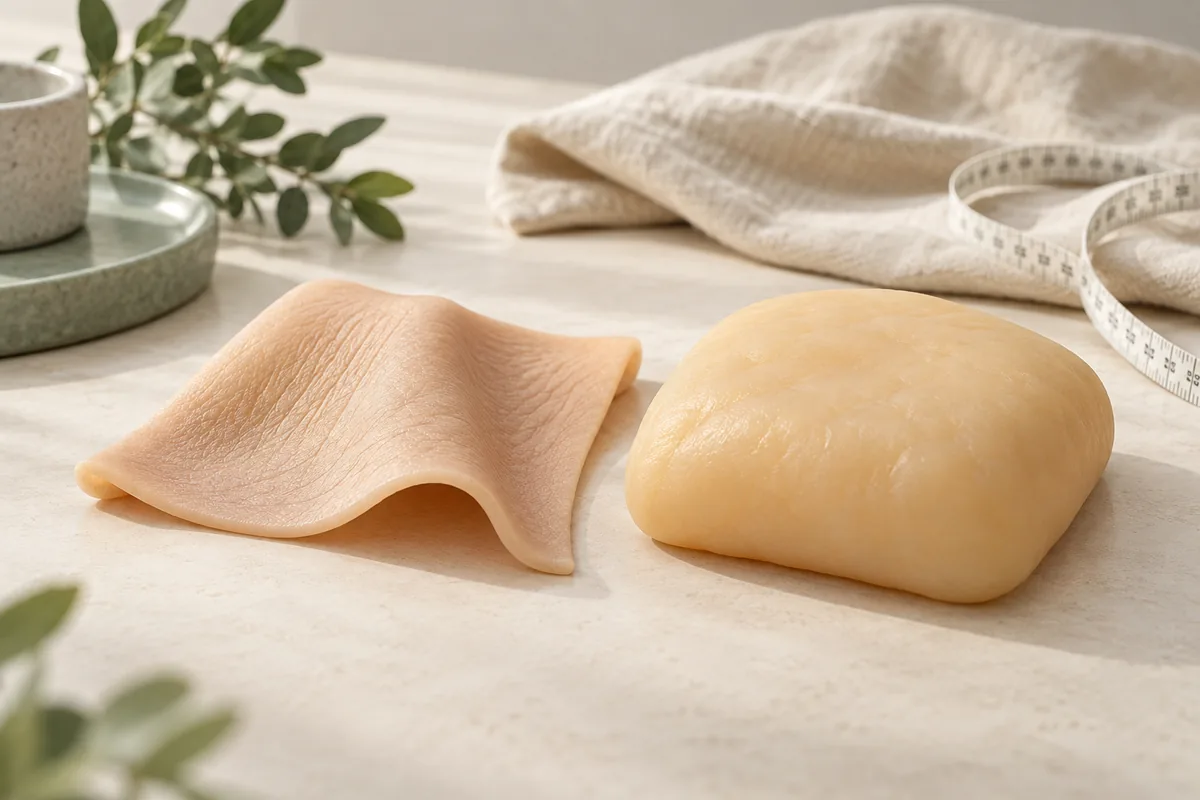
Loose skin is tissue that has stretched and lost some firmness. It can look wrinkled or hang in a fold, particularly after substantial weight loss. The amount and appearance vary considerably from person to person.
Subcutaneous fat sits beneath the skin. It gives the lower abdomen a softer, fuller contour and can be present beneath a loose fold. A normal amount of fat also protects and naturally cushions the body.
These are not mutually exclusive categories. A hanging fold can include stretched skin and a layer of fat. Scars, posture, and changes in abdominal muscles can also affect the outline you notice in everyday movement.
The term FUPA usually describes fullness above the pubic bone, while people sometimes use it for a lower abdominal fold. Describe the exact location when seeking advice; the two areas need not have identical causes.
A fold suggests skin may contribute, and a fuller fold suggests fat may contribute. Neither observation establishes a diagnosis. For a discussion of changes over time, see our guide to whether a FUPA goes away.
Can You Tell the Difference at Home?
You can notice where a fold begins, how it changes when you sit, and whether it rubs. These observations help you describe a concern, but they cannot reliably measure skin, fat, or deeper abdominal structures.
A pinch test is often offered online as a shortcut. Yet fingers can grasp both skin and the fat underneath. The thickness you feel is not a dependable way to identify one tissue with certainty.
Photographs add another uncertainty. Lighting, posture, clothing, and camera angle alter the visible contour. A before-and-after image cannot establish which tissue changed, or whether weight change, treatment, or both contributed to the final visible result.
If the area changes with straining, or you notice a new lump, describe that separately to a clinician. A visible bulge does not prove that it is ordinary fat or loose skin without an examination.
A GP can assess symptoms and examine the area when needed. The useful question is what causes your particular concern and whether any action is appropriate, rather than trying to find a perfect home test.
Why Does the Lower Belly Change?
Substantial weight loss can leave skin that no longer follows the smaller body contour. Age, genetics, and how long skin was stretched may influence looseness. The degree of change varies considerably between people in practice.
Weight gain can increase fat beneath the skin, while weight loss can reduce some of it. Fat does not leave one chosen area specifically. A remaining fold does not mean more weight loss is needed.
Pregnancy can stretch abdominal skin and change the abdominal wall. Recovery differs between people, and a caesarean scar can influence the shape above it. Those issues deserve assessment rather than a label based on appearance.
The abdominal muscles lie deeper than the skin and subcutaneous fat. Separation of those muscles after pregnancy is another possible contributor to contour. Its presence cannot be confirmed from a photo or a pinch alone.
Normal variation matters. Lower-belly fullness is not inherently a medical problem. If your concern is comfort, focus on friction or symptoms; if it is appearance, remember that a flat outline is not a health requirement.
What Can Change, and What Helps With Comfort?
When overall weight loss is appropriate, it may reduce the fat component. It does not guarantee a lower-belly shape, and exercise cannot select where fat is lost. Choose sustainable habits over promises of targeted reduction.
Strength training can build muscle and may change how an area looks, but it cannot remove excess skin. Creams and exercise programmes should not be presented as reliable ways to eliminate a hanging skin fold.
If a fold rubs, comfortable clothing and attention to moisture may help. Keep the area gently clean and dry, and avoid garments that repeatedly chafe. Ask a clinician about persistent irritation or a recurring rash.
For a person considering treatment, the tissue involved matters. A tummy tuck can remove excess abdominal skin and fat, but it is surgery with risks and recovery. An individual consultation is needed to discuss suitability.
You do not have to pursue a procedure for normal variation. Ask a GP about a new lump, persistent pain, or skin problems. Clinical assessment is more useful than trying to diagnose yourself from photographs.

Frequently Asked Questions
Can I Have Loose Skin and Fat at the Same Time?
Yes. A lower abdominal fold can contain skin and a layer of subcutaneous fat. One does not cancel out the other. The proportions vary, and appearance cannot tell you how much of each is present.
After significant weight loss, some fat may remain beneath skin that has stretched. The fold may look soft or hang when seated. Neither observation proves the person failed to lose enough weight or lacked effort.
Likewise, a fuller lower belly does not prove that fat is the only contributor. Pregnancy, scars, and abdominal muscle changes can also alter the contour. A clinician can consider these possibilities if you need assessment.
If the distinction affects a treatment decision, discuss it with a qualified clinician. They can consider your history, symptoms, and examination findings, rather than relying on a photograph or a single informal home pinch test.
The practical goal is to understand your concern. Comfort, an unexplained change, and a preferred appearance are different reasons to seek advice. Each calls for a different conversation and realistic expectations about what can change.
Does a Pinch Test Tell Me Which One I Have?
No. Pinching gathers skin and often the fat immediately underneath it. A thin pinch may suggest one component, but it cannot determine the composition of an entire fold or assess deeper abdominal structures with certainty.
The amount you can grasp changes with posture and exactly where you place your fingers. Pressing harder may change what you feel. Comparing your pinch with someone else’s photograph adds uncertainty rather than useful evidence.
A pinch cannot assess deeper abdominal muscles or a possible hernia. If a lump is new, painful, or noticeably changing, seek prompt clinical advice rather than trusting a home test to explain the concerning change.
Use observations to prepare a clear description: location, when you noticed the change, whether it hurts, and whether it changes with movement. Those details are more helpful in an appointment than a self-assigned tissue label.
If you have no symptoms and only want to understand your shape, it is reasonable to leave the area alone. A clinician can still help when uncertainty is distressing or you are still considering treatment.
Will Exercise Remove Loose Lower-Belly Skin?
Exercise supports health and can increase strength. Resistance work builds muscle beneath the skin, which may change its appearance, but it does not remove skin left after major weight loss. Expectations should reflect that limit.
Abdominal exercises strengthen the muscles you use. They do not specifically burn lower-belly fat, and they cannot pull away a hanging fold. Be wary of a programme promising to target that precise area through exercise.
Some skin may change as the body recovers from pregnancy or weight change. The result varies, and a deadline is not reliable. Do not mistake a change for proof that you chose the wrong exercise.
If you want to be active, choose movement you can sustain and adapt it to your circumstances. After birth or surgery, ask your clinician about timing and exercises where recovery or symptoms make that relevant.
For an established fold causing persistent discomfort, discuss the problem rather than simply adding more workouts. Options depend on the cause, symptoms, and your preferences; treatment is not obligatory for normal variation in every case.
Will Losing More Weight Remove the Fold?
It might reduce a fat component when weight loss is appropriate. It cannot selectively remove lower-belly fat, and it will not necessarily remove excess skin. More weight loss is not always the sensible next step.
If skin has been stretched substantially, the fold can remain even at a stable weight. A clinician can help interpret persistent changes in context rather than treating the fold alone as evidence of excess weight.
The lower abdomen may also contain a scar-related contour or abdominal-wall change. Losing weight would not address every such cause. Avoid making a treatment decision from photographs or clothing fit as reliable proof of cause.
If you are managing weight for health, focus on an approach suited to you. The outcome should not be measured only by whether one fold disappears. Comfort, strength, and overall well-being are useful measures too.
If the area causes pain, recurring irritation, or a new lump, ask a GP for assessment. If it is comfortable and stable, you may decide that no further change is needed. That choice is valid.
Sources and further reading
Chelsea and Westminster Hospital NHS Foundation Trust, Weight loss surgery and loose skin