
FUPA Pictures: Why Photos Mislead and What to Check Instead
Page Contents
- Why this site does not publish photographs of the area
- Why photographs mislead about this area specifically
- What you are likely to find if you search anyway
- A more reliable way to answer your question
- The answer to the underlying question
- When an image genuinely is worth looking at
- If you want to track your own progress with photos
- If comparison is making things worse
- Frequently asked questions
- Why are there no pictures on this page?
- How can I tell if mine looks normal without comparing photos?
- Why do images online look so different from each other?
- Are clinic before-and-after photos accurate?
- Where should I look if I am researching a surgeon?
- Is it normal to keep checking?
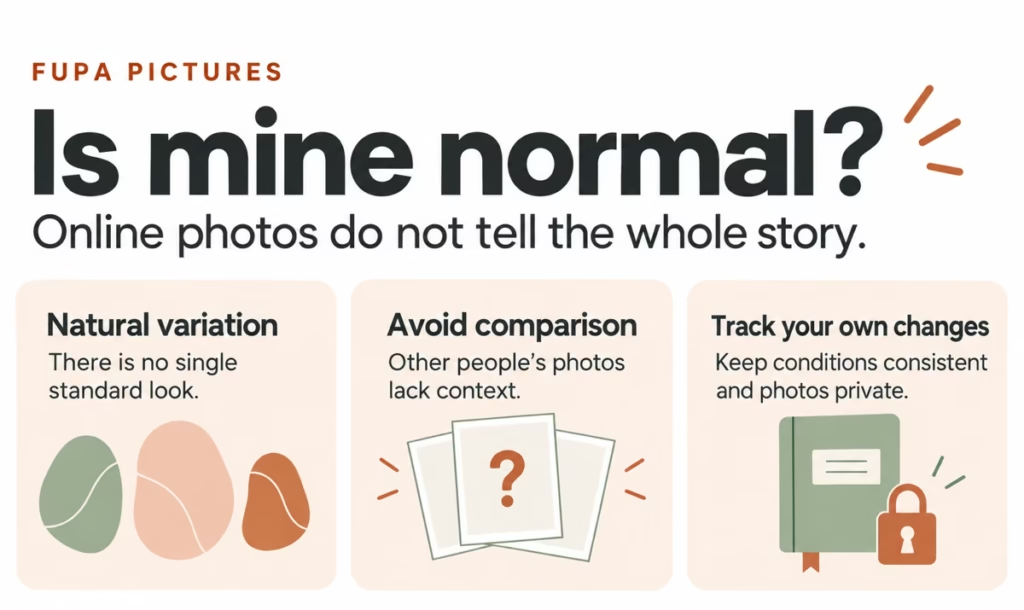
Most people searching for pictures of this area want to answer one question: is mine normal, or is mine unusual? This guide addresses that directly, explains why photographs are a poor way to answer it, and gives you a more reliable method than comparing yourself against images online.
For a description of the range of normal appearance, see our guide to what a FUPA looks like and our guide to sizes and shapes.
Why this site does not publish photographs of the area
We have made a deliberate editorial choice not to host images of this part of people’s bodies. There are three reasons. Genuine medical photographs belong to the clinics and patients who created them, and republishing them without explicit consent is both a copyright issue and an ethical one. Photographs of this specific area sit close enough to intimate imagery that hosting a gallery of them invites use the people photographed never agreed to. And practically, they would not answer your question anyway, for reasons covered below. A clear written description does the job better and does not require anyone’s body to be put on display.
Why photographs mislead about this area specifically
A photograph of this region is unusually sensitive to how it was taken, more so than most parts of the body.
- Camera angle changes everything. A shot taken from slightly above flattens the area; one taken from below or at hip height exaggerates it substantially.
- Posture alters the shape before any fat is involved. An anterior pelvic tilt pushes the area forward; a neutral pelvis pulls it flat. The same body can look markedly different in two photos taken seconds apart.
- Lighting creates or erases the shadow line that defines the fold, which is often the single most visible feature.
- Time of day and cycle stage change bloating and fluid retention enough to alter the outline meaningfully.
- Editing is routine in the images most likely to appear at the top of an image search, particularly on social platforms and in clinic marketing.
Put together, this means two photographs of the same person on the same day can support opposite conclusions, which makes them close to useless as a comparison standard.
What you are likely to find if you search anyway
Image results for this term cluster into a few types, none of which represent a normal population. Clinic before-and-after galleries show people who sought surgery, meaning the “before” images skew toward the more pronounced end of the range, and the “after” images are taken under favourable, deliberately consistent conditions. Social media posts skew the other way, toward people comfortable enough with their bodies to post them, often lit and angled carefully. Stock photography features professional models. Forum posts are unverified and frequently include images taken from elsewhere without consent. What is almost entirely missing is the ordinary middle of the distribution, which is the thing you were actually trying to see.
A more reliable way to answer your question
If the underlying question is whether yours is normal, a physical self-check is far more informative than any image comparison.
Standing relaxed in front of a mirror, look at whether the area is soft and symmetrical, and whether it sits smoothly rather than folding over itself. Both are consistent with ordinary anatomy. Then pinch the area gently: fat feels thick and full through its depth, while loose skin feels thin and pliable with little substance between your fingers. Lie flat and look again; fat and fluid largely flatten out lying down, whereas a fold that remains visible indicates loose skin. Finally, tense your abdominal muscles and watch for doming or a ridge along the midline, which points toward diastasis recti rather than fat.
That four-part check tells you considerably more about your own situation than an hour of image comparison would, and it maps directly onto what actually helps.
The answer to the underlying question
Some fat on the mons pubis is normal anatomy present in everyone, and the range of how prominent it is spans from barely noticeable to significantly projecting, all within normal variation. There is no medical threshold at which a normal mons pubis becomes abnormal. Our guide to whether a FUPA is normal covers this in full, and our guide to sizes and shapes describes the common patterns in words rather than pictures.
When an image genuinely is worth looking at
There is one context where photographs serve a real purpose: assessing a specific surgeon’s work before booking a procedure. In that case you are not asking whether your body is normal, you are asking whether a particular practitioner produces results you would be happy with. Ask the clinic directly for their own patient photographs during consultation, taken under consistent conditions and with patient consent, rather than relying on marketing galleries. Our guide to surgical before-and-after results covers how to interpret them critically.
If you want to track your own progress with photos
Photographs are genuinely useful for one purpose: comparing your own body against itself over time. That only works if the conditions are controlled, since the same variables that make other people’s photos misleading will make yours misleading too.
Take them in the same place, at the same time of day, ideally first thing in the morning before eating, in the same lighting, wearing the same thing, and standing the same way with a neutral rather than tilted pelvis. Take them monthly rather than daily, because this area changes more from one day’s fluid retention than from a week of genuine fat loss, so daily photos measure noise rather than progress. Keep them somewhere private and take them for your own reference rather than for comparison against anyone else’s.
If comparison is making things worse
Repeatedly searching for images of a part of your own body to check whether it is acceptable is a common pattern and rarely a satisfying one, because the search never returns the reassurance it is looking for. If you find yourself doing this often, or if it is affecting your mood or daily life, it is worth mentioning to your GP. Body image concerns are extremely common and there is genuine help available for them.
Frequently asked questions
Why are there no pictures on this page?
Photographs of this area raise consent and copyright issues, and they are unusually distorted by angle, lighting and posture, so they would not reliably answer the question anyway.
How can I tell if mine looks normal without comparing photos?
Check whether it is soft and symmetrical, pinch to distinguish fat from loose skin, look again lying flat, and watch for midline doming when you tense your abdominal muscles.
Why do images online look so different from each other?
Camera angle, lighting, posture, time of day and editing all change the appearance substantially, and the images that surface tend to come from clinic galleries or social media rather than a representative sample.
Are clinic before-and-after photos accurate?
They show real patients but under favourable and deliberately consistent conditions, and they represent people who chose surgery rather than the general population.
Where should I look if I am researching a surgeon?
Ask the clinic directly for their own patient photographs during consultation rather than relying on marketing galleries or third-party image results.
Is it normal to keep checking?
It is a common pattern, though rarely a reassuring one. If it is frequent or affecting your mood, it is worth raising with your GP.