
FUPA vs a Beer Belly
Page Contents
- Where Each One Sits On The Body
- What Kind Of Fat You Are Actually Dealing With
- Why Men Get One And Women Get The Other
- What Causes A Beer Belly To Form
- What Causes A FUPA To Form
- Health Risks Behind Each Type Of Fat
- How To Tell Them Apart At Home
- Can You Have Both At The Same Time
- Frequently Asked Questions
- Is A Beer Belly Always Visceral Fat?
- Does Cutting Alcohol Reduce A FUPA?
- Why Does Fat Distribution Differ Between Men And Women?
- Can A Firm Belly Still Shrink Without Surgery?
- Does Waist Circumference Reveal Which Fat Type You Have?
- Should You See A Doctor About Either Condition?
A FUPA and a beer belly both sit on the lower torso, yet they form in different tissue. A FUPA is a pocket of subcutaneous fat above the pubic bone; a beer belly is visceral fat pushing outward from within.
Confusion happens because both are dismissed as stubborn belly fat, and both can appear on the same man. Location, firmness and waist circumference separate them, even though diet, drinking and genetics shape how each one grows.
This guide breaks down anatomy, causes, health risk and a home test, using terms doctors actually use: android fat distribution, hepatic fat, Camper’s fascia and Scarpa’s fascia, so you know which belly change this is.
| Feature | FUPA | Beer Belly |
|---|---|---|
| Location | Above the pubic bone | Upper abdomen, around the navel |
| Fat type | Subcutaneous fat | Mostly visceral fat |
| Feel | Soft, easily pinched | Firm, hard to pinch |
| Main cause | Genetics, hormones, pregnancy | Alcohol, diet, sedentary lifestyle |
| Health risk | Mostly cosmetic | Linked to insulin resistance, diabetes, heart disease |
| Responds fastest to | Targeted, longer-term effort | Diet and exercise, fairly quickly |
Where Each One Sits On The Body
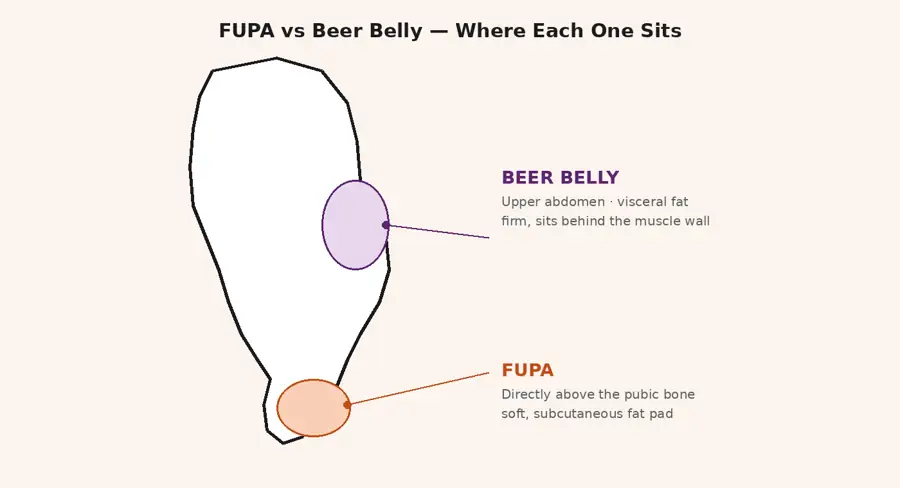
A FUPA sits directly over the mons pubis, just above the pubic bone itself. A beer belly instead fills the upper abdomen, from navel toward ribs, growing outward more than a true panniculus usually would.
Layer matters here: Camper’s fascia and Scarpa’s fascia hold the FUPA’s fat pad close to the skin, keeping it soft. Beer belly fat sits behind the muscle wall instead, which is why it feels tight rather than loose.
Because the FUPA sits low and the beer belly sits high, a man can carry both without either one touching. Clothing reveals this first: trousers strain at the beer belly while underwear lines cut into the lower fat pad itself.
What Kind Of Fat You Are Actually Dealing With
A FUPA is almost entirely subcutaneous fat, the soft, pinchable layer sitting just beneath skin and above the muscle. It is adipose tissue you can grab between two fingers, moving slightly when you move around.
A beer belly is largely visceral fat, wrapped tightly around organs rather than sitting under the skin, which is why it produces a firm belly you cannot easily pinch. Some soft pinchable fat sits over the harder core.
This composition explains why diet alone reshapes a beer belly faster than a FUPA. Visceral fat responds quickly to calorie changes, while stubborn subcutaneous fat in the pubic area often needs longer, more targeted effort.
Why Men Get One And Women Get The Other
Men and women store fat differently because of hormones, not just habits. Testosterone favours android fat distribution, pushing weight to the belly and organs, exactly the pattern behind a classic beer belly and its dad bod name.
Oestrogen favours gynoid fat distribution, sending weight to hips, thighs and the lower pubic shelf, which is why women develop a FUPA more often. Men can still develop one, just less often than this belly type.
Age shifts the balance for both sexes: falling testosterone and oestrogen push more fat toward the middle. That is one reason a beer belly or FUPA can appear later despite no real change in diet.
What Causes A Beer Belly To Form
Alcohol units add up fast: every drink supplies extra calories with little nutrition, and heavy sessions raise hepatic fat stored around the liver. Regular drinking, not occasional drinking, links most strongly with beer belly growth.
A sedentary lifestyle compounds this effect, since unused calories from alcohol simply convert to stored visceral fat rather than fuel. Poor sleep raises cortisol, a stress hormone that encourages fat storage around the middle over other areas.
Refined carbohydrates eaten alongside beer, crisps and white bread, spike blood sugar and add further fuel to the store. Genetics decide how much ends up as belly fat versus fat carried elsewhere on the frame.
What Causes A FUPA To Form
A FUPA usually starts with genetics and hormonal changes, not diet alone, which is why even thin people can have one. Pregnancy stretches the area in many women, leaving a fat pad that outlasts the baby weight.
Weight gain of any kind can enlarge an existing FUPA, since the pubic area is a preferred storage site in people with a gynoid fat distribution pattern. Ageing skin also loses tone, making the pad look bigger.
Previous abdominal surgery, including a caesarean, can leave scar tissue that traps fat locally above the pubic bone. This differs from a beer belly, which forms from calorie surplus and rarely follows a surgical scar.
Health Risks Behind Each Type Of Fat
Visceral fat carries the heavier medical risk: it releases inflammatory signals into the portal circulation, raising the odds of insulin resistance, type 2 diabetes and cardiovascular disease far more than fat sitting under the skin.
A large beer belly with a high waist circumference is one of the clearest home warning signs of metabolic syndrome, a cluster of risk factors doctors track together rather than judging any single number alone.
A FUPA made of subcutaneous fat carries far lower metabolic risk and stays mostly a cosmetic concern. It can still cause chafing or clothing discomfort, but it rarely shows up on any cardiovascular risk chart.
How To Tell Them Apart At Home
The simplest home check is a pinch test: grab the tissue between two fingers. A FUPA’s soft pinchable fat lifts away from the body easily, while a true beer belly stays largely firm and resists an easy pinch.
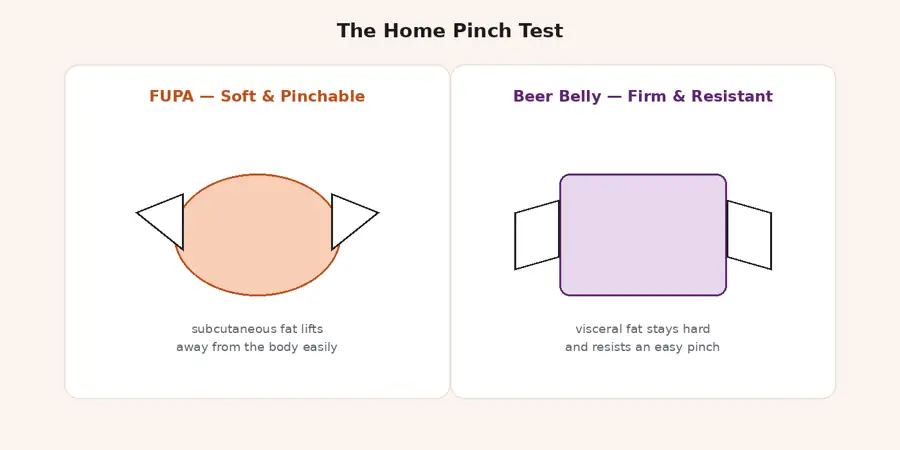
Next, check bulge position against the navel. A FUPA sits below the pubic hairline and above the pubic bone; a beer belly centres around and above the navel, extending toward the ribs rather than downward.
A tape measure adds a third clue: a high waist-to-hip ratio alongside a hard midsection points toward visceral fat and a beer belly, while a soft lower bulge with a normal ratio points toward a FUPA.
Can You Have Both At The Same Time
Yes, both can exist on the same body, especially in men over forty who carry weight in the upper abdomen as well as the pubic area. The two zones develop independently and do not always grow at the same rate.
In that case, a firm belly sits above the navel while a softer fat pad persists lower down near the mons pubis, and each usually needs a different approach: general fat loss for one, targeted work.
Losing overall weight shrinks both areas somewhat, since total body fat and visceral fat respond fastest to a calorie deficit. The lower FUPA, made of subcutaneous fat, tends to be the last area to change.
Frequently Asked Questions
Is A Beer Belly Always Visceral Fat?
Not always, but often. A true beer belly is mostly visceral fat behind the muscle wall, giving it that classic firm feel, though a layer of soft pinchable fat usually still sits on top of the core.
Genetics decide the exact ratio between the two layers in any one person. Someone can have a rounder, softer belly that looks like a beer belly but is closer to subcutaneous fat than visceral fat.
A doctor can estimate the split using waist circumference alongside a simple pinch test, though imaging remains the only fully accurate method. For most people, lifestyle advice stays the same regardless of the exact ratio.
Does Cutting Alcohol Reduce A FUPA?
Cutting alcohol reduces overall calorie intake, which helps shrink a beer belly faster than it shrinks a FUPA. Alcohol units contribute directly to hepatic fat and general weight gain, both easing once drinking drops away.
A FUPA responds more slowly because it is subcutaneous fat shaped heavily by genetics and hormonal changes, not just calories. Cutting alcohol still helps overall body composition, but the pubic area often lags behind the rest.
Combining reduced drinking with consistent exercise and better sleep gives the best result for both areas together. Expect the upper abdomen to respond within weeks, while the lower fat pad may take several months to shift.
Why Does Fat Distribution Differ Between Men And Women?
Hormones drive most of the difference between the two. Testosterone promotes android fat distribution toward the belly and organs, explaining why men develop rounder, firmer bellies more often than women across most adult age groups.
Oestrogen promotes gynoid fat distribution toward hips, thighs and the lower pubic shelf, which is why women more often develop a FUPA than a true beer belly, even at a similar overall body weight.
After menopause, falling oestrogen shifts some women’s fat pattern closer to the male android fat distribution style, which is one reason belly fat can increase later in life despite no change in diet.
Can A Firm Belly Still Shrink Without Surgery?
Yes, a firm belly driven mainly by visceral fat often shrinks well with consistent diet changes and regular exercise, since this fat type responds faster to a calorie deficit than the softer layer sitting underneath.
Reducing alcohol units, cutting refined carbohydrates and lowering cortisol through better sleep all target the same visceral store directly and steadily. Most people notice a firmer, smaller upper abdomen within a few months of change.
Surgery is rarely needed for a beer belly alone, unlike some FUPA or panniculus cases that involve excess loose skin. Lifestyle change remains the first and usually the most effective option for this fat-driven belly.
Does Waist Circumference Reveal Which Fat Type You Have?
Yes, waist circumference is one of the simplest indirect signs doctors use. A high measurement paired with a firm, hard-to-pinch belly usually points toward visceral fat and a genuine beer belly pattern rather than fat.
A lower waist circumference with a soft, easily pinched lower bulge points more toward subcutaneous fat and a FUPA. The number alone cannot confirm this, but with a pinch test it gives a home estimate.
Doctors often pair waist circumference with a waist-to-hip ratio for a fuller picture, since ratio accounts for frame size and hip width. Neither number replaces imaging, but both help flag a worthwhile check-up.
Should You See A Doctor About Either Condition?
See a doctor if waist circumference runs high, the belly feels unusually firm, or you notice other signs linked to insulin resistance or metabolic syndrome, since a beer belly can quietly signal risk beyond looks.
A FUPA rarely needs medical attention unless it causes chafing, back pain, restricted movement or sudden noticeable growth without any clear cause. Most FUPA concerns stay cosmetic rather than being tied to cardiovascular disease.
If either belly type appears suddenly, alongside fatigue, swelling or pain, book a check-up promptly rather than assuming lifestyle alone explains it. Rapid, unexplained changes deserve a professional look regardless of the belly type.