
FUPA and Sleep: How Poor Sleep Feeds Lower Belly Fat
Page Contents
- Can Poor Sleep Really Cause a FUPA?
- How Much Sleep Do Adults Need?
- Ghrelin and Leptin: Why Tired People Eat More
- Visceral vs Subcutaneous Fat: Where Sleep Loss Shows Up
- Cortisol, Insulin Sensitivity and Lower Belly Fat
- Why Short Sleep Makes Dieting Harder
- Shift Work, Circadian Rhythm and Late-Night Eating
- Sleep Apnoea: When Snoring and a FUPA Feed Each Other
- Good Sleep vs Poor Sleep: How Each Affects a FUPA
- How to Sleep Better to Support FUPA Fat Loss
- When to See a GP About Sleep
- Frequently Asked Questions
- Does Lack of Sleep Make a FUPA Bigger?
- How Many Hours of Sleep Help With FUPA Fat Loss?
- Can You Lose a FUPA While You Sleep?
- Does Shift Work Cause a FUPA?
- Can Catch-Up Sleep at Weekends Undo the Damage?
- Is Snoring Linked to a FUPA?
- The Bottom Line on FUPA and Sleep
FUPA and sleep are connected more closely than most people expect. A short night does not deposit fat straight onto the mons pubis, yet repeated sleep loss changes appetite, hormones and food choices in ways that favour lower belly fat.
A FUPA is the soft suprapubic fat pad sitting above the pubic bone. Because this layer stores energy readily, it often thickens when overall body fat rises. Poor sleep makes that calorie surplus easier to reach, night after night.
This guide explains how ghrelin, leptin, cortisol and insulin sensitivity respond to short sleep, how shift work and sleep apnoea fit in, and what realistic changes may help. It is general information, not personal medical advice.
Can Poor Sleep Really Cause a FUPA?
Poor sleep is a contributing factor, not a single cause. A FUPA usually reflects several overlapping causes, including genetics, hormones, pregnancy and overall weight. Sleep sits alongside these, nudging energy balance towards storage rather than release.
Research on sleep and weight mostly measures total body fat or waist size, not the mons pubis directly. Therefore, nobody can promise that better sleep will shrink a FUPA specifically. The evidence instead shows broader shifts in eating and fat storage.
Those broader shifts still matter for a FUPA. When overall body fat rises, the suprapubic fat pad usually grows with it, and it is often among the last areas to slim down when body fat later falls.
How Much Sleep Do Adults Need?
The NHS says most healthy adults need around 7 to 9 hours of sleep a night, although individual needs differ. Regularly falling short of your own requirement builds a sleep debt that a single lie-in rarely clears.
Sleep quality counts as well as sleep duration. Eight hours broken by frequent waking, loud snoring or a crying baby may leave you as tired as six solid hours. Daytime sleepiness is a useful signal that something is off.
Most people with a FUPA will not need a sleep study. However, tracking bedtime, wake time and how rested you feel for two weeks gives a clear picture before you change anything about diet or exercise.
Ghrelin and Leptin: Why Tired People Eat More
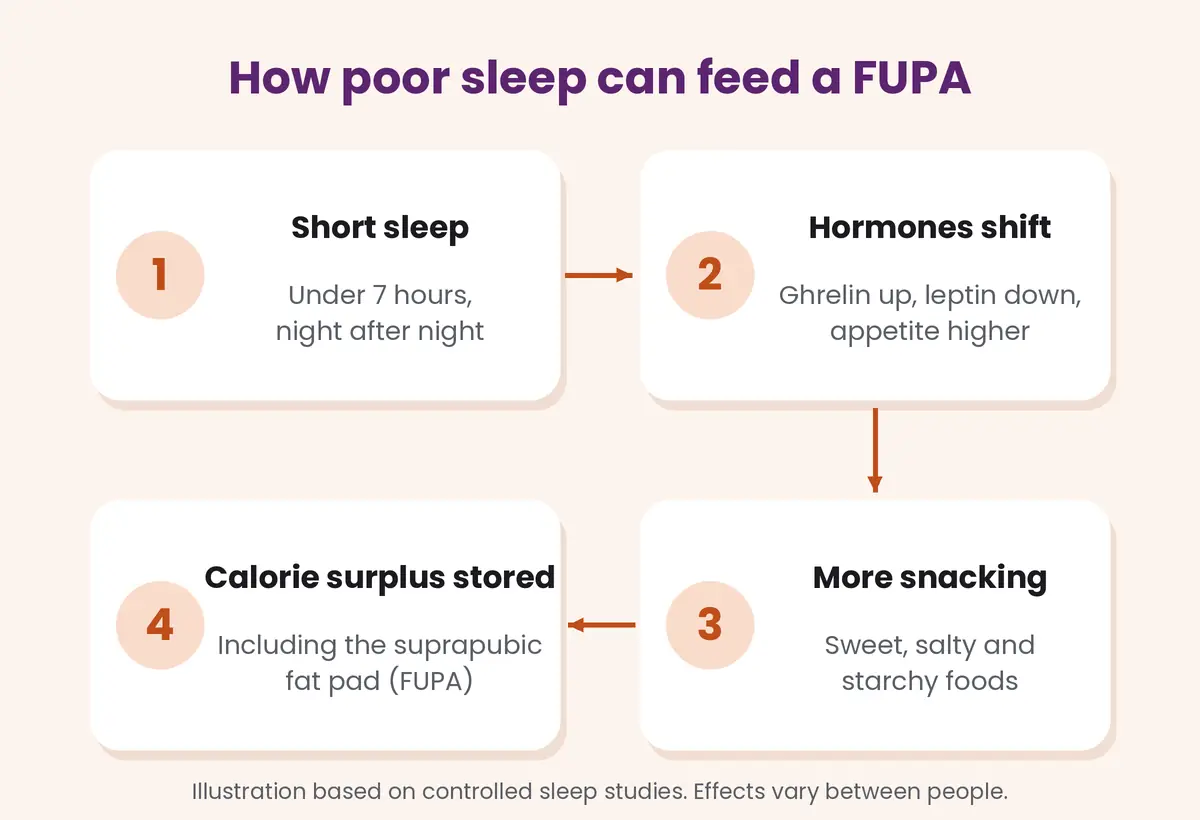
Ghrelin is the hormone that signals hunger, while leptin helps signal fullness. In a small 2004 study of healthy young men, two nights of four hours in bed lowered leptin by 18% and raised ghrelin by 28%.
Reported hunger rose by about 24% in the same study. Participants wanted more sweets, salty snacks and starchy foods, yet showed little extra interest in fruit, vegetables or dairy. That pattern pushes energy intake upwards very quickly.
For someone trying to reduce a FUPA, this is the most practical link. Extra snacks on tired days add calories the body has to store, and the lower abdomen, including the suprapubic fat pad, is a common storage site.
Visceral vs Subcutaneous Fat: Where Sleep Loss Shows Up
Belly fat comes in two main layers. Subcutaneous fat sits under the skin and can be pinched; a FUPA is mostly this type. Visceral fat lies deeper, around the organs, and carries greater metabolic risk.
A 2022 study in the Journal of the American College of Cardiology restricted 12 healthy adults to four hours of sleep for two weeks. They ate over 300 extra calories daily, and abdominal fat rose 9%, visceral fat 11%.
Visceral fat kept rising during recovery sleep, which suggests catch-up weekends may not undo the damage quickly. For a broader comparison of fat types, see our guide to FUPA vs other belly fat.
Cortisol, Insulin Sensitivity and Lower Belly Fat
Cortisol follows a daily rhythm, normally peaking in the morning and falling at night. Some laboratory studies report higher evening cortisol after sleep loss, and our guide to FUPA and cortisol explains what that hormone can and cannot do.
Sleep also affects insulin sensitivity. In a 2012 study of seven lean adults, four nights of 4.5 hours lowered whole-body insulin sensitivity by 16% and fat-cell insulin sensitivity by about 30%, compared with 8.5 hours.
Reduced insulin sensitivity is linked with higher type 2 diabetes risk and central fat storage. These were short, tightly controlled studies, so they show direction rather than exact effects on any individual FUPA.
Why Short Sleep Makes Dieting Harder
Sleep influences what you lose, not only what you eat. In a 2010 trial, ten overweight adults followed the same calorie deficit for 14 days, once with 8.5 hours in bed and once with 5.5 hours.
With short sleep, fat loss fell by 55%, from 1.4 kg to 0.6 kg, while loss of fat-free mass, which includes muscle, rose by 60%. Participants also felt hungrier, which makes any calorie deficit harder to sustain.
If you are cutting calories to reduce a FUPA, protecting your sleep may help more of the weight you lose come from fat. Tiredness also reduces everyday movement, such as walking, which lowers energy expenditure further.
Shift Work, Circadian Rhythm and Late-Night Eating
The circadian rhythm is the body clock that times sleep, hunger and hormone release, including melatonin. Night shifts force eating and sleeping at times this clock does not expect, which can disturb how the body handles food.
A 2017 meta-analysis of 28 studies linked night shift work with a 23% higher risk of overweight or obesity. Abdominal obesity showed the strongest link, and permanent night workers had a higher risk than rotating shift workers.
Shift workers cannot always change rotas, yet consistent sleep windows, planned meals rather than vending machine snacks, and a dark, quiet bedroom for daytime sleep may soften the effect on a FUPA over time.
Sleep Apnoea: When Snoring and a FUPA Feed Each Other
Obstructive sleep apnoea makes breathing stop and start during sleep. The NHS lists loud snoring, gasping or choking noises, frequent waking, morning headaches and daytime tiredness as common signs, and overweight and a large neck as risk factors.
The relationship can run both ways. Extra body weight raises apnoea risk, and the broken, unrefreshing sleep it causes can drive the appetite changes described above. Alcohol before bed can worsen symptoms, as our FUPA and alcohol guide explains.
Sleep apnoea needs a medical assessment rather than self-treatment. The NHS may offer a CPAP machine, and weight loss often helps milder cases. If confirmed apnoea causes excessive sleepiness, the NHS advises not driving until symptoms are controlled.
Good Sleep vs Poor Sleep: How Each Affects a FUPA
The table below summarises the main differences reported in research. Figures come from small controlled studies, so treat them as signs of direction rather than predictions for your own FUPA.
| Factor | Regular 7 to 9 hours | Repeated short sleep |
|---|---|---|
| Hunger hormones | Ghrelin and leptin in usual balance | Ghrelin up, leptin down, hunger higher |
| Food choices | Easier to follow planned meals | More sweet, salty and starchy snacks |
| Calorie intake | Closer to actual energy needs | Over 300 extra calories daily in one study |
| Insulin sensitivity | Normal response to meals | Lower, especially in fat cells |
| Dieting results | More of the loss comes from fat | Less fat lost, more muscle lost |
| Energy for activity | More everyday movement | Less walking, training feels harder |
| Likely FUPA effect | Supports gradual overall fat loss | Makes fat gain easier and loss slower |
How to Sleep Better to Support FUPA Fat Loss
Start with a fixed wake time, even at weekends, then set a bedtime that allows seven to nine hours. A consistent rhythm steadies the body clock and makes falling asleep easier within a few weeks.
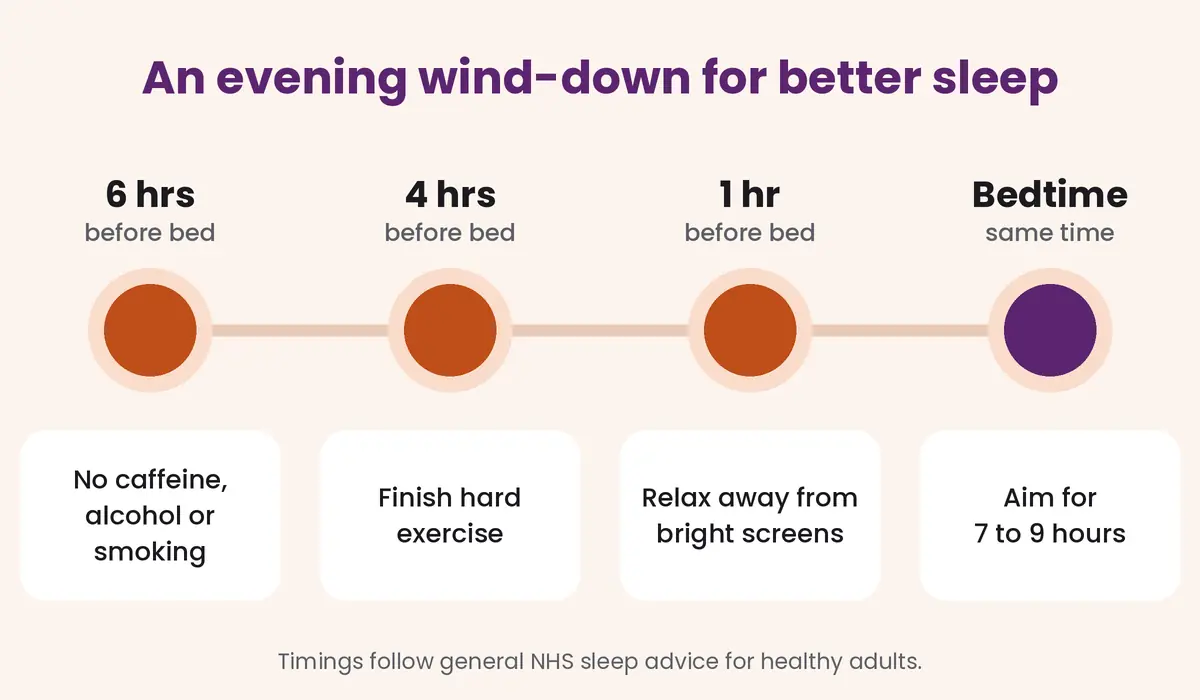
- Avoid caffeine, alcohol and smoking for about six hours before bed, as the NHS suggests.
- Finish vigorous exercise at least four hours before bedtime, while aiming for 150 minutes of activity a week.
- Give yourself an hour to relax before bed, away from bright screens.
- Keep the bedroom dark, quiet and cool, with a comfortable mattress.
Pair better sleep with the fundamentals in our FUPA diet guide and complete FUPA reduction guide. Sleep supports these habits; it does not replace a sensible eating pattern or regular movement.
Be patient with the results. Appetite often feels calmer within days of better sleep, but visible change in a FUPA depends on overall fat loss, genetics and hormones, and usually takes months rather than weeks.
When to See a GP About Sleep
Speak to a GP if poor sleep lasts for months, affects daily life or does not improve with routine changes. The NHS describes insomnia lasting three months or longer as long-term, and cognitive behavioural therapy is often offered.
Seek advice promptly if someone notices you stop breathing during sleep, or if you feel dangerously sleepy while driving. A GP can also check for thyroid problems, low mood or medicines that affect sleep and weight.
Frequently Asked Questions
Does Lack of Sleep Make a FUPA Bigger?
It can contribute indirectly. Short sleep raises hunger, encourages higher-calorie snacks and reduces insulin sensitivity. Over weeks, the resulting calorie surplus may be stored partly in the suprapubic fat pad, making an existing FUPA fuller.
How Many Hours of Sleep Help With FUPA Fat Loss?
The NHS suggests most healthy adults need around 7 to 9 hours a night. No research sets a specific figure for a FUPA, so aim for the amount that leaves you alert during the day.
Can You Lose a FUPA While You Sleep?
Not directly. Your body uses some energy overnight, but sleep does not target fat over the mons pubis. Good sleep helps by supporting appetite control and making a steady calorie deficit easier to maintain.
Does Shift Work Cause a FUPA?
Shift work does not cause a FUPA on its own. However, research links night shifts with higher rates of abdominal obesity, probably through circadian disruption, irregular meals and short sleep. Consistent routines may reduce the effect.
Can Catch-Up Sleep at Weekends Undo the Damage?
Probably not fully. In one controlled study, visceral fat kept rising even during recovery sleep. A regular schedule across the whole week appears more helpful for appetite and FUPA fat than long weekend lie-ins.
Is Snoring Linked to a FUPA?
Loud snoring can be a sign of obstructive sleep apnoea, which is more common with higher body weight. Apnoea disrupts sleep and appetite, so it is worth a GP assessment if snoring comes with daytime tiredness.
The Bottom Line on FUPA and Sleep
Sleep will not remove a FUPA by itself, but chronic short sleep makes lower belly fat easier to gain and harder to lose. Ghrelin, leptin, insulin sensitivity and food choices all shift in an unhelpful direction.
Treat 7 to 9 hours of good-quality sleep as part of your FUPA plan, alongside balanced eating and regular activity. If snoring, insomnia or shift patterns get in the way, a GP can help find a workable solution.