
Shapewear That Rolls Down: Fit Checks and Fixes
Page Contents
- Why Shapewear Rolls Down
- Size and Compression Level
- Torso Length, Waistband Position and Movement
- Anti-Roll Features and Garment Styles
- Skin Irritation and Excessive Tightness
- Frequently Asked Questions
- Why Does Shapewear Roll Down When I Sit?
- Does Rolling Mean It Is Too Small?
- Do Bodysuits Roll Less Than Shaping Shorts?
Why Shapewear Rolls Down
If your shapewear rolls down, notice where movement starts. Distinguish waistband rolling and waistband folding from the whole shaping garment sliding. Describing what happens helps you compare alternatives without assuming that size explains every problem.
Check garment slipping, bunching and visible clothing lines while wearing your intended outfit. Smooth the fabric into position, then sit and walk naturally. Notice which changes return before deciding that pulling everything higher will help.
Make one fit adjustment at a time so you can tell what helps. Compare size, length or construction separately, keeping the outfit consistent. You do not need shapewear if you prefer clothing without added compression.
Size and Compression Level
Treat shapewear sizing and compression level separately. Use the specific garment size chart, taking your waist measurement and hip measurement as instructed. Ask the retailer for guidance when those measurements point towards different garment sizes.
SPANX advises against sizing down for stronger shaping because it can encourage rolling and discomfort. An oversized garment may lose support; an undersized garment may restrict comfort. Rolling alone cannot reliably distinguish between these possibilities.
Compare the intended support level while preserving a comfortable fit. Notice any pinching during ordinary movement. A garment that looks smooth but repeatedly hurts needs reassessment, even when its labelled size matches your usual expectations.
Torso Length, Waistband Position and Movement
Your torso length affects how garment length and waistband position work together. Check seated fit instead of assuming every high waist lands identically. Compare coverage and pressure before deciding whether another size addresses the problem.
Include sitting, bending and walking in your try-on with your intended outer clothing. Notice outfit pressure where waistbands overlap. If rolling happens with one combination, compare another outfit before replacing shapewear that otherwise feels comfortable.
With high-waisted shorts, inspect coverage around the lower belly curve without forcing the band higher than intended. Repeat your movement check after repositioning. Persistent pulling suggests that the current combination deserves another fit or style.
Anti-Roll Features and Garment Styles
Compare anti-roll construction details rather than labels alone. Honeylove describes flexible supports inside side seams. A supported waistband differs structurally from a free waistband, but that distinction cannot establish how comfortably either fits your proportions.
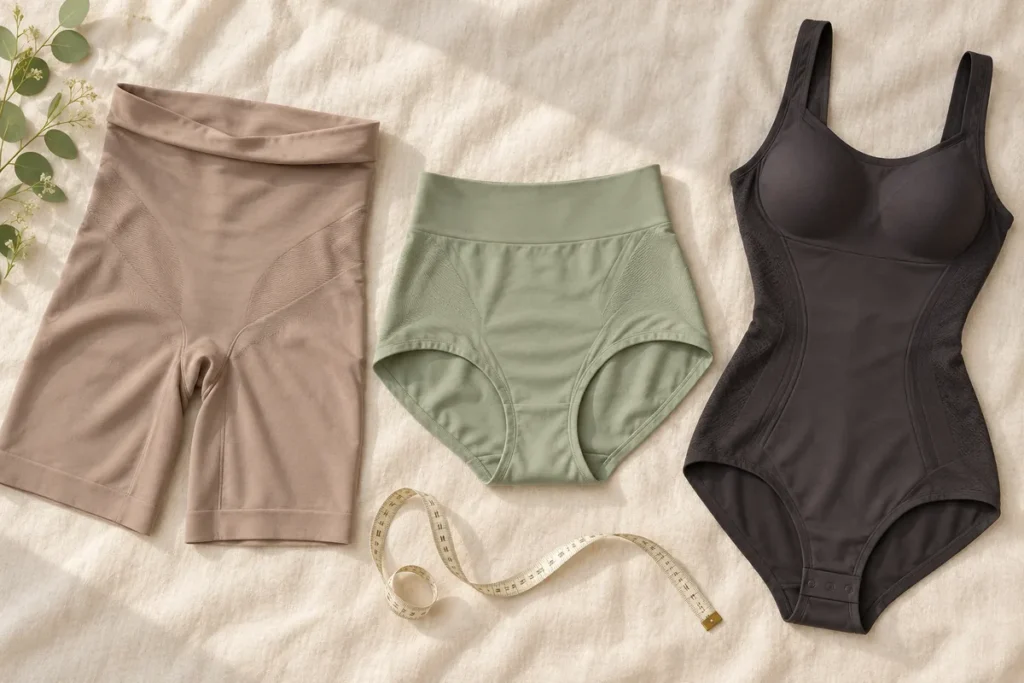
A bodysuit with shoulder straps offers a different arrangement from shaping shorts or shaping briefs. Compare coverage, length and bathroom access. Attachment at the shoulders changes the fitting considerations rather than guaranteeing comfort or stability.
Features such as silicone grips, a wide waistband and compression panels deserve inspection during your try-on. Check how each feels against your skin. Their presence alone does not guarantee that the garment will stay comfortable.
Skin Irritation and Excessive Tightness
Watch for skin irritation, particularly with sensitive skin. If chafing, redness or itching develops, remove the garment. Cleveland Clinic advises taking a break from irritating shapewear; seek medical advice if symptoms persist or become worse.
Tingling or numbness means you should stop wearing shapewear and reassess comfort. Cleveland Clinic notes that overly tight garments can compress nerves. Remove the garment, and seek medical advice if these symptoms continue after removal.
Use clean shapewear and follow its care instructions. Cleveland Clinic advises against prolonged wear and sleeping in shaping garments. Its guidance does not establish one universal hourly limit that makes every garment suitable for everyone.
Frequently Asked Questions
Why Does Shapewear Roll Down When I Sit?
Observe shapewear rolling when sitting alongside seated waistband pressure. Note whether folding starts immediately or after several minutes. This gives you something specific to compare, although timing cannot identify one underlying cause on its own.
Compare waistband placement before deciding whether a garment too short explains the problem. Excess material can also gather near the top. Repeated fabric folding helps locate an issue without proving which adjustment will resolve it.
Repeat a sitting fit test with the full outfit, then stand and walk normally. Choose the combination that needs less adjustment and feels comfortable. A successful standing mirror check cannot substitute for testing actual movement.
Does Rolling Mean It Is Too Small?
Shapewear too small and shapewear too big require different adjustments, but rolling alone cannot distinguish them. Assess any size mismatch across the waist, hips and length rather than judging everything from the upper edge alone.
Distinguish loss of support from a preference for lighter compression. Shapewear need not feel extremely firm to suit your outfit. If you dislike the sensation, consider another support option rather than accepting excessive tightness instead.
Try a different size when your measurements and fit observations support that choice. If one area improves while another becomes uncomfortable, compare another cut. The aim is a wearable garment, not simply a smaller label.
Do Bodysuits Roll Less Than Shaping Shorts?
When comparing a bodysuit versus shaping shorts, consider shoulder support alongside torso fit. Leonisa presents straps as an anti-rolling feature. That manufacturer’s explanation does not establish that every bodysuit performs better than every separate garment.
Compare garment stability through the same movements in both styles. If adjustable straps are provided, follow the garment instructions for strap adjustment. Tightening them repeatedly is not a substitute for finding an appropriate overall length.
Let individual comfort decide between suitable options. Consider shoulder feel, bathroom access, coverage and the intended neckline together. A separate brief or short remains a reasonable choice when it fits comfortably and suits your outfit.