
Does Stress Cause a FUPA? What Cortisol Really Does to Lower Belly Fat
Page Contents
- What Cortisol Actually Does in the Body
- How Chronic Stress Changes Fat Storage
- Visceral Fat vs Subcutaneous Fat: Where a FUPA Sits
- The Pubic Cortisol Receptor Myth
- Appetite, Cravings and Stress Eating
- Sleep Loss, Cortisol and Lower Belly Fat
- Muscle Loss, Insulin Resistance and Metabolism
- Signs Stress May Be Adding to Your FUPA
- Cushing’s Syndrome and When to See a GP
- How to Lower Cortisol and Reduce a FUPA
- Exercise Without Raising Cortisol
- How Long Before You See a Difference
- Frequently Asked Questions
- Can You Flush Cortisol Out of Your Body?
- What Does Cortisol Belly Look Like?
- Is Cortisol Belly Real?
- Do Cortisol Supplements Reduce a FUPA?
- Does HIIT Raise Cortisol and Make a FUPA Worse?
- Does Stress Affect a FUPA Differently in Men and Women?
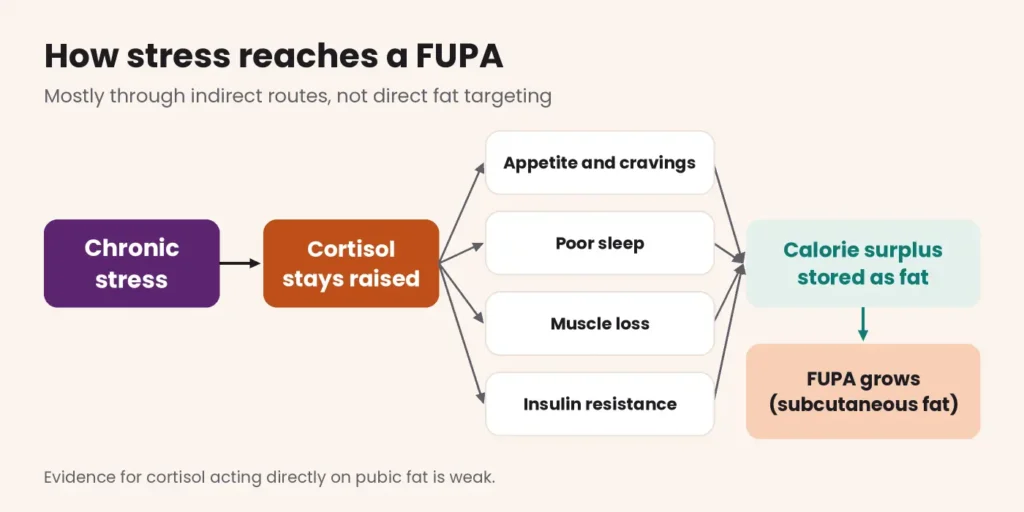
Stress rarely builds a FUPA alone. The fat upper pubic area sits over the mons pubis, and chronic stress works mainly through appetite, sleep and movement, so cortisol has an indirect effect, not direct control.
The popular labels stress belly, cortisol belly and hormonal belly are not clinical terms in medicine. They describe midsection weight gain that people link with busy, pressured years, yet doctors diagnose none of them.
What research does support is a link between prolonged stress and more abdominal fat. The suprapubic fat pad can grow as part of that picture, but lower belly fat reflects genetics, calories and hormones together, as our guide to what causes a FUPA explains.
What Cortisol Actually Does in the Body
Cortisol is a glucocorticoid made by the adrenal glands. Its release is controlled by the HPA axis, a chain running from the hypothalamus to the pituitary gland and down to the adrenals, which respond accordingly.
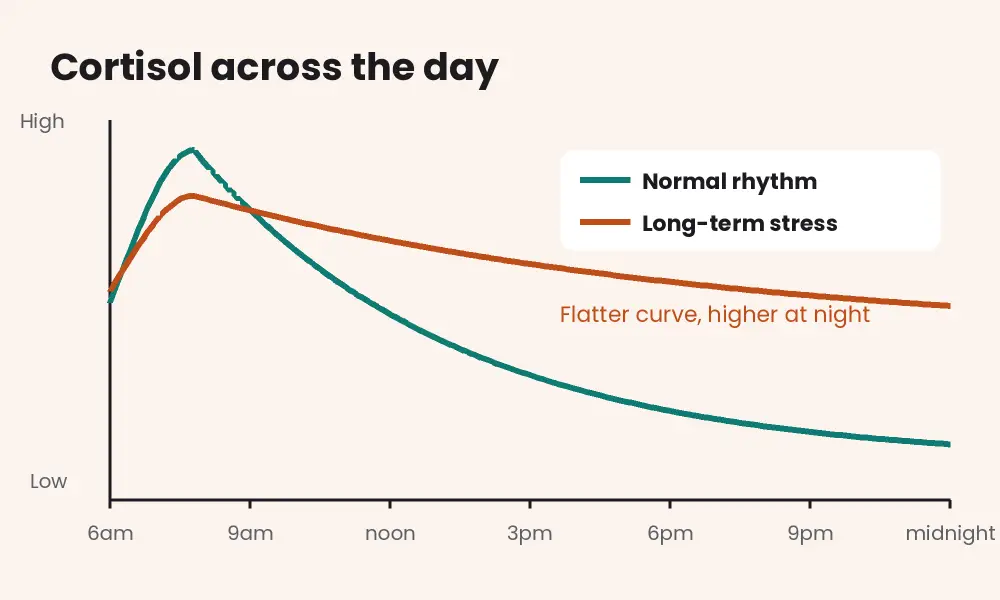
It follows a circadian rhythm. A morning cortisol peak supports wakefulness, then levels fall through the day. It also handles blood sugar regulation, supports blood pressure, provides inflammation control and immune regulation, and shapes metabolism.
During the fight-or-flight response, adrenaline acts instantly while cortisol follows to keep energy available. Calling it simply the stress hormone misses how essential it is. Without cortisol, the body cannot manage ordinary daily demands safely.
How Chronic Stress Changes Fat Storage
Acute stress passes quickly and cortisol settles. Ongoing stress is different. When pressure lasts for months, cortisol dysregulation can flatten the normal daily curve, keeping levels higher in the evening when they should be falling.
Cortisol drives gluconeogenesis in the liver and glycogenolysis in muscle, raising blood glucose. The pancreas releases more insulin. High insulin alongside high cortisol favours fat storage, a survival habit built for energy conservation during threat.
Over time this can cause fat redistribution toward the trunk, known as central adiposity. Researchers often track it with waist-to-hip ratio. Most of this shift appears in deep abdominal fat, not in the pubic mound.
Visceral Fat vs Subcutaneous Fat: Where a FUPA Sits
Visceral fat, also called intra-abdominal fat or omental fat, wraps around the organs. It is the organ fat most tied to metabolic syndrome, type 2 diabetes, heart disease and stroke. You cannot pinch it externally.
A FUPA is subcutaneous fat, the soft, pinchable fat between Camper’s fascia and Scarpa’s fascia above the pubic bone. The body also carries essential fat, which protects organs and hormones, so some fat is necessary.
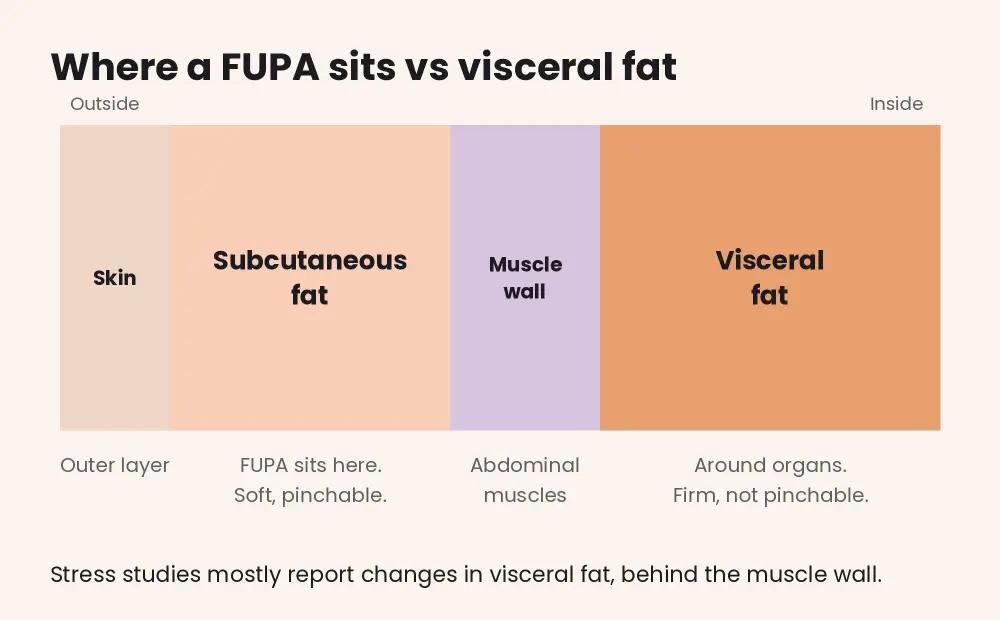
This matters here. Android fat distribution, common in men and after menopause, loads the belly, while gynoid fat distribution favours hips and thighs. Stress studies mainly report visceral change, not growth in pubic subcutaneous fat. Our comparison of FUPA and other belly fat covers each type in detail.
| Feature | FUPA (subcutaneous fat) | Visceral fat |
|---|---|---|
| Location | Above the pubic bone, under the skin | Behind the muscle wall, around organs |
| Feel | Soft and pinchable | Firm, cannot be pinched |
| Link to stress | Mostly indirect, through eating and sleep | Strongest evidence of a cortisol link |
| Health risk | Mainly comfort and appearance | Diabetes, heart disease, stroke |
| Responds to | Steady whole-body fat loss over months | Diet, activity and stress control, often sooner |
The Pubic Cortisol Receptor Myth
Some clinic websites claim the pubic area holds a high concentration of cortisol receptors. We found no study measuring glucocorticoid receptors in pubic fat. Published work compares omental adipose tissue with subcutaneous abdominal adipose tissue.
The enzyme 11-beta-HSD1, short for 11-beta-hydroxysteroid dehydrogenase type 1, handles cortisone to cortisol conversion inside fat cells. This local cortisol regeneration is linked to visceral obesity and to adipocyte hypertrophy, meaning larger fat cell size.
Findings on GR alpha vary, and obesity raises enzyme activity in subcutaneous belly fat too. Depot differences are real but modest. Stress touches every fat store, yet nothing shows the pubic mound is uniquely sensitive. Genes play a far bigger role, as FUPA hormones and genetics shows.
Appetite, Cravings and Stress Eating
The clearest route from stress to a bigger FUPA is food. Cortisol produces increased appetite and steers choices toward comfort foods, especially calorie-dense foods that satisfy sugar cravings and the pull of high-fat foods quickly.
Stress also activates the brain’s reward centre, which is why emotional eating briefly soothes. Disturbed levels of ghrelin, the hunger signal, and leptin, the fullness signal, make overeating easier and stopping noticeably harder than usual.
Busy, stressful weeks often mean more ultra-processed foods eaten quickly. Over months, that steady calorie surplus is stored somewhere, and for people genetically inclined to store fat low on the abdomen, the pubic area fills. A simple FUPA-friendly way of eating breaks that cycle.
Sleep Loss, Cortisol and Lower Belly Fat
Sleep deprivation and poor sleep keep night-time cortisol high when it should be at its lowest. Short nights also raise ghrelin and lower leptin, so these hunger hormones push appetite up throughout the following day.
One bad night causes next-day insulin resistance, and repeated short sleep deepens it. The result is fatigue, often described as feeling wired but tired: exhausted, yet too alert to rest, snack less or move more.
Good sleep hygiene helps. Most adults need 7 to 9 hours, a consistent bedtime and waking time, a cool dark room, and no screens before bed for an hour. Better sleep makes other changes easier, and our guide to FUPA and sleep covers the evidence in detail.
Muscle Loss, Insulin Resistance and Metabolism
Long-term high cortisol is catabolic. It causes muscle breakdown to release amino acids the liver turns into glucose. Losing lean mass this way lowers basal metabolic rate, the energy your body burns entirely at rest.
A slower metabolism combined with ageing-related sarcopenia can produce sarcopenic obesity, sometimes called skinny fat: thin arms and legs, softer trunk. The lower abdomen may then look fuller even when body weight has barely changed, a pattern explained in why slim people get a FUPA.
Cortisol also reduces insulin sensitivity. As insulin resistance builds, cells respond poorly, high blood sugar lingers after meals, and more energy is stored as fat. Strength work and steady activity are the most reliable fix.
Signs Stress May Be Adding to Your FUPA
No test separates stress fat from any other fat. Still, patterns can suggest a link: abdominal weight gain during a difficult period, strong stress cravings, waking at night, and lasting anxiety or irritability most days.
Others notice fatigue, low motivation, less movement through the day and more evening snacking. These habits, rather than cortisol alone, usually explain the change. Tracking them for two weeks often reveals the real drivers clearly.
Measure your waist circumference at the navel, not only your weight. NICE guideline NG246 advises keeping waist below half of height, known as the waist-to-height ratio. A rising ratio signals deeper belly fat worth addressing early.
Cushing’s Syndrome and When to See a GP
Genuinely high cortisol is a medical condition called hypercortisolism. Cushing’s syndrome most often follows long-term steroid use, while Cushing’s disease comes from a pituitary tumour. An adrenal tumour can too. All three need specialist care.
It is rare, affecting roughly 10 to 15 per million people each year. Warning signs include a rounded moon face, a buffalo hump between the shoulders, wide purple stretch marks, thin skin and easy bruising.
See your GP if these appear with muscle weakness, high blood pressure or rapid weight gain. Diagnosis uses a cortisol blood test or late-night saliva test, as the NHS guide to Cushing’s syndrome describes. Ordinary stress does not raise cortisol to these levels.
| Sign | Everyday stress | Cushing’s syndrome |
|---|---|---|
| Cortisol level | Mildly raised, rhythm flattened | Very high all day |
| Weight change | Gradual, linked to eating and sleep | Rapid, mainly face and trunk |
| Skin | Usually unchanged | Thin skin, wide purple stretch marks |
| Other features | Cravings, tiredness, poor sleep | Moon face, buffalo hump, muscle weakness |
| What to do | Lifestyle changes and stress support | See a GP for testing |
How to Lower Cortisol and Reduce a FUPA
Start with stress management you will realistically keep up. Mindfulness, meditation, deep breathing, breathwork, yoga and journaling all help calm the stress response, and just five to ten minutes each day is enough to begin.
Protect social connection, since isolation keeps stress high. If worry feels constant, CBT and other talking therapy help. In England you can self-refer to NHS Talking Therapies without seeing a GP first, removing one barrier.
Eat regular meals built on protein, fibre and whole foods. Balanced meals steady cravings. Aim for a calorie deficit of 300 to 500 kcal daily, set a caffeine limit, cut alcohol and avoid crash dieting. Our guide to getting rid of a FUPA naturally builds these habits into a plan.
Exercise Without Raising Cortisol
Exercise lowers stress, but overtraining does the opposite. Daily HIIT or other high-intensity exercise without recovery keeps cortisol raised. Plan rest days, and keep hard intervals to one or two sessions each week at most.
Strength training is the priority because it rebuilds muscle and improves insulin sensitivity. Two or three resistance training sessions using compound movements like squats, rows and presses fit most weeks and suit every fitness level. See our FUPA exercises that actually work.
Walking at moderate intensity lowers cortisol. Aim for 7,000 to 10,000 steps and 150 minutes a week, matching NHS physical activity guidelines, and read how walking helps with a FUPA. Remember the spot reduction myth: fat loss throughout the body shrinks a FUPA.
How Long Before You See a Difference
Sleep and mood often improve within a few weeks. Visible change to a FUPA takes a few months, because the pubic area is often among the last places the body releases fat during weight loss.
Aim for gradual weight loss of about 0.5 to 1 kg a week. That pace protects muscle and improves body composition. Sustainable habits and consistency matter more than intensity, since short bursts of effort fade.
Some factors limit results regardless of stress. Genetics, menopause, PCOS, pregnancy and ageing all shape where fat sits, and stretched skin can leave loose skin behind. In those cases, lower stress helps health, not shape. Read whether a FUPA goes away for realistic expectations.
Frequently Asked Questions
Can You Flush Cortisol Out of Your Body?
No. Cortisol is essential, and your body clears and replaces it all day. Drinks, detoxes and teas cannot remove it; regular sleep, daily movement and steady meals bring a raised rhythm back to normal.
What Does Cortisol Belly Look Like?
There is no distinct shape. Stress-linked fat looks like any other belly fat: visceral fat makes the upper belly firm, while a FUPA is soft and low. The mirror cannot show whether cortisol played a part.
Is Cortisol Belly Real?
Only as shorthand. It is a social media label, not a diagnosis. Long-term stress can add abdominal fat, mostly indirectly, but calories, sleep, genetics and hormones matter far more for most people.
Do Cortisol Supplements Reduce a FUPA?
No reliable evidence says so. Adrenal fatigue is not a recognised condition, the viral cortisol cocktail is untested, and ashwagandha studies show small stress changes but no pubic fat loss. Ask a pharmacist before trying any.
Does HIIT Raise Cortisol and Make a FUPA Worse?
Only when overdone. Hard intervals raise cortisol briefly, which is normal. One or two sessions a week alongside strength work and walking is fine; daily HIIT without recovery keeps stress hormones high.
Does Stress Affect a FUPA Differently in Men and Women?
Partly. Stress pushes men towards visceral gain and can lower testosterone. In women, falling oestrogen during menopause weakens the brake on the stress response, shifting more fat to the lower abdomen.