
FUPA or Posture? How Anterior Pelvic Tilt Makes Your Lower Belly Look Bigger (and the 2-Minute Wall Test)
Page Contents
- What Anterior Pelvic Tilt Actually Is
- How Pelvic Tilt Pushes the Lower Belly Forward
- Fat, Posture or Both: Telling Them Apart
- The 2-Minute Wall Test for Pelvic Tilt
- What Causes Anterior Pelvic Tilt
- Pregnancy, Diastasis Recti and the Pelvic Floor
- Breathing, Stomach Gripping and the Pouch
- Symptoms That Often Come With It
- How Physiotherapists Check Pelvic Tilt
- Exercises That Correct the Tilt
- What the Research Says About Muscle Strategies
- Daily Habits and Desk Setup
- What Fixing Your Posture Can and Cannot Do
- When to See a Professional
- Frequently Asked Questions
- Can Bad Posture Cause a FUPA?
- Can You Fix Anterior Pelvic Tilt?
- How Long Does It Take to Fix Pelvic Tilt?
- Can a Lower Belly Pooch Go Without Losing Weight?
- Does Sucking In Your Stomach Cause a Pooch?
- Is a FUPA Normal?
A FUPA, short for fat upper pubic area, is not always a pure fat problem. Anterior pelvic tilt can tip the pubic pouch forward, so the lower belly looks larger than the fat underneath is.
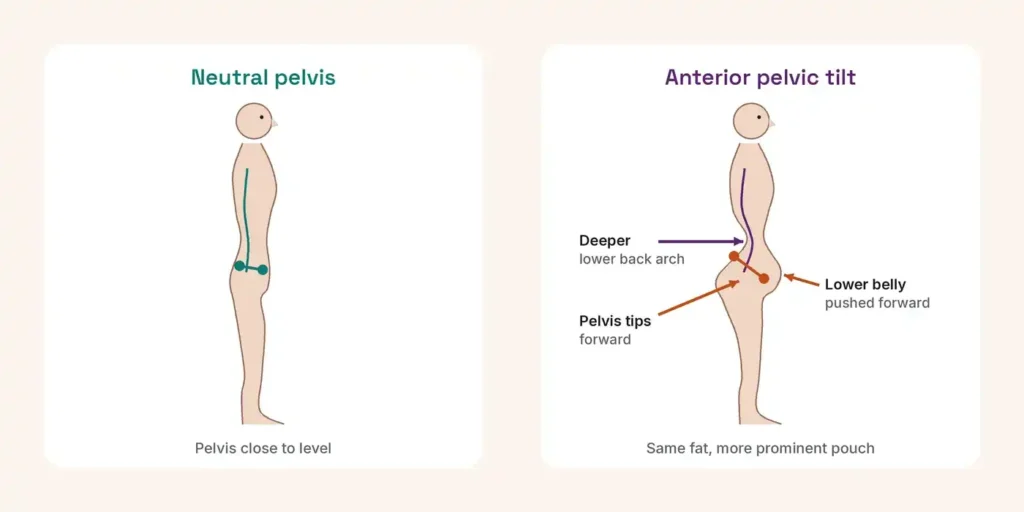
When the pelvis tipped forward drags the mons pubis with it, the lower abdomen juts out over an arched lower back. The result: a lower belly pooch that reads as fat in photos and mirrors.
This changes the fix. Suprapubic fat, or panniculus, responds to fat loss, while a belly sticking out from pelvic alignment responds to muscle work. Many carry both, and appearance alone cannot diagnose which one dominates.
What Anterior Pelvic Tilt Actually Is
Pelvic tilt describes your pelvic angle while you stand. In anterior pelvic tilt, the front of the pelvis rotates forward and the back of the pelvis rises, which increases the curve in your lumbar spine.
Clinicians judge the angle from two bony landmarks: the ASIS (anterior superior iliac spine) at the front and the PSIS (posterior superior iliac spine) at the back. A neutral position keeps them close to level.
A mild tilt is normal in standing posture, so several degrees forward is not a disorder. Trouble starts when the misalignment becomes excessive and the lower spine curving in changes your spine shape and silhouette.
How Pelvic Tilt Pushes the Lower Belly Forward
Picture the pelvis as a bowl. Tip it forward and the abdominal contents slide towards the front, pressing on a relaxed abdominal wall. The lower belly pokes out, even when there is very little fat.
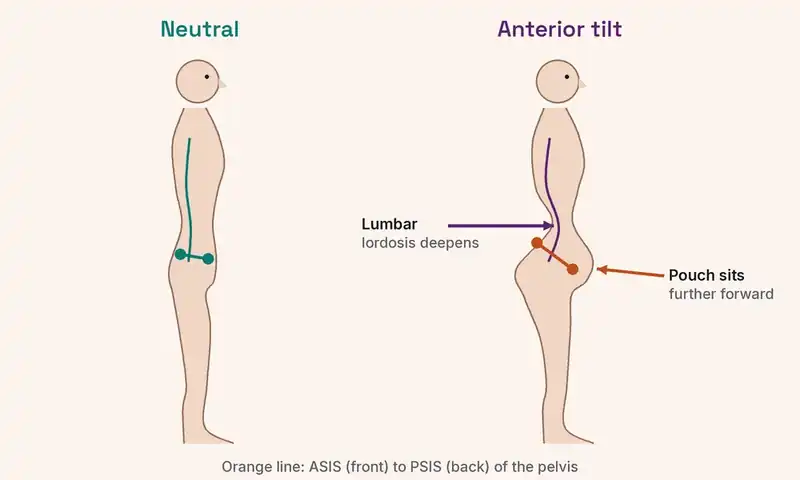
At the same time the rectus abdominis, obliques and transverse abdominis sit in a lengthened position. Stretched abdominals hold the gut loosely, so weak lower abs let the bulge settle lower, above the pubic bone.
From the side profile, the butt sticks out, the back forms a swayback, and the pubic area tipped forward juts furthest. That silhouette inflates the visual size of a small FUPA above the waistband line.
Fat, Posture or Both: Telling Them Apart
A lower abdominal bulge usually comes from three sources: excess fat, mostly subcutaneous fat you can pinch, loose skin after weight change, or a functional pooch created by posture and muscle control rather than tissue.
Pinchable fat stays when you lie down or tilt your pelvis back. A posture-driven belly pooch that isn’t fat shrinks noticeably once you hold a neutral pelvis, because nothing structural has changed underneath the skin.
Most have combined causes. Genetics set your body shape and visceral fat distribution, while habits decide the tilt. Treat the cosmetic pooch and the structural cause separately, and avoid wasting months on the wrong plan.
| Check | Mostly fat | Mostly posture | Both |
|---|---|---|---|
| Pinch test above the pubic bone | Thick fold you can grip | Thin fold, firm underneath | Fold present but shrinks when you stand tall |
| Lying flat on your back | Pouch stays much the same | Lower belly flattens clearly | Flattens partly |
| Wall test gap | Flat hand fits | Fist or forearm fits | Fist fits |
| Across the day | Stable size | Worse after long sitting | Worse in the evening |
| What helps most | Calorie deficit and activity | Glute, core and hip flexor work | Both, run together |
The 2-Minute Wall Test for Pelvic Tilt
Stand with your heels against the wall, then let your buttocks and shoulder blades touch it. Slide a hand behind your lower back. A flat palm fitting snugly suggests your pelvis sits close to neutral.
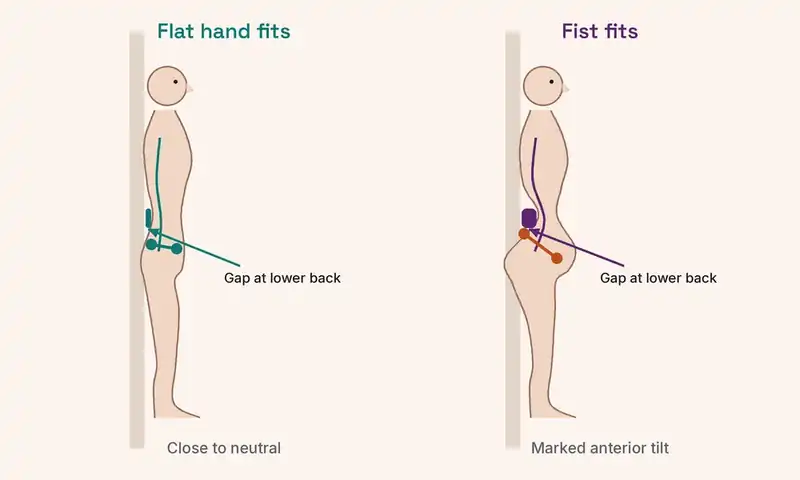
An excessive gap, where your whole fist or forearm slides through, points to marked tilt and deep lumbar lordosis. This self-check is only a rough screen, not a diagnosis: a simple two-minute measurement at home.
Next, do a lying check: standing vs lying down. If your belly flattens when lying on your back, posture is involved. Add a pinch test and monthly side-profile photo in one mirror to track change.
What Causes Anterior Pelvic Tilt
Prolonged sitting is the main driver. A desk job keeps your hips bent for hours, so the hip flexors, especially the iliopsoas and rectus femoris, tighten up, and shortened hip flexors tip the pelvis forward.
Meanwhile weak hip extensors lose ground. Weak glutes, above all the gluteus maximus, plus weak hamstrings and weak abdominals, cannot counter it. This muscle imbalance is often called lower crossed syndrome by physiotherapists and trainers.
A sedentary lifestyle and lack of physical activity amplify every one of these risk factors. Erector spinae tightness in the lower back and regular high heels add further forward pull, deepening the arch each day.
Pregnancy, Diastasis Recti and the Pelvic Floor
Pregnancy shifts your centre of gravity forward as the weight of the bump grows. Hormones such as relaxin also loosen ligaments, and many women keep a forward-tipped pelvis well into the postpartum months after birth.
The belly may carry diastasis recti, a muscle separation where the linea alba stretches between both halves of the rectus abdominis. That abdominal separation weakens the front wall and makes a tilt-driven pouch more obvious.
Your pelvic floor forms the base of the core pressure system. Pelvic floor dysfunction disrupts intra-abdominal pressure control. A pelvic health physiotherapist, who you can find through the POGP directory, can assess both problems together.
Breathing, Stomach Gripping and the Pouch
Sucking in your stomach all day seems helpful, yet chronic stomach gripping, or belly gripping, shifts abdominal pressure downward. That compensatory pattern pushes lower belly outward, just beneath the navel, exactly where a FUPA sits.
Gripping also forces shallow breathing and chest breathing. The diaphragm stops descending fully, the ribs lift into a rib cage flare, and the lower back arches further, locking the pelvis into its forward tilt position.
Retraining diaphragmatic breathing helps reverse this. Practise 360-degree breathing, letting the ribs widen sideways and backwards, then add gentle core bracing rather than hollowing. Over time, your abdominal wall learns to hold without constant clenching.
Symptoms That Often Come With It
Excessive tilt is often asymptomatic, so many people only ever notice the pouch itself. When symptoms appear, lower back pain, tight hamstrings and a persistent lower back arch are among the most commonly reported complaints.
Some people describe stiffness after sitting, posture fatigue by evening, or hip pain. Biomechanical research shows that changes in pelvic tilt alter hip joint forces, which may explain discomfort during walking, running or climbing stairs.
Glute weakness signs, such as your knees drifting inwards during squats, and occasional knee strain can travel with the tilt. None of these prove a problem alone, but together they justify a proper posture assessment.
How Physiotherapists Check Pelvic Tilt
A physiotherapist starts with a physical examination, watching you stand, walk and bend. A posture assessment and gait assessment show how your pelvis behaves under load rather than only while you are standing completely still.
The Thomas test is the classic hip flexor length test. You lie on a treatment couch hugging one knee to your chest, and a lifted opposite thigh suggests tight hip flexors feeding the tilt forward.
Clinicians may use a pelvic angle device such as an inclinometer or PALM palpation meter. X-ray imaging is rarely needed. In England you can often book NHS physiotherapy self-referral, or ask your GP for referral.
Exercises That Correct the Tilt
The simple principle: stretch the front, strengthen the back. Start with the glute bridge, the posterior pelvic tilt exercise lying on your back, and the kneeling hip flexor stretch, a half-kneeling stretch held thirty seconds.
Build core engagement with a dead bug, bird dog and high plank. During each, press lower back into floor or keep it neutral, and draw navel toward spine gently rather than gripping your stomach hard.
Add squats, a hip hinge, hamstring strengthening and kneeling rear leg raises for gluteus maximus activation. Work in reps and sets of eight to twelve, and use progression by adding load, tempo or single-leg versions.
What the Research Says About Muscle Strategies
A 2024 study by Ludwig and colleagues in the Journal of Functional Morphology and Kinesiology tested how healthy adults actively pull their pelvis back towards neutral. It found four activation patterns, all producing similar correction.
Some relied on abdominal and gluteal activation, others on back and gluteal muscles, and others on the glutes with the biceps femoris. Every group achieved equal pelvic correction, through individual motor patterns of their own.
The constant was the glutes. The gluteus maximus showed the strongest correlation with tilt change, at r = 0.35, a weak to moderate correlation. The lesson: no single routine fits everyone, but glute work belongs.
Daily Habits and Desk Setup
Exercise twice a week cannot outwork eight daily hours in a chair. A sit-stand desk, regular movement breaks and more walking raise NEAT, the energy you burn outside formal exercise, while unloading tight hip flexors.
Set chair height so your hips sit slightly above knees, with feet flat on the floor and lumbar support filling the curve. Avoid evening sofa slouching, and adjust your car seat for longer drives too.
Standing tall with shoulders back should feel easy, not forced. Flatter footwear reduces forward pull. The NHS physical activity guidelines advise 150 minutes of moderate activity a week, which also supports fat loss over time.
What Fixing Your Posture Can and Cannot Do
Correcting the tilt changes how the pouch sits, not how much fat it holds. The spot reduction myth persists, yet you cannot burn fat in one area, because fat loss is whole-body and usually gradual.
For the fat you need a calorie deficit. NHS weight-loss guidance suggests cutting 600 calories a day. Cardio helps, and a 2017 trial comparing HIIT vs moderate-intensity training found a negligible difference in weight lost.
Set realistic expectations. Postural appearance improves within weeks to months of consistency, while fat stays the same unless your diet changes. Expect the pouch to look smaller first and genuinely shrink later with fat loss.
When to See a Professional
Book your GP promptly for a new bulge, a painful bulge, or one that grows when you cough or strain. These can signal a hernia, which needs a proper medical examination rather than posture exercises.
Seek urgent help if a bulge comes with vomiting, fever, bowel changes or persistent pain. For a severe tilt or back pain that does not settle, ask for a GP referral to an NHS physiotherapist.
Surgery is rarely needed for posture. If a fat pad remains after the tilt is fixed, options such as monsplasty, liposuction or abdominoplasty address tissue, not alignment, and belong in a separate specialist surgical consultation.
Frequently Asked Questions
Can Bad Posture Cause a FUPA?
Posture cannot create new fat, so bad posture does not directly cause a FUPA. It can, however, make an existing fat upper pubic area look noticeably larger by tipping the pubic region forward and down.
Anterior pelvic tilt leaves the lower stomach protruding and deepens the lower back curve. The same amount of fat therefore occupies a far more prominent visual position, especially in fitted clothes, swimwear and side-on photographs.
If the wall test shows a large gap and your belly flattens when lying down, posture is clearly part of the overall picture. Fixing it will not remove fat, but it will change the shape.
Can You Fix Anterior Pelvic Tilt?
Yes. Most people can reduce excessive tilt with regular stretching of the hip flexors, strengthening of the glutes and abdominals, and better sitting habits. Structural bone causes are fairly uncommon and need a specialist assessment.
Consistency matters more than intensity. Three short focused sessions a week, combined with daily movement breaks, usually outperform an occasional long workout. Progress the exercises gradually as the easier versions stop feeling challenging for you.
If you notice pain, numbness or no progress after several weeks, see a physiotherapist. They can identify which muscle strategy suits your body and adjust the plan, which generic online routines simply cannot do properly.
How Long Does It Take to Fix Pelvic Tilt?
Timelines vary widely from person to person. Many people notice their pouch sitting flatter within four to eight weeks of consistent work, because muscle activation and body awareness improve before muscles physically change in size.
Lasting change in muscle length and strength usually takes weeks to months. Your starting point, daily sitting time, age, previous pregnancies and how often you train all shape how quickly the pelvis settles into neutral.
Track your progress carefully rather than guessing. Repeat the wall test monthly and take the same side-profile photo in similar lighting. Measurable change in the gap is a more honest marker than day-to-day mirror checks.
Can a Lower Belly Pooch Go Without Losing Weight?
Partly, yes. If posture, breathing or bloating drive the bulge, it can shrink without any weight loss. Correcting the tilt and relaxing stomach gripping often flattens the lower abdomen within several weeks for many people.
If the pooch is mainly subcutaneous fat, weight loss is still needed. Posture work improves its position, but only a sustained calorie deficit reduces the fat itself, and that loss happens across your whole body.
Loose skin behaves differently again. It does not respond to exercise or diet, and surgical removal is the only reliable option. A qualified clinician can tell you exactly which tissue is responsible for your bulge.
Does Sucking In Your Stomach Cause a Pooch?
Holding your stomach in constantly throughout the day can make a lower pooch worse. Chronic stomach gripping raises pressure in the upper abdomen and pushes it downward, so the area below your navel bulges out.
It also trains shallow breathing, which stiffens the ribs and encourages a deeper lower back arch. Over months, that pattern can reinforce anterior pelvic tilt and make the pouch far more noticeable even at rest.
Swap gripping for relaxed diaphragmatic breathing and light bracing during effort. Your abdominal wall still works hard, but it shares pressure evenly instead of pushing everything towards the weakest point just above your pubic bone.
Is a FUPA Normal?
Yes. Some fat over the pubic bone is completely normal for every body type, and women naturally store more there than men. Its size depends on genetics, hormones, age, pregnancy history and overall body fat.
What people often read as an unusually large FUPA is sometimes ordinary fat sitting in a tilted position. Checking your posture first gives a far fairer picture of how much tissue is really there underneath.
A FUPA only becomes a medical concern if it causes skin irritation, pain or restricted movement, or grows suddenly. Otherwise it is a cosmetic choice whether to change it, and there is no wrong answer.
One Response