
Tights for a FUPA: Control Tops That Stay Put and Never Roll

Page Contents
- Why Tights Roll Down Over a FUPA
- What a Control Top Does and Does Not Do
- Waistband Rise: Sit Above the FUPA, Not On It
- Waistband types to look for
- How to Choose the Right Size
- Denier, Fabric and the Gusset
- Denier and opacity
- Elastane and knit
- The cotton gusset
- Control Tops vs Shaping Briefs vs High-Waisted Tights vs Leggings
- How to Put Tights On So They Stay Up
- Styling Tights With Skirts, Dresses and Shorts
- Comfort Problems and How to Fix Them
- Digging, chafing and VPL
- Thrush and irritation
- Shaping is not medical compression
- When to see a GP
- Caring for Tights So the Elastic Lasts
- Frequently Asked Questions
- Why do my tights keep rolling down under my belly?
- Do control top tights flatten a FUPA?
- Should I size up in tights if I have a FUPA?
- What denier is best for hiding a FUPA?
- Are high-waisted tights better than control top tights?
- Can tights cause thrush?
- The Bottom Line
Finding tights for a FUPA can feel like a daily battle with a waistband that will not stay put. You pull them up at breakfast, and by lunchtime they have slid under your lower belly and rolled into a ridge. The good news is that rolling is a fit problem, not a body problem. With the right rise, size and control top, tights can sit smoothly over the mons pubis all day.
This guide is part of our wider advice on how to style and smooth a FUPA.
Why Tights Roll Down Over a FUPA
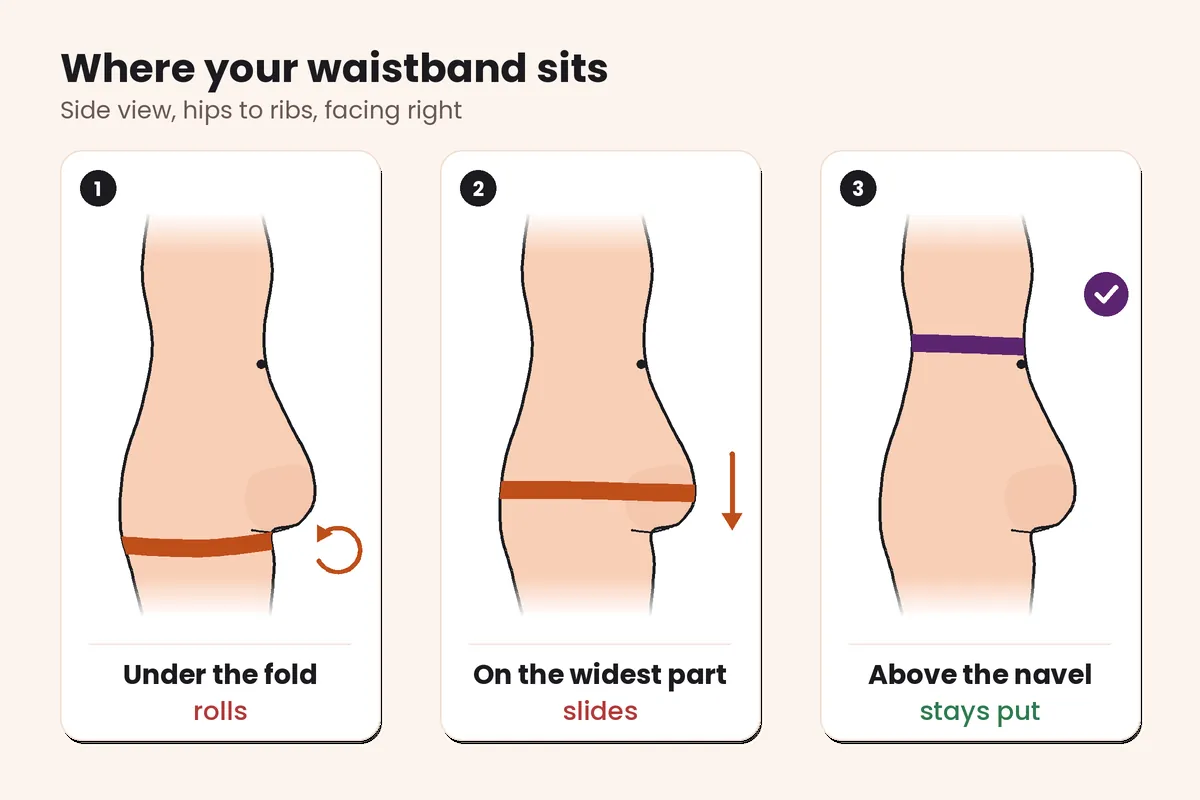
A FUPA is the suprapubic fat pad that sits over the pubic bone, just below the lower belly. This rounded curve creates a slope. A waistband placed on a slope slides towards the narrowest point, then folds over.
Most rolling comes down to a few causes:
- The waistband sits under the fold, so the lower belly presses it down and over.
- The waistband sits across the widest part of the FUPA, where elastic has nothing to grip.
- The body or rise is too short, so the tights pull down from the crotch and the top rolls to relieve the tension.
- The size is too small, so the overstretched knit gives way at the top edge first.
- Bulky knickers or shapewear seams push the waistband out of place.
Sitting down makes all of this worse. The lower belly folds forward and pushes a weak waistband straight into the crease.
What a Control Top Does and Does Not Do
A control top is the panty section of the tights, knitted with stronger yarns than the legs. It covers the hips, bottom and lower belly, acting as a light shaping panel under a skirt or dress.
Over a FUPA, a control top helps in three ways:
- It spreads pressure across the lower belly instead of concentrating it at the waistband.
- Its denser knit grips the skin, so the tights shift less when you walk.
- It smooths small bumps, so the mons pubis looks less defined through fitted fabric.
It has limits, though. A control top cannot flatten a large FUPA or rescue a waistband in the wrong place. A very firm control top in too small a size can even increase rolling. For firmer smoothing, a separate garment from our guide to shapewear for a FUPA will do more than any pair of tights.
Waistband Rise: Sit Above the FUPA, Not On It
Rise is the distance from the crotch to the top of the waistband. For tights that stay up, rise matters more than any other feature.
Standard tights often finish around the hip bones. On many bodies, that line falls right on the fold or across the fullest curve of the FUPA. Look instead for a high-rise or waist-high style that finishes at or above the navel. There, the waistband anchors on the narrower waist.
Waistband types to look for
- Wide, flat or comfort waistbands spread pressure and fold less than a thin strip of elastic.
- A silicone grip strip inside the waistband helps the top edge cling to skin.
- Anti-roll designs increase the elastane gradually towards the top, so the band holds without pinching.
- Maternity or over-bump styles have a tall panel and extra room, which many people find comfortable after pregnancy.
The layer underneath matters too. Our guide on underwear waistbands that roll down explains how to stop your knickers undoing your tights.
How to Choose the Right Size
Tights sizing is not the same as dress sizing. UK size charts usually use height and hip measurement, and some add weight. Height decides the leg and body length. Hips decide the width of the panty section.
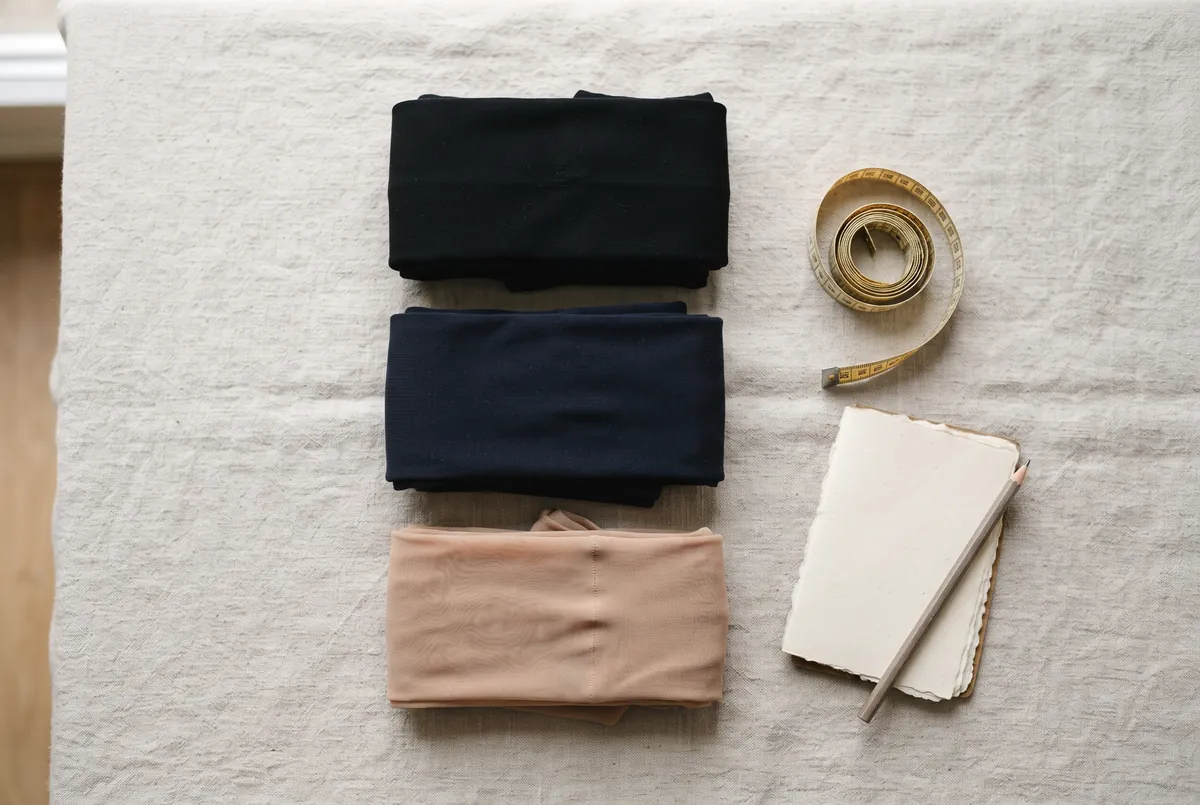
- Measure your height standing on a flat surface, without shoes.
- Measure your hips around the fullest point, roughly 20cm below your natural waistline.
- If height and hips point to different sizes, choose the larger one.
- Size up if you are between sizes or have a longer torso, so the waistband can reach above the FUPA.
- Check one-size ranges carefully. Some only fit hips up to about 101cm (40 inches) and a height up to 5ft 7in.
Some ranges offer short, long and extra-long lengths within each size. A longer length helps the crotch sit where it should.
Denier, Fabric and the Gusset
Denier and opacity
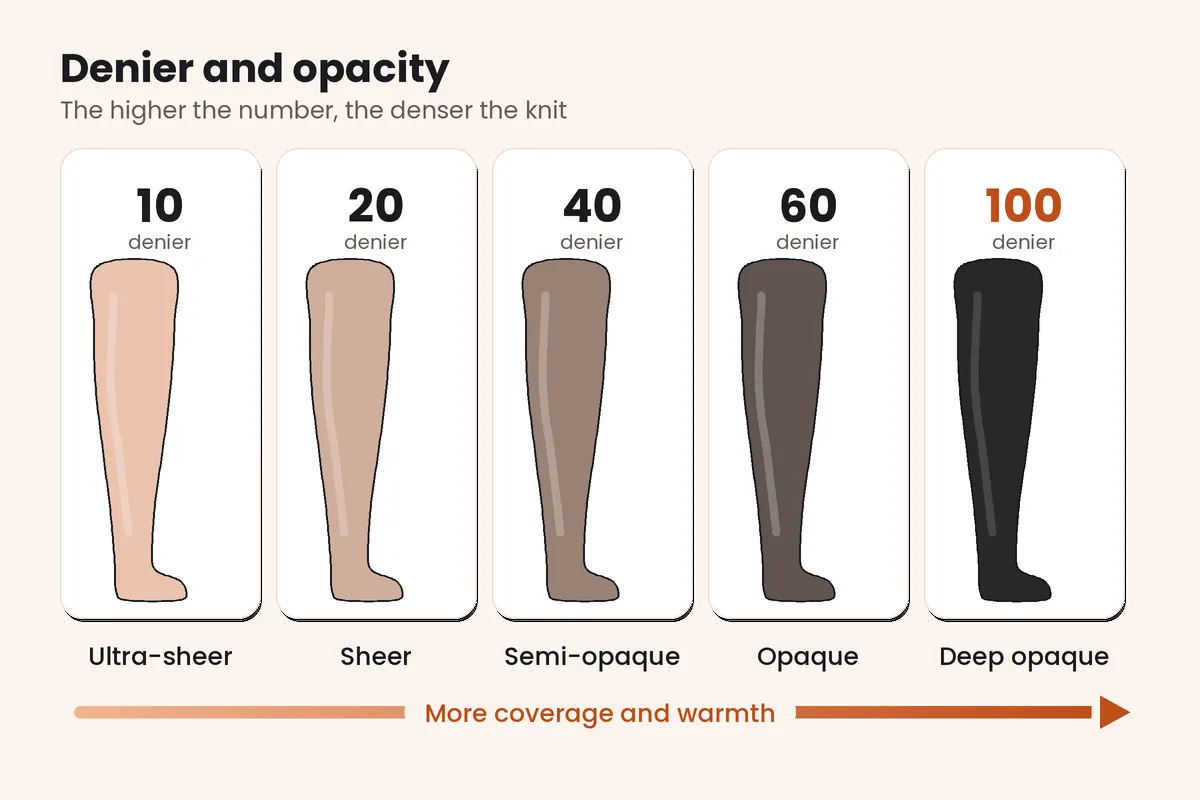
Denier measures the linear density of the yarn: the weight in grams of 9,000 metres of it. A lower denier looks finer and sheerer. A higher denier is thicker, warmer and more opaque.
| Denier | Opacity | Look and feel |
|---|---|---|
| 8 to 10 | Ultra-sheer | Almost invisible and delicate |
| 15 to 20 | Sheer | Transparent, soft veil of colour |
| 30 to 40 | Semi-opaque | More coverage, leg softly visible |
| 50 to 80 | Opaque | Even, covered and warmer |
| 100 | Deep opaque | Dense, warm, full coverage |
Bands vary between makers, but 40 denier and above is usually called opaque. Higher deniers are more durable and less prone to ladders. Their firmer knit also feels more secure over the lower belly.
Elastane and knit
Most tights blend nylon (polyamide) with elastane, often sold as Lycra. Many everyday opaques use around 10% elastane, and some high-stretch styles reach about 15%. More elastane helps the knit stretch over a curve and recover, so it sags and rolls less.
The cotton gusset
The gusset is the small panel between the legs. A cotton or cotton-lined gusset is more breathable than a fully synthetic one, which helps if you sweat or get irritation around the mons pubis.
Control Tops vs Shaping Briefs vs High-Waisted Tights vs Leggings
Here is how each option behaves over a FUPA.
| Option | Rise | Hold | Best for | Watch out |
|---|---|---|---|---|
| Control top tights | Mid to high | Light shaping panel | Everyday skirts and dresses | Rolls if the waistband lands on the fold |
| High-waisted tights | At or above the navel | Gentle, spread evenly | A fuller lower belly that rolls standard pairs | Can show under cropped tops |
| Shaping brief over sheer tights | Mid-rise to high-waist | Firmer tummy panel | Fitted dresses and occasions | Mid-rise briefs can leave a ridge |
| Footless tights or leggings | Mid to high | Light to moderate | Tunics and long jumpers | Thin fabric can show VPL |
If you prefer a thicker waistband, see our guide to leggings for a FUPA.
How to Put Tights On So They Stay Up
How you put tights on decides how they sit all day. Rushing leaves slack in the legs and pulls the waistband low.
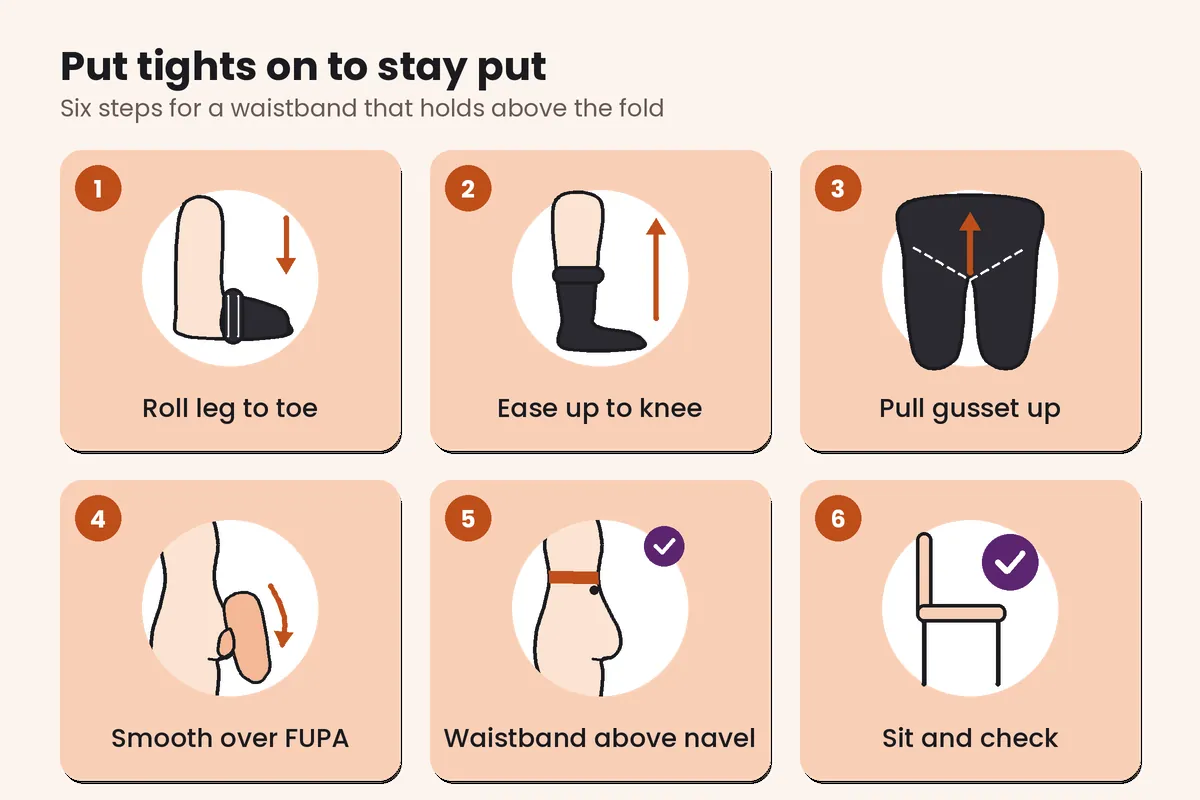
- Roll one leg down to the toe and slide your foot straight in.
- Unroll up to the knee, then repeat with the other leg, smoothing out twists.
- Pull the gusset fully up, so the crotch sits snugly against your body.
- Lift the panty section over the FUPA with flat hands, so the knit lies evenly.
- Settle the waistband at or above your navel, above the fold.
- Sit down and stand up once. If the top edge gathers, adjust it now.
Some people add a firm, close-fitting brief over their tights. This “tights sandwich” acts as a hoist and keeps the waistband in place.
Styling Tights With Skirts, Dresses and Shorts
Tights work best when the outfit above them skims the lower belly rather than drawing a line across it.
- A-line skirts and wrap dresses skim the FUPA. Our guide to dresses for a FUPA lists the most flattering cuts.
- Shift dresses and tunic jumpers fall straight from the bust and hide the waistband.
- High-rise tailored shorts over 60 or 80 denier tights make a smooth autumn look.
- Black tights with dark shoes lengthen the leg.
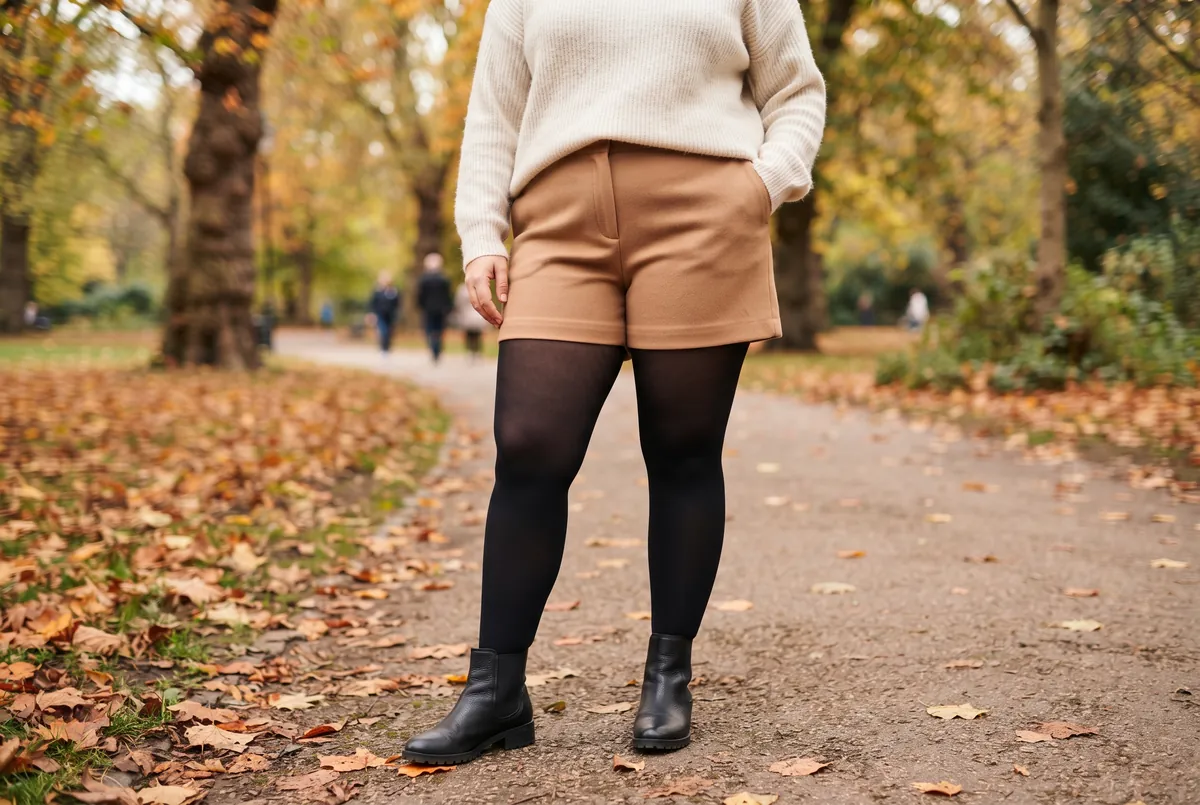
For complete looks, see our outfit ideas for a FUPA.
Comfort Problems and How to Fix Them
Digging, chafing and VPL
A waistband that leaves deep red marks is too small or too firm, so size up or choose a wider band. Friction where the suprapubic fat pad meets the inner thighs is common, and our guide to lower belly chafing when walking has practical fixes. Seamless, flat-edged knickers prevent VPL and keep the waistband in place.
Thrush and irritation
Thrush thrives in warm, moist conditions. NHS advice on thrush is to wear cotton underwear and avoid tight underwear or tights while you have it. If it recurs, choose a cotton gusset and wear cotton knickers underneath.
Shaping is not medical compression
Shaping tights smooth the outline. Graduated compression hosiery applies measured pressure, rated in mmHg, strongest at the ankle. Higher grades are usually advised by a health professional, so ask your GP or pharmacist first.
When to see a GP
See a GP if the skin under your FUPA breaks down, weeps, bleeds or develops a rash that does not settle. Seek advice too if thrush keeps returning. Our guide to FUPA pain and irritation explains common causes.
Caring for Tights So the Elastic Lasts
Elastane loses its spring with heat. Once the waistband slackens, any pair will roll.
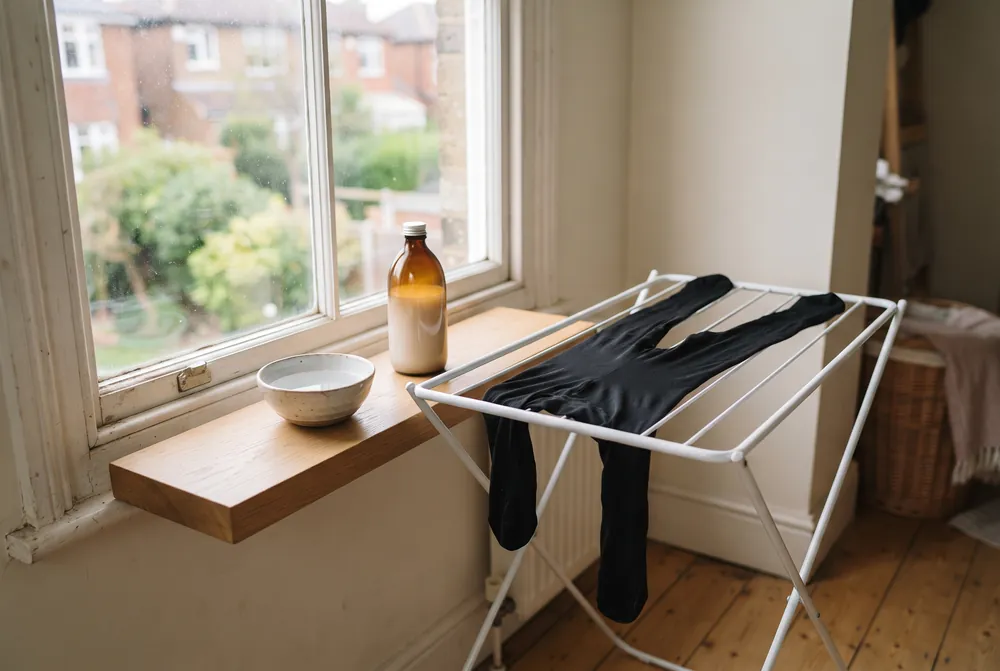
- Hand wash in lukewarm water, or use a cool, delicate machine cycle.
- Use a mesh laundry bag or pillowcase to prevent snags.
- Never tumble dry, as heat breaks down the stretch.
- Roll wet tights in a towel instead of wringing, then air dry.
When the waistband no longer springs back after a gentle stretch, replace the pair.
Frequently Asked Questions
Why do my tights keep rolling down under my belly?
Tights usually roll because the waistband sits on the fold or across the fullest part of the FUPA, and the lower belly pushes it down. A body that is too short or a size that is too small adds tension. A high-rise waistband above the navel and a larger size usually fix it.
Do control top tights flatten a FUPA?
Control top tights smooth the outline but do not flatten it. The firmer knit spreads pressure across the lower belly and softens small bumps under fitted fabric. For a firmer hold, wear a shaping brief over sheer tights, in a size that does not dig in or roll.
Should I size up in tights if I have a FUPA?
Size up if your height and hip measurements point to different sizes, or if you sit between two sizes. The extra body length lets the waistband reach above the mons pubis. Tights that are too small overstretch, pull down from the crotch and roll at the top.
What denier is best for hiding a FUPA?
Opaque tights of 40 denier and above give the smoothest look, because the denser knit hides the panty section. Choose 60 to 100 denier in cold weather. Sheer tights of 15 to 20 denier also work, but pair them with seamless knickers to avoid a visible panty line.
Are high-waisted tights better than control top tights?
For many people, yes. High-waisted tights finish at or above the navel, so the waistband grips the narrower waist instead of sliding off the lower belly. Many high-waisted styles also include a light control panel, which gives you the benefits of both features in a single pair.
Can tights cause thrush?
Tights do not cause thrush directly, but they can trap warmth and moisture, which helps it grow. NHS advice is to avoid tight underwear or tights during an infection. Choose a cotton gusset, wear cotton knickers underneath, and see a GP if thrush keeps coming back.
The Bottom Line
The best tights for a FUPA rely on the right rise and size rather than the firmest control. Choose high-rise or waist-high styles with a wide or silicone-grip band, and size up when in doubt. Pull the gusset fully up, smooth the knit over the mons pubis, and wash gently to protect the elastic. See a GP if your skin becomes sore or broken.