FUPA and Your Menstrual Cycle: Why It Looks Bigger Before Your Period

Page Contents
- Key Takeaways
- The Menstrual Cycle in Brief
- The follicular phase
- Ovulation
- The luteal phase
- Every cycle is different
- Why a FUPA Looks Bigger Before Your Period
- Fluid retention
- Slower digestion and constipation
- Gut changes during the period
- Appetite and cravings
- Posture and tiredness
- Fat, Water or Bloating? How to Tell
- Signs it is cyclical bloating
- Signs it is the fat pad itself
- How Much Does Weight Change Across a Cycle?
- A normal swing
- Why it matters for tracking
- A better way to measure
- What Helps With Premenstrual Bloating
- Keep moving
- Eat regular meals with fibre
- Drink enough water
- Watch the salt
- Limit fizzy drinks and gas causing foods
- Choose comfortable clothes
- Does Your Cycle Affect Fat Loss?
- Energy use changes a little
- Appetite changes are real
- Training across the cycle
- Conditions That Can Cause Ongoing Bloating
- Premenstrual syndrome and PMDD
- Endometriosis
- Polycystic ovary syndrome
- When bloating needs checking
- Contraception and Your Cycle
- Hormonal contraception changes the pattern
- Does contraception cause a FUPA?
- Frequently Asked Questions
- Why does my FUPA look bigger before my period?
- Can your period make you gain fat?
- How long does period bloating last?
- What is the best time of the month to measure my FUPA?
- Does exercise help period bloating?
- When should I see a GP about bloating?
- The Bottom Line
- Your FUPA is not growing, it is just puffy
Many women notice that their lower belly looks rounder and feels tighter in the days before a period. Jeans that fitted last week suddenly dig in. If you already feel self conscious about a FUPA, this can be frustrating. The good news is that most of this change is temporary. This guide explains the link between a FUPA and your menstrual cycle, why it looks bigger before your period, and what helps.
A FUPA is a pad of fat over the mons pubis, the soft area just above the pubic bone. Your cycle does not add fat to it from week to week. Instead, hormone shifts cause water retention, bloating and gut changes that push the lower belly out for a few days. You can read more about this area in our guide to the FUPA in women.
This guide is general information, not medical advice. If you have severe pain, very heavy periods, bloating that lasts most of the month, or bleeding between periods or after sex, see your GP.
Key Takeaways
- A FUPA does not grow and shrink with your cycle. The fat pad stays the same. What changes is water, gas and the contents of your gut.
- In the week or so before a period, higher progesterone can slow digestion and both hormones can affect fluid balance. This often causes bloating and puffiness.
- Weight can rise by a kilo or two before a period and then fall again once bleeding starts.
- Gentle movement, regular meals, fibre, water and less salt can ease premenstrual bloating.
- Measure progress at the same point in each cycle, so hormone swings do not hide real change.
The Menstrual Cycle in Brief
The follicular phase
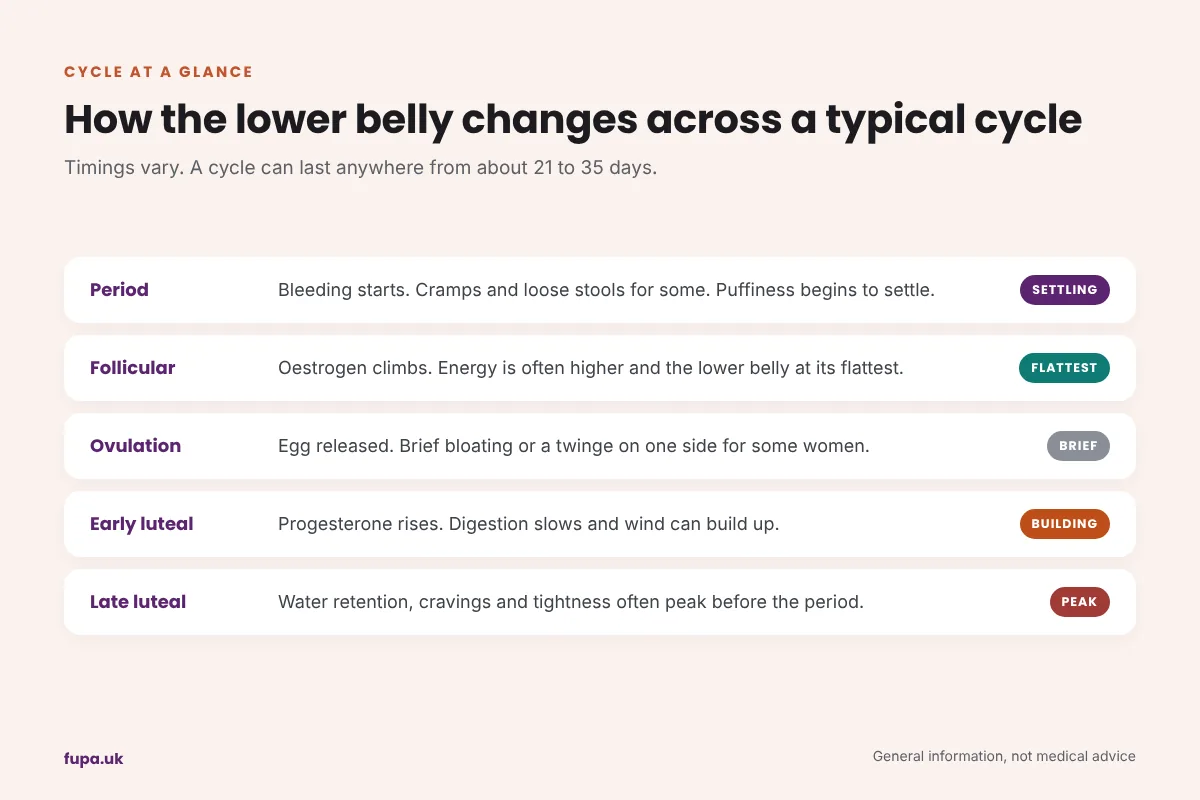
The cycle starts on the first day of your period. Over the next one to two weeks, oestrogen rises as an egg matures. Many women feel lighter and more energetic in this phase. Bloating is often at its lowest in the days after a period ends.
Ovulation
Around the middle of the cycle, an egg is released. Some women notice brief bloating or a one sided twinge in the lower abdomen at this point. It usually settles within a day or two.
The luteal phase
After ovulation, progesterone rises along with a second, smaller peak of oestrogen. Both fall sharply in the days before your period if you are not pregnant. This is the window when many women feel bloated, puffy, tender and hungrier.
Every cycle is different
A typical cycle lasts anywhere from about 21 to 35 days. The NHS guide to periods explains what is normal. The timing of each phase varies from person to person and from month to month.
Why a FUPA Looks Bigger Before Your Period
Fluid retention
Changes in oestrogen and progesterone affect how your body handles salt and water. Many women hold a little extra fluid in the second half of the cycle. It can collect in the abdomen, breasts, hands and ankles. The soft tissue over the lower belly can look fuller and feel tighter as a result.
Slower digestion and constipation
Progesterone relaxes smooth muscle, including the muscle of the gut wall. This can slow the movement of food and lead to constipation and trapped wind. A fuller bowel and gas push the lower abdominal wall forward, right where a FUPA sits.
Gut changes during the period
When your period starts, chemicals called prostaglandins help the womb contract. They can also affect the bowel, which is why some women get looser stools or cramps at this time. The bloating often eases as the period goes on.
Appetite and cravings
Many women feel hungrier before a period and crave salty or sweet foods. Salty snacks add to water retention. Larger meals add to the volume in the gut. Neither adds noticeable fat over a few days, but both can make the lower belly look rounder.
Posture and tiredness
Cramps and fatigue can make you slump. A slumped posture lets the lower belly push forward. This is a small effect, but it adds to the overall picture.
Fat, Water or Bloating? How to Tell
Signs it is cyclical bloating
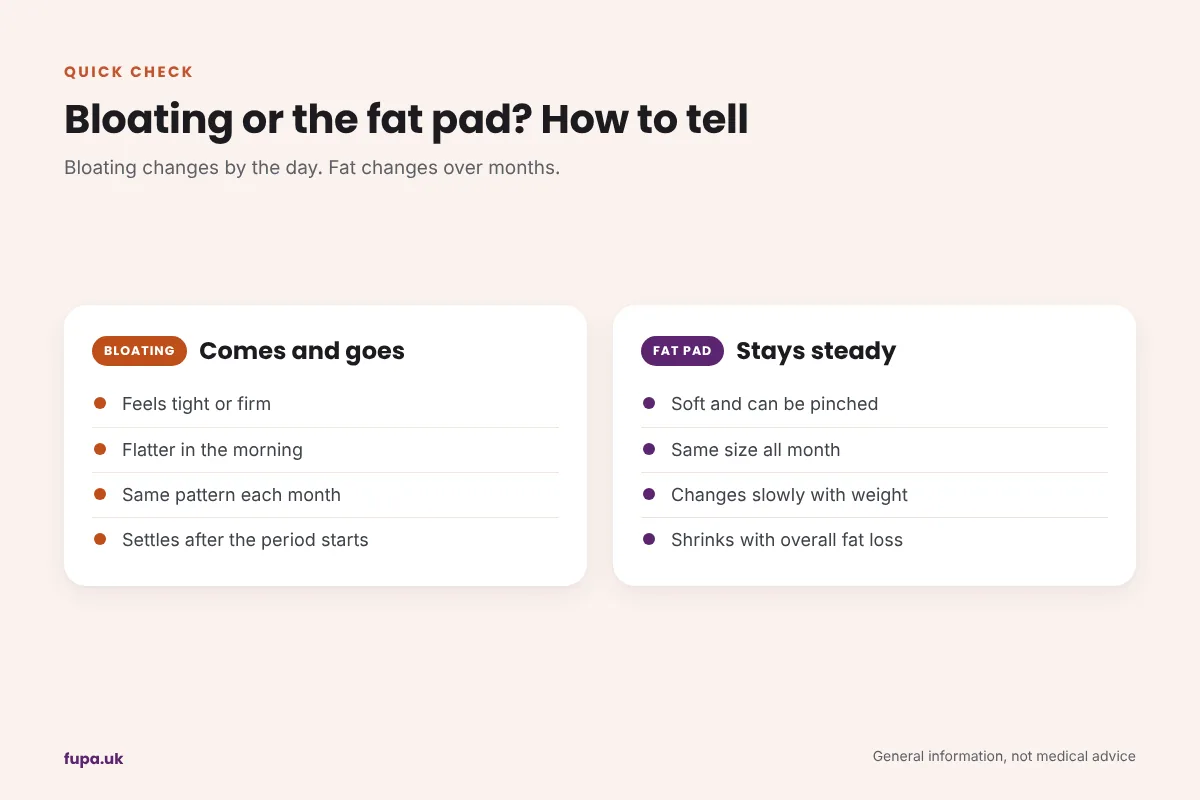
- The lower belly feels tight or firm rather than soft.
- It gets bigger through the day and is flatter in the morning.
- It follows the same pattern each month, peaking just before or at the start of your period.
- Your rings, bra or shoes also feel tighter.
- It settles within a few days of your period starting.
Signs it is the fat pad itself
- The area feels soft and can be pinched between your fingers.
- Its size stays much the same across the whole month.
- It changes slowly over months with weight gain or loss, not over days.
Our guide to FUPA vs bloating covers the differences in more depth, including a simple pinch test.
How Much Does Weight Change Across a Cycle?
A normal swing
It is common for scale weight to rise by around a kilo, and sometimes more, in the days before a period. Most of this is water and gut contents. It usually falls again within a few days of bleeding starting. The amount varies a lot between women and between cycles.
Why it matters for tracking
If you weigh yourself just before your period, you may think your diet has stopped working. In fact, fat loss may be happening underneath a temporary rise in water. This is one of the most common reasons people give up on a plan too early.
A better way to measure
Measure your waist and lower belly at the same point in your cycle each month. A week after your period starts is often a good time, when bloating is usually low. Our guide on how to measure a FUPA shows exactly where to place the tape.
What Helps With Premenstrual Bloating
Keep moving
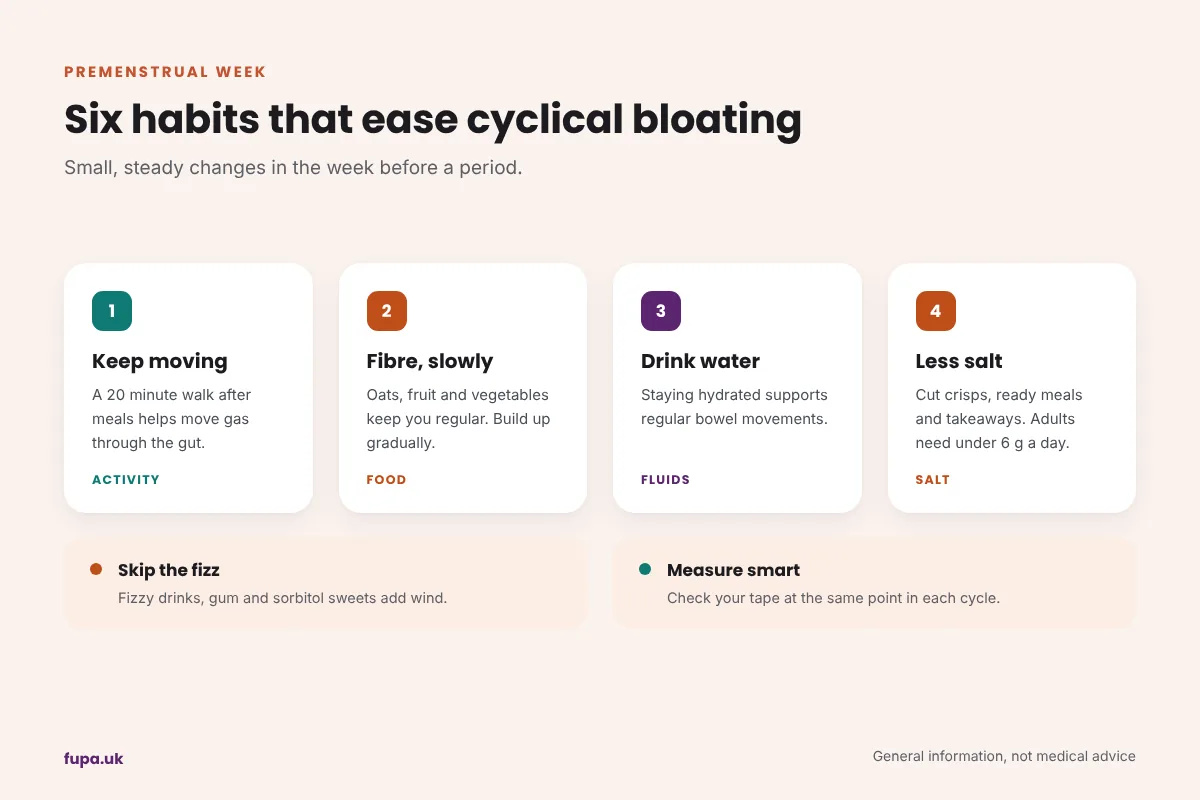
Gentle exercise such as walking, cycling, swimming or yoga can help move gas through the gut and may ease cramps. Even a 20 minute walk after a meal can help.
Eat regular meals with fibre
Fibre from vegetables, fruit, oats, beans and wholegrains helps keep you regular. Increase it gradually, as a sudden jump can cause more wind. Smaller, regular meals may feel more comfortable than large ones.
Drink enough water
It sounds odd to drink more when you feel puffy, but staying hydrated supports regular bowel movements. Water, herbal tea and other unsweetened drinks are good choices.
Watch the salt
Crisps, ready meals, processed meat and takeaway food are high in salt. Cutting back in the second half of your cycle may reduce water retention. The NHS advises adults to have no more than 6 g of salt a day.
Limit fizzy drinks and gas causing foods
Fizzy drinks, chewing gum and sugar free sweets containing sorbitol can add to wind. Some people also find beans, onions and cabbage make bloating worse in the premenstrual week.
Choose comfortable clothes
A soft, stretchy waistband that sits above or below the fullest point of the lower belly can make those days easier. High rise leggings, wrap dresses and relaxed trousers are all kind choices. Loose layers over the top can also take the focus off the lower belly.
Does Your Cycle Affect Fat Loss?
Energy use changes a little
Some studies suggest the body uses slightly more energy in the luteal phase. The difference is small and varies between women. It is not enough to plan your diet around.
Appetite changes are real
Increased hunger before a period is common. Planning for it can help. Keep filling, higher protein snacks to hand, such as yoghurt, eggs, fruit or a handful of nuts. Allowing a little more flexibility in that week can make a plan easier to keep over months.
Training across the cycle
You do not need to change your training around your cycle. Some women feel stronger in the first half and prefer lighter sessions before a period. Listen to your body and keep moving where you can.
Conditions That Can Cause Ongoing Bloating
Premenstrual syndrome and PMDD
Bloating is one of the most common symptoms of premenstrual syndrome. A smaller number of women have premenstrual dysphoric disorder, a more severe form that mainly affects mood. If symptoms affect your daily life, your GP can help.
Endometriosis
Endometriosis is a condition where tissue similar to the lining of the womb grows elsewhere in the pelvis. It can cause painful periods, pelvic pain and marked bloating, sometimes called “endo belly”. If your periods are very painful or stop you doing normal activities, see your GP.
Polycystic ovary syndrome
PCOS can cause irregular periods and weight gain around the middle. It is linked with insulin resistance. Our guide to PCOS and a FUPA explains the signs and the tests involved.
When bloating needs checking
See your GP if bloating is there most days, lasts for three weeks or more, or comes with a loss of appetite, feeling full quickly, weight loss, pain or a change in bowel habit. These symptoms are usually caused by something minor, but they should be checked to rule out ovarian problems and other conditions.
Contraception and Your Cycle
Hormonal contraception changes the pattern
The combined pill, patch and ring create a regular withdrawal bleed and can smooth out some hormone swings. Progestogen only methods may cause irregular bleeding. Some women notice mild bloating when they start a new method, which often settles within a few months.
Does contraception cause a FUPA?
Most methods have not been shown to cause major weight gain. The contraceptive injection is the main exception, with some people gaining weight while using it. Our guide to whether contraception can cause a FUPA covers each method.
Frequently Asked Questions
Why does my FUPA look bigger before my period?
Hormone changes in the second half of your cycle can cause water retention, slower digestion and trapped wind. These push the lower belly forward and make it feel tighter. The fat pad itself does not change. The extra fullness usually settles within a few days of your period starting.
Can your period make you gain fat?
No. The weight gain many women notice before a period is mostly water and gut contents, not fat. It usually goes once bleeding starts. Fat gain only happens over weeks and months when you regularly eat more energy than you use.
How long does period bloating last?
For many women it starts a few days to a week before the period and eases within the first few days of bleeding. The pattern varies. If bloating lasts most of the month or is getting worse, see your GP.
What is the best time of the month to measure my FUPA?
Measure at the same point in each cycle. About a week after your period starts is a good choice, as bloating is usually low then. Use the same tape position and time of day, ideally in the morning before eating.
Does exercise help period bloating?
Yes, for many women. Gentle activity such as walking, cycling or yoga can help move gas through the gut and may ease cramps. It does not need to be intense to help.
When should I see a GP about bloating?
See your GP if bloating happens on most days, lasts three weeks or more, or comes with pain, feeling full quickly, weight loss, needing to wee more often or a change in bowel habits. Also seek advice for very painful or heavy periods.
The Bottom Line
Your FUPA is not growing, it is just puffy
The link between a FUPA and your menstrual cycle comes down to water, gas and gut changes, not fat. In the days before a period, hormone shifts make the lower belly look and feel bigger. Then it settles. Be kind to yourself in that week. Move gently, eat regular meals with fibre, ease off salt and fizzy drinks, and wear comfortable clothes. Measure at the same point each month to see real progress. If bloating is severe or constant, speak to your GP. For the bigger picture, see our guide to hormones and genetics behind a FUPA.