
HIIT vs Steady Cardio for a FUPA: Which Burns Lower Belly Fat Better?

Page Contents
- Key Takeaways
- What Is HIIT and What Is Steady Cardio?
- High intensity interval training
- Steady state cardio
- Low intensity steady state
- HIIT vs Steady Cardio for a FUPA: What the Research Shows
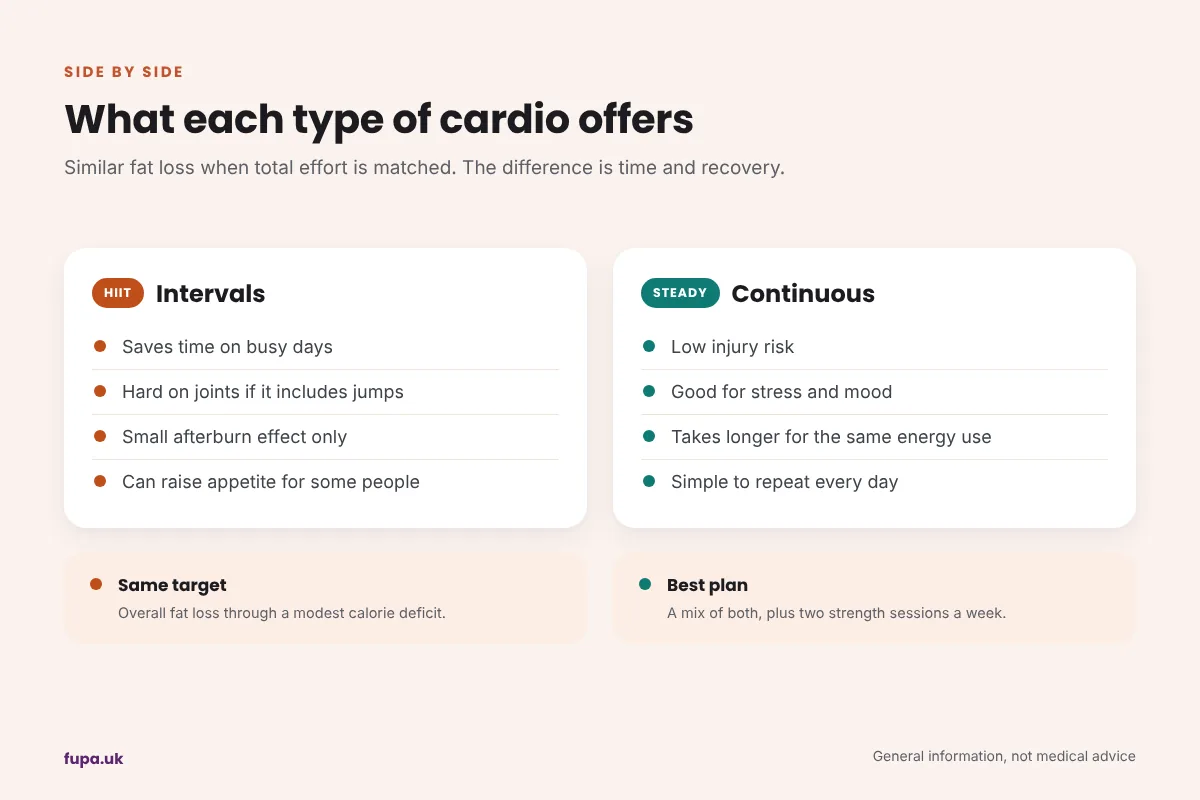
- Total fat loss is similar
- HIIT saves time
- The afterburn effect is small
- Belly fat studies
- Why You Cannot Burn Fat From One Spot
- Fat comes from everywhere
- Why the lower belly is stubborn
- The Case for HIIT
- Strengths
- Drawbacks
- Low impact HIIT ideas
- The Case for Steady Cardio
- Strengths
- Drawbacks
- Walking is underrated
- Which Is Better for You?
- Choose mostly HIIT if
- Choose mostly steady cardio if
- The best answer for most people: both
- Sample Weekly Cardio Plan for a FUPA
- Beginner week
- How this meets UK guidance
- Progressing over time
- Cardio Alone Is Not Enough
- Diet sets the pace
- Strength training protects muscle
- Sleep and stress
- Safety: When to Take Care
- After pregnancy
- Heart and blood pressure
- Joints
- Frequently Asked Questions
- Is HIIT better than cardio for a FUPA?
- How many HIIT sessions a week should I do?
- Does walking burn lower belly fat?
- How long until cardio shrinks my FUPA?
- Can I do HIIT after having a baby?
- Should I do cardio before or after weights?
- The Bottom Line
- Pick the cardio you will keep doing
If you want to shrink a FUPA, cardio is one of the first tools people reach for. Then comes the big question. Should you do short, hard intervals or longer, steady sessions? This guide compares HIIT vs steady cardio for a FUPA, using what the research shows rather than gym myths. The short answer is that both can work, neither targets the lower belly on its own, and the best choice is the one you can keep doing.
A FUPA is a pad of fat over the mons pubis, just above the pubic bone. It shrinks as part of overall fat loss. This guide sits within our wider resource on how to get rid of a FUPA.
This guide is general information, not medical advice. If you have a heart condition, high blood pressure, joint problems, are pregnant or have recently given birth, check with your GP before you start high intensity exercise.
Key Takeaways
- Neither HIIT nor steady cardio burns fat from the lower belly first. Both reduce body fat as a whole.
- Studies comparing the two have found broadly similar fat loss when total effort is matched. HIIT mainly saves time.
- Steady cardio is easier to recover from and to do often. HIIT is harder and needs more rest between sessions.
- A mix of both, with strength training and a calorie deficit, is a sound plan for most people.
- Consistency over months matters far more than which type of cardio you pick.
What Is HIIT and What Is Steady Cardio?
High intensity interval training
HIIT means short bursts of very hard effort followed by rest or easy movement. A burst might last 20 seconds to a minute. During the work part you should be breathing hard and unable to say more than a few words. A whole session, including warm up and cool down, often takes 15 to 25 minutes.
Steady state cardio
Steady cardio, sometimes called moderate intensity continuous training, means keeping a comfortable but purposeful pace for a longer time. Think brisk walking, easy cycling, swimming or a gentle jog for 30 to 60 minutes. You can still talk in full sentences, but you could not sing.
Low intensity steady state
Some people also talk about LISS, short for low intensity steady state. This is the easiest end of the scale, such as a long walk. It burns fewer calories per minute but is very easy to recover from and simple to fit into daily life.
HIIT vs Steady Cardio for a FUPA: What the Research Shows
Total fat loss is similar
Several reviews have compared interval training with steady cardio for fat loss. Most found that both reduce body fat, and the gap between them is small. Some reviews found a slight edge for interval training. Others found no clear difference once the total energy used was similar. No good study has shown that one type removes fat from the lower belly first.
HIIT saves time
The clearest benefit of HIIT is efficiency. A 20 minute interval session can use a similar amount of energy to a longer steady session, and it can improve fitness quickly. If your week is busy, this matters.
The afterburn effect is small
You may hear that HIIT keeps burning calories for hours afterwards. Your body does use extra energy after hard exercise to recover. This is known as excess post exercise oxygen consumption. In studies the extra is modest, often a small share of what the session itself burned. It is a bonus, not the main reason to choose HIIT.
Belly fat studies
Some research has looked at abdominal fat in particular, including the deep visceral fat around the organs. Both HIIT and steady cardio can reduce it. A FUPA is mostly subcutaneous fat under the skin, which tends to shift more slowly. This is why the lower belly often changes later than your waist or face.
Why You Cannot Burn Fat From One Spot
Fat comes from everywhere
When you use more energy than you eat, your body releases stored fat from many areas at once. Where it draws from first depends on your genes, sex hormones and age. You cannot steer it with a type of exercise. Our guide to common FUPA myths explains why the “fat burning zone” and spot reduction ideas do not hold up.
Why the lower belly is stubborn
Many women store fat on the hips, thighs and lower abdomen. These areas often hold on to fat longer during weight loss. Hormones play a part, as our guide to FUPA hormones and genetics explains. Patience is part of the plan.
The Case for HIIT
Strengths
- Short sessions that fit into a lunch break.
- Fast gains in fitness and heart and lung capacity.
- Can be done with no equipment, using moves like fast step ups or marching.
- Some people find it less boring than long sessions.
Drawbacks
- Hard sessions need recovery. Two or three a week is enough for most people.
- Jumping moves put load on joints and the pelvic floor.
- It can raise appetite for some people, which may cancel the calories burned.
- It feels hard, so it can be harder to stick with over months.
Low impact HIIT ideas
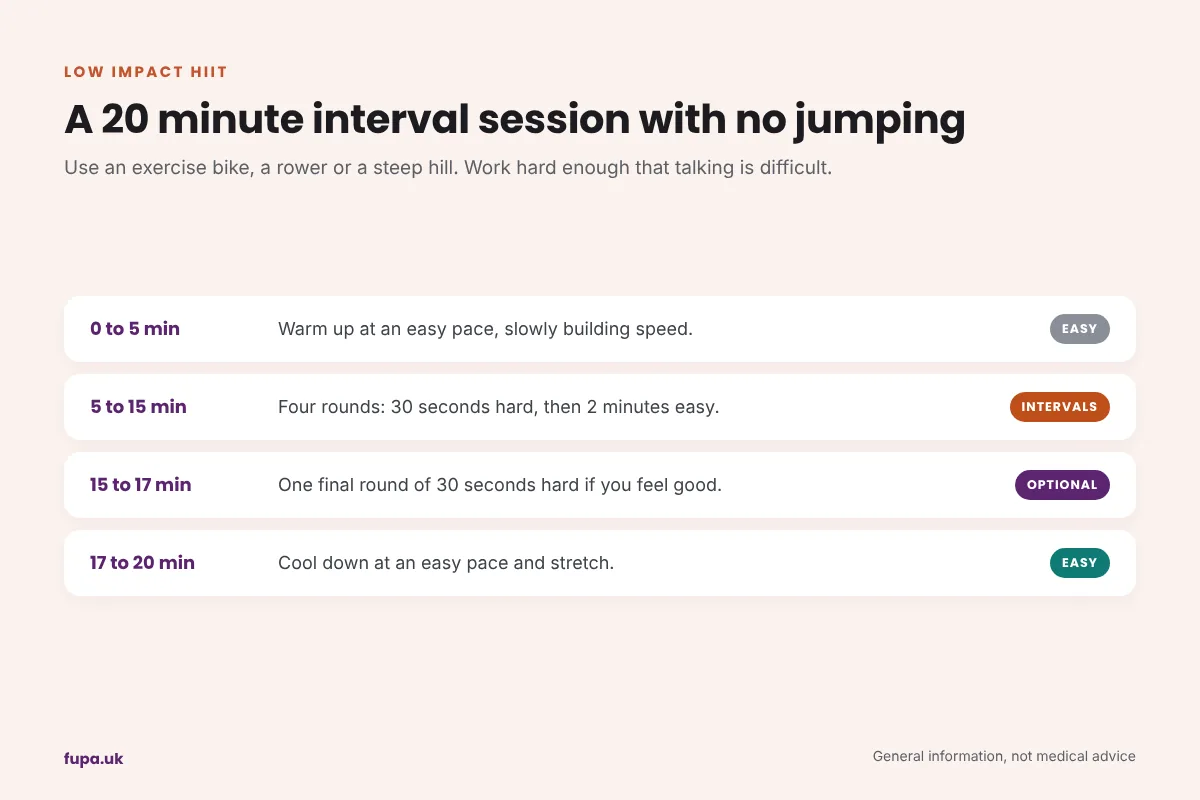
You do not need to jump to do intervals. Try 30 seconds of fast cycling on an exercise bike, brisk uphill walking, fast rowing or quick step ups, then two minutes easy. Repeat six to eight times. These options are kinder to the knees and the pelvic floor.
The Case for Steady Cardio
Strengths
- Easy to recover from, so you can do it most days.
- Low injury risk, especially walking and cycling.
- Good for mood and stress, and easy to share with a friend.
- Adds up over the week without making you hungry or worn out.
Drawbacks
- Takes more time to burn the same amount of energy.
- Fitness gains slow down once your body adapts.
- Some people find long sessions dull.
Walking is underrated
Brisk walking is the simplest steady cardio. It also raises your daily step count, which counts towards the energy you use outside the gym. Our guide to walking to lose a FUPA shows how to build up from a few short walks a day.
Which Is Better for You?
Choose mostly HIIT if
You are short on time, enjoy hard effort, have no joint or pelvic floor problems, and already have a base level of fitness. Keep it to two or three sessions a week.
Choose mostly steady cardio if
You are new to exercise, carry extra weight that makes impact uncomfortable, are returning after pregnancy, or simply prefer calm, longer sessions. Daily walking plus one or two longer sessions a week works well.
The best answer for most people: both
A blend gives you the benefits of each. One or two short interval sessions, daily walking and two strength sessions cover fitness, energy use and muscle. This is also easier to sustain than doing one type every day.
Sample Weekly Cardio Plan for a FUPA
Beginner week
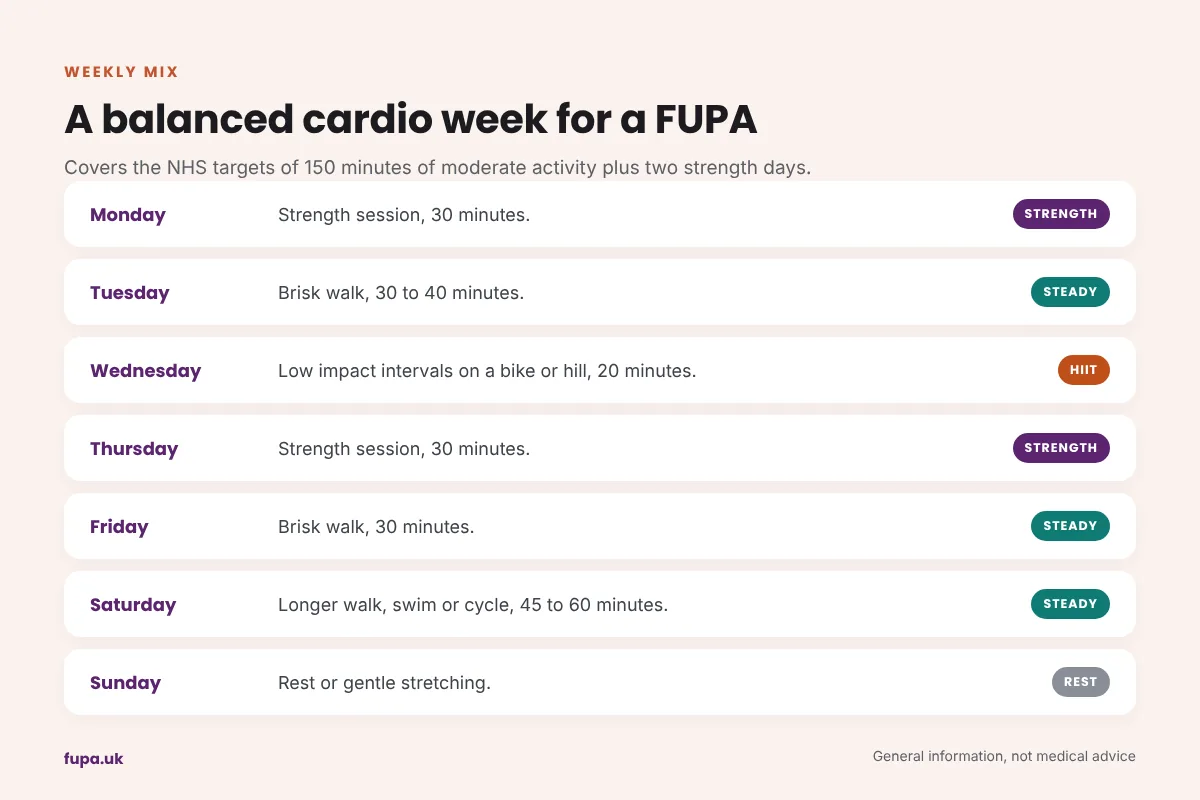
- Monday: strength session, 30 minutes
- Tuesday: brisk walk, 30 to 40 minutes
- Wednesday: low impact intervals on a bike or uphill walk, 20 minutes
- Thursday: strength session, 30 minutes
- Friday: brisk walk, 30 minutes
- Saturday: longer walk, swim or cycle, 45 to 60 minutes
- Sunday: rest or gentle stretching
How this meets UK guidance
The NHS physical activity guidelines suggest at least 150 minutes of moderate activity or 75 minutes of vigorous activity a week. They also advise strengthening activities on at least two days. The plan above covers both. One minute of vigorous activity counts roughly as two minutes of moderate activity.
Progressing over time
Every two weeks, add five minutes to a walk, one extra interval or a little more resistance. Do not increase everything at once. If you feel run down, take an easy week.
Cardio Alone Is Not Enough
Diet sets the pace
Exercise burns less than most people think. A 30 minute walk might use around 100 to 200 calories, depending on your size and pace. A single snack can replace that. A modest calorie deficit is still the main driver of fat loss. Our calorie deficit guide shows how to set a realistic target.
Strength training protects muscle
When you lose weight, some of it can come from muscle. Strength work two or more times a week helps you keep it, so more of the loss comes from fat. Lower body moves such as squats, lunges and glute bridges suit a FUPA plan well.
Sleep and stress
Poor sleep and high stress can raise appetite and make training feel harder. If you are always tired, an extra HIIT session may do more harm than good. Rest is part of training.
Safety: When to Take Care
After pregnancy
Running, jumping and high impact HIIT put load on the pelvic floor. UK guidance for returning to running after birth generally suggests waiting at least three months and building up gradually. Walking, swimming once bleeding has stopped, and cycling are good early choices. If you leak urine or feel heaviness, see your GP and ask about pelvic floor physiotherapy.
Heart and blood pressure
If you have a heart condition, high blood pressure or feel chest pain, dizziness or unusual breathlessness during exercise, stop and seek medical advice. Your GP can help you choose a safe level of intensity.
Joints
If your knees or hips ache, swap jumps for cycling, rowing or swimming. These let you work hard without the impact.
Frequently Asked Questions
Is HIIT better than cardio for a FUPA?
Not clearly. Research comparing HIIT with steady cardio has found similar total fat loss when the effort is matched. HIIT saves time, while steady cardio is easier to do often. Neither targets the lower belly. The best choice is the one you will keep doing alongside a sensible diet.
How many HIIT sessions a week should I do?
Two or three sessions a week is enough for most people. HIIT is demanding, so leave at least one easier day between sessions. Fill the other days with walking, steady cardio and strength training.
Does walking burn lower belly fat?
Walking helps you burn fat across your whole body, and that includes the lower belly over time. It cannot target the FUPA directly. Its big advantage is that you can walk most days, so the energy used adds up across a week.
How long until cardio shrinks my FUPA?
Most people need several months of steady effort to see the lower belly change. Fat loss of about 0.5 kg to 1 kg a week is a realistic target. The FUPA often shrinks after the waist and face, so track your progress with a tape measure every few weeks.
Can I do HIIT after having a baby?
High impact HIIT is usually best left until at least three months after birth, and only once your pelvic floor feels strong. Low impact intervals on a bike or in the pool may be possible sooner. Get the all clear from your GP first.
Should I do cardio before or after weights?
If building strength is your main goal, do weights first while you are fresh. If you only have time for one session, a short circuit that mixes strength moves with brief cardio bursts can cover both. Either way, total effort over the week matters most.
The Bottom Line
Pick the cardio you will keep doing
In the HIIT vs steady cardio debate, there is no clear winner for a FUPA. Both burn fat across the body, and neither targets the lower belly. HIIT saves time and builds fitness fast. Steady cardio is easier to repeat and recover from. Combine a little of each with strength training, a modest calorie deficit and good sleep. Then give the lower belly the months it needs. For a full plan, see our guide to the best exercises for a FUPA.