
FUPA vs Bloating: How Are They Different?
Page Contents
- What Does FUPA Mean, and Where Is It Located?
- Pubic Fullness and Body Tissue
- Why the Exact Location Matters
- What Is Bloating, and How Does It Differ From Distension?
- Feeling Full Versus Visible Enlargement
- Describing Your Symptoms Clearly
- FUPA vs Bloating: Differences in Location, Timing and Symptoms
- Location and Timing
- Symptoms and Overlapping Causes
- What Can Changes After Meals or Overnight Tell You?
- Patterns Around Meals and Sleep
- The Limits of Pinch Tests and Photographs
- What Causes Bloating, and What Can Help?
- Common Digestive Triggers
- Practical Steps for Everyday Comfort
- When Should You Seek Medical Advice About Bloating or Swelling?
- Persistent or Recurring Symptoms
- Urgent and Emergency Warning Signs
- Frequently Asked Questions
- How Can I Tell Whether My Lower Belly Is Fat or Bloating?
- Can You Have FUPA and Bloating at the Same Time?
- Will Reducing Bloating Get Rid of FUPA?
A fuller lower belly can raise a straightforward question: is this body fat, or am I bloated? Answering starts with distinguishing the tissue around your pubic area from sensations and changes occurring inside your abdomen.
FUPA is an informal everyday name for fullness around the upper pubic area. Bloating is a feeling of abdominal fullness or pressure. Sometimes it comes with visible swelling, but a noticeable increase is not essential.
These descriptions can apply to the same person. Existing belly fat does not prevent digestive symptoms, and feeling bloated does not mean you have gained fat. Your appearance cannot reliably separate all the possible contributors.
A useful comparison considers location, timing and symptoms together. Changes after meals may provide clues, while a contour that stays similar suggests a different pattern. Neither observation can establish a medical diagnosis on its own.
The practical question is what needs attention. A familiar contour without symptoms differs from new discomfort or swelling. Understanding that distinction helps you respond to digestive problems without treating every change as a weight issue.
What Does FUPA Mean, and Where Is It Located?
Pubic Fullness and Body Tissue
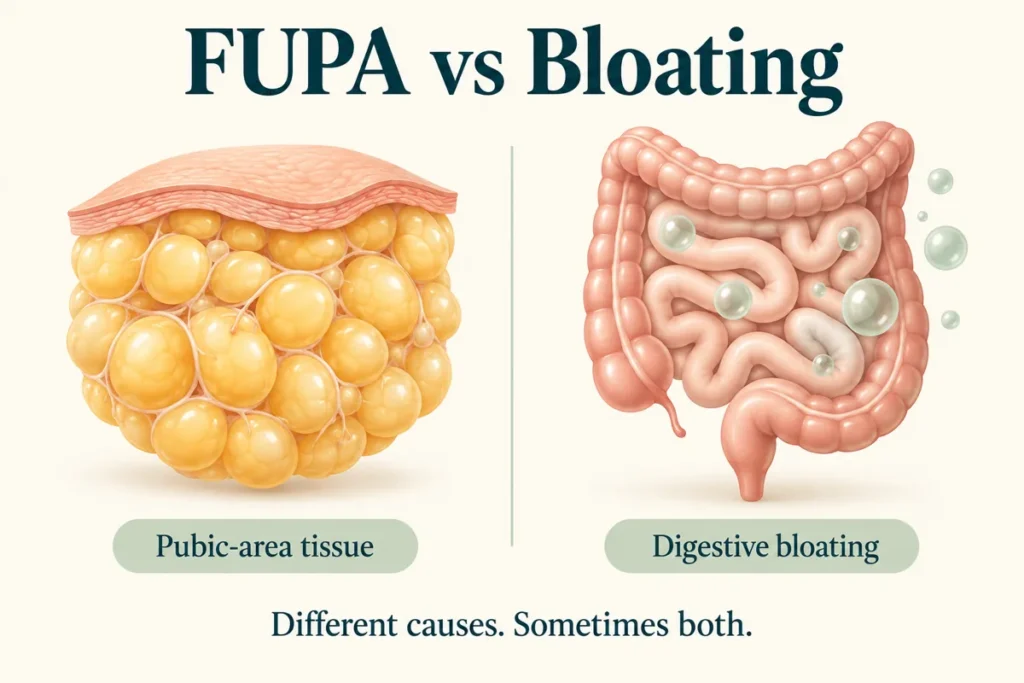
People use FUPA to mean fat upper pubic area, although the everyday expression is not a clinical diagnosis. In everyday conversation, it can describe pubic fullness or, less precisely, a fold across the lower belly.
The mons sits over the pubic bone and contains fatty tissue. Its contour can also involve excess skin. This anatomical location differs from the digestive tract, where swallowed air and digestive processes can produce gas.
Why the Exact Location Matters
That distinction becomes less clear when the word describes the entire lower abdomen. Before comparing possible causes, identify the area you mean. Pubic fullness, a lower abdominal fold and general enlargement are not identical descriptions.
Skin and fatty tissue contribute to an external contour; bloating describes an internal sensation. You may notice both simultaneously. Touch can reveal a fold, but it cannot tell you everything happening internally beneath that surface.
A sudden change deserves its own explanation. Avoid calling a new abdominal lump or painful swelling FUPA simply because it appears nearby. Medical assessment can help clarify unfamiliar findings instead of relying on informal terminology.
What Is Bloating, and How Does It Differ From Distension?
Feeling Full Versus Visible Enlargement
Bloating describes a feeling of fullness, pressure or swelling in your abdomen. The experience can range from mild awareness to abdominal discomfort. Some people feel markedly bloated without seeing much difference in their belly size.
Distension refers to an actual increase in abdominal size. It can accompany bloating, but the two descriptions are separate. One describes how you feel; the other describes enlargement that can be visually observed or measured.
Describing Your Symptoms Clearly
Gas is one possible contributor, rather than a complete explanation for every episode. Constipation and other digestive problems can contribute too. Identifying the cause requires more context than whether your stomach feels tight or full.
Someone might report pressure after lunch without visible enlargement. Someone else might notice swelling and physical discomfort together. These hypothetical examples illustrate why asking about sensations and appearance gives a clearer account than either alone.
When describing an episode, mention where the discomfort occurs and how long it lasts. Include associated symptoms and any effect on eating or usual activities. That information helps a clinician understand what you are experiencing.
FUPA vs Bloating: Differences in Location, Timing and Symptoms
Location and Timing
Start with location. Pubic fullness concerns a particular external body area, while bloating is an abdominal sensation. Because everyday descriptions can be imprecise, pointing out the area may communicate more clearly than using FUPA alone.
Next consider timing. Fatty tissue does not appear after lunch and disappear before breakfast. Rapid changes therefore need an explanation beyond fat alone, although the pattern cannot tell you which process is actually causing them.
Symptoms and Overlapping Causes
Then consider symptoms. Fullness accompanied by gas, abdominal discomfort or bowel changes provides digestive context. A visible bulge without those features does not automatically establish FUPA, because appearance cannot identify every possible cause of enlargement.
Coexistence explains why the comparison is not always straightforward. You may have stable tissue around the pubic area alongside episodes of bloating. Noticeable daily changes can then alter your overall outline without representing new fat.
Use these distinctions to describe your experience, not to give yourself a diagnosis. Persistent or unfamiliar swelling warrants attention even when some features seem recognisable. No single clue can safely explain every abdominal contour change.
What Can Changes After Meals or Overnight Tell You?
Patterns Around Meals and Sleep
If fullness repeatedly follows large meals, record that recurring pattern. Notice eating too fast or fizzy drinks as possible contributors. These observations may guide practical adjustments, but they do not confirm a particular food intolerance.
Looking smaller overnight does not demonstrate fat loss during sleep. Looking larger later does not establish fat gain. Changes across a day need to be considered alongside meals, bowel symptoms and your own usual pattern.
The Limits of Pinch Tests and Photographs
A pinch test answers only a limited question about graspable tissue. You can hold a fold while also feeling uncomfortably bloated. Conversely, difficulty grasping an area cannot confirm that gas is responsible for its shape.
Photographs may document changing appearance, but they cannot identify its cause. Self-assessment becomes more useful when you describe physical discomfort and timing alongside visible changes. Avoid interpreting a single photograph as evidence of increased fat.
Keep brief notes about eating patterns, bowel movements and duration if symptoms frequently recur. Share those observations when seeking medical advice. You do not need to complete a diary before getting help for concerning symptoms.

What Causes Bloating, and What Can Help?
Common Digestive Triggers
Swallowed air can contribute to gas, particularly when you eat quickly or drink fizzy drinks. Gut bacteria also produce gas while breaking down undigested carbohydrates in the large intestine. These are normal parts of digestion.
Constipation, food intolerance and irritable bowel syndrome can contribute to bloating. IBS may involve changes in gut sensitivity or gas movement. Coeliac disease and lactose intolerance are other possibilities, depending on the overall symptom presentation.
Bloating can occur around menstrual periods too. Recognising a recurring pattern may be helpful, but timing should not explain away unfamiliar symptoms. Persistent bloating still merits attention when it continues or affects usual daily activities.
Practical Steps for Everyday Comfort
Smaller meals, regular exercise and adequate water may help. For constipation, soluble fibre from oats or linseed can be useful. Adjustments should suit your symptoms; a food that bothers someone else may still suit you.
If basic changes are insufficient, a clinician or dietitian can help assess the next step. Avoid repeatedly removing foods without guidance. The purpose is to address symptoms while preserving adequate nutrition and manageable eating habits.

When Should You Seek Medical Advice About Bloating or Swelling?
Persistent or Recurring Symptoms
Arrange medical assessment for recurring bloating, particularly when simple adjustments have not helped. Report sudden symptom changes or symptoms that interfere with normal activities. A longstanding problem can still deserve investigation and appropriate individual management.
Unintentional weight loss or blood in stool alongside bloating warrants medical advice. These features do not identify a diagnosis, but they should not be attributed to belly fat. Explain when they began and their pattern.
Urgent and Emergency Warning Signs
Seek urgent care for bloating with vomiting, fever or an abdominal lump. Inability to pass gas or stool also needs urgent attention. New abdominal pain deserves prompt medical advice, particularly when accompanied by other symptoms.
Sudden severe abdominal pain with a swollen abdomen requires emergency care. Vomiting blood or severe difficulty breathing also calls for emergency help. Contact your emergency service rather than waiting to see whether food changes help.
When seeking help, mention constipation, diarrhoea and any other symptoms clearly. NHS guidance can consider the history and examine you before deciding whether tests are needed. The appropriate response depends on the whole clinical presentation.

Frequently Asked Questions
How Can I Tell Whether My Lower Belly Is Fat or Bloating?
Changes after meals, pressure and bowel symptoms may suggest bloating. Fatty tissue changes more gradually. However, appearance and a pinch test cannot confirm the cause; persistent or unfamiliar swelling needs assessment.
Can You Have FUPA and Bloating at the Same Time?
Yes. FUPA and bloating can occur together. Digestive swelling may make an existing contour more noticeable without increasing the underlying fatty tissue.
Will Reducing Bloating Get Rid of FUPA?
Relieving bloating may reduce digestive discomfort and temporary enlargement. It does not remove pubic fatty tissue or excess skin, so an existing FUPA may remain after the bloating settles.
One Response