
Belts for a FUPA: Where to Wear Them and Which Styles Flatter
Page Contents
- Key Takeaways
- Why Belt Position Matters for a FUPA
- Belts create a line
- The low slung problem
- Comfort counts too
- Where to Wear a Belt
- The natural waist
- Just under the bust
- On high rise trousers and skirts
- Where to avoid
- Belt Widths and Which to Choose
- Skinny belts
- Medium belts
- Wide belts
- Obi and wrap belts
- Belt Styles That Flatter a FUPA
- Stretch and elastic belts
- Fabric tie belts
- Flat buckle leather belts
- Tone on tone belts
- Corset and waist cincher belts
- How to Belt Different Outfits
- Dresses
- Coats and long cardigans
- Shirts and blouses
- Jeans and trousers
- Blazers
- Belts to Skip or Use With Care
- Low hip belts
- Very stiff, wide leather belts
- Belts that are too tight
- Buying the Right Belt Size
- Measure where you will wear it
- Try it sitting down
- Think about a belt wardrobe
- Combining Belts With Other FUPA Styling Tips
- Smooth the base layer
- Use vertical lines
- Choose fabrics that drape
- Frequently Asked Questions
- Where should I wear a belt if I have a FUPA?
- Can I wear a belt with a FUPA and a tummy?
- What belt width is most flattering?
- Should I wear a belt with jeans if I have a FUPA?
- Are stretch belts better than leather belts?
- Do belts make you look bigger?
- The Bottom Line
- Belt high, keep it soft
A belt can be one of the most useful tools in your wardrobe if you have a FUPA. In the right place, it draws the eye up, defines your shape and pulls an outfit together. In the wrong place, it cuts across the lower belly and points straight at the area you would rather play down. This guide to belts for a FUPA explains where to wear them, which widths and styles flatter, and which ones to skip.
A FUPA is a soft pad of fat over the mons pubis, just above the pubic bone. Many people have one, at every size, and there is nothing wrong with it. Styling is simply about choosing clothes that feel comfortable and look the way you want. For the wider picture, see our guide on how to hide a FUPA.
Key Takeaways
- Wear belts at your natural waist, the narrowest point above your belly button. This draws attention up and away from the lower belly.
- Avoid belts that sit low on the hips, right across the fullest part of a FUPA.
- Medium width belts of about 2.5 cm to 4 cm suit most body shapes. Very wide belts work best on taller frames or longer torsos.
- Stretch, elastic and soft fabric belts move with you and do not dig in when you sit down.
- Belting a coat, cardigan, blazer or dress over the top often flatters more than belting tight trousers.
Why Belt Position Matters for a FUPA
Belts create a line
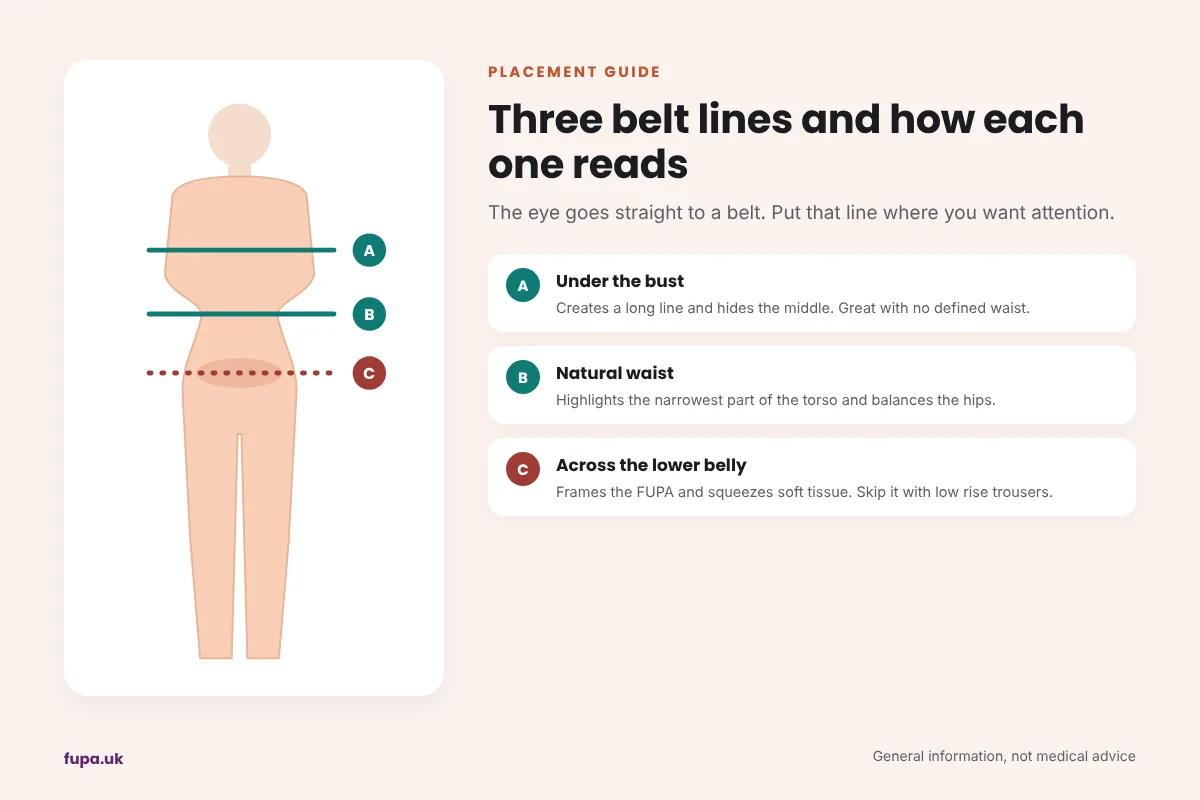
A belt draws a strong horizontal line across the body. The eye goes straight to it. When that line sits at the narrowest part of your torso, it highlights your waist and creates an hourglass outline. When it sits across the widest point, it does the opposite.
The low slung problem
Belts worn through the loops of low or mid rise jeans often sit right over the top of a FUPA. Pulled tight, they can squeeze soft tissue above and below the belt. This creates the bulge many people want to avoid, and it is not comfortable when you sit.
Comfort counts too
A tight belt pressing into the lower belly can feel sore, especially after a meal or in the days before a period. A belt should sit flat against you without leaving a deep mark. If you have to hold your breath to fasten it, it is too tight.
Where to Wear a Belt
The natural waist
Your natural waist is usually a few centimetres above your belly button, where your body bends when you lean to the side. For most people with a FUPA, this is the best place for a belt. It sits well clear of the lower belly and highlights the narrowest part of the torso.
Just under the bust
An empire line belt sits just below the bust. It works well on dresses and long tops, as the fabric then falls freely over the tummy and the FUPA. It is a good choice if you do not have a defined waist.
On high rise trousers and skirts
If you wear high rise jeans or trousers, the waistband should already sit above the FUPA. A belt through these loops will sit in a flattering spot. Our guide to the best jeans for a FUPA explains how to choose the right rise.
Where to avoid
Skip belts that sit on the hips or across the lower belly. This includes low slung chain belts and wide hip belts. Also avoid belting a top at the point where it meets low rise trousers, as this adds bulk at the widest spot.
Belt Widths and Which to Choose
Skinny belts
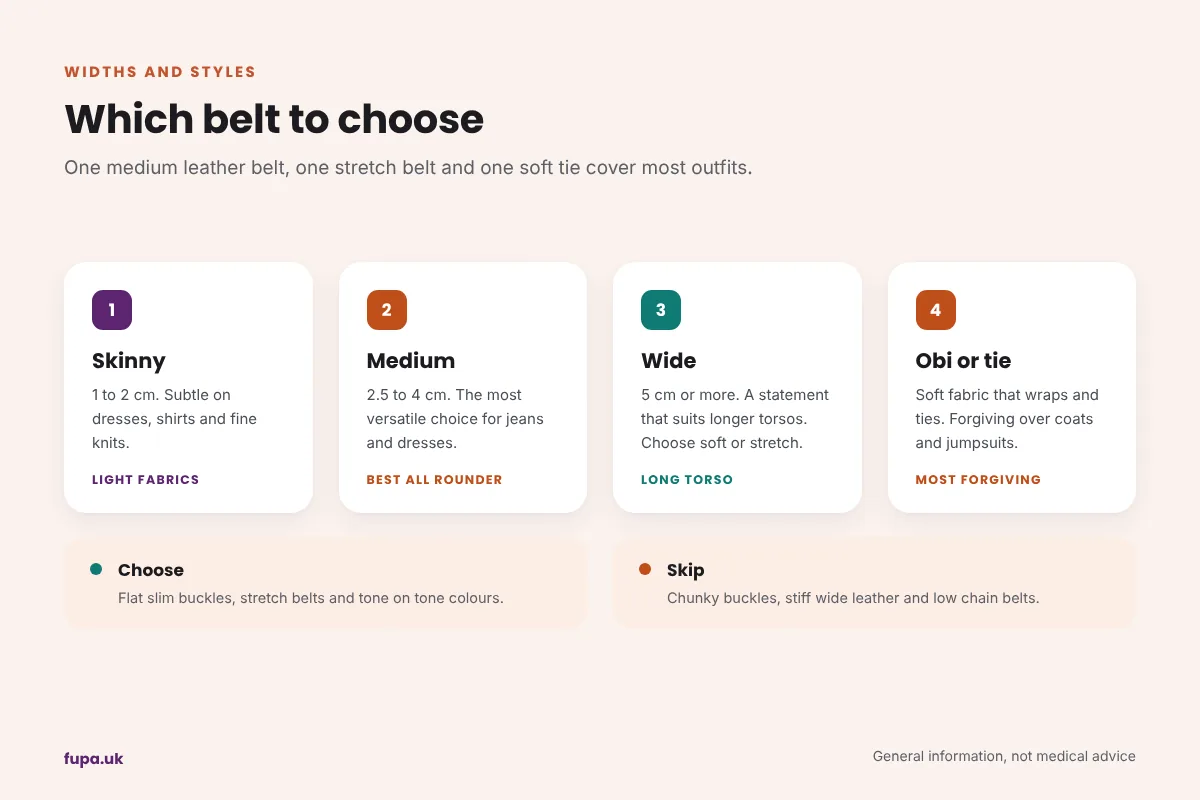
Skinny belts are around 1 cm to 2 cm wide. They are subtle and work well on dresses, shirts and fine knits. On a fuller figure they can look slightly lost, so pick a colour that stands out a little if you want them to show.
Medium belts
Medium belts of about 2.5 cm to 4 cm are the most versatile. They are wide enough to define the waist and narrow enough to sit comfortably when you sit down. If you are buying one belt, choose this width.
Wide belts
Wide belts of 5 cm or more make a strong statement. They suit people with a longer torso, as a wide belt on a short torso can fill the gap between bust and hips. Soft or elastic wide belts are easier to wear than stiff leather ones.
Obi and wrap belts
Fabric obi belts wrap around the waist and tie at the front or side. They are soft, adjustable and very forgiving. They work well over dresses, jumpsuits and long cardigans.
Belt Styles That Flatter a FUPA
Stretch and elastic belts
Elastic belts with a front clasp move as you breathe, sit and eat. They hold their position at the waist without digging in. They are one of the easiest styles to wear over dresses and tunics.
Fabric tie belts
Many coats, wrap dresses and jumpsuits come with a matching tie belt. Tying it at the waist creates soft gathers that hide the lower belly. Tie it to the side for a softer, less formal look.
Flat buckle leather belts
For jeans and trousers, choose a leather belt with a flat, slim buckle. Big, chunky buckles sit forward and draw the eye to the centre of the body. A slim buckle keeps the line smooth under tops.
Tone on tone belts
A belt in the same colour as your outfit gives definition without a harsh line. This is a good choice if you want shape without drawing too much attention to the middle.
Corset and waist cincher belts
Structured corset belts can create a dramatic shape when worn at the natural waist over a dress or shirt. Choose a soft, flexible version and do not lace it too tight. Our guide to waist trainers for a FUPA explains why heavy compression is best avoided.
How to Belt Different Outfits
Dresses
Belting a dress at the natural waist creates a fitted top and a full skirt that skims over the lower belly. Wrap dresses and A line dresses suit this best. Our guide to dresses for a FUPA covers the most flattering cuts.
Coats and long cardigans
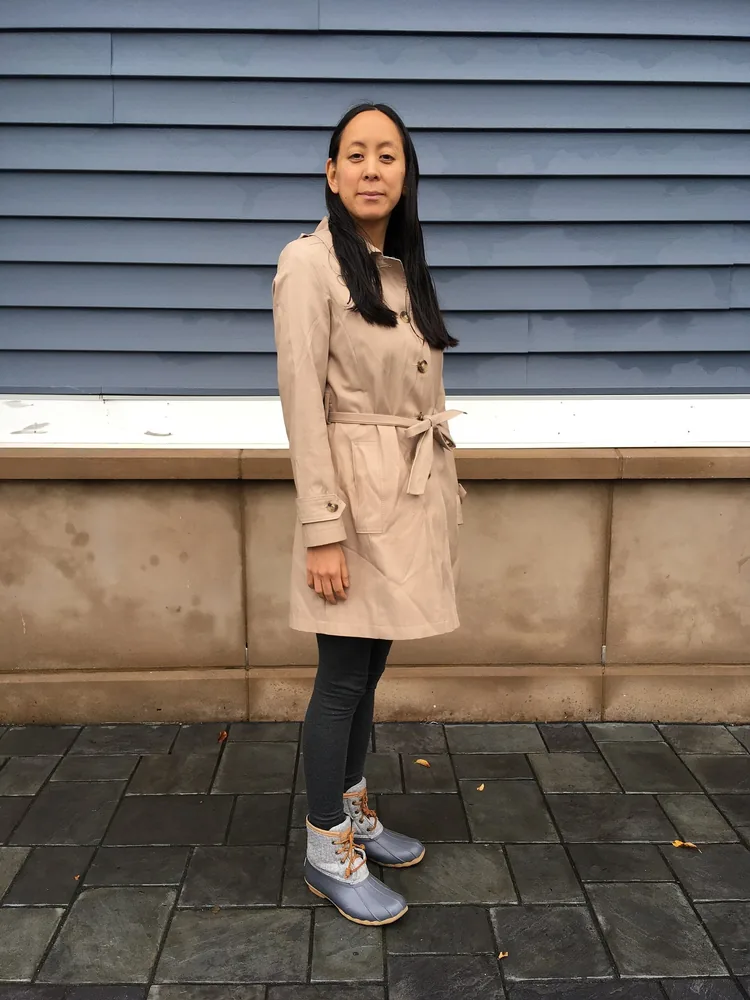
Belting a long coat or cardigan over a simple outfit is one of the easiest ways to look put together. The long open lines on either side create a vertical frame, and the belt defines the waist. A trench coat with a tie belt is a classic example.
Shirts and blouses
Leave a loose shirt untucked and add a skinny or medium belt at the natural waist. Let the fabric blouse slightly over the belt. The soft fall hides the lower belly well.
Jeans and trousers
Choose high rise styles and thread a medium belt through the loops. Keep the belt snug but not tight. A half tuck of your top at the front shows the belt and the waist without drawing attention to the lower belly.
Blazers
Belting a single breasted blazer at the waist gives a sharp, modern shape. It works well over a dress or with wide leg trousers.
Belts to Skip or Use With Care
Low hip belts
Chain belts and wide hip belts worn low sit right across the FUPA. They draw the eye there and can create a bulge. Leave these for outfits where you want a relaxed, low line and the fabric beneath is loose.
Very stiff, wide leather belts
Stiff belts do not bend when you sit. They can push into the soft tissue of the lower belly and ride up or down. Soft leather or stretch versions are kinder.
Belts that are too tight
A belt that squeezes creates rolls above and below it. Size your belt so you can fasten it on the middle hole. That leaves room to adjust after a meal or in the premenstrual week.
Buying the Right Belt Size
Measure where you will wear it
Use a soft tape measure at the spot where the belt will sit, whether that is your natural waist or the waistband of your trousers. Belt sizes in the UK are often given in inches or centimetres for the length to the middle hole.
Try it sitting down
When you try on a belt, sit down in it. A belt that feels fine standing may dig in once you sit. Stretch belts give you more room for comfort.
Think about a belt wardrobe
Three belts cover most outfits: a medium black or brown leather belt for trousers, a stretch belt for dresses, and a soft fabric or obi belt for coats and cardigans.
Combining Belts With Other FUPA Styling Tips
Smooth the base layer
Light shapewear or a supportive high waist brief can create a smooth line under a belted dress. Our guide to shapewear for a FUPA covers styles that do not roll down.
Use vertical lines
Long open cardigans, long necklaces and V necks draw the eye up and down. Paired with a belt at the waist, they balance the outline.
Choose fabrics that drape
Fabrics such as jersey, crepe and viscose fall smoothly over the lower belly. Stiff fabrics can stand away from the body or crease at the belt line.
Frequently Asked Questions
Where should I wear a belt if I have a FUPA?
At your natural waist, the narrowest point above your belly button. This draws the eye up and creates a defined shape. Avoid wearing belts low on the hips, where they sit across the fullest part of the lower belly.
Can I wear a belt with a FUPA and a tummy?
Yes. If you do not have a defined waist, try belting just under the bust on a dress or long top, or belt a long open cardigan or coat. The fabric will then fall over the tummy and lower belly instead of being pulled in.
What belt width is most flattering?
For most people, a medium belt of about 2.5 cm to 4 cm works best. It defines the waist without overwhelming the torso. Wide belts suit longer torsos, and skinny belts suit lighter fabrics.
Should I wear a belt with jeans if I have a FUPA?
You can, if the jeans are high rise. The belt then sits above the FUPA. With low rise jeans, a belt sits across the lower belly and can create a bulge, so it is often better to skip it.
Are stretch belts better than leather belts?
For dresses and tunics, stretch belts are often more comfortable because they move with you. For jeans and trousers, a soft leather belt with a flat buckle works well. Many people find it useful to own one of each.
Do belts make you look bigger?
Not if they sit in the right place. A belt at the natural waist usually makes the body look more defined. A belt across the hips or lower belly can draw attention to that area and add bulk.
The Bottom Line
Belt high, keep it soft
The best belts for a FUPA sit at the natural waist or under the bust, not across the lower belly. Medium widths, stretch belts, soft tie belts and slim buckles work hardest. Belt over coats, cardigans and dresses to create shape while the fabric skims the lower belly. Above all, choose a fit that feels comfortable when you sit, eat and move. For more outfit ideas, see our guide to outfits for a FUPA.