
Fibre and Belly Fat: How Much You Need and the Best Sources
Page Contents
- Key Takeaways
- How Much Fibre Do You Need?
- The UK daily targets
- How much most people actually eat
- Reading food labels
- Fibre and Belly Fat: What the Research Shows
- The soluble fibre and visceral fat study
- What the study does and does not show
- Why fibre helps with fat loss
- Soluble vs Insoluble Fibre
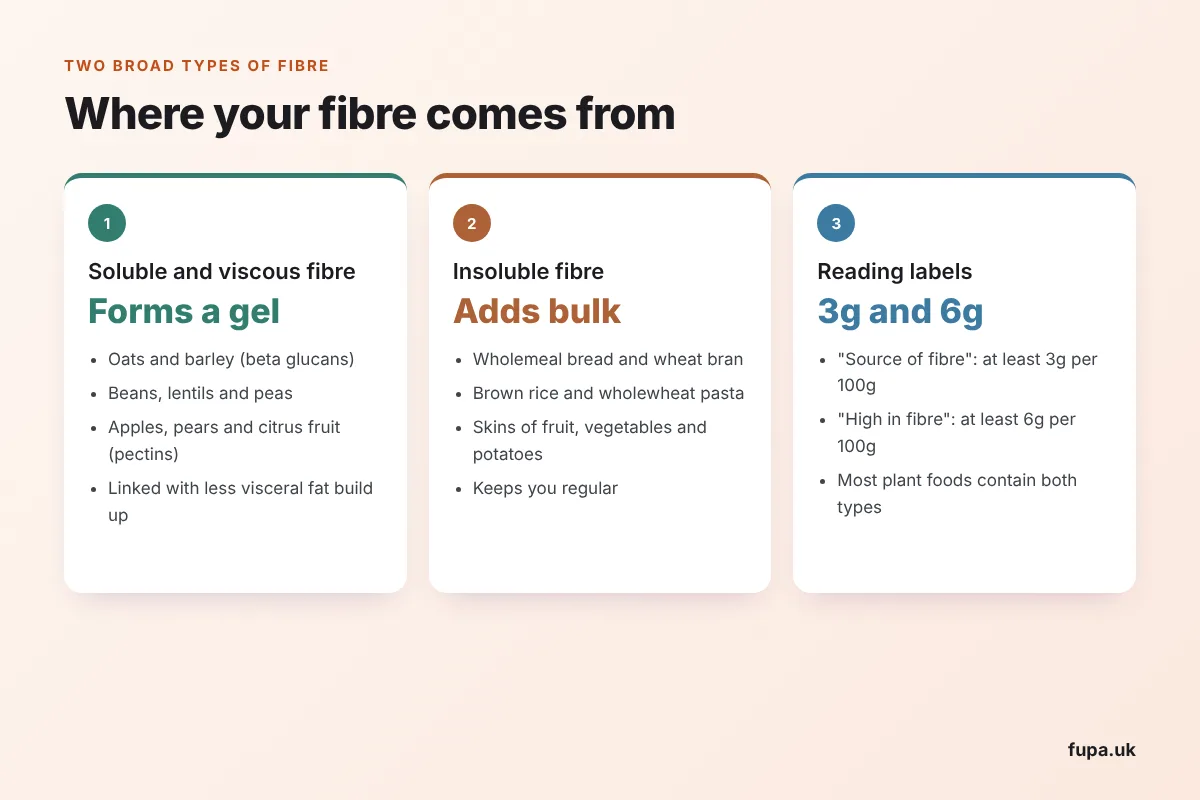
- Soluble and viscous fibre
- Insoluble fibre
- Why you need both
- The Best High Fibre Foods in the UK
- Everyday sources and easy swaps
- Sources of soluble fibre
- Watch out for added sugar
- How to Reach 30g a Day
- An example day
- Increase it gradually
- Drink enough fluid
- Putting Fibre Into Your Belly Fat Plan
- Combine fibre with protein
- Keep the overall diet in balance
- Stay active
- Frequently Asked Questions
- Does fibre help you lose belly fat?
- How much fibre should I eat a day to lose belly fat?
- Which fibre is best for belly fat?
- Can fibre supplements reduce belly fat?
- Why does eating more fibre make me bloated?
- The Bottom Line
- A small change with a steady payoff
The link between fibre and belly fat is simpler than most diet trends suggest. Fibre does not burn fat directly, but it keeps you full, slows digestion and makes a calorie deficit easier to stick to. One long running study also linked more soluble fibre with less build up of deep belly fat over time. Most UK adults eat far less fibre than they should, so this is one of the easiest diet changes to make.
This guide explains how much fibre you need, what the research says about fibre and belly fat, the best food sources and how to eat more without bloating. For the full fat loss method, see our main guide on how to burn lower belly fat, part of our wider guide on how to get rid of a FUPA.
This guide is general information, not medical advice. If you have a bowel condition such as IBS or inflammatory bowel disease, or notice a lasting change in your bowel habits, speak to your GP or a dietitian before changing your fibre intake.
Key Takeaways
- UK government guidelines say adults should eat 30g of fibre a day; the average adult eats about 20g.
- Fibre helps with belly fat mainly by keeping you full on fewer calories.
- A five year study of 1,114 adults found that each extra 10g of soluble fibre a day was linked with 3.7% less visceral fat build up.
- The best sources are wholegrains, oats, beans, lentils, vegetables, fruit, nuts and seeds.
- Increase fibre gradually and drink plenty of fluids to avoid wind and bloating.
How Much Fibre Do You Need?
The UK daily targets
The NHS says government guidelines advise adults to eat 30g of fibre a day. Children need less, based on their age.
| Age | Recommended fibre per day |
|---|---|
| 2 to 5 years | About 15g |
| 5 to 11 years | About 20g |
| 11 to 16 years | About 25g |
| Adults | 30g |
How much most people actually eat
Adults in the UK eat about 20g of fibre a day on average, according to the NHS. The British Nutrition Foundation reports that only around 4 in 100 adults meet the 30g target. For most people, closing that gap means adding about 10g a day, which is easier than it sounds.
Reading food labels
UK labelling rules help you spot good sources. A food can claim to be a “source of fibre” if it has at least 3g per 100g, and “high in fibre” if it has at least 6g per 100g. Checking the per 100g column lets you compare breads, cereals and crackers quickly.
Fibre and Belly Fat: What the Research Shows
The soluble fibre and visceral fat study
Researchers at Wake Forest Baptist Medical Center followed 1,114 adults for five years, measuring their belly fat with CT scans at the start and the end. They found that for every 10g increase in soluble fibre eaten per day, visceral fat was reduced by 3.7% over the five years. Moderate activity was linked with a 7.4% lower rate of visceral fat build up over the same period. The study was published in the journal Obesity in 2011.
What the study does and does not show
This was an observational study, so it shows a link rather than proof that fibre caused the change. It measured visceral fat, the deep fat around the organs, not the soft fat that sits over the pubic bone. Exercise had a larger effect than fibre, which is why the two work best together. Our guide on whether lower belly fat is dangerous explains why visceral fat matters most for health.
Why fibre helps with fat loss
Fibre adds bulk to meals without adding many calories, so you feel full sooner. Viscous fibres, such as the beta glucans in oats and barley and the pectins in fruit, form a gel in the gut that slows digestion and can help steady blood sugar after meals. High fibre foods also tend to need more chewing and are often less processed. Together, these effects make it easier to eat a little less without feeling hungry, which is the basis of any calorie deficit.
Soluble vs Insoluble Fibre
Soluble and viscous fibre
Soluble fibre dissolves in water to form a gel. The British Nutrition Foundation notes that the viscous fibres, most of which are classed as soluble, include gums, pectins, psyllium and beta glucans. Good sources include oats, barley, beans, lentils, peas, apples and citrus fruit. This is the type linked with less visceral fat in the Wake Forest study.
Insoluble fibre
Insoluble fibre, such as the cellulose in wheat bran and the skins of fruit and vegetables, does not dissolve. It adds bulk to stools and helps food pass through the gut, which prevents constipation.
Why you need both
Experts increasingly see the soluble and insoluble split as an oversimplification, and most plant foods contain a mix. Rather than counting each type, aim for a wide variety of fibre rich foods across the day.
The Best High Fibre Foods in the UK
Everyday sources and easy swaps
| Food group | Good choices | Easy swap |
|---|---|---|
| Breakfast cereals | Porridge oats, bran flakes, plain wholewheat biscuits | Swap sugary cereal for porridge with fruit |
| Bread and grains | Wholemeal or granary bread, wholewheat pasta, brown rice, barley | Swap white bread and pasta for wholegrain versions |
| Pulses | Lentils, chickpeas, kidney beans, baked beans, peas | Add a tin of beans or lentils to stews, curries and chilli |
| Vegetables | Broccoli, carrots, sweetcorn, Brussels sprouts, potatoes with skins | Keep the skins on potatoes and add an extra vegetable at dinner |
| Fruit | Apples, pears, berries, oranges, dried fruit | Eat whole fruit instead of drinking juice |
| Nuts and seeds | Almonds, unsalted nuts, chia seeds, linseeds | Snack on a small handful of nuts or oatcakes instead of crisps |
Sources of soluble fibre
The Wake Forest researchers gave a practical example: two small apples, one cup of green peas and half a cup of pinto beans together provide about 10g of soluble fibre. Oats, barley, beans and lentils are the simplest regular sources.
Watch out for added sugar
Some cereal bars and “high fibre” snacks also contain a lot of sugar. Check the label for both fibre and sugar, and choose whole foods most of the time. Our guide to sugar and a FUPA explains why this matters.
How to Reach 30g a Day
An example day
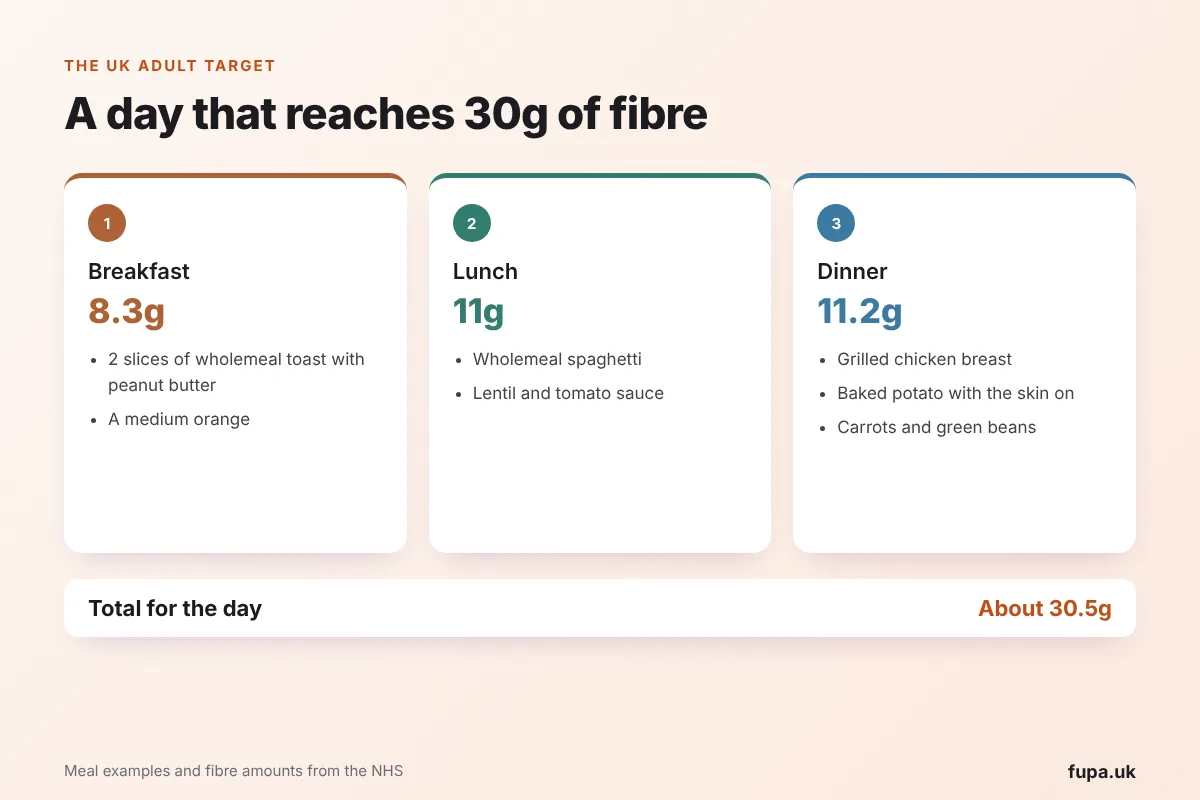
The NHS gives three meal examples that together reach the target:
- Breakfast: 2 slices of wholemeal toast with peanut butter and a medium orange, about 8.3g.
- Lunch: wholemeal spaghetti with a lentil and tomato sauce, about 11g.
- Dinner: grilled chicken breast with a baked potato with the skin on, carrots and green beans, about 11.2g.
That adds up to just over 30g without any special products.
Increase it gradually
- Add one fibre rich swap a day for the first week, such as porridge for breakfast.
- Add a portion of beans, lentils or an extra vegetable to one meal in week two.
- Swap white bread, rice and pasta for wholegrain versions in week three.
- Keep going until you reach around 30g, then stay there.
Raising fibre too quickly can cause wind, bloating and stomach cramps. If your lower belly often swells after meals, our guide to FUPA vs bloating can help you tell the difference.
Drink enough fluid
Fibre works best with plenty of fluid. The British Nutrition Foundation suggests 6 to 8 glasses of fluid a day for most adults, and more when it is hot or you are active.
Putting Fibre Into Your Belly Fat Plan
Combine fibre with protein
Fibre and protein are the two most filling parts of a meal. Building each plate around a protein source, vegetables and a wholegrain or pulse keeps hunger low on fewer calories. Our guide to protein for FUPA fat loss shows how much to aim for.
Keep the overall diet in balance
Fibre will not offset a large calorie surplus. It works best as part of an eating pattern that limits sugary drinks, alcohol and ultra processed snacks. Our FUPA diet guide sets out the full approach.
Stay active
In the Wake Forest study, moderate exercise had about twice the effect of soluble fibre on visceral fat. Pairing a higher fibre diet with regular activity gives you the benefit of both.
Frequently Asked Questions
Does fibre help you lose belly fat?
Fibre helps indirectly. It keeps you full and makes a calorie deficit easier, and a five year study linked more soluble fibre with less build up of visceral belly fat.
How much fibre should I eat a day to lose belly fat?
Aim for the UK adult target of 30g a day. There is no special higher amount for fat loss, and most people benefit simply from moving up from about 20g.
Which fibre is best for belly fat?
Soluble fibre, found in oats, barley, beans, lentils and fruit, has the strongest link with less visceral fat. Eating a mix of fibre rich foods is still the best approach.
Can fibre supplements reduce belly fat?
Supplements such as psyllium can add fibre, but they lack the other nutrients in whole foods. Get most of your fibre from food, and speak to a pharmacist or GP before taking a supplement regularly.
Why does eating more fibre make me bloated?
Gut bacteria ferment some fibres, which produces gas. Bloating usually settles if you increase fibre slowly over a few weeks and drink plenty of fluid.
The Bottom Line
A small change with a steady payoff
Fibre will not burn belly fat on its own, but it is one of the simplest ways to feel fuller on fewer calories, and more soluble fibre is linked with less deep belly fat over time. Most UK adults could add about 10g a day by choosing wholegrains, oats, beans, vegetables and fruit. Build up slowly, drink enough fluid and pair it with regular exercise. For the complete approach, read our guide on how to burn lower belly fat.