Mons Pubis Fat in Men vs Women: Why It Sits Differently
Page Contents
- Key Takeaways
- What the Mons Pubis Is in Both Sexes
- The same structure, different names
- What it is for
- Where the FUPA fits in
- Mons Pubis Women: Why Women Have More Pubic Fat
- Oestrogen builds the mound
- Women store more fat under the skin
- Pregnancy and life stage
- Pubic Fat Pad in Men: Why It Sits Differently
- Men store more fat inside the abdomen
- The role of testosterone
- Why it can affect visible penis length
- Mons Pubis Fat Men vs Women Compared
- How Age Changes the Mons Pubis
- After the menopause
- Ageing in men
- Loose skin in both sexes
- Is a Large Mons Pubis Normal?
- Wide natural variation
- When it might be something else
- Reducing Pubic Fat: What Works for Men and Women
- Overall fat loss comes first
- Why women may see it change later
- Strength training and activity
- Surgery when fat or skin remains
- Frequently Asked Questions
- Do men have a mons pubis?
- Why do women have more pubic fat?
- Does the mons pubis shrink after the menopause?
- Can pubic fat make the penis look smaller?
- Is the way to lose mons pubis fat different for men and women?
- The Bottom Line
- Same structure, different hormones
Mons pubis fat in men vs women is a question many people ask once they compare their own body with a partner’s or with pictures online. Both sexes have the same basic structure: a cushion of fat sitting over the pubic bone. Yet in women it usually forms a soft, rounded mound, while in men it is often flatter and blends into the lower belly. The reasons come down to sex hormones, where each body prefers to store fat, and how those patterns change with age.
This guide explains the anatomy, why women tend to have more pubic fat, how the pubic fat pad in men behaves differently, and what that means if you want to reduce it. For the full picture of this area, see our main guide to mons pubis fat.
This guide covers adult bodies and is general information, not medical advice. If you notice a new lump, swelling or pain in your pubic area, speak to your GP.
Key Takeaways
- The mons pubis is a fat pad over the pubic bone that both men and women have.
- It tends to be larger in women because its fat responds to oestrogen, which builds the mound at puberty.
- Men store more fat deep inside the abdomen, so their pubic fat pad often shows as part of a wider lower belly.
- In men, a large pubic fat pad can hide part of the penis, which can affect hygiene and confidence.
- After the menopause the female mons often gets smaller, while belly fat higher up may increase.
- The way to reduce pubic fat is the same for both sexes: steady overall fat loss.
What the Mons Pubis Is in Both Sexes
The same structure, different names
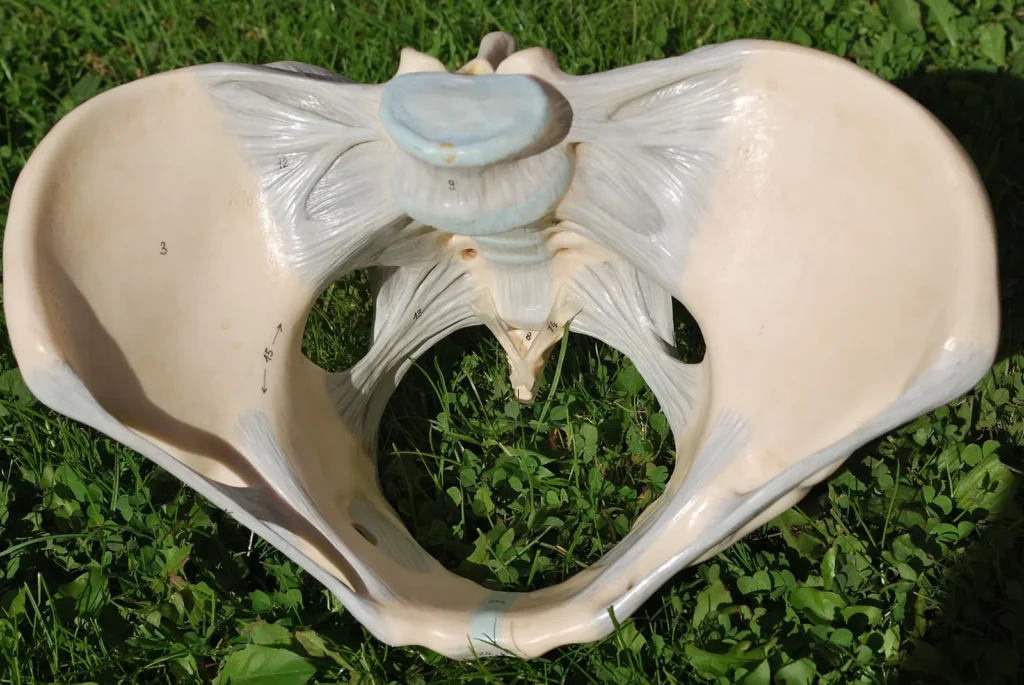
The mons pubis is a rounded mass of fatty tissue that sits on top of the pubic symphysis, the joint where the two pubic bones meet at the front of the pelvis. In women it is sometimes called the mons veneris. In men there is no separate everyday name, and doctors may describe it as the suprapubic or prepubic fat pad. Our guide to mons pubis anatomy explains the layers in more detail.
What it is for
The fat pad cushions the pubic bone and acts as padding during movement and sex. It is where most pubic hair grows. It is a normal part of the body in everyone, not a sign of being overweight.
Where the FUPA fits in
FUPA is a slang term for the same area when the fat pad, and often the lower belly above it, becomes more noticeable. In practice it describes a larger than average mons pubis, whatever your sex.
Mons Pubis Women: Why Women Have More Pubic Fat
Oestrogen builds the mound
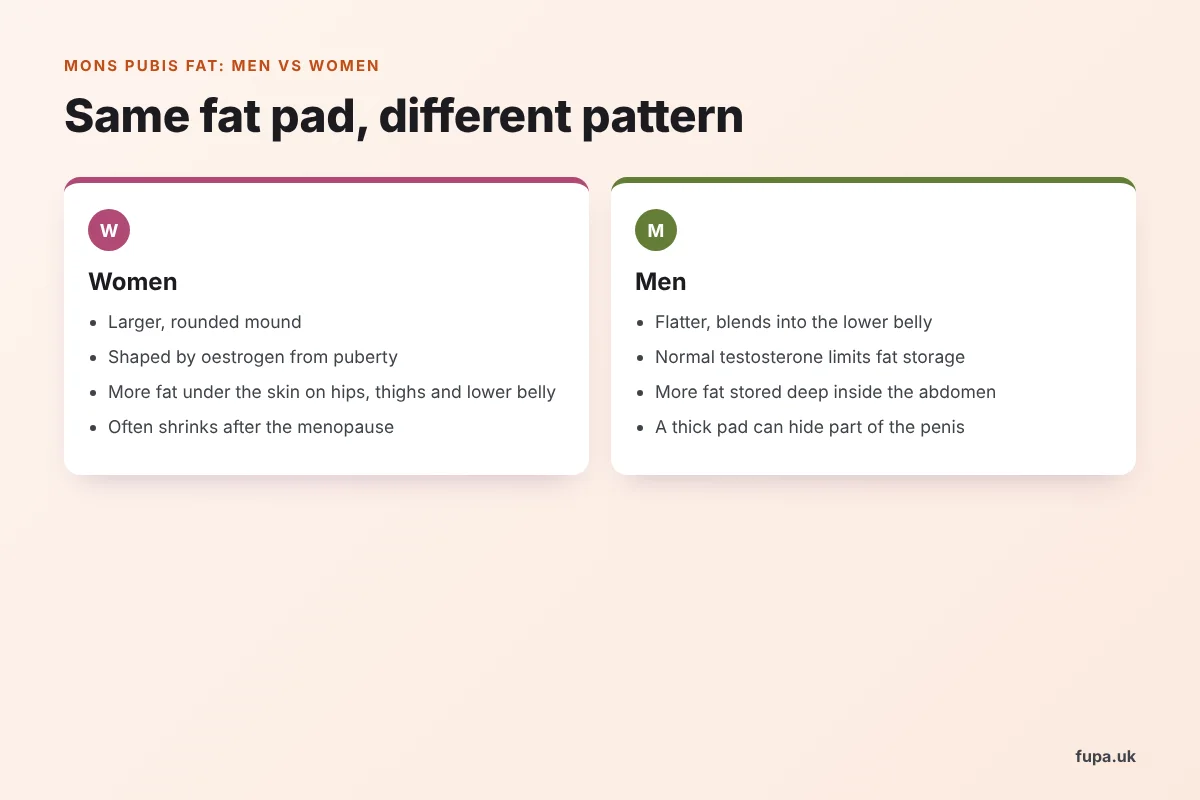
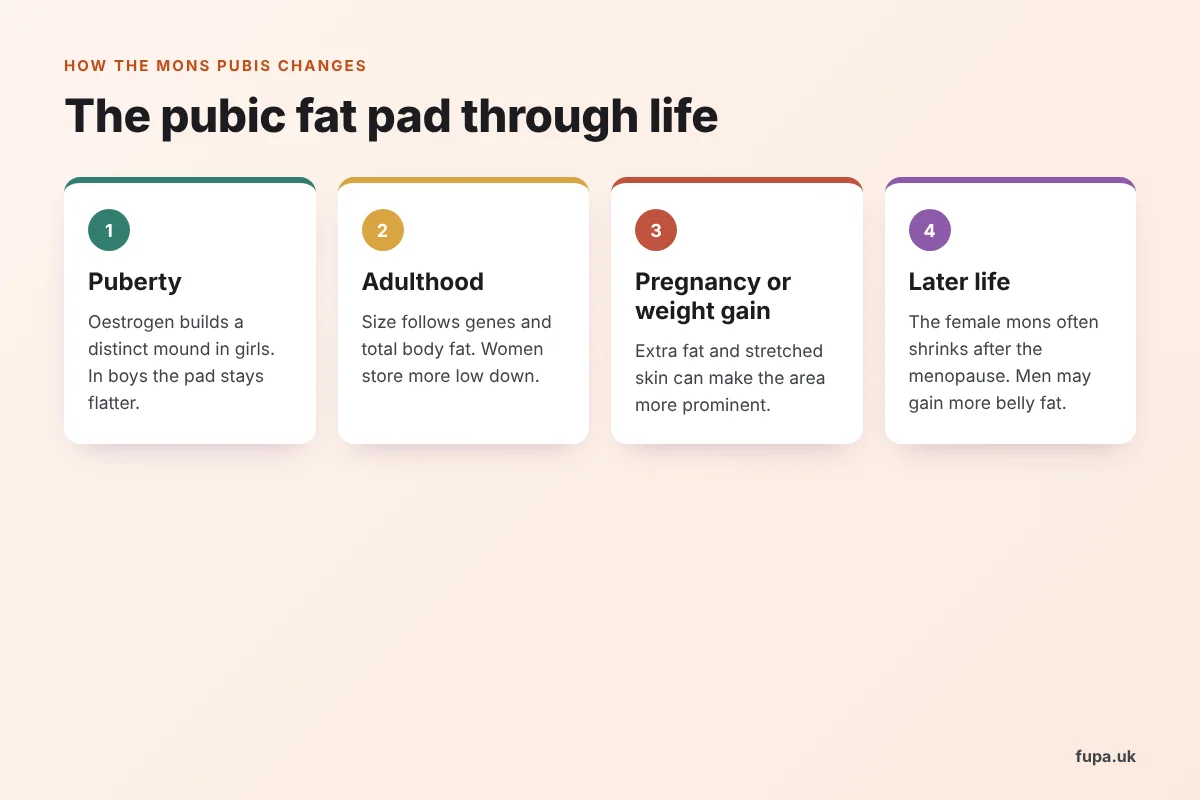
Before puberty the mons pubis is fairly flat in both sexes. The fat in this area is sensitive to oestrogen, so as oestrogen rises during female puberty, a distinct mound forms. This is the main reason the adult female mons is usually larger and rounder than the male one.
Women store more fat under the skin
On average, women carry a higher percentage of body fat than men, and more of it sits under the skin on the hips, thighs, buttocks and lower belly. This is often called a pear shape. The pubic fat pad is part of that lower body store, so when a woman gains weight it often shows on the mons and lower belly early on.
Pregnancy and life stage
Pregnancy stretches the skin and muscles of the lower belly, and weight gained during pregnancy often settles low. Many women notice a larger pubic area afterwards. Our guide to FUPA in women covers pregnancy, PCOS and other female specific causes.
Pubic Fat Pad in Men: Why It Sits Differently
Men store more fat inside the abdomen
Men tend to store a greater share of their fat deep inside the abdomen, around the organs. This apple shaped pattern means extra weight in men often shows as a firm, round belly above the belly button first, with the pubic fat pad growing as part of a wider lower belly rather than as a separate mound.
The role of testosterone
Testosterone helps men keep muscle and limits how much fat is stored. Lower testosterone, which can come with age, poor sleep or obesity, is linked with more fat around the middle. Our guide to FUPA and testosterone explains the two way link.
Why it can affect visible penis length
Because the male fat pad sits directly above the base of the penis, a thick pad can hide part of its length. The penis itself is not smaller, it is simply covered. In more severe cases this is known as buried penis. Our guides to prepubic fat and FUPA in men cover this in detail.
Mons Pubis Fat Men vs Women Compared
| Feature | Women | Men |
|---|---|---|
| Typical size | Larger, rounded mound | Flatter, blends into lower belly |
| Main hormone shaping it | Oestrogen | Testosterone (less fat stored when levels are normal) |
| Main fat storage pattern | Under the skin, hips, thighs, lower belly | Deep inside the abdomen |
| When it changes most | Puberty, pregnancy, menopause | Weight gain, ageing, falling testosterone |
| Common concern | Bulge in clothes and swimwear | Hidden penis length and hygiene |
| How to reduce it | Overall fat loss | Overall fat loss |
How Age Changes the Mons Pubis
After the menopause
As oestrogen falls during the menopause, the mons pubis often gets smaller and pubic hair can thin. At the same time, many women find more fat settles around the waist and upper belly, so their overall shape moves closer to the typical male pattern. Our guide to FUPA and the menopause covers these changes.
Ageing in men
Men often gain fat around the middle from their forties onwards as muscle mass and testosterone slowly fall. The pubic fat pad may grow along with the lower belly, especially if weight creeps up.
Loose skin in both sexes
With age, large weight loss or pregnancy, the skin over the mons can lose its firmness and sag. This is called mons ptosis. It is skin rather than fat, so diet will not fix it. See our guide to a saggy mons pubis.
Is a Large Mons Pubis Normal?
Wide natural variation
Mons size varies a great deal from person to person. Genes, hormones, body fat and life events all play a part. A noticeable mound in a woman, or some fat above the pubic bone in a man, is normal and not a health problem in itself. Our guide to whether a FUPA is normal explains this further. If worries about your shape affect how you feel with a partner, our guide to FUPA and intimacy covers body confidence and comfort.
When it might be something else
Speak to a GP if your pubic area is swelling quickly, is painful, red or hot, has a lump that is hard or growing, or if one side looks very different from the other. Swelling that comes and goes, or a lump that gets bigger when you cough, needs to be checked.
Reducing Pubic Fat: What Works for Men and Women
Overall fat loss comes first
You cannot burn fat from one spot. The mons pubis shrinks when your total body fat falls. A steady calorie deficit, enough protein and fibre, and regular activity work for both sexes. Our guide on how to get rid of mons pubis fat sets out the full plan.
Why women may see it change later
Because the female mons is part of the lower body store, many women find it is among the last areas to slim down. Men often lose belly fat higher up quite quickly, and the pubic pad follows once overall body fat falls further.
Strength training and activity
UK guidance is at least 150 minutes of moderate activity a week plus strength work on two or more days. Building muscle helps both sexes keep a higher resting metabolism while losing fat.
Surgery when fat or skin remains
If the fat pad or loose skin remains after weight loss, procedures such as liposuction or a pubic lift (monsplasty) are options for both men and women. These are usually private procedures. See our guide to monsplasty for what is involved.
Frequently Asked Questions
Do men have a mons pubis?
Yes. Men have the same fat pad over the pubic bone. It is usually flatter than in women and is often called the suprapubic or prepubic fat pad.
Why do women have more pubic fat?
The fat in the mons pubis is sensitive to oestrogen. Rising oestrogen at female puberty builds a distinct mound, and women also tend to store more fat under the skin on the lower body.
Does the mons pubis shrink after the menopause?
It often does. As oestrogen falls the mons pubis tends to get smaller and pubic hair can thin, though belly fat higher up may increase.
Can pubic fat make the penis look smaller?
Yes. A thick pubic fat pad can cover the base of the penis so less of it is visible. The penis is not smaller, and losing weight often reveals more length.
Is the way to lose mons pubis fat different for men and women?
No. Both sexes reduce pubic fat through overall fat loss: a steady calorie deficit, regular activity and strength training. Women may find it is one of the last areas to change.
The Bottom Line
Same structure, different hormones
Men and women share the same pubic fat pad, but oestrogen gives women a larger, rounder mound, while men tend to store fat deeper in the abdomen so their pubic fat blends into the lower belly. Age and the menopause shift these patterns over time. Whatever your sex, a large mons pubis is usually normal, and steady overall fat loss is what shrinks it. For more, read our guide to mons pubis fat.