
How to Burn Lower Belly Fat: What Actually Works

Page Contents
- Key Takeaways
- Can You Burn Fat From Your Lower Belly Only?
- Why spot reduction does not work
- Why the lower belly is often last to go
- What this means for your plan
- How to Burn Lower Belly Fat: The Core Plan
- Step 1: Create a modest calorie deficit
- Step 2: Build meals around protein and fibre
- Step 3: Cut easy calories first
- Step 4: Move more every day
- Exercise for Lower Belly Fat
- Hit the UK activity guidelines
- Strength training protects muscle
- Where core work fits
- HIIT or steady cardio?
- A Simple Weekly Plan
- Sample week
- How to progress
- Sleep, Stress and Hormones
- Sleep
- Stress and cortisol
- Life stage and hormones
- How to Measure Progress
- Use a tape measure, not just the scales
- Know the healthy waist targets
- Take photos and note how clothes fit
- Common Mistakes That Slow Lower Belly Fat Loss
- Crash diets
- Relying on gadgets and pills
- Mistaking bloating or loose skin for fat
- Giving up too early
- When to Speak to Your GP
- Signs to get checked
- Help with weight loss
- Frequently Asked Questions
- What is the fastest way to get rid of lower belly fat?
- Do crunches burn lower belly fat?
- Why is my lower belly fat so stubborn?
- Can walking reduce lower belly fat?
- How long does it take to lose lower belly fat?
- The Bottom Line
- Lose fat overall and give it time
Lower belly fat is often the part of the stomach people most want to change and the part that seems slowest to move. This guide explains how to burn lower belly fat in a way that matches the evidence: why you cannot target it with ab exercises, what drives fat loss across the whole body, and a simple weekly plan you can follow in the UK.
Lower stomach fat sits below the belly button and, for many people, includes the pad of fat over the pubic bone known as a FUPA. This guide sits within our wider resource on how to get rid of a FUPA, which covers the pubic fat pad in more detail.
This guide is general information, not medical advice. If you have a health condition, take regular medicine, are pregnant or have recently given birth, speak to your GP before making big changes to your diet or exercise.
Key Takeaways
- You cannot burn fat from one spot. Lower belly fat shrinks as part of overall fat loss.
- A steady calorie deficit is the main driver. Aiming to lose 0.5kg to 1kg a week is a realistic pace.
- The NHS advises at least 150 minutes of moderate activity a week plus strength work on 2 days.
- Protein, fibre, good sleep and less alcohol make a deficit easier to keep.
- The lower belly is often one of the last areas to slim down, so measure progress over months, not days.
Can You Burn Fat From Your Lower Belly Only?
Why spot reduction does not work
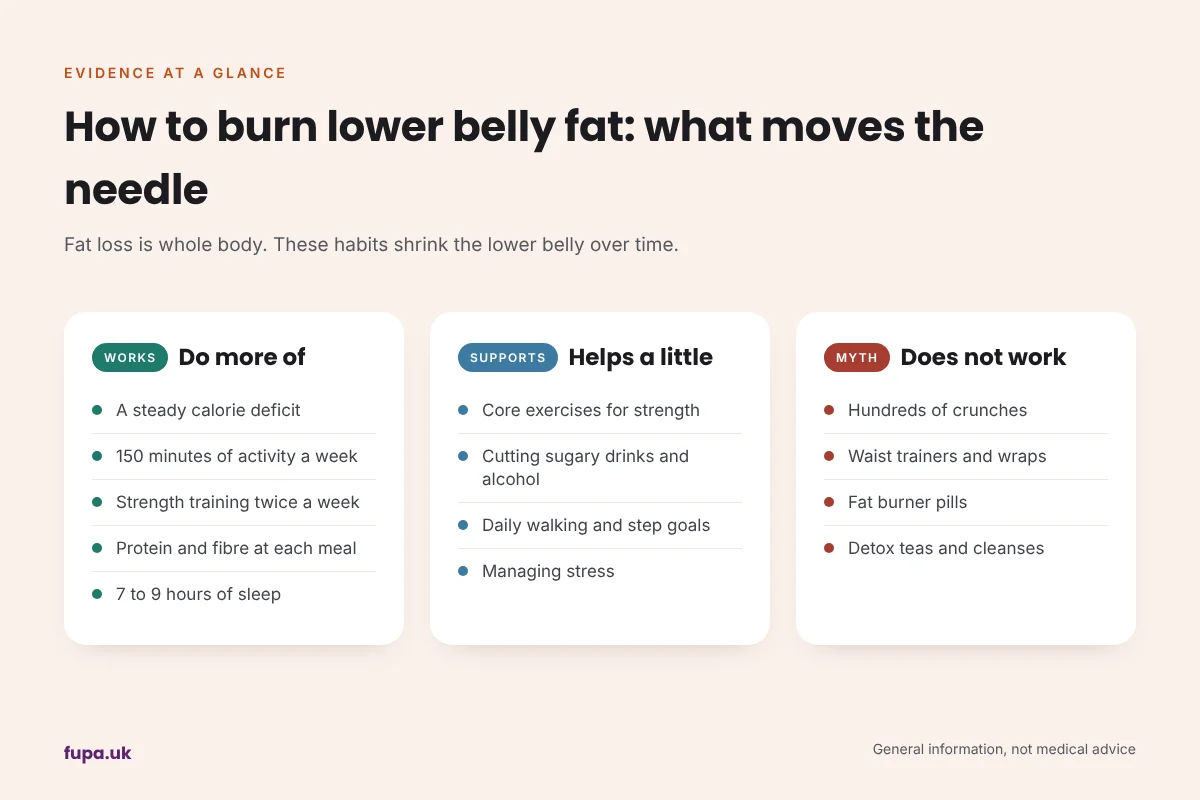
Spot reduction is the idea that working a muscle burns the fat sitting over it. Research does not support it for the stomach. In one well known trial from 2011, adults who did abdominal exercises five days a week for six weeks got stronger abs but did not lose more belly fat than a group who did no ab work. Your body releases stored fat from many areas at once when you use more energy than you take in.
Why the lower belly is often last to go
Where you store fat, and where you lose it first, depends on your genes, sex hormones and age. Many people find their face, arms and upper body slim down before the lower belly. That is normal. It does not mean the plan is failing, only that this area needs more time.
What this means for your plan
The most effective way to reduce lower belly fat is to lose fat overall and keep going. Core exercises still have value because they build strength and support posture, but they are a supporting act, not the main event. If you want a plan for the whole stomach rather than just the area below the belly button, our guide on how to lose belly fat covers every step.
How to Burn Lower Belly Fat: The Core Plan
Step 1: Create a modest calorie deficit
To lose fat you need to use more energy than you eat over time. The NHS suggests that cutting around 600 calories a day helps most people lose 0.5kg to 1kg a week. As a reference point, the average daily intake is about 2,000 calories for women and 2,500 for men, but your own needs depend on your size, age and activity. Our calorie deficit guide shows how to set a target that you can live with.
Step 2: Build meals around protein and fibre
Protein and fibre help you feel full on fewer calories. Aim for a portion of protein at each meal, such as eggs, fish, chicken, beans, lentils, tofu or Greek yoghurt. UK guidance is to eat 30g of fibre a day, which most adults fall short of. Wholegrains, oats, beans, vegetables and fruit help you get there.
Step 3: Cut easy calories first
Sugary drinks, alcohol, snacks eaten on autopilot and large portions of refined carbohydrates add calories without much fullness. Swapping these is often the simplest way to create a deficit without feeling hungry all day. The UK low risk guideline for alcohol is no more than 14 units a week for men and women, spread over three or more days.
Step 4: Move more every day
Walking, taking the stairs and standing up more all add to the energy you use. These everyday movements often burn more over a week than a single gym session. A daily step goal is an easy way to track it.
Exercise for Lower Belly Fat
Hit the UK activity guidelines
The NHS physical activity guidelines advise adults to do at least 150 minutes of moderate activity or 75 minutes of vigorous activity a week, and to do strengthening activities that work all the major muscles on at least 2 days a week. Brisk walking, cycling and swimming all count towards the cardio target.
Strength training protects muscle
When you diet, some of the weight you lose can come from muscle. Lifting weights or doing bodyweight exercises such as squats, lunges, push ups and hip thrusts helps you keep muscle, which supports your metabolism and shape. Two full body sessions a week is a good start. Our weekly workout plan for belly fat sets out both sessions alongside cardio and rest days.
Where core work fits
Exercises such as dead bugs, planks, reverse crunches and pelvic tilts strengthen the deep abdominal muscles. They will not burn the fat on top, but a stronger core can improve posture and how your lower belly looks when you stand. Our list of FUPA exercises includes beginner friendly options.
HIIT or steady cardio?
Both work for fat loss when total effort and calories are similar. High intensity intervals save time, while walking and steady cardio are easier to recover from and to do every day. Choose the one you will keep doing.
A Simple Weekly Plan
Sample week
| Day | Activity | Food focus |
|---|---|---|
| Monday | Full body strength, 40 minutes | Protein at every meal |
| Tuesday | Brisk walk, 30 to 45 minutes | Add a portion of beans or lentils |
| Wednesday | Cycling or swimming, 30 minutes | Swap sugary drinks for water |
| Thursday | Full body strength plus 10 minutes of core work | Two portions of vegetables at dinner |
| Friday | Brisk walk, 30 to 45 minutes | Alcohol free evening |
| Saturday | Longer walk, hike or active day out | Plan meals for the week ahead |
| Sunday | Rest or gentle stretching | Batch cook high fibre lunches |
How to progress
Every two to four weeks, add a little more: a few extra minutes of walking, an extra set, or slightly heavier weights. Small, steady increases are easier to stick with than big jumps.
Sleep, Stress and Hormones
Sleep
The NHS notes that most adults need between 7 and 9 hours of sleep a night. Short sleep is linked to increased hunger and cravings, which makes a deficit harder to keep. A regular bedtime and less screen time before bed can help.
Stress and cortisol
Long term stress can affect appetite and sleep, and high cortisol levels are linked to fat stored around the middle. Walking, time outdoors, breathing exercises and talking to someone can all help. Our guide to stress, cortisol and a FUPA covers this in more depth.
Life stage and hormones
Pregnancy, menopause and falling testosterone with age can all change where fat is stored. These changes make the lower belly more stubborn but do not stop fat loss. Men tend to store more of this fat deep around the organs, which our guide to lower belly fat in men covers in detail. If you notice sudden weight gain, a swollen or hard lower belly, or other new symptoms, see your GP.
How to Measure Progress
Use a tape measure, not just the scales
Your weight can swing by a kilo or more from day to day because of water, salt and digestion. A tape measure around your waist gives a clearer picture of belly fat over time. Measure once a week, at the same time of day.
Know the healthy waist targets
In the UK, NICE advises keeping your waist to less than half your height. A waist of 94cm or more in men, or 80cm or more in women, is linked to a higher risk of health problems such as type 2 diabetes and heart disease. Visceral fat, the deeper fat around the organs, carries more risk than the soft fat you can pinch.

Take photos and note how clothes fit
Photos taken every four weeks in the same light, and the fit of a favourite pair of jeans, often show changes before the scales do. Our guide on measuring a FUPA explains a simple routine.
Common Mistakes That Slow Lower Belly Fat Loss
Crash diets
Very low calorie diets can cause muscle loss, tiredness and rebound weight gain. A modest deficit you can keep for months works better than a strict plan you drop after two weeks.
Relying on gadgets and pills
Waist trainers, sweat belts, fat burner pills and detox teas do not burn lower belly fat. Some carry real risks. The time and money is better spent on food, walking shoes and sleep.
Mistaking bloating or loose skin for fat
Not every lower belly bulge is fat. Bloating comes and goes during the day. Loose skin after weight loss or pregnancy will not shrink with diet. A gap in the abdominal muscles after pregnancy, called diastasis recti, needs specific rehab. If fat loss has stalled but the bulge stays, it may be one of these.
Giving up too early
Because the lower belly is often among the last areas to change, many people stop just before they would see a difference. Judge progress over 8 to 12 weeks, not a few days.
When to Speak to Your GP
Signs to get checked
See your GP if your lower belly is getting bigger quickly, feels hard or lumpy, is painful, or if you have other symptoms such as bloating most days, changes in your periods or bowel habits, or unexplained weight changes. These can have causes other than fat.
Help with weight loss
If you have a high BMI or a related health condition, your GP can talk to you about local weight management services, the free NHS weight loss plan, and whether licensed medicines might be suitable.
Frequently Asked Questions
What is the fastest way to get rid of lower belly fat?
There is no shortcut. The quickest safe approach is a steady calorie deficit, regular activity, strength training twice a week and good sleep. Losing 0.5kg to 1kg a week is a realistic pace for most people.
Do crunches burn lower belly fat?
No. Crunches strengthen the abdominal muscles but do not burn the fat that sits over them. Research on spot reduction shows that ab exercises alone do not reduce belly fat. They are useful for strength and posture alongside fat loss.
Why is my lower belly fat so stubborn?
Many people store fat in the lower belly first and lose it from there last. This pattern is shaped by genes, hormones and age. It does not mean you cannot lose it, only that it may take longer than other areas.
Can walking reduce lower belly fat?
Yes, as part of overall fat loss. Brisk walking burns calories, is easy to do every day and counts towards the 150 minutes of weekly activity the NHS recommends.
How long does it take to lose lower belly fat?
It depends on how much you have to lose and how consistent you are. Most people notice changes in how clothes fit within 6 to 12 weeks of steady effort, with the lower belly often among the last areas to change.
The Bottom Line
Lose fat overall and give it time
Learning how to burn lower belly fat starts with accepting that you cannot target it. A modest calorie deficit, meals built around protein and fibre, daily movement, two strength sessions a week and enough sleep will shrink the lower belly along with the rest of your body. Track your waist, be patient with this stubborn area, and speak to your GP if anything feels unusual. For the pubic fat pad itself, our guide on whether a FUPA goes away explains what to expect.