
What Causes Lower Belly Fat? 9 Common Reasons

Page Contents
- Key Takeaways
- What Causes Lower Belly Fat? The Basics
- Two types of belly fat
- Why the bottom belly is often the last to slim down
- 9 Common Reasons for Lower Belly Fat
- 1. Eating more energy than you use
- 2. Your genes
- 3. Sex hormones and menopause
- 4. Getting older and losing muscle
- 5. Alcohol
- 6. Short or poor sleep
- 7. Long term stress
- 8. Sitting for long periods
- 9. Medical conditions and medicines
- When a Lower Belly Bulge Is Not Fat
- Bloating
- Posture
- Tummy muscle separation
- Loose skin
- How to Tell If Your Lower Belly Fat Is a Health Risk
- Check your waist to height ratio
- A worked example
- What You Can Do About Lower Abdomen Fat
- Focus on the causes you can change
- Do not rely on ab exercises alone
- Be patient with the lowest part of the belly
- When to See a GP
- Signs that need checking
- Getting help with weight
- Frequently Asked Questions
- What causes lower belly fat in women?
- What causes lower belly fat in men?
- Can stress cause lower belly fat?
- Why do I have lower belly fat when I am slim?
- Is lower belly fat dangerous?
- The Bottom Line
- Several causes, one main fix
If you have been asking what causes lower belly fat, the short answer is that it is rarely one thing. Fat in the lower abdomen builds up when you take in more energy than you burn over months and years, and your genes, hormones, age and habits then decide how much of that fat sits low on the tummy. This guide walks through the 9 most common reasons, what you can change, and the signs that a bulge is something other than fat.
This page looks at the whole lower abdomen. If your main concern is the soft pad of fat right over the pubic bone, our guide to what causes a FUPA covers that area in more detail.
This guide is general information, not medical advice. If your lower belly is painful, swollen, hard or has changed quickly, speak to your GP.
Key Takeaways
- Lower belly fat mostly comes from a long term energy surplus. Genes and hormones decide where that fat is stored.
- Age, menopause and muscle loss shift more fat to the tummy in both men and women.
- Alcohol, short sleep, stress and long hours sitting all make lower abdomen fat more likely.
- Bloating, posture and tummy muscle separation can make the lower belly stick out without extra fat.
- NICE advises keeping your waist to less than half your height to lower health risks.
What Causes Lower Belly Fat? The Basics
Two types of belly fat
Your lower belly holds two kinds of fat. Subcutaneous fat sits just under the skin and is the soft layer you can pinch. Visceral fat sits deeper, around organs such as the liver and bowel, and pushes the tummy out from inside. Visceral fat is the type most linked to type 2 diabetes and heart disease, which is why waist size matters more than the number on the scales. To check whether your own belly fat is a health risk, see our guide on whether lower belly fat is dangerous.
Why the bottom belly is often the last to slim down
Fat does not leave the body evenly. Many people find their face, arms and upper body slim down first while bottom belly fat stays put. That is normal, and it is one reason why lower belly fat feels so stubborn. Our pillar guide on how to burn lower belly fat explains what does and does not work to shift it.
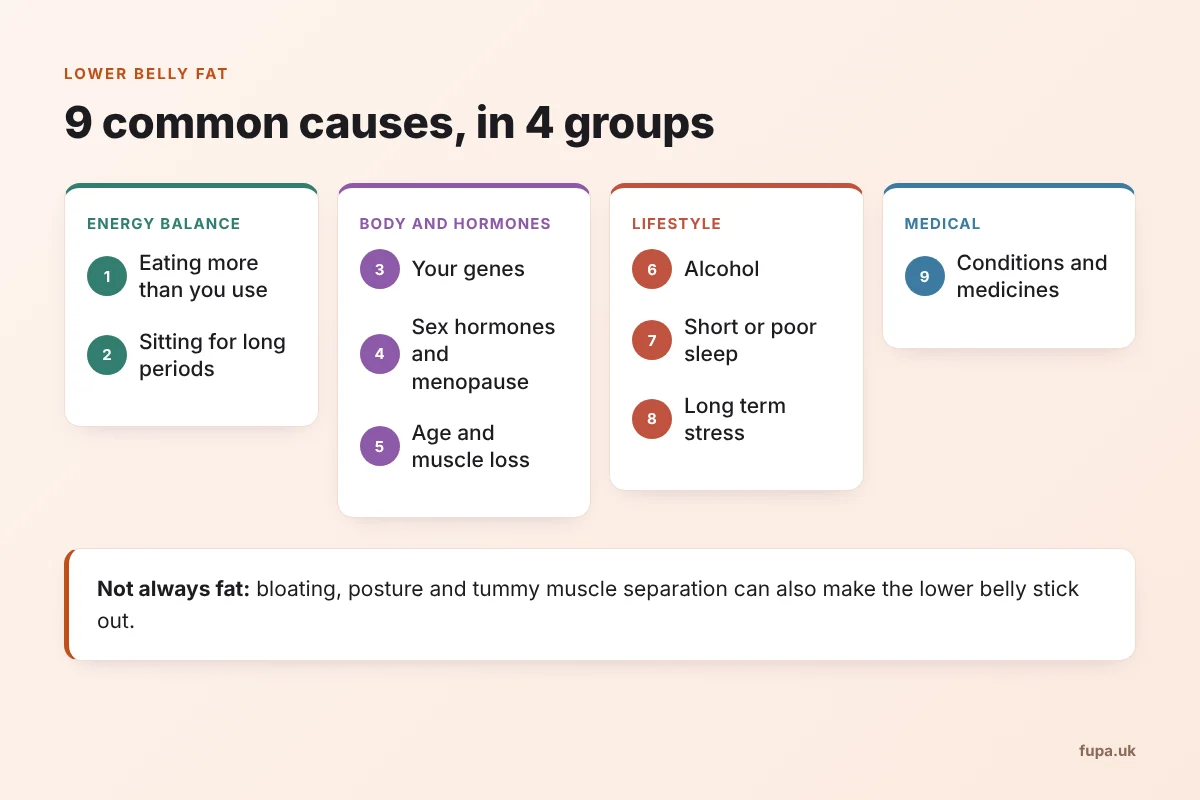
9 Common Reasons for Lower Belly Fat
1. Eating more energy than you use
This is the root cause for most people. When you regularly eat and drink more calories than your body needs, the extra is stored as fat. Larger portions, frequent snacks, sugary drinks and takeaways add up quickly without making you feel much fuller. Small surpluses over years are enough to build lower belly fat.
2. Your genes
Genes play a big part in where your body stores fat. Some people put on weight around the hips and thighs, while others store it mainly on the tummy. If your parents carried weight low on the belly, you may too. You cannot change your genes, but you can change how much total fat you carry. See our guide to FUPA hormones and genetics for more on this.
3. Sex hormones and menopause
Oestrogen tends to send fat to the hips, thighs and lower belly in younger women. Around the menopause, falling oestrogen shifts more fat towards the middle, and the NHS lists weight gain among the physical symptoms of the menopause and perimenopause. In men, low testosterone is linked with carrying more body fat. Our pages on FUPA and the menopause and FUPA and PCOS look at these links. For a step by step routine that fits these changes, see our plan on how to lose lower belly fat as a woman.
4. Getting older and losing muscle
From middle age, most people slowly lose muscle unless they do strength training. Less muscle means your body burns slightly less energy at rest, so the same diet that kept your weight steady at 30 may lead to gain at 50. Many people also move less as they get older, which adds to the effect.
5. Alcohol
Alcohol is high in calories, it can make you hungrier, and drinks are often paired with salty snacks. The UK guideline is to drink no more than 14 units a week, spread over 3 or more days. Cutting back is one of the simplest ways to reduce lower belly fat. Read more in our guide to FUPA and alcohol.
6. Short or poor sleep
When you are tired, you tend to feel hungrier, crave higher calorie foods and move less during the day. Over time, regular poor sleep can make weight gain more likely. Our page on FUPA and sleep covers simple ways to sleep better.
7. Long term stress
Stress raises cortisol, a hormone that helps your body cope with pressure. Ongoing stress can drive comfort eating, reduce sleep and leave less time for activity, all of which favour belly fat. Very high cortisol from a medical condition called Cushing’s syndrome causes fat to build up on the tummy, chest and face, but this is rare. See FUPA and cortisol for more detail.
8. Sitting for long periods
Desk jobs, long commutes and evenings on the sofa reduce the energy you burn each day. The NHS recommends at least 150 minutes of moderate activity a week and breaking up long periods of sitting. Low activity also makes it harder for your body to manage blood sugar, which is linked to insulin resistance and more belly fat.
9. Medical conditions and medicines
An underactive thyroid can cause tiredness and weight gain. Some medicines, including steroid tablets and some antidepressants, can lead to weight gain in some people. Never stop a prescribed medicine on your own. Speak to your GP or pharmacist if you think a medicine is affecting your weight.
When a Lower Belly Bulge Is Not Fat
Bloating
Bloating makes the lower abdomen feel tight and swollen, and it often changes through the day. The NHS says the most common cause of bloating is gas in the gut, while constipation, food intolerance, IBS and periods can also play a part. Fat stays the same from morning to night. Our comparison of FUPA vs bloating helps you tell them apart.
Posture
If your pelvis tips forward when you stand, your lower belly can push out even when you carry little fat. Long hours sitting and weak core and glute muscles can make this worse. See our guide to FUPA and posture for simple fixes.
Tummy muscle separation
After pregnancy, the two long tummy muscles can stay apart, which leaves a soft bulge or pouch low on the belly. This is called diastasis recti, and it needs targeted exercises rather than fat loss alone. Our page on FUPA vs diastasis recti explains how to check.
Loose skin
After major weight loss or pregnancy, stretched skin can hang over the lower belly. Diet and exercise will not tighten it. A doctor or surgeon can tell you whether the fullness is mainly skin or fat.
How to Tell If Your Lower Belly Fat Is a Health Risk
Check your waist to height ratio
The NICE guideline on central adiposity uses waist to height ratio for adults with a BMI under 35. To measure, find the bottom of your ribs and the top of your hips, then wrap a tape measure around your waist midway between the two, which is just above the belly button. Breathe out naturally and measure. Divide your waist by your height, using the same units for both.
| Waist to height ratio | What NICE says |
|---|---|
| 0.4 to 0.49 | Healthy, no increased health risks |
| 0.5 to 0.59 | Increased central adiposity, increased health risks |
| 0.6 or more | High central adiposity, further increased health risks |
A worked example
Someone who is 170cm tall with a 96.5cm waist has a ratio of 96.5 divided by 170, which is 0.57. That sits in the increased risk band. To get under 0.5, their waist would need to be below 85cm.

What You Can Do About Lower Abdomen Fat
Focus on the causes you can change
You cannot change your genes or your age, but most of the other causes are within reach. A modest calorie deficit, less alcohol, better sleep, more daily movement and strength training twice a week will reduce lower belly fat over time, along with fat everywhere else.
Do not rely on ab exercises alone
Crunches and planks strengthen the muscles under the fat, but they do not burn the fat that sits on top. They are useful for posture and core strength, so keep them as one part of a wider plan.
Be patient with the lowest part of the belly
Track your waist once a week at the same time of day rather than weighing yourself daily. Give any plan at least 8 to 12 weeks before judging the lower belly, because it is often the last area to change.
When to See a GP
Signs that need checking
Book a GP appointment if your lower belly is swollen and hard, keeps growing, is painful, or comes with changes in your periods, bowel habits or weight that you cannot explain. Persistent bloating, a lump, or feeling full quickly should also be checked. These signs are often harmless, but they are worth ruling out.
Getting help with weight
Your GP can check your BMI and waist, look for conditions such as an underactive thyroid, and tell you about local weight management support.
Frequently Asked Questions
What causes lower belly fat in women?
The main cause is a long term calorie surplus, but oestrogen tends to send fat to the hips, thighs and lower belly. Pregnancy, PCOS and the menopause can all change how much fat sits low on the tummy.
What causes lower belly fat in men?
Men tend to store more fat around the middle, including deeper visceral fat. Alcohol, low activity, ageing and low testosterone can all add to lower belly fat in men.
Can stress cause lower belly fat?
Long term stress can make belly fat more likely, mainly by affecting appetite, sleep and activity. Very high cortisol from Cushing’s syndrome causes tummy fat, but this condition is rare.
Why do I have lower belly fat when I am slim?
Genes, posture, bloating or separated tummy muscles can make the lower belly stick out in slim people. A small pad of fat over the pubic bone is also normal for everyone.
Is lower belly fat dangerous?
It depends on how much you carry and where. Deep visceral fat raises the risk of type 2 diabetes and heart disease. A waist to height ratio of 0.5 or more means increased health risks, according to NICE.
The Bottom Line
Several causes, one main fix
Lower belly fat is caused by a mix of energy surplus, genes, hormones, age and habits such as drinking, sitting and sleeping badly. Some bulges are bloating, posture or muscle separation rather than fat. The causes you can change all point to the same plan: eat a little less, move a little more, sleep well and keep your waist to less than half your height. Our guide on how to burn lower belly fat sets out that plan step by step.