
How to Lose Belly Fat: A Realistic Guide for UK Adults
Page Contents
- Key Takeaways
- What Is Belly Fat?
- Subcutaneous fat
- Visceral fat
- Why the difference matters
- How to Lose Your Belly Fat: 7 Steps That Work
- Step 1: Set a modest calorie deficit
- Step 2: Put protein in every meal
- Step 3: Eat more fibre
- Step 4: Swap sugary drinks and cut back on alcohol
- Step 5: Move more every day
- Step 6: Lift weights twice a week
- Step 7: Sleep and manage stress
- Best Way to Get Rid of Belly Fat: What to Eat
- A simple plate model
- Sample day of eating
- Foods to keep as occasional treats
- Tips to Lose Belly Fat: Exercise That Helps
- Cardio for calorie burn
- Strength training for shape
- Where ab exercises fit
- How Do I Lose Stomach Fat if I Have Tried Before?
- Check your portions honestly
- Rule out bloating and other causes
- Use free NHS support
- How to Track Your Progress
- Measure your waist
- Expect a realistic timeline
- Look beyond the scales
- Belly Fat Myths to Ignore
- Fat burner pills and detox teas
- Waist trainers and sweat belts
- Cutting out whole food groups
- Frequently Asked Questions
- How can I lose tummy fat fast?
- What is the best way to get rid of belly fat?
- Can you lose belly fat by doing sit ups?
- Why is my belly fat the last to go?
- Is belly fat dangerous?
- The Bottom Line
- Lose fat overall and be patient
If you have been wondering how to lose your belly fat without fad diets or endless sit ups, the honest answer is that the stomach slims down when your body loses fat overall. This guide explains what belly fat is, why some of it matters more for your health than the rest, and a realistic plan for UK adults built on NHS and NICE guidance.
Belly fat covers the whole stomach, from the upper abdomen to the lower belly. If the part that bothers you most sits below the belly button, our guide on how to burn lower belly fat goes into that area in more detail. This page looks at the bigger picture.
This guide is general information, not medical advice. If you have a health condition, take regular medicine, are pregnant or have recently given birth, speak to your GP before making big changes to your diet or exercise.
Key Takeaways
- You cannot burn fat from your stomach alone. Belly fat shrinks as part of overall fat loss.
- Cutting around 600 calories a day helps most people lose 0.5kg to 1kg a week, according to the NHS.
- Visceral fat, the deeper fat around the organs, carries the most health risk and often responds well to fat loss and exercise.
- Protein, fibre, fewer sugary drinks and less alcohol make a calorie deficit easier to keep.
- A tape measure tells you more about belly fat than the scales. NICE advises keeping your waist to less than half your height.
What Is Belly Fat?
Subcutaneous fat
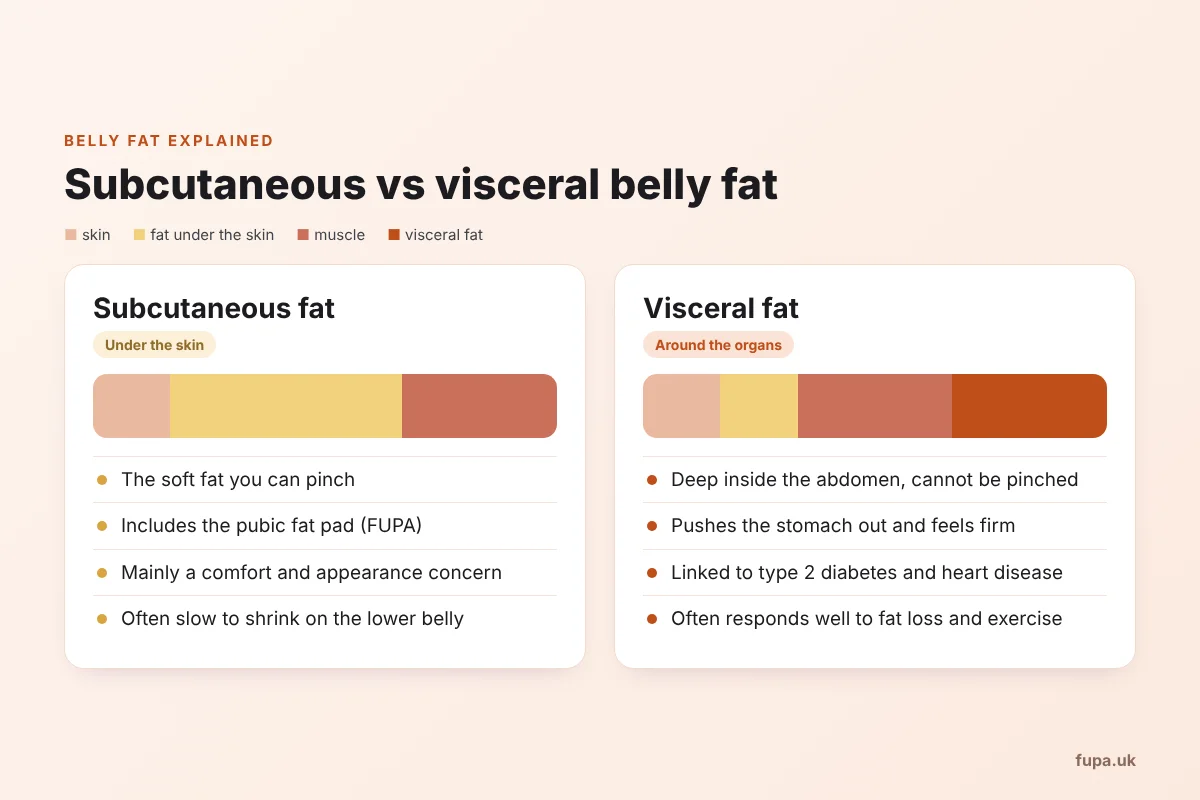
Subcutaneous fat sits just under the skin. It is the soft fat you can pinch, and it includes the fat pad over the pubic bone that many people call a FUPA. It is mostly a cosmetic concern, although a large amount can rub, sweat or make clothes uncomfortable.
Visceral fat
Visceral fat sits deeper, inside the abdomen and around organs such as the liver and gut. You cannot pinch it, but it pushes the stomach outwards and can make the belly feel firm. It is linked to a higher risk of type 2 diabetes, heart disease and some other conditions, which is why waist size is used as a health check.
Why the difference matters
The good news is that visceral fat often reduces early when people lose weight and become more active. Subcutaneous fat, especially on the lower belly, can be slower to change. So even when the soft fat seems stubborn, your health may already be improving.
How to Lose Your Belly Fat: 7 Steps That Work
Step 1: Set a modest calorie deficit
To lose fat you need to use more energy than you eat over time. The NHS suggests that cutting around 600 calories a day helps most people lose 0.5kg to 1kg a week. As a rough reference, the guideline daily intake is about 2,000 calories for women and 2,500 for men, but your own needs depend on your size, age and activity. Our calorie deficit guide shows how to work out a target you can stick to.
Step 2: Put protein in every meal
Protein helps you feel full and helps you keep muscle while you lose fat. Eggs, fish, chicken, beans, lentils, tofu, cottage cheese and Greek yoghurt are all easy ways to add a portion to breakfast, lunch and dinner. If set meal times help you eat less, our guide to intermittent fasting for lower belly fat checks whether 16:8 or 5:2 adds anything extra.
Step 3: Eat more fibre
UK guidance is to eat 30g of fibre a day, yet most adults eat far less. Fibre adds bulk to meals for few calories. Oats, wholemeal bread, brown rice, beans, lentils, vegetables, fruit with the skin on, nuts and seeds all help you reach the target.
Step 4: Swap sugary drinks and cut back on alcohol
Fizzy drinks, sweetened coffees, juice and alcohol add calories without keeping you full. The UK low risk guideline is no more than 14 units of alcohol a week, spread over 3 or more days. Water, sparkling water, tea and coffee without sugar are easy swaps that can cut hundreds of calories a week. Our guide to drinks that burn belly fat checks the popular claims for green tea and apple cider vinegar.
Step 5: Move more every day
The NHS advises adults to do at least 150 minutes of moderate activity or 75 minutes of vigorous activity a week. Brisk walking, cycling, swimming and dancing all count. Everyday movement such as walking to the shops and taking the stairs adds up too.
Step 6: Lift weights twice a week
The same guidelines advise strengthening activities that work all the major muscles on at least 2 days a week. Squats, lunges, push ups, rows and hip thrusts help you keep muscle while you diet, which supports your metabolism and shape.
Step 7: Sleep and manage stress
Most adults need 7 to 9 hours of sleep a night. Short sleep is linked to more hunger and cravings, and long term stress can affect appetite and where fat is stored. A regular bedtime, daylight walks and time away from screens can help.
Best Way to Get Rid of Belly Fat: What to Eat
A simple plate model
You do not need a special belly fat diet. A plate with a palm sized portion of protein, half the plate filled with vegetables or salad, and a fist sized portion of wholegrain carbohydrate works for most people. Our FUPA diet guide has meal ideas built on this model.
Sample day of eating
| Meal | Example | Why it helps |
|---|---|---|
| Breakfast | Porridge oats with berries and a spoon of Greek yoghurt | Fibre and protein keep you full until lunch |
| Lunch | Lentil and vegetable soup with a wholemeal roll | High in fibre, low in calories |
| Snack | An apple and a small handful of unsalted nuts | Fibre plus healthy fats |
| Dinner | Baked salmon, new potatoes and two portions of vegetables | Protein and vegetables fill the plate |
| Drinks | Water, tea or coffee without sugar | No hidden calories |
Foods to keep as occasional treats
Ultra processed snacks, pastries, takeaways and sweets are easy to overeat because they are high in calories and low in fibre. You do not have to ban them. Planning them, rather than eating them on autopilot, makes a deficit easier to keep.
Tips to Lose Belly Fat: Exercise That Helps
Cardio for calorie burn
Brisk walking is the simplest place to start. It is free, easy on the joints and can be done every day. If you enjoy more intense exercise, intervals on a bike or running are time efficient. Both work for fat loss when the total effort is similar.
Strength training for shape
Muscle helps you look firmer as fat comes off. Two full body sessions a week, using weights, resistance bands or your body weight, is enough for most beginners. Add a little more weight or a few more reps every couple of weeks.
Where ab exercises fit
Crunches, planks and dead bugs strengthen the core, but they do not burn the fat on top of the muscles. Research on spot reduction shows that ab exercises alone do not shrink belly fat. Use them for strength and posture, alongside the habits above.

How Do I Lose Stomach Fat if I Have Tried Before?
Check your portions honestly
Many people underestimate how much they eat. Logging meals in an app for a week or two, or weighing portions of oil, cereal, pasta and cheese, often shows where the extra calories come from.
Rule out bloating and other causes
Not every swollen stomach is fat. Bloating can come and go during the day, often linked to food, wind or the menstrual cycle. Loose skin after pregnancy or weight loss will not shrink with diet. A gap in the stomach muscles after pregnancy, called diastasis recti, needs specific exercises. If your stomach is getting bigger quickly, feels hard, or you have other symptoms, see your GP. Our guide to what causes lower belly fat sets out the most common reasons, including those that are not fat at all.
Use free NHS support
The free NHS Better Health weight loss plan is a 12 week app that helps you set a calorie goal, plan meals and track progress. If you have a high BMI or a related health condition, your GP can talk to you about local weight management services and whether licensed weight loss medicines might be suitable.
How to Track Your Progress
Measure your waist
Measure halfway between your lowest rib and the top of your hip bone, after breathing out. NICE advises keeping your waist to less than half your height. For someone who is 170cm tall, that means a waist under 85cm. Measure once a week, at the same time of day.
Expect a realistic timeline
| Timeframe | What you might notice |
|---|---|
| Weeks 1 to 2 | Less bloating, better energy, small change on the scales |
| Weeks 4 to 6 | Waist down by a centimetre or two, clothes feel looser |
| Weeks 8 to 12 | Clear change in waist size and photos |
| 3 months and beyond | Lower belly starts to catch up with the rest of the body |
Look beyond the scales
Your weight can swing by a kilo or more from day to day because of water and salt. Photos every four weeks and the fit of your jeans often show change before the scales do. Our guide to measuring a FUPA covers a simple routine.
Belly Fat Myths to Ignore
Fat burner pills and detox teas
There is no pill, tea or supplement that melts belly fat. Some products contain stimulants or laxatives and can cause harm. Our page on FUPA myths checks the most common claims.
Waist trainers and sweat belts
These squeeze the stomach and make you sweat, so you may lose water, but not fat. The effect disappears once you take them off.
Cutting out whole food groups
You do not need to cut out carbohydrates, fruit or dairy to lose belly fat. Any eating pattern that keeps you in a calorie deficit will work, so pick one you can follow for months.
Frequently Asked Questions
How can I lose tummy fat fast?
There is no safe shortcut. The fastest realistic pace for most people is 0.5kg to 1kg a week, which the NHS says can come from cutting around 600 calories a day, alongside regular activity and strength training.
What is the best way to get rid of belly fat?
A steady calorie deficit is the main driver. Meals built on protein and fibre, fewer sugary drinks, less alcohol, 150 minutes of activity a week, 2 strength sessions and good sleep all support it.
Can you lose belly fat by doing sit ups?
No. Sit ups and crunches strengthen the stomach muscles but do not burn the fat that sits over them. Belly fat shrinks as part of overall fat loss.
Why is my belly fat the last to go?
Where you store and lose fat depends on your genes, sex hormones and age. Many people lose fat from the face and arms first. The lower belly often changes last, so judge progress over at least 8 to 12 weeks.
Is belly fat dangerous?
Visceral fat around the organs is linked to type 2 diabetes and heart disease. NICE advises keeping your waist to less than half your height. If yours is above that, losing even a few centimetres can improve your health.
The Bottom Line
Lose fat overall and be patient
Learning how to lose belly fat starts with accepting that you cannot target the stomach. A modest calorie deficit, protein and fibre at every meal, regular walking, two strength sessions a week and enough sleep will shrink your belly along with the rest of your body. Track your waist, give it at least three months, and see your GP if anything feels unusual. When the rest of your stomach has slimmed down but the area below the belly button has not, our guide on how to get rid of a FUPA explains the next steps.