
Supplements for a FUPA: What Works, What Does Not and What Is Risky

Page Contents
- Key Takeaways
- Why No Supplement Can Target a FUPA
- Fat loss is whole body
- How supplements are regulated
- Approved health claims
- Supplements With Some Evidence
- Glucomannan
- Protein powder
- Caffeine
- Psyllium and general fibre
- Supplements With Weak or No Evidence
- Raspberry ketones
- Garcinia cambogia
- Apple cider vinegar gummies
- CLA, chromium and carnitine
- Probiotics
- Supplements That Are Risky
- High dose green tea extract
- Products bought online with hidden medicines
- DNP
- Detox teas, laxatives and water pills
- Very high dose vitamins
- Vitamin D and Other Nutrients Worth Knowing About
- Vitamin D in the UK
- Iron
- Folic acid
- Medicines Are Different From Supplements
- Licensed weight loss medicines
- Do not self treat
- Non surgical clinic treatments
- How to Judge a Supplement Before You Buy
- Red flags
- Better signs
- What Works Better Than Supplements
- A steady calorie deficit
- Protein, fibre and fewer sugary drinks
- Movement and strength training
- Sleep and stress
- Frequently Asked Questions
- Is there a supplement that gets rid of a FUPA?
- Do fat burner pills work for lower belly fat?
- Is glucomannan safe?
- Can vitamin D help me lose belly fat?
- Are detox teas good for a FUPA?
- Should I talk to a doctor before taking supplements?
- How can I tell if a slimming product is dangerous?
- The Bottom Line
- Spend on food and trainers, not fat burners
Search for ways to lose lower belly fat and you will soon find pills, powders and gummies promising to melt a FUPA. Some contain useful nutrients. Many do very little. A few are dangerous. This guide to supplements for a FUPA explains what the evidence shows, which products may play a small supporting role, and which ones carry real risk.
A FUPA is a pad of fat over the mons pubis, just above the pubic bone. No supplement can target it. Fat there shrinks as part of overall fat loss. This guide sits within our wider resource on how to get rid of a FUPA.
This guide is general information, not medical advice. Supplements can interact with medicines and health conditions. Speak to your GP or pharmacist before taking any supplement, especially if you are pregnant, breastfeeding, taking prescribed medicine or have a liver, kidney or heart condition.
Key Takeaways
- No supplement removes fat from the lower belly. Claims that a product “targets belly fat” are not supported by good evidence.
- A few products may help a little, alongside a calorie deficit. These include fibre such as glucomannan, protein powder for convenience and caffeine in sensible amounts.
- Vitamin D is advised for most people in the UK in autumn and winter, for bone and muscle health, not for fat loss.
- Some products carry real risks. These include high dose green tea extract, products bought online that may contain hidden medicines, and anything containing DNP.
- Diet, activity, sleep and time do the heavy lifting. Supplements play a supporting role at most.
Why No Supplement Can Target a FUPA
Fat loss is whole body
Your body releases stored fat from many areas when you use more energy than you eat. Where it draws from first depends on your genes, hormones and age. Nothing you swallow can direct fat loss to the mons pubis.
How supplements are regulated
In the UK, food supplements are regulated as foods, not medicines. They do not need to prove they work before going on sale. Medicines, by contrast, are licensed by the Medicines and Healthcare products Regulatory Agency (MHRA) after testing. This is why marketing for supplements can sound more confident than the evidence behind them.
Approved health claims
Only health claims on an approved list can be used legally on food and supplement labels in the UK. Claims such as “burns belly fat” or “melts fat” are not on that list. If a product makes them, treat it with caution.

Supplements With Some Evidence
Glucomannan
Glucomannan is a soluble fibre from the konjac root. It absorbs water and swells in the stomach, which may help you feel fuller. It is one of the few products with an approved health claim for weight loss, but only as part of an energy restricted diet, at 3 g a day split into three doses taken with water before meals. The effect in studies is small. Always take it with plenty of water, as it can cause choking if it swells in the throat.
Protein powder
Protein powder is simply a convenient food. It does not burn fat, but protein helps you feel full and supports muscle while you lose weight. If you struggle to eat enough protein from meals, a shake can help. Our guide to protein for FUPA fat loss explains how much to aim for and the best food sources.
Caffeine
Caffeine can slightly increase energy use and may help you train harder. The effect on fat loss is small. Healthy adults are generally advised to stay under 400 mg a day, roughly four mugs of filter coffee. Pregnant women are advised to have no more than 200 mg a day. Fat burner pills often contain high doses of caffeine plus other stimulants, which can cause a racing heart, anxiety and poor sleep.
Psyllium and general fibre
Fibre supplements such as psyllium husk may help with fullness and regular bowel habits. If constipation makes your lower belly look bloated, they may help it look flatter. Food sources of fibre such as oats, beans, vegetables and wholegrains are still the best choice.
Supplements With Weak or No Evidence
Raspberry ketones
Raspberry ketones were heavily promoted as a fat burner. The evidence comes mainly from animal and lab studies using very high doses. There is little good research in humans.
Garcinia cambogia
Garcinia contains hydroxycitric acid. Human studies show little or no meaningful weight loss. There have also been reports of liver injury linked to products containing it.
Apple cider vinegar gummies
Some small studies on vinegar suggest slight effects on blood sugar after meals. There is no good evidence that gummies reduce belly fat. Many also contain added sugar.
CLA, chromium and carnitine
Conjugated linoleic acid, chromium picolinate and L carnitine have all been studied for weight loss. Results are mixed and any average effects are small. They are unlikely to make a visible difference to a FUPA.
Probiotics
Gut bacteria are an active area of research. Some probiotics may slightly affect weight or bloating in certain people, but results vary by strain and the effects are modest. They are not a fat loss tool.
Supplements That Are Risky
High dose green tea extract
Drinking green tea is generally safe. Concentrated green tea extract is different. European food safety experts have raised concerns about liver damage linked to high doses of the catechin EGCG, especially from supplements taken on an empty stomach. Many fat burners contain green tea extract.
Products bought online with hidden medicines
The MHRA has repeatedly warned about slimming products sold online that contain undeclared medicines. These have included sibutramine, a weight loss drug withdrawn because of heart risks, and laxatives or diuretics. You cannot tell from the label. Buy only from reputable UK sellers and be wary of products with dramatic promises.
DNP
2,4 dinitrophenol (DNP) is an industrial chemical sold illegally as a fat burner. It is extremely dangerous and has caused deaths in the UK. It is not safe for human consumption at any dose. If you or someone you know has taken it, seek urgent medical help.
Detox teas, laxatives and water pills
Slimming teas often contain senna or other laxatives. They make you lose water and bowel contents, not fat. Long term use can upset your gut and salt balance. Diuretic “water pills” do the same. Any loss returns as soon as you stop.
Very high dose vitamins
Taking more than the recommended amount of some vitamins can cause harm. For example, too much vitamin D over a long time can raise calcium levels in the blood. More is not better.
Vitamin D and Other Nutrients Worth Knowing About
Vitamin D in the UK
The NHS advice on vitamin D is that everyone should consider a daily supplement of 10 micrograms in autumn and winter, when sunlight is weaker. Some people at higher risk of low levels should take it all year. Vitamin D supports bones and muscles. It is not a fat loss supplement, but low levels are common and worth correcting.
Iron
Heavy periods can lower iron levels and leave you tired, which makes exercise harder. Do not take iron supplements without a reason. If you feel very tired or breathless, ask your GP for a blood test.
Folic acid
If you could become pregnant, the NHS advises taking 400 micrograms of folic acid daily before conception and for the first 12 weeks of pregnancy. This is for the baby’s development and has nothing to do with weight.
Medicines Are Different From Supplements
Licensed weight loss medicines
Some medicines are licensed in the UK to help with weight loss for people who meet certain criteria. These include orlistat and injectable medicines such as semaglutide and tirzepatide. They are tested, regulated and prescribed or supplied with medical oversight. They are not supplements and should only be used with proper advice.
Do not self treat
Buying prescription weight loss medicines from unregulated online sellers is risky. Products may be fake or contaminated. If you are considering medicine, talk to your GP or a registered pharmacy service.
Non surgical clinic treatments
Fat freezing and injections are sometimes marketed for a FUPA. These are procedures, not supplements, and they have their own risks and costs. Our guide to fat dissolving injections for a FUPA covers one of them.
How to Judge a Supplement Before You Buy
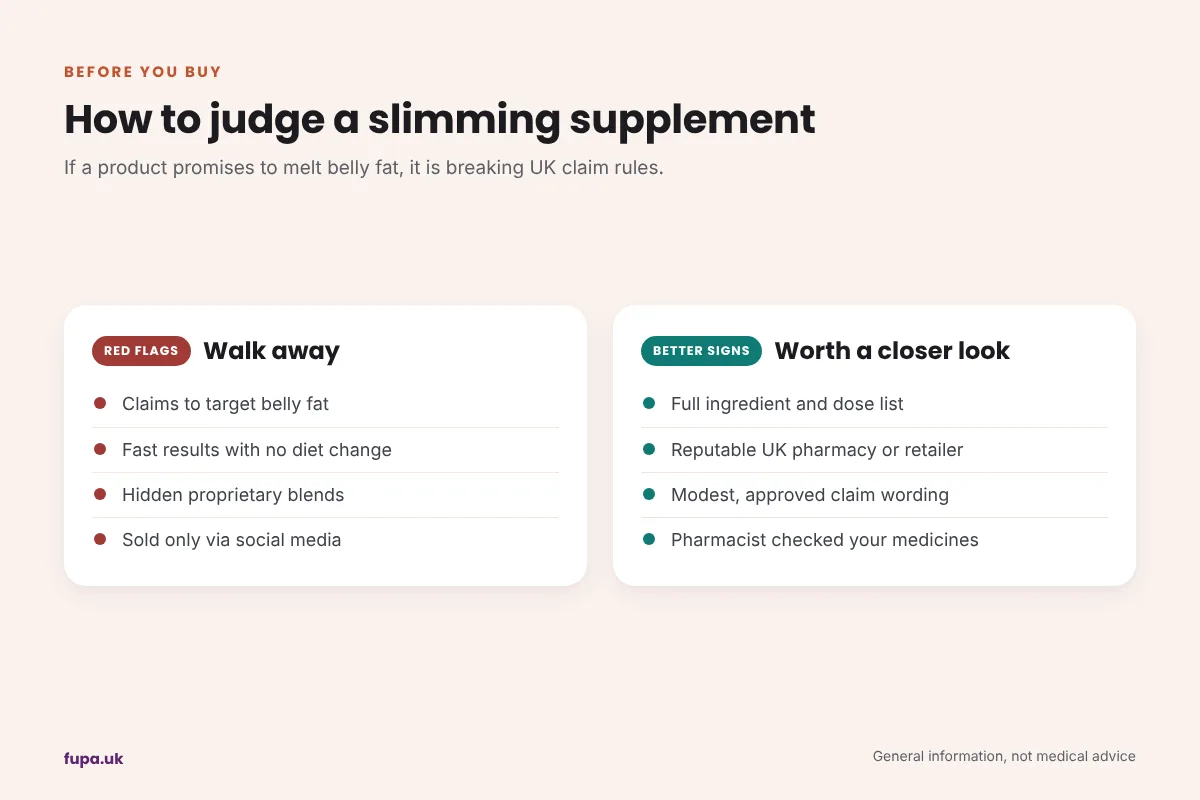
Red flags
- Claims to “target” belly or lower belly fat.
- Promises of fast results without diet or exercise.
- “Clinically proven” with no named study.
- Before and after photos and celebrity endorsements.
- Sold only through social media or unknown websites.
- Proprietary blends that hide the dose of each ingredient.
Better signs
- Clear list of ingredients and doses.
- Sold by a reputable UK pharmacy or retailer.
- Claims that are modest and match approved wording.
- Your pharmacist is happy for you to take it with your other medicines.
What Works Better Than Supplements
A steady calorie deficit
Eating a little less than you use, every day, is the main driver of fat loss. Our calorie deficit guide explains how to set a realistic target.
Protein, fibre and fewer sugary drinks
These three changes help you feel full and cut easy calories. They cost less than most supplements and have stronger evidence.
Movement and strength training
Daily walking and two strength sessions a week help you burn energy and keep muscle. Our guide to the best exercises for a FUPA has a simple plan.
Sleep and stress
Poor sleep and stress can increase appetite. Fixing them often helps more than any pill.
Frequently Asked Questions
Is there a supplement that gets rid of a FUPA?
No. No supplement can remove fat from the lower belly. A FUPA shrinks as part of overall fat loss through a calorie deficit, activity and time. Some supplements may play a small supporting role, but none target this area.
Do fat burner pills work for lower belly fat?
Most fat burners rely on caffeine and other stimulants. They may slightly increase energy use, but the effect is small and they cannot target the lower belly. Some contain ingredients linked to liver damage or heart problems.
Is glucomannan safe?
Glucomannan is generally safe for most adults when taken with plenty of water before meals. It can cause bloating and wind. It must be taken with water because it swells and can cause choking. It may affect how some medicines are absorbed, so check with a pharmacist.
Can vitamin D help me lose belly fat?
There is no good evidence that vitamin D causes fat loss. The NHS advises most people in the UK to consider 10 micrograms a day in autumn and winter for bone and muscle health. It is worth taking for that reason, not for weight.
Are detox teas good for a FUPA?
No. Detox and slimming teas often contain laxatives. They cause water and bowel losses, not fat loss. The effect reverses quickly, and long term use can upset your gut.
Should I talk to a doctor before taking supplements?
Yes, especially if you take medicine, are pregnant or breastfeeding, or have a health condition. Your GP or pharmacist can check for interactions and side effects.
How can I tell if a slimming product is dangerous?
Be wary of products sold online with big promises, no clear ingredient list, or claims to work without diet or exercise. The MHRA has found hidden medicines in some products. If in doubt, ask a pharmacist and buy only from reputable UK sellers.
The Bottom Line
Spend on food and trainers, not fat burners
Supplements for a FUPA mostly promise more than they deliver. A few, such as fibre, protein powder and modest caffeine, may support a calorie deficit a little. Vitamin D is worth taking in winter for other reasons. Others, such as high dose green tea extract, products with hidden medicines and DNP, carry real risk. The plan that works is still a modest calorie deficit, enough protein, regular activity and patience. Before you take anything new, speak to your GP or pharmacist. Our guide on whether a FUPA goes away explains what to expect over time.