
Best Exercises for Lower Belly Fat: 10 Moves Ranked
Page Contents
- Key Takeaways
- Can Exercise Burn Lower Belly Fat?
- Why spot reduction does not work
- What exercise does do
- How we ranked the moves
- The 10 Best Exercises for Lower Belly Fat, Ranked
- 1. Rowing machine
- 2. Kettlebell swings
- 3. Running or jogging
- 4. Goblet squats
- 5. Elliptical trainer
- 6. Brisk walking, ideally uphill
- 7. Romanian deadlifts
- 8. Stationary cycling
- 9. Mountain climbers and bodyweight circuits
- 10. Planks, dead bugs and reverse crunches
- Lower Belly Exercises Compared
- Which ones to choose
- How to Build a Weekly Routine
- Meet the NHS guidelines first
- A sample week
- How to progress
- Getting the Most From Your Workouts
- Pair exercise with your diet
- Look after your form
- Track the right measures
- Frequently Asked Questions
- What is the best exercise for lower belly fat?
- Can you lose lower belly fat with exercise alone?
- Do sit ups get rid of lower belly fat?
- Is walking good for lower belly fat?
- How often should I exercise to lose lower belly fat?
- The Bottom Line
- Move more, lift something and stay consistent
The best exercise for lower belly fat is one that burns plenty of calories, builds muscle and is something you will keep doing every week. No single move melts fat from the lower stomach, but some exercises do far more for overall fat loss than endless crunches. This guide ranks 10 moves by how much they help, explains how to do each one, and shows how to fit them into a simple week.
The ranking below looks at calorie burn, how much muscle each move builds, how hard it works your core and how easy it is for beginners. For the full plan behind it, see our guide on how to burn lower belly fat, part of our wider guide on how to get rid of a FUPA.
This guide is general information, not medical advice. If you have a heart condition, joint problems, are pregnant or have recently given birth, or have not exercised for a long time, speak to your GP before starting a new routine.
Key Takeaways
- Exercise cannot target fat on the lower belly alone; it works by helping you burn more energy overall.
- The moves that help most combine a high calorie burn with strength, such as rowing, kettlebell swings, running and squats.
- Core exercises like planks strengthen the muscles under the fat but burn few calories on their own.
- The NHS advises at least 150 minutes of moderate activity a week plus strength work on at least 2 days.
- Exercise works best alongside a modest calorie deficit and enough protein.
Can Exercise Burn Lower Belly Fat?
Why spot reduction does not work
Working a muscle does not burn the fat sitting on top of it. A small 2011 study in the Journal of Strength and Conditioning Research found that six weeks of abdominal exercises alone did not reduce belly fat compared with doing no exercise. When you are in a calorie deficit, your body draws on fat stores across your whole body, and genetics and hormones decide the order. The lower belly and the fat pad over the pubic bone are often the last areas to change, which our guide to stubborn lower belly fat explains in more detail.
What exercise does do
Exercise helps in three ways. It burns energy, which makes a calorie deficit easier to reach. It builds or keeps muscle while you lose weight, which helps your body look firmer as fat drops. And regular activity helps reduce visceral fat, the deeper fat around your organs that carries most of the health risk.
How we ranked the moves
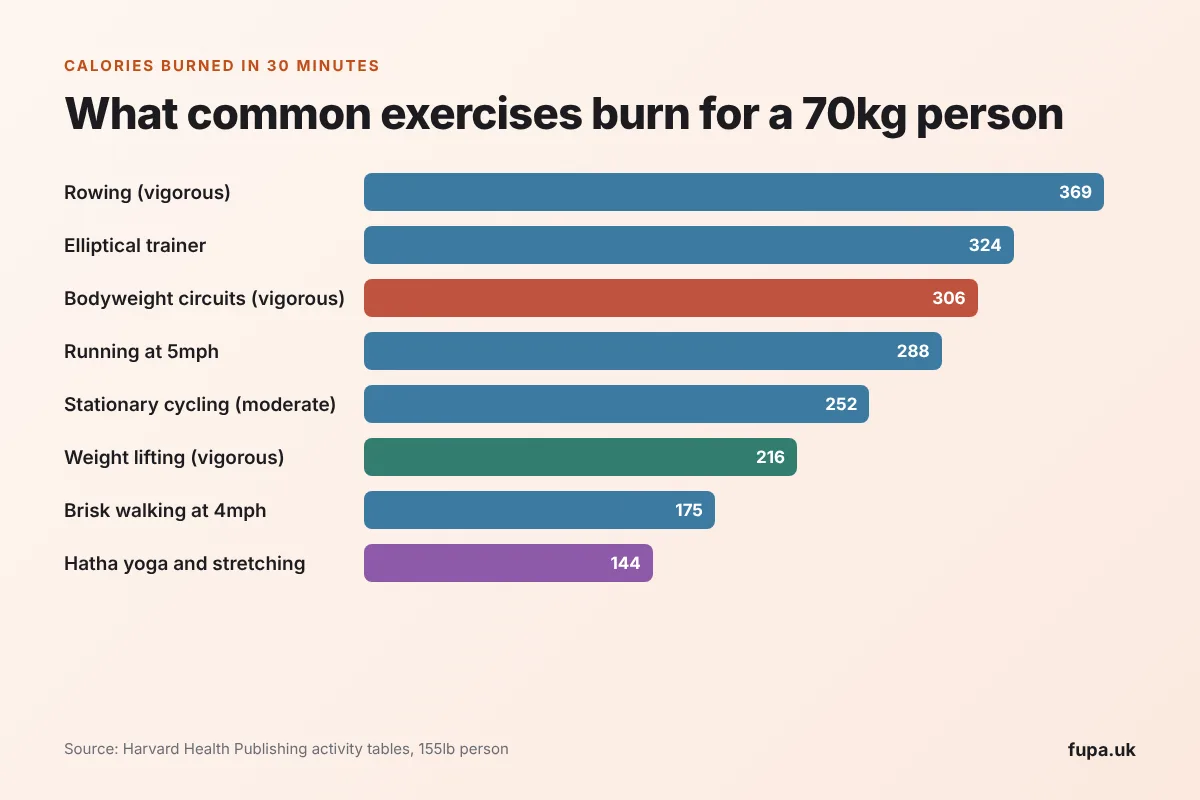
Each move was judged on four things: calorie burn in 30 minutes, muscle built, core demand and how easy it is to start. Calorie figures come from Harvard Health’s activity tables for a person weighing 155lb (about 70kg). Heavier people burn more and lighter people burn less.
The 10 Best Exercises for Lower Belly Fat, Ranked
1. Rowing machine
Rowing works your legs, back, arms and core in every stroke, which is why it tops the list. A 70kg person burns about 252 calories in 30 minutes at a moderate pace and about 369 at a vigorous pace. Push through your legs first, then lean back slightly and pull the handle to your lower ribs. Keep your core braced so your lower back stays neutral.
2. Kettlebell swings
The swing is a fast hip hinge that trains the glutes, hamstrings and deep core while raising your heart rate. Done in short rounds, such as 20 seconds of work and 40 seconds of rest, it works like a circuit. Stand with feet a little wider than your hips, hinge back, then snap your hips forward so the bell floats to chest height. The power comes from your hips, not your arms.
3. Running or jogging
Running at 5mph burns about 288 calories in 30 minutes for a 70kg person. It needs no equipment, but it is high impact, so build up slowly. If you are new to it, mix one minute of jogging with two minutes of walking and add running time each week.
4. Goblet squats
Holding a weight at your chest as you squat trains the biggest muscles in your body and makes your core work hard to keep you upright. More muscle supports a higher daily energy use over time. Our guide on whether squats shrink a FUPA covers what they can and cannot do.
5. Elliptical trainer
The cross trainer burns about 324 calories in 30 minutes for a 70kg person with very little impact on your knees. That makes it a strong choice if you carry extra weight or have sore joints. Stand tall, hold the moving handles and drive the pedals with your legs, not by leaning on the frame.
6. Brisk walking, ideally uphill
Walking at 4mph burns about 175 calories in 30 minutes for a 70kg person, and adding hills raises that further. It is the easiest move to do daily and the one most people keep doing for years. Our guide to walking to lose a FUPA includes a step plan.
7. Romanian deadlifts
This move trains the hamstrings, glutes and lower back while your abs brace to protect your spine. Hold dumbbells in front of your thighs, soften your knees and push your hips back until you feel a stretch, then stand tall. Keep the weights close to your legs and your back flat.
8. Stationary cycling
A moderate session on an exercise bike burns about 252 calories in 30 minutes for a 70kg person. It is low impact and easy to do while watching television, which helps with consistency. Short bursts of harder pedalling turn it into an interval session.
9. Mountain climbers and bodyweight circuits
Vigorous bodyweight work, such as mountain climbers, squat thrusts and jumping jacks, burns about 306 calories in 30 minutes for a 70kg person. Mountain climbers also train the lower abs as you drive each knee towards your chest. Our comparison of HIIT vs steady cardio explains when intervals make sense.
10. Planks, dead bugs and reverse crunches
These core moves rank last for fat loss because they burn few calories. They still earn a place. Strong deep abdominal muscles help with posture and back support, and they make the lower belly look flatter once the fat above them shrinks. Our FUPA exercises guide shows the best lower core moves with form tips, and our guide to lower ab exercises sets out a full progression from dead bugs to hanging knee raises.
Lower Belly Exercises Compared
The table sums up how the 10 moves compare. Calorie figures are for 30 minutes and a 70kg person, using Harvard Health’s tables where the activity is listed.
| Exercise | Type | Calories in 30 minutes | Core demand | Beginner friendly |
|---|---|---|---|---|
| Rowing machine | Cardio and strength | About 252 to 369 | High | Yes, with good form |
| Kettlebell swings | Power and cardio | Varies with rounds | High | Learn the hinge first |
| Running at 5mph | Cardio | About 288 | Medium | Build up slowly |
| Goblet squats | Strength | About 216 (vigorous lifting) | Medium | Yes |
| Elliptical trainer | Cardio | About 324 | Low | Yes |
| Brisk walking at 4mph | Cardio | About 175 | Low | Yes |
| Romanian deadlifts | Strength | About 216 (vigorous lifting) | Medium | Start light |
| Stationary cycling | Cardio | About 252 | Low | Yes |
| Bodyweight circuits | Cardio and strength | About 306 | High | Modify as needed |
| Planks and dead bugs | Core strength | Low | Very high | Yes |
Which ones to choose
Pick one or two cardio moves you enjoy, two or three strength moves and one core move. Enjoyment matters more than a small gap in calorie burn, because the exercise you repeat for months is the one that changes your body.
How to Build a Weekly Routine
Meet the NHS guidelines first
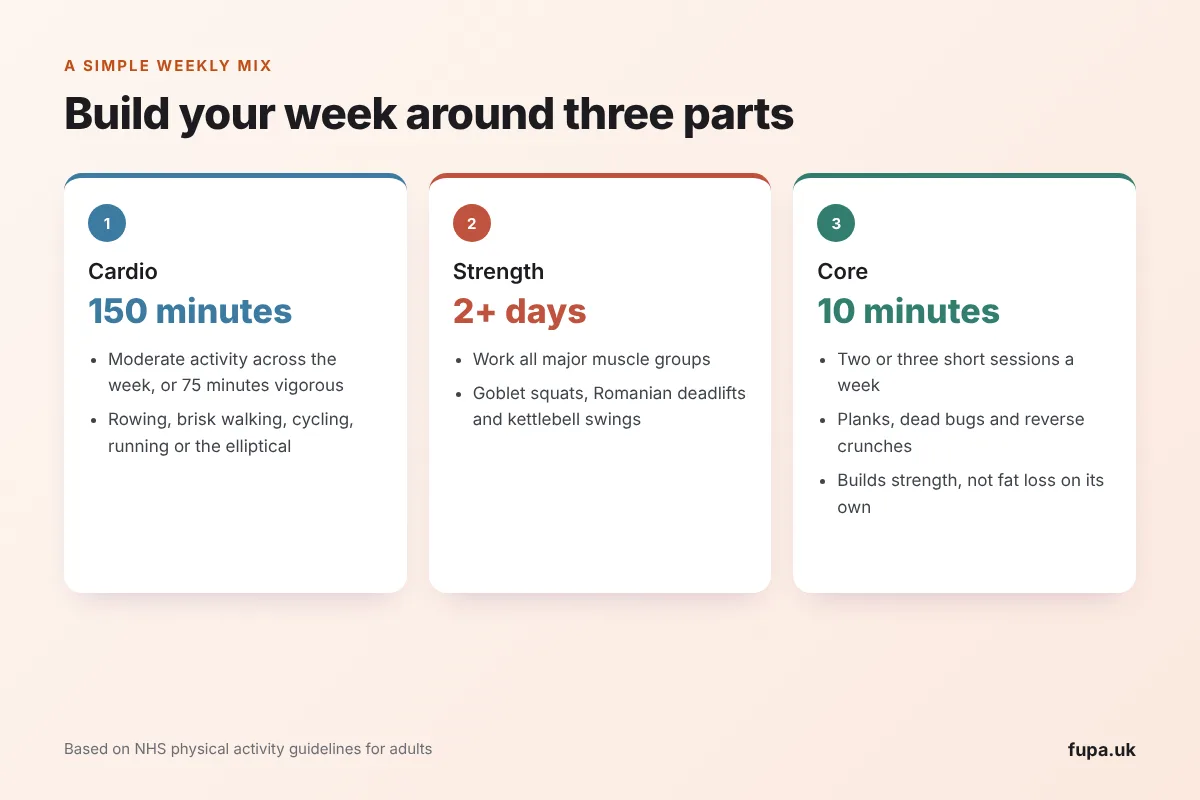
The NHS physical activity guidelines advise adults to do at least 150 minutes of moderate activity or 75 minutes of vigorous activity a week, spread across the week, plus strengthening activities that work all the major muscle groups on at least 2 days. That is a sensible base for anyone trying to lose belly fat.
A sample week
- Monday: strength, with goblet squats, Romanian deadlifts and a plank.
- Tuesday: 30 to 40 minutes of brisk walking.
- Wednesday: 20 minutes of rowing or cycling intervals.
- Thursday: rest or an easy walk.
- Friday: strength, with kettlebell swings, squats and dead bugs.
- Saturday: a longer walk, jog or elliptical session.
- Sunday: rest.
Our belly fat workout plan sets out a full seven day routine with sets, reps and progressions.
How to progress
- Start with sessions you can finish feeling you had a little left.
- Add 5 minutes to cardio sessions or one set to strength moves every one to two weeks.
- Increase weights once you can do every rep with good form.
- Take at least one full rest day each week.
Getting the Most From Your Workouts
Pair exercise with your diet
Exercise alone rarely shifts lower belly fat if you eat more to make up for it. A modest calorie deficit, plenty of protein and fewer sugary drinks matter as much as your training. Our guide to a calorie deficit for a FUPA shows how to set one up.
Look after your form
Brace your core as if someone were about to tap your stomach, keep your back neutral during hinges and squats, and stop if you feel sharp pain. If you have a gap between your stomach muscles after pregnancy, check our guide on FUPA vs diastasis recti before doing crunch style moves.
Track the right measures
The scales can stall while you gain muscle. Measure your waist every two to four weeks and take photos in the same light, as these show lower belly changes more clearly than weight alone.
Frequently Asked Questions
What is the best exercise for lower belly fat?
There is no single best move, but rowing, kettlebell swings, running and squats come out on top because they burn plenty of energy and build muscle. The best choice is the one you will do several times a week.
Can you lose lower belly fat with exercise alone?
It is possible but slow. Most people need a modest calorie deficit as well, because it is easy to eat back the energy a workout burns.
Do sit ups get rid of lower belly fat?
No. Sit ups and crunches strengthen your abs but burn few calories, and research shows ab exercises alone do not reduce belly fat. Use them alongside cardio and strength work.
Is walking good for lower belly fat?
Yes. Brisk walking burns a useful amount of energy, is easy on the joints and is simple to do every day, which makes it one of the most sustainable options.
How often should I exercise to lose lower belly fat?
Aim for at least 150 minutes of moderate activity a week plus strength work on at least 2 days, as the NHS advises. Results usually show after several months of steady effort.
The Bottom Line
Move more, lift something and stay consistent
The best exercises for lower belly fat are the ones that burn energy and build muscle: rowing, kettlebell swings, running, squats and brisk walking lead the way, with core work as a useful extra. None of them can choose where fat comes from, but together with a sensible diet they will reduce body fat overall, and the lower belly will follow in time. For the complete approach, read our guide on how to burn lower belly fat.