
How to Shave a FUPA Safely: Hair Removal Without Irritation
Page Contents
- Key Takeaways
- Why Shaving a FUPA Is Tricky
- Sensitive skin and coarse hair
- Folds, curves and reach
- Sweat and friction
- What You Need Before You Start
- The right tools
- Choosing a razor
- Pick your timing
- How to Shave a FUPA Step by Step
- 1. Trim the hair short
- 2. Soften the skin and hair
- 3. Lift the fold and apply gel
- 4. Shave in the direction of growth
- 5. Rinse, dry and moisturise
- How to Avoid Ingrown Hairs on a FUPA
- Leave a little stubble
- Shave less often
- Exfoliate gently
- Do not pick or squeeze
- Bumps on a FUPA: What They Usually Are
- Razor burn
- Ingrown hairs
- Infected hair follicles and boils
- When to get help
- Other Ways to Remove Hair From the Pubic Area
- Trimming
- Hair removal creams
- Waxing and sugaring
- Laser hair removal on the mons pubis
- Comparing the options
- Aftercare and Everyday Comfort
- Keep the crease dry
- Choose soft, breathable underwear
- Look after the skin between shaves
- Frequently Asked Questions
- Should I shave up or down on my FUPA?
- How do I stop bumps on my FUPA after shaving?
- Is it normal to have a hairy mons pubis?
- Can I use hair removal cream on my FUPA?
- Does laser hair removal work on the mons pubis?
- The Bottom Line
- Slow, gentle and dry
Knowing how to shave a FUPA safely saves a lot of soreness. The skin over the pubic fat pad is thin and sensitive, the hair is often coarse and curly, and a fold or overhang can make the area hard to see and reach. That combination makes razor burn, ingrown hairs and red bumps very common. This guide covers how to prepare, how to shave step by step, how to treat bumps on a FUPA, and other options such as trimming, creams and laser hair removal.
If you want to understand why this area holds fat and how it is built, read our guide to mons pubis fat first.
This guide is general information, not medical advice. If you have a painful, hot or swollen lump, sores that will not heal, or you feel unwell, speak to your GP or call NHS 111.
Key Takeaways
- Trim long hair first, shave after a warm shower and always use a sharp razor with a shaving gel.
- Shave in the direction the hair grows, with light pressure and as few strokes as possible.
- The NHS says leaving at least 1mm of stubble can help prevent ingrown hairs.
- Keep the skin crease under a fold clean and fully dry after shaving to avoid rubbing and rashes.
- Trimming carries the lowest risk of bumps. Laser hair removal gives long term reduction but costs more.
Why Shaving a FUPA Is Tricky
Sensitive skin and coarse hair
A hairy mons pubis is completely normal. The hair here is usually thicker and curlier than on the legs or face, and curly hair is more likely to curl back into the skin after it is cut. The skin itself is soft and thin, so it nicks and gets irritated easily.
Folds, curves and reach
A larger fat pad changes the shape of the area. It may curve outwards, form a crease where it meets the lower belly, or hang slightly over the top of the genitals. That makes it harder to see what you are doing and to keep the razor flat against the skin, which raises the chance of cuts.
Sweat and friction
Skin folds trap warmth and moisture. Freshly shaved skin that then rubs against damp skin or tight underwear is more likely to get sore. Our guide to sweating under a belly fold covers ways to keep the crease dry.
What You Need Before You Start
The right tools
- A pair of clippers or a bikini trimmer to cut long hair first.
- A sharp razor. Change disposable blades often, as a blunt blade drags and irritates.
- A shaving gel or cream for sensitive skin, ideally fragrance free.
- A hand mirror, or a mirror you can stand in front of, so you can see the underside of the pad.
- A clean towel and a gentle, fragrance free moisturiser.
Choosing a razor
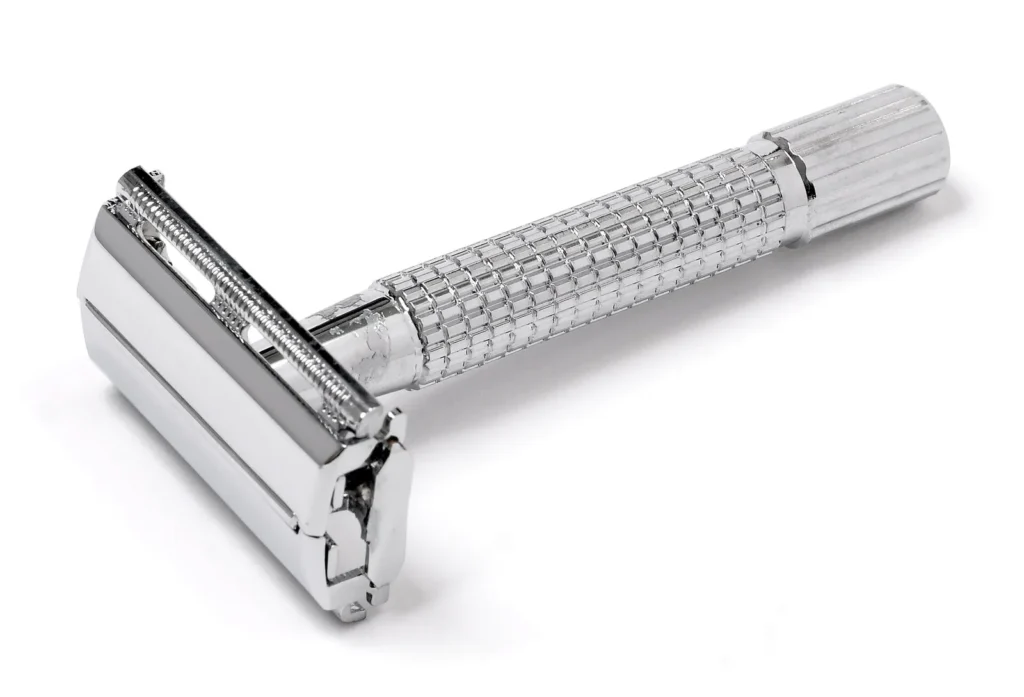
Some people find a single or double blade causes less irritation than a razor with many blades, because it cuts less close to the skin. A safety razor or an electric shaver are other options. An electric shaver leaves slightly more stubble, which can mean fewer ingrown hairs.
Pick your timing
Do not rush it before going out. Give yourself time to work slowly, and avoid shaving just before swimming in a chlorinated pool or the sea, or before a long walk in tight clothes, as the fresh skin can sting and chafe.
How to Shave a FUPA Step by Step

1. Trim the hair short
Use clippers or small scissors to cut long hair down to a few millimetres. A razor clogs and pulls when it meets long hair, which causes tugging and irritation.
2. Soften the skin and hair
Shave at the end of a warm bath or shower. Warm water softens the hair and the outer layer of skin, so the blade glides rather than scrapes.
3. Lift the fold and apply gel
With one hand, gently lift the fat pad or lower belly upwards so the skin is flat and you can see the area. Apply a layer of shaving gel so you can see where you have shaved.
4. Shave in the direction of growth
Use short, light strokes in the direction the hair grows, which is usually downwards on the mons. Pubic hair can grow in different directions in different spots, so check as you go. Rinse the razor after every stroke or two. Do not press hard and do not go over the same patch again and again.
5. Rinse, dry and moisturise
Rinse with cool water and pat the skin dry with a clean towel, paying extra attention to the crease under any fold. Apply a thin layer of fragrance free moisturiser. Wear loose, breathable cotton underwear for the rest of the day.
How to Avoid Ingrown Hairs on a FUPA
Leave a little stubble
The NHS advice on ingrown hairs says the best way to prevent them is not to shave at all. If you do shave, it advises not shaving too close, and says leaving at least 1mm of stubble can help. A trimmer with a guard does this easily.
Shave less often
Try not to shave every day. Giving the skin a few days to recover between shaves lowers irritation, and many people find a short trim every few days works better than a close shave.
Exfoliate gently
Gently exfoliating a day or two after shaving can help stop dead skin trapping hairs. Use a soft cloth or a mild product. Do not scrub hard or exfoliate broken or sore skin.
Do not pick or squeeze
The NHS advises against scratching, picking or squeezing ingrown hairs. This can push bacteria into the skin, cause infection and leave dark marks or scars.
Bumps on a FUPA: What They Usually Are
Razor burn
Razor burn is a red, stinging rash that appears soon after shaving. It usually settles in a few days. Leave the area alone, keep it clean and dry, and wait until it has calmed down before shaving again.
Ingrown hairs
Ingrown hairs are small, often itchy bumps where a hair has grown back into the skin. Sometimes you can see the hair under the surface. A pharmacist can suggest creams to ease itching, antiseptic products and exfoliating products.
Infected hair follicles and boils
Sometimes a hair follicle becomes infected, causing a red or pus filled spot. A larger, hard and painful lump that fills with pus may be a boil. The NHS advises holding a clean cloth soaked in warm water on a boil for 10 minutes, four times a day, and not squeezing it. Our guide to FUPA pain and irritation covers other causes of soreness in the area.
When to get help
See a GP if an ingrown hair or the skin around it is very painful, hot or swollen, if a boil does not improve after two weeks or keeps coming back, or if you have a high temperature or feel hot, cold, shivery or very unwell. Get checked too for any lump that does not go away, or sores and blisters, which can have other causes.
Other Ways to Remove Hair From the Pubic Area
Trimming
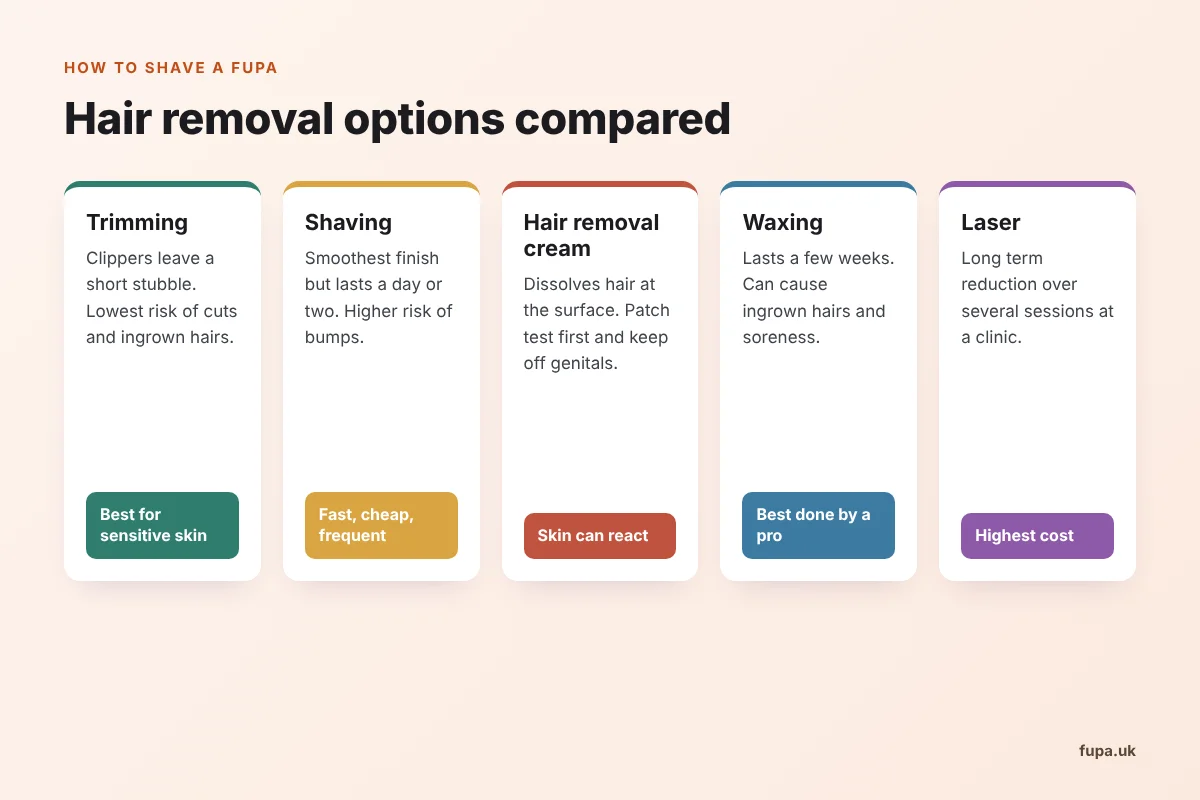
Trimming with clippers is the gentlest option. It leaves short stubble, so there is little risk of cuts or ingrown hairs, and it is easy to do on a curved or folded area.
Hair removal creams
Creams dissolve hair at the surface. Choose one made for the bikini line, do a patch test first as the instructions advise, and keep it away from the genitals and broken skin. Stop and rinse straight away if it burns.
Waxing and sugaring
Waxing pulls hair out from the root, so results last a few weeks. It can be painful and can cause ingrown hairs too. On a fuller or folded area, a trained professional will usually get a better and safer result than doing it at home.
Laser hair removal on the mons pubis
Laser hair removal uses light to damage hair follicles so that less hair grows back. It usually needs a course of sessions several weeks apart, and it tends to work best on dark hair. It is a cosmetic treatment, so it is not usually available on the NHS. Choose a reputable clinic with properly trained staff, ask about the risks for your skin type, and expect a patch test before treatment.
Comparing the options
| Method | How long it lasts | Main downside |
|---|---|---|
| Trimming | Days | Leaves short stubble |
| Shaving | 1 to 3 days | Razor burn and ingrown hairs |
| Hair removal cream | Several days | Skin reactions |
| Waxing or sugaring | A few weeks | Pain and ingrown hairs |
| Laser | Long term reduction | Cost and several sessions |
Aftercare and Everyday Comfort
Keep the crease dry
Dry the fold under the belly fully after showering. Some people use a soft cotton cloth or a dry towel tucked into the crease for a few minutes. Avoid heavily perfumed powders and products on freshly shaved skin.
Choose soft, breathable underwear
Cotton underwear with a waistband that sits above or below the pad, rather than cutting across it, reduces rubbing. Our guide to underwear for a FUPA covers styles that sit comfortably.
Look after the skin between shaves
A plain, fragrance free moisturiser keeps the skin supple. If you get chafing when walking, a barrier balm can help. See our tips on lower belly chafing when walking.
Frequently Asked Questions
Should I shave up or down on my FUPA?
Shave in the direction the hair grows, which is usually downwards on the mons. Shaving against the grain gives a closer shave but makes razor burn and ingrown hairs more likely.
How do I stop bumps on my FUPA after shaving?
Trim first, shave after a warm shower with a sharp razor and gel, use light strokes with the grain, and leave a little stubble. Shave less often and moisturise afterwards.
Is it normal to have a hairy mons pubis?
Yes. Hair on the mons pubis is normal for adults, and the amount varies a lot from person to person. Removing it is a personal choice, not a health need.
Can I use hair removal cream on my FUPA?
You can use a cream made for the bikini line on the mons, but do a patch test first and keep it off the genitals and any broken or sore skin.
Does laser hair removal work on the mons pubis?
Laser can reduce hair on the mons over a course of sessions, and it tends to work best on darker hair. It is not usually available on the NHS, so choose a reputable private clinic.
The Bottom Line
Slow, gentle and dry
Shaving a FUPA safely comes down to good preparation and a gentle technique. Trim long hair, soften the skin in a warm shower, lift the fold, use a sharp razor and gel, shave with the grain and leave a little stubble. Rinse, dry the crease well and moisturise. If you keep getting bumps, switch to trimming or consider laser, and see a GP about any lump that is painful, hot or not getting better. For more about this area, read our guide to fat on the pubic mound.