
Swollen Mons Pubis: 8 Possible Causes and When to See a GP
Page Contents
- Key Takeaways
- Swelling or Fat? How to Tell the Difference
- What the mons pubis is
- Quick checks
- 8 Possible Causes of a Swollen Mons Pubis
- 1. Fat build up
- 2. Swelling after surgery
- 3. Infected hair follicles, boils and abscesses
- 4. Swollen lymph glands
- 5. Skin irritation or an allergic reaction
- 6. A hernia
- 7. A cyst or lipoma
- 8. Lymphoedema
- Other Things That Can Cause Swelling
- Injury and bruising
- Hormonal changes
- What You Can Do at Home
- Simple self-care
- When a pharmacist can help
- When to See a GP About Swelling: Mons Pubis Warning Signs
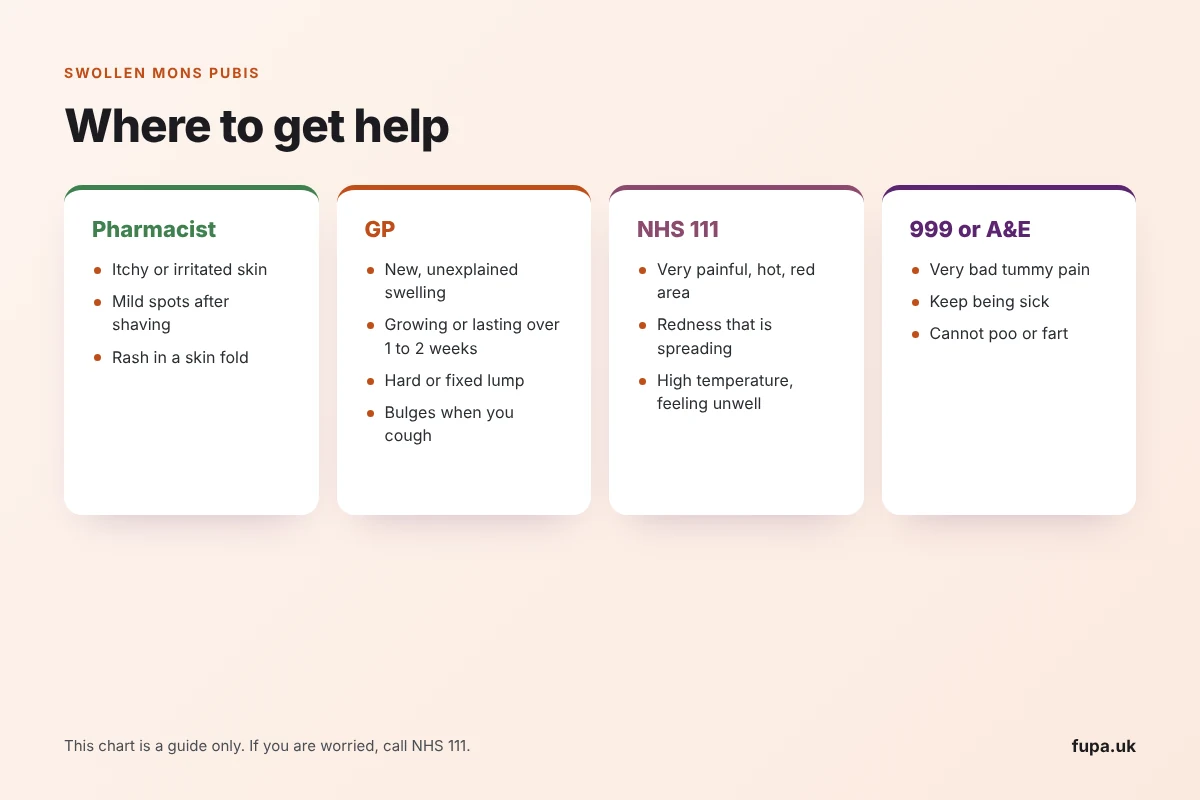
- Book a GP appointment if
- Get urgent help if
- What happens at the appointment
- Frequently Asked Questions
- Why is my mons pubis suddenly swollen?
- Is a swollen mons pubis after surgery normal?
- Can swollen lymph nodes cause swelling above the pubic bone?
- How do I know if it is fat or swelling?
- Should I worry about a lump on my mons pubis?
- The Bottom Line
- Most causes are common and treatable
Noticing that the mound over your pubic bone looks puffier, feels tender or has changed shape can be unsettling. Swelling of the mons pubis has many possible causes, and most of them are common and easy to treat. A few need a doctor to take a look, and a small number need help the same day.
This guide covers eight possible causes of a swollen mons pubis, how to tell them apart, what you can do at home and the warning signs that mean you should see a GP or get urgent help. It is part of our guide to hormonal belly fat and health conditions.
This guide is general information, not medical advice. It cannot diagnose the cause of your swelling. If you have a new lump or swelling you cannot explain, speak to your GP or call NHS 111.
Key Takeaways
- The mons pubis is the pad of fat and skin over the pubic bone, so a gradual, even increase in size is often simply fat.
- Swelling that appears over days, hurts, feels warm or comes with a fever points towards infection or inflammation.
- Swelling after a tummy tuck, monsplasty or liposuction is expected and settles over weeks to months.
- A lump that bulges when you cough and shrinks when you lie down may be a hernia and should be checked.
- Any swelling that is hard, fixed, growing or unexplained needs a GP appointment.
Swelling or Fat? How to Tell the Difference
What the mons pubis is
The mons pubis is the rounded area of fatty tissue that sits over the pubic bone in both men and women. Our guide to mons pubis anatomy explains its structure. Because it is mostly fat, it naturally gets bigger with weight gain and with hormonal changes over a lifetime.
Quick checks
| Feature | More likely fat | More likely swelling |
|---|---|---|
| How fast it appeared | Months or years | Hours, days or a few weeks |
| Feel | Soft, pinchable, even | Puffy, tight, firm or a distinct lump |
| Pain or warmth | Usually none | Often tender, warm or itchy |
| Skin colour | Normal | May look red, purple or darker than the skin around it |
| Other symptoms | None | Fever, discharge, rash or feeling unwell |
If the fullness has built up slowly and feels like the rest of your body fat, our guide to mons pubis fat is the place to start.
8 Possible Causes of a Swollen Mons Pubis
1. Fat build up
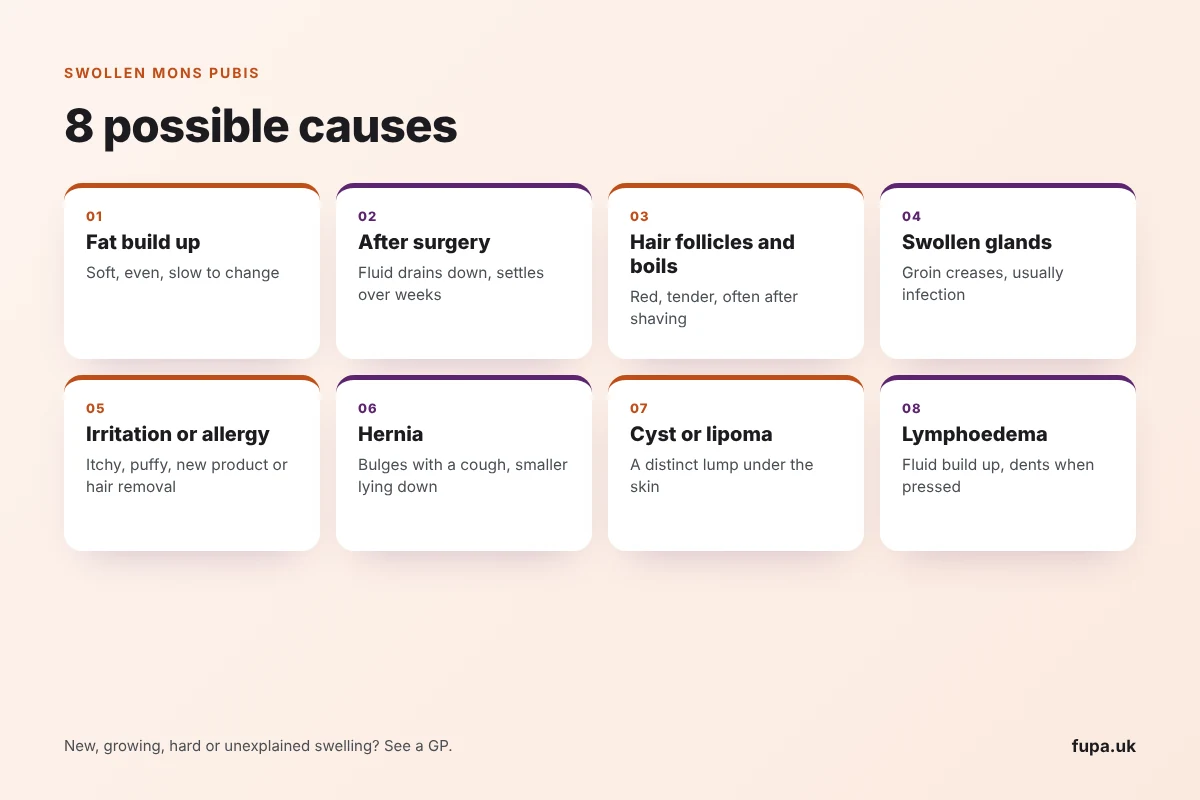
Weight gain, pregnancy, menopause and lower testosterone in men can all add fat to the pubic area. This kind of fullness is soft, painless and spread evenly across the mound. It is not dangerous, although it can cause rubbing and sweating in skin folds. Our guide to what causes a FUPA covers the main reasons.
2. Swelling after surgery
Swelling of the mons pubis is very common after a tummy tuck, liposuction, a monsplasty or a caesarean section. Fluid drains downwards with gravity, so the pubic area can look puffy and bruised even when the operation was higher up. The NHS says it takes about 6 weeks to fully recover from a tummy tuck, and swelling in the lower area can take longer to settle completely. Compression garments, rest and following your surgeon’s aftercare advice help. Contact your clinic quickly if swelling suddenly gets worse, becomes very painful, hot or red, or if the wound leaks.
3. Infected hair follicles, boils and abscesses
The pubic area has thick hair, warm skin folds and friction from underwear, so infected hair follicles are common, especially after shaving or waxing. They start as small, red, itchy bumps and can turn into a painful boil or abscess, which causes a tender, swollen and warm patch. A long term skin condition called hidradenitis suppurativa can also cause repeated painful lumps in the groin. Our guide to shaving a FUPA covers how to reduce irritation.
4. Swollen lymph glands
There are lymph glands in the groin creases on either side of the pubic area. They can swell with infections in the legs, feet, genitals or skin, including sexually transmitted infections. The NHS swollen glands guide says glands swollen by an infection usually improve within 1 to 2 weeks. Rarely, swollen glands are caused by blood or lymph cancers, so glands that keep growing, feel hard or do not move need checking.
5. Skin irritation or an allergic reaction
Hair removal creams, fragranced soaps, new washing powder, latex, lubricants and tight synthetic underwear can all inflame the skin. Contact dermatitis causes itchy, dry or blistered skin, and the area can look puffy. It usually settles once the trigger is found and avoided. Our page on FUPA pain and irritation has more on skin fold problems such as chafing and intertrigo.
6. A hernia
A hernia happens when tissue pushes through a weak spot in the muscle wall. Groin hernias usually sit to one side, where the leg meets the tummy, and an incisional hernia can bulge through an old scar low on the tummy. A hernia lump often gets bigger when you cough or strain and smaller when you lie down. Our guide to FUPA or hernia explains the differences.
7. A cyst or lipoma
Fluid filled skin cysts can form in the pubic area and may become swollen and sore if they get infected. A lipoma is a soft, rubbery lump of fat that moves under the skin and is usually harmless. Our guide to a FUPA or a lipoma covers how they differ from general fat.
8. Lymphoedema
Lymphoedema is a long term condition where fluid builds up because the lymphatic system is not draining properly. The NHS says it usually affects the arms or legs but can affect other parts of the body, and it can develop after cancer treatment that involves the lymph nodes. Early swelling is soft and may leave a dent when pressed. It is different from lipoedema, which is a build up of fat rather than fluid.
Other Things That Can Cause Swelling
Injury and bruising
A knock, a fall onto a bike crossbar or rough sport can bruise the pubic area. Bruising usually fades over a couple of weeks. Swelling that keeps growing after an injury should be checked.
Hormonal changes
Fluid retention before a period and changes in pregnancy can make the whole lower belly and pubic area feel fuller. This tends to come and go rather than form a single lump.
What You Can Do at Home
Simple self-care
- Keep the area clean and dry, and pat skin folds dry after washing.
- Stop shaving, waxing or using hair removal creams until the skin settles.
- Switch to loose cotton underwear and unperfumed wash products.
- Use a cool, clean compress for short periods to ease tender swelling.
- Do not squeeze, pop or lance a lump or boil yourself.
When a pharmacist can help
A pharmacist can advise on irritated or itchy skin, mild infected hair follicles and fungal rashes in skin folds, and tell you if you need to see a GP.
When to See a GP About Swelling: Mons Pubis Warning Signs
Book a GP appointment if
- the swelling or lump is new and you cannot explain it
- it keeps getting bigger, or has not settled within about 1 to 2 weeks
- a lump feels hard, is fixed in place or does not move when pressed
- you have night sweats, weight loss you cannot explain or feel generally unwell
- a lump bulges when you cough and shrinks when you lie down
- swelling keeps coming back
Get urgent help if
Call NHS 111 or get an urgent appointment if the area is very painful, hot and red with spreading redness, or you have a high temperature and feel unwell. Patient.info’s guide to lumps in the groin also advises urgent help if a hernia becomes hard and painful, or if you have tummy pain with vomiting or cannot pass stools. Call 999 or go to A&E if you have very bad tummy pain, keep being sick or feel very unwell.
What happens at the appointment
A GP will ask when the swelling started, whether it hurts and about any recent illness, surgery or hair removal. They will usually examine the area, sometimes while you stand and cough. Depending on what they find, they may suggest blood tests, swabs, an ultrasound scan or a referral to a specialist.
Frequently Asked Questions
Why is my mons pubis suddenly swollen?
Sudden swelling is most often caused by an infected hair follicle or boil, skin irritation from hair removal or a new product, or swollen glands from an infection. If it is very painful, hot, spreading or comes with a fever, get medical advice the same day.
Is a swollen mons pubis after surgery normal?
Yes. Swelling and bruising in the pubic area are common after a tummy tuck, liposuction, monsplasty or caesarean, because fluid drains downwards. It settles over weeks to months. Contact your clinic if it suddenly worsens, becomes hot and red or the wound leaks.
Can swollen lymph nodes cause swelling above the pubic bone?
The groin glands sit in the creases on either side of the pubic area, so they can cause tender lumps near the mons. The NHS says glands swollen by an infection usually improve within 1 to 2 weeks. See a GP if they keep growing or feel hard.
How do I know if it is fat or swelling?
Fat builds up slowly, feels soft and pinchable and does not hurt. Swelling tends to appear over hours or days and may feel tight, tender, warm or itchy, or come with redness or a fever.
Should I worry about a lump on my mons pubis?
Most lumps are harmless, such as ingrown hairs, cysts or lipomas. See a GP about any new lump you cannot explain, or one that is growing, hard, fixed in place or painful.
The Bottom Line
Most causes are common and treatable
A swollen mons pubis is usually down to fat, healing after surgery, irritated skin or an infection, and most of these settle with simple care or treatment from a pharmacist or GP. Swelling that is new and unexplained, growing, hard or comes with a fever needs checking, and severe pain with sickness needs urgent help. For other causes of changes in the lower belly, see our hub on hormonal belly fat and health conditions.