
Lower Belly Fat After a Hysterectomy: Causes and How to Manage It
Page Contents
- Key Takeaways
- Why Your Lower Belly Changes After a Hysterectomy
- Post-surgical swelling
- Gas and bloating
- Less activity during recovery
- Scar tissue and the “hysterectomy pouch”
- Surgical Menopause and Belly Fat
- When the ovaries are removed
- Why falling oestrogen moves fat to the stomach
- When the ovaries are kept
- HRT and your waistline
- Swelling or Belly Fat After Hysterectomy: How to Tell
- Signs it is mostly swelling
- Signs it is fat
- When to get it checked
- How to Manage Belly Fat After Hysterectomy
- Walk early and often
- Return to exercise in stages
- Eat to heal, then to lose fat
- Build strength once you are cleared
- Look after sleep and stress
- What If the Pouch Does Not Go Away?
- Give it time
- Options for a stubborn overhang
- Frequently Asked Questions
- Why is my stomach bigger after a hysterectomy?
- How long does swelling last after a hysterectomy?
- Does a hysterectomy cause weight gain?
- What is a hysterectomy pouch?
- When can I exercise to lose belly fat after a hysterectomy?
- The Bottom Line
- Heal first, then build steady habits
Belly fat after hysterectomy is a common worry. Many women notice that their lower belly looks rounder, puffier or more like a pouch in the weeks and months after surgery, and wonder whether the operation itself has made them gain fat. The honest answer is that several different things can change the lower belly after a hysterectomy: swelling while you heal, less activity during recovery, scar tissue and, if your ovaries were removed, a sudden surgical menopause.
This guide explains each cause, how to tell swelling from fat, what the research says about weight gain, and a safe, step by step way to manage your lower belly once you are healing well. It is part of our hub on hormonal belly fat.
This guide is general information, not medical advice. Always follow the advice of your own surgical team. Contact your GP, the hospital ward or NHS 111 if you have increasing tummy pain, a temperature of 38C or above, a red, hot or leaking wound, heavy bleeding or a smelly discharge.
Key Takeaways
- Early puffiness of the lower belly after a hysterectomy is usually swelling from surgery, not new fat, and it settles as you heal.
- If both ovaries are removed, the NHS explains that menopause starts straight away, whatever your age. Falling oestrogen tends to move fat towards the stomach.
- Even when the ovaries are kept, menopause may come sooner than it otherwise would have.
- Weeks of rest and no heavy lifting mean you use less energy, which can lead to gradual weight gain if eating stays the same.
- Walking from day one, a slow return to exercise, steady eating habits and HRT where suitable all help manage the lower belly.
Why Your Lower Belly Changes After a Hysterectomy
Post-surgical swelling
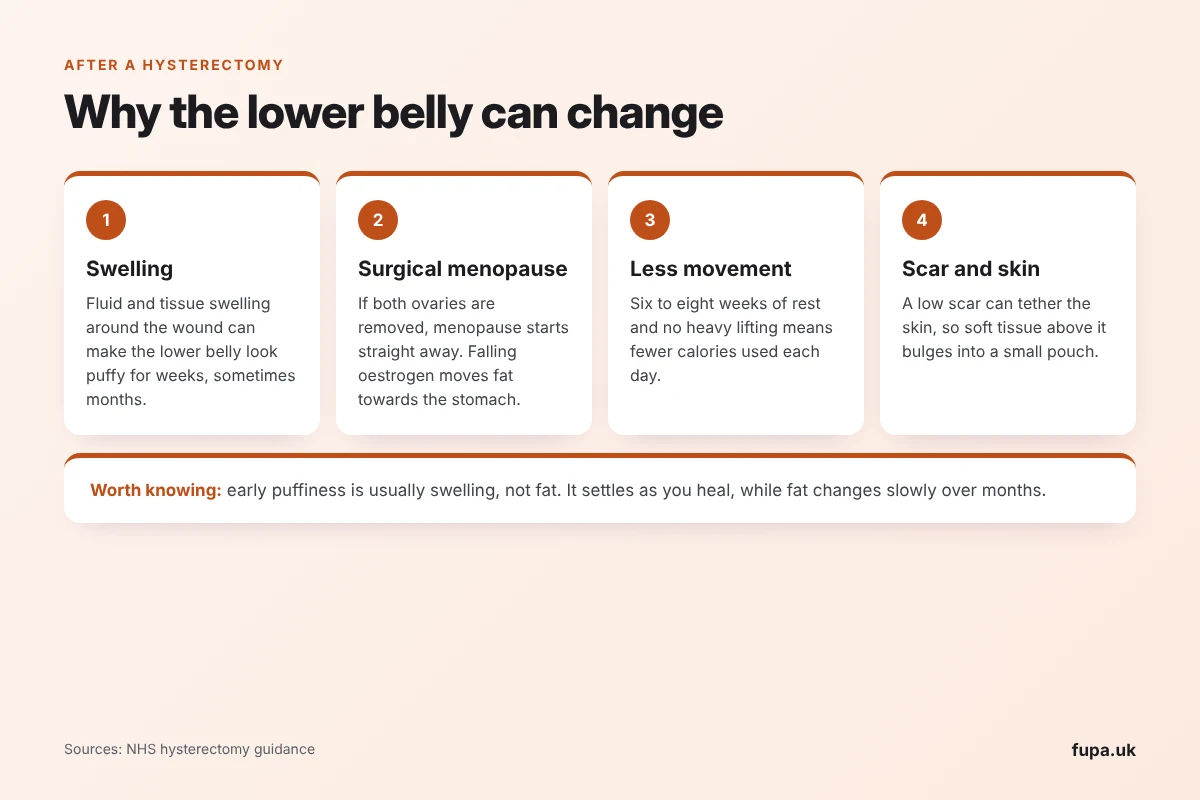
Any operation on the abdomen causes swelling as the body sends fluid and immune cells to repair the tissues. After an abdominal (open) hysterectomy, the cut is usually low across the bikini line, so the area just above it can look puffy, firm or swollen. Keyhole and vaginal operations usually cause less visible swelling, but some bloating is still common. This swelling can come and go, often gets worse by the evening or after a busy day, and slowly settles over weeks to a few months.
Gas and bloating
Bowel changes are common in the first weeks. The NHS notes that some women develop constipation after a hysterectomy and recommends plenty of fluids and fruit and fibre in your diet. Trapped wind and constipation can make the lower belly look much bigger, which can be mistaken for fat. Our guide to a FUPA vs bloating explains how to tell them apart.
Less activity during recovery
The NHS says it can take about 6 to 8 weeks to fully recover after an abdominal hysterectomy, with shorter recovery times after vaginal or keyhole surgery. During this time you are advised to rest and avoid heavy lifting. Moving less while eating the same amount, or eating more for comfort, can lead to gradual weight gain, and the lower belly is often where many women see it first.
Scar tissue and the “hysterectomy pouch”
A low horizontal scar can heal with the skin slightly tethered to the deeper tissues. Soft tissue and fat above the scar can then fold over it, creating a small shelf or pouch. This is similar to the overhang some women notice after a C-section. Exercise and fat loss can reduce the fat part of the pouch, but a tethered scar or loose skin may not change much on its own.
Surgical Menopause and Belly Fat
When the ovaries are removed
The NHS guidance on hysterectomy explains that if your ovaries are removed, you will go through the menopause immediately after the operation, regardless of your age. This is called a surgical menopause. Symptoms can be sudden and strong, including hot flushes, night sweats, poor sleep, low mood and vaginal dryness.
Why falling oestrogen moves fat to the stomach
Before the menopause, oestrogen tends to direct fat towards the hips and thighs. When oestrogen falls, more fat is stored around the abdomen, including the deeper visceral fat linked with heart disease and type 2 diabetes. Combined with poor sleep from night sweats, this can make the lower belly change faster than expected. Our guide to a FUPA and the menopause covers this shift in detail.
When the ovaries are kept
The NHS notes that if one or both ovaries are left in place, there is still a chance you will reach menopause sooner than you would have without the operation. A large Mayo Clinic study published in Menopause in 2018 followed more than 2,000 women who had a hysterectomy with both ovaries kept. They had an 18% higher risk of later developing obesity than similar women who had not had the operation. The researchers could not prove the surgery caused this, and suggested changes in ovarian function may play a part. Our hub on hormonal belly fat explains how to spot hormone-related changes.
HRT and your waistline
The NHS says you may be offered hormone replacement therapy (HRT) after having your ovaries removed, and that if both ovaries are removed and HRT is suitable for you, it is important to continue it until the usual age of menopause, which is 51 on average. HRT is a treatment for symptoms and long-term health, not a weight loss treatment, but better sleep and fewer hot flushes can make healthy habits much easier to keep.
| Cause | When it shows | What it feels like | What helps |
|---|---|---|---|
| Swelling | First weeks to a few months | Puffy, tight, worse in the evening | Time, gentle walking, rest |
| Bloating and constipation | First weeks, can come and go | Changes through the day, may be uncomfortable | Fluids, fibre, regular walks |
| Surgical menopause | Soon after surgery if ovaries removed | Gradual fat gain around the stomach, with hot flushes and poor sleep | HRT if suitable, strength training, sleep support |
| Less activity | Weeks to months after surgery | Soft, steady weight gain | Gradual return to activity, steady eating |
| Scar and loose skin | Once swelling has settled | Shelf or pouch above the scar that does not change with weight | Scar care, fat loss for the fat part, surgical advice if bothersome |
Swelling or Belly Fat After Hysterectomy: How to Tell
Signs it is mostly swelling
Swelling usually feels firm or tight rather than soft, changes from morning to evening, and is often worse after being on your feet. It tends to sit close to the wound and gradually improves week by week. If your weight has not changed but your lower belly looks bigger, swelling is the most likely reason.
Signs it is fat
Fat feels soft and squashy, stays the same size through the day and builds up slowly over months. It usually comes with a rising number on the scales or a bigger waist measurement. A tape measure every 2 to 4 weeks, taken at the same time of day, tells you more than the mirror. Our guide on loose skin vs fat on the lower belly shows how to check what you are seeing.
When to get it checked
See your GP if your belly gets more swollen rather than less, feels hard or painful, or if you have a fever, a red or leaking wound, a lump near the scar that bulges when you cough, or bowel or bladder problems that do not settle. These need checking and are not something to fix with diet or exercise. Fibroids are one common reason for a hysterectomy. If you are still weighing up surgery and are not sure whether your lower belly swelling is fibroids or fat, our guide to fibroids or belly fat explains the signs to look for.
How to Manage Belly Fat After Hysterectomy
Walk early and often
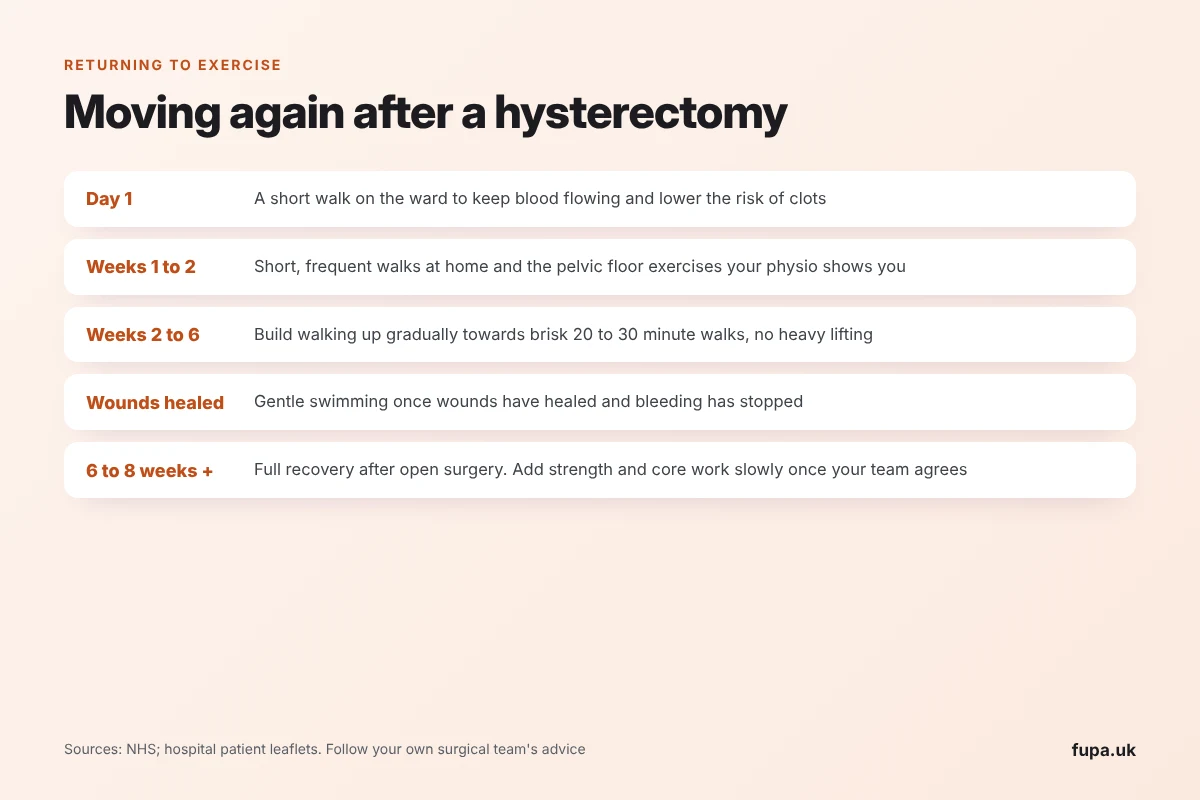
The NHS says you will be encouraged to take a short walk the day after your operation, and that walking is always recommended during recovery. Short, frequent walks help blood flow, ease wind and constipation, and keep you moving without straining your tummy. Many hospital leaflets suggest building up gradually so that by about 6 weeks you are taking brisk walks of 20 to 30 minutes.
Return to exercise in stages
The NHS advises not lifting anything heavy, such as bags of shopping, while you recover, and says you can swim once your wounds have healed. Your hospital should give you advice about exercise. Once your team is happy, add gentle strength work for your legs and arms, then slowly build up core exercises. Start with pelvic floor exercises and deep core work rather than crunches or sit-ups.
Eat to heal, then to lose fat
In the first weeks, focus on healing: regular meals, protein at each meal, fruit, vegetables and wholegrains to keep your bowels moving, and plenty of fluids. Once you are recovering well, a modest calorie deficit is the way to reduce fat. Our guide to a calorie deficit for a FUPA shows how to set a sensible target, and our FUPA diet guide gives practical meal ideas.
Build strength once you are cleared
Strength training helps you keep muscle and protect your bones, which matters more after a surgical menopause because oestrogen helps protect against weak bones. Aim for strength work on at least 2 days a week once you are fully recovered. Our guide to strength training for belly fat has a simple beginner routine.
Look after sleep and stress
Night sweats, anxiety and low mood are common after surgery and surgical menopause. Poor sleep and stress both make appetite harder to manage. Talk to your GP if symptoms are affecting your daily life, as treatment can make a real difference.
What If the Pouch Does Not Go Away?
Give it time
Swelling can take several months to settle fully, and scars keep changing for a year or more. Many women find their lower belly looks quite different at 6 months than at 6 weeks, so avoid judging your final shape too early.
Options for a stubborn overhang
If a shelf or pouch remains once you have healed and your weight is stable, it is often a mix of fat, loose skin and scar tethering. Fat loss can reduce the fat part, while loose skin may need a surgical opinion. Our guides to a FUPA in women and FUPA surgery explain the options, from non-surgical treatments to monsplasty and tummy tucks.
Frequently Asked Questions
Why is my stomach bigger after a hysterectomy?
In the first weeks it is usually swelling, wind or constipation from surgery, which settles as you heal. Later, less activity during recovery and, if your ovaries were removed, surgical menopause can lead to fat gain around the stomach. A low scar can also create a small pouch above it.
How long does swelling last after a hysterectomy?
Swelling is usually most noticeable in the first few weeks and improves gradually. The NHS says full recovery after an abdominal hysterectomy takes about 6 to 8 weeks, but some puffiness around the lower belly can take a few months to settle completely.
Does a hysterectomy cause weight gain?
Not directly for everyone, but it can make weight gain more likely. Removing both ovaries causes an immediate menopause, and a 2018 Mayo Clinic study found women who kept their ovaries had an 18% higher risk of later obesity. Less activity during recovery also plays a part.
What is a hysterectomy pouch?
A hysterectomy pouch is a small bulge or shelf of soft tissue above a low abdominal scar. It can be caused by swelling, fat, loose skin or skin that has healed tethered to the deeper tissues. Fat loss can reduce it, but loose skin or scar tethering may not change on its own.
When can I exercise to lose belly fat after a hysterectomy?
Walking is encouraged from the day after surgery. Avoid heavy lifting during recovery and follow your hospital’s advice. Most women can return to more demanding exercise and gradual core work after about 6 to 8 weeks following open surgery, once their surgical team agrees.
The Bottom Line
Heal first, then build steady habits
Belly fat after hysterectomy is a real and common concern, but early changes are often swelling rather than fat. Over the longer term, surgical menopause, less activity and scar changes can all affect the lower belly. Walk early, return to exercise in stages, eat to heal and then to lose fat, and talk to your GP about HRT and symptoms if your ovaries were removed. For more on how hormones shape your waistline, see our guide to hormonal belly fat.