
Does Cycling Burn Belly Fat? Indoor and Outdoor Options
Page Contents
- Key Takeaways
- Does Cycling Burn Belly Fat?
- How cycling leads to fat loss
- Why you cannot target belly fat
- Visceral fat and subcutaneous fat
- How Many Calories Does Cycling Burn?
- Calories per 30 minutes
- What the numbers mean for you
- Do not eat the calories back
- Indoor Cycling Options
- Upright exercise bikes
- Recumbent bikes
- Spin classes
- Outdoor Cycling Options
- Road, hybrid and gravel bikes
- Electric bikes
- Cycling to work
- How to Cycle for Belly Fat Loss
- Hit the NHS weekly target
- Mix steady rides with intervals
- A simple 4 week starter plan
- Add strength training
- Saddle Comfort Tips With a FUPA
- Choose the right saddle and shorts
- Set the bike up properly
- Prevent chafing and irritation
- Cycling vs Running and Walking for Belly Fat
- Cycling vs running
- Cycling vs walking
- Frequently Asked Questions
- Does cycling burn belly fat?
- Is an exercise bike good for losing belly fat?
- How long should I cycle to lose belly fat?
- Is cycling or running better for belly fat?
- Is cycling uncomfortable with a FUPA?
- The Bottom Line
- Ride often, eat sensibly and be patient
Does cycling burn belly fat? It is one of the most common questions from people who want a low-impact way to slim their middle, especially if running hurts their knees or feels uncomfortable with a FUPA. The short answer is yes, but not in the way many people hope. Cycling burns calories and fat across the whole body, and the lower belly shrinks as part of that overall fat loss rather than because the pedalling works the tummy directly.
This guide explains what cycling can and cannot do for belly fat, compares indoor and outdoor options, shows how many calories a ride burns, and gives a simple weekly plan. It also covers saddle comfort tips for anyone carrying weight over the pubic area. It is part of our weekly workout plan for belly fat.
This guide is general information, not medical advice. If you have not exercised for a while, or you have a heart condition, joint problems or another health concern, speak to your GP before starting a new cycling routine.
Key Takeaways
- Cycling burns calories, and a regular calorie deficit is what reduces belly fat. No exercise can burn fat from one chosen spot.
- Harvard Health estimates that 30 minutes on an exercise bike at a moderate pace burns about 210 to 294 calories, depending on body weight.
- The NHS advises adults to aim for at least 150 minutes of moderate activity or 75 minutes of vigorous activity a week, plus strength work on 2 days.
- Indoor and outdoor cycling both work. The best choice is the one you will do most weeks.
- A wider padded saddle, padded shorts and a more upright riding position make cycling far more comfortable with a FUPA.
Does Cycling Burn Belly Fat?
How cycling leads to fat loss
Your body stores spare energy as fat, and it releases that fat when you use more energy than you take in. Cycling raises the energy you use: your legs, hips and heart all work harder, so you burn more calories than you would sitting still. Over weeks and months, that extra burn helps create the calorie deficit that reduces body fat, including the fat around your waist and over your pubic bone.
Cycling also works the large muscles of the legs and bottom. Building and keeping muscle helps your body use energy and makes everyday movement easier, which supports fat loss in the long run.
Why you cannot target belly fat
Pedalling does not burn fat from your stomach any more than crunches do. Your body decides where it takes fat from, and genes, sex hormones and age all play a part. For many people, the lower belly is one of the last places to slim down. Our page on whether crunches burn belly fat explains the research on spot reduction in more detail.
Visceral fat and subcutaneous fat
Belly fat comes in two main types. Subcutaneous fat sits under the skin and is the soft fat you can pinch, including a FUPA. Visceral fat sits deeper, around the organs, and is linked with type 2 diabetes and heart disease. Regular aerobic exercise such as cycling, together with healthy eating, helps reduce both, so your health can benefit even while the soft fat over your pubic bone is slow to change. Our guide to whether lower belly fat is dangerous explains how to check your waist size.
How Many Calories Does Cycling Burn?
Calories per 30 minutes
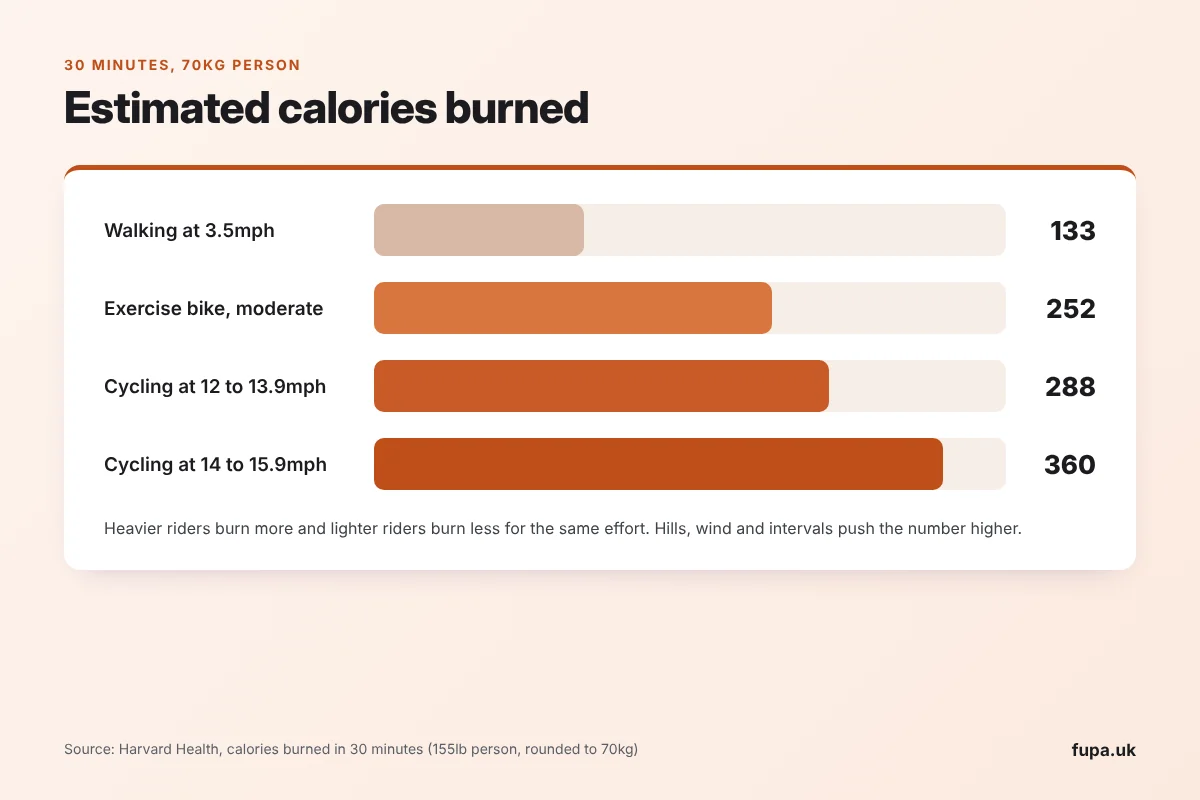
The figures below come from the Harvard Health calories burned table, converted to rounded kilograms. They are estimates, and your real burn depends on your weight, effort, fitness, wind, hills and how well your bike is set up.
| Activity (30 minutes) | 57kg person | 70kg person | 84kg person |
|---|---|---|---|
| Walking at 3.5mph | 107 | 133 | 159 |
| Exercise bike, moderate | 210 | 252 | 294 |
| Cycling at 12 to 13.9mph | 240 | 288 | 336 |
| Running at 5mph | 240 | 288 | 336 |
| Cycling at 14 to 15.9mph | 300 | 360 | 420 |
What the numbers mean for you
A steady outdoor ride at 12 to 14mph burns about the same as running at 5mph, but with far less impact on your knees, hips and pelvic floor. A moderate session on an exercise bike burns roughly twice as much as brisk walking for the same time. Heavier riders burn more calories for the same effort, which is helpful when you are starting out.
Do not eat the calories back
Fitness watches and bike displays often overestimate calories. A large snack or sugary sports drink after a ride can easily cancel out the burn. For most rides under an hour, water and your normal meals are enough. Our guide to a calorie deficit for a FUPA explains how to set a realistic target.
Indoor Cycling Options
Upright exercise bikes
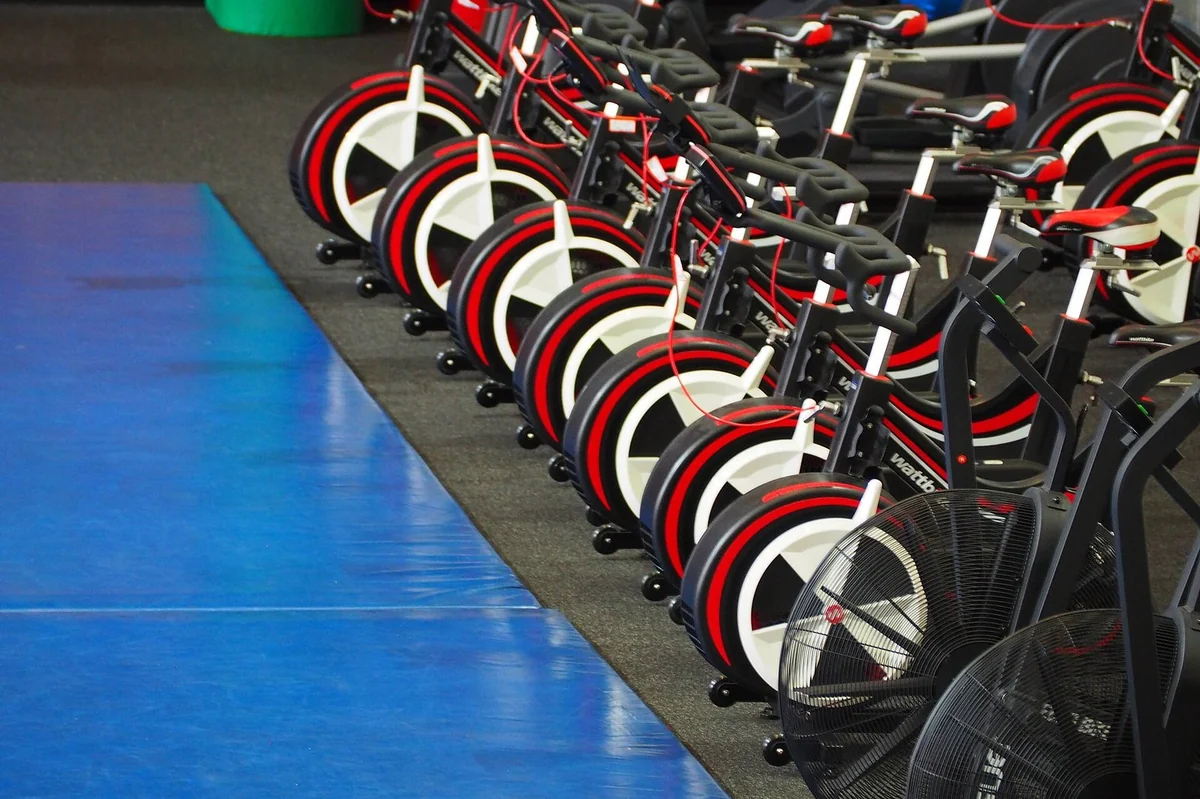
An upright exercise bike at home or in the gym lets you ride whatever the weather, at any time of day. You can control the resistance exactly, watch television or listen to a podcast, and stop the moment you need to. This makes it a very easy habit to keep, which is what matters most for fat loss.
Recumbent bikes
A recumbent bike has a wide seat with a backrest and pedals out in front. It suits beginners, larger bodies and people with back pain, because there is no pressure on the pubic area from a narrow saddle and no need to lean forward over the belly. You still work your legs and raise your heart rate.
Spin classes
Spin classes mix fast pedalling, standing climbs and short sprints to music. The NHS lists spinning classes as very vigorous activity, so they pack a lot of work into a short time. They are hard, so build up to them, set your own resistance and sit down whenever you need to.
Outdoor Cycling Options
Road, hybrid and gravel bikes
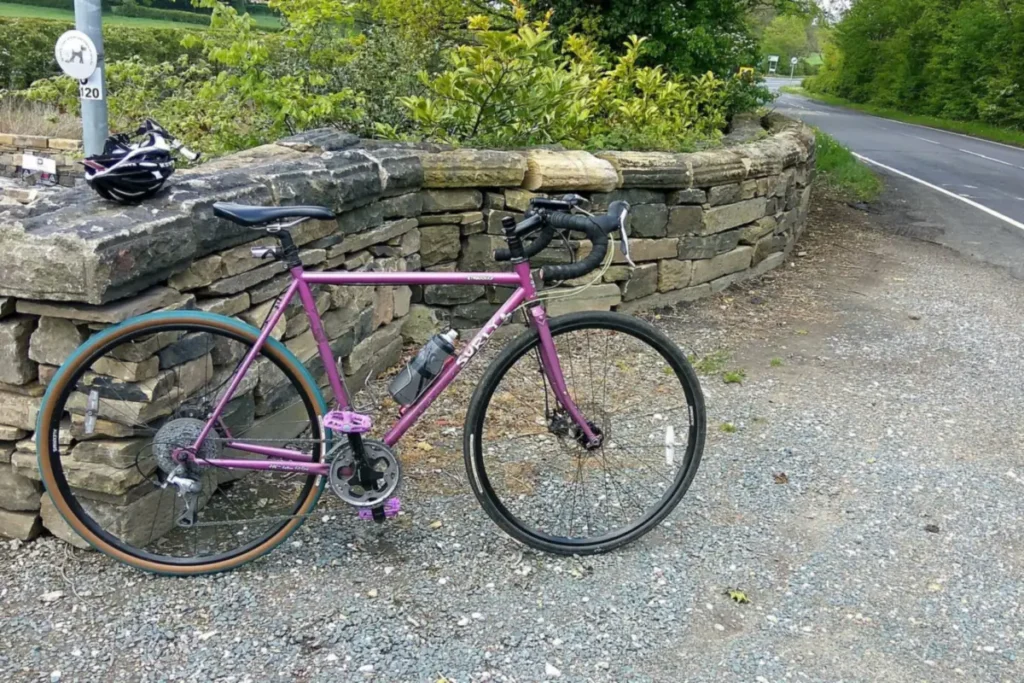
Riding outside adds hills, wind and changes of pace, so you naturally mix easy and harder efforts. A hybrid bike, with flat handlebars and a more upright position, is often the most comfortable choice for new riders with a lower belly, because you do not need to fold forward over your stomach.
Electric bikes
An e-bike gives you a boost when you pedal. It can help you ride further, tackle hills and arrive at work without being soaked in sweat. You burn fewer calories per minute than on a standard bike, but if the motor means you ride more often and for longer, the total can still add up.
Cycling to work
Commuting by bike builds activity into days that are already busy. Many UK employers offer the government’s Cycle to Work scheme, which lets staff hire a bike and safety equipment through salary sacrifice, with tax savings. Ask your employer whether they run a scheme, and plan a quiet route first, ideally using cycle paths and traffic-free sections.
How to Cycle for Belly Fat Loss
Hit the NHS weekly target
The NHS physical activity guidelines advise adults to do at least 150 minutes of moderate activity or 75 minutes of vigorous activity a week, spread across 4 to 5 days or more. Riding a bike counts as moderate activity, while riding fast or on hills counts as vigorous. A good check for moderate effort is that you can still talk, but not sing.
Mix steady rides with intervals
Steady rides build fitness and burn fat comfortably. Short intervals, such as 30 seconds of hard pedalling followed by 90 seconds easy, push your heart rate higher and make sessions more time efficient. Both have a place. Our guide to HIIT vs steady cardio explains how to balance them.
A simple 4 week starter plan
Use this as a guide and adjust it to your fitness. Keep at least one rest day a week.
| Week | Rides | Session |
|---|---|---|
| Week 1 | 3 rides | 20 minutes easy to moderate |
| Week 2 | 3 rides | 25 to 30 minutes moderate |
| Week 3 | 4 rides | 30 minutes moderate, with one ride including 5 short intervals |
| Week 4 | 4 rides | 30 to 40 minutes moderate, plus one interval session of 20 minutes |
Add strength training
The NHS also recommends strengthening activities that work all the major muscle groups on at least 2 days a week. Squats, lunges, rows and hip thrusts keep your upper body and core strong, which cycling alone does not do. Our guide to strength training for belly fat has a beginner routine.
Saddle Comfort Tips With a FUPA
Choose the right saddle and shorts
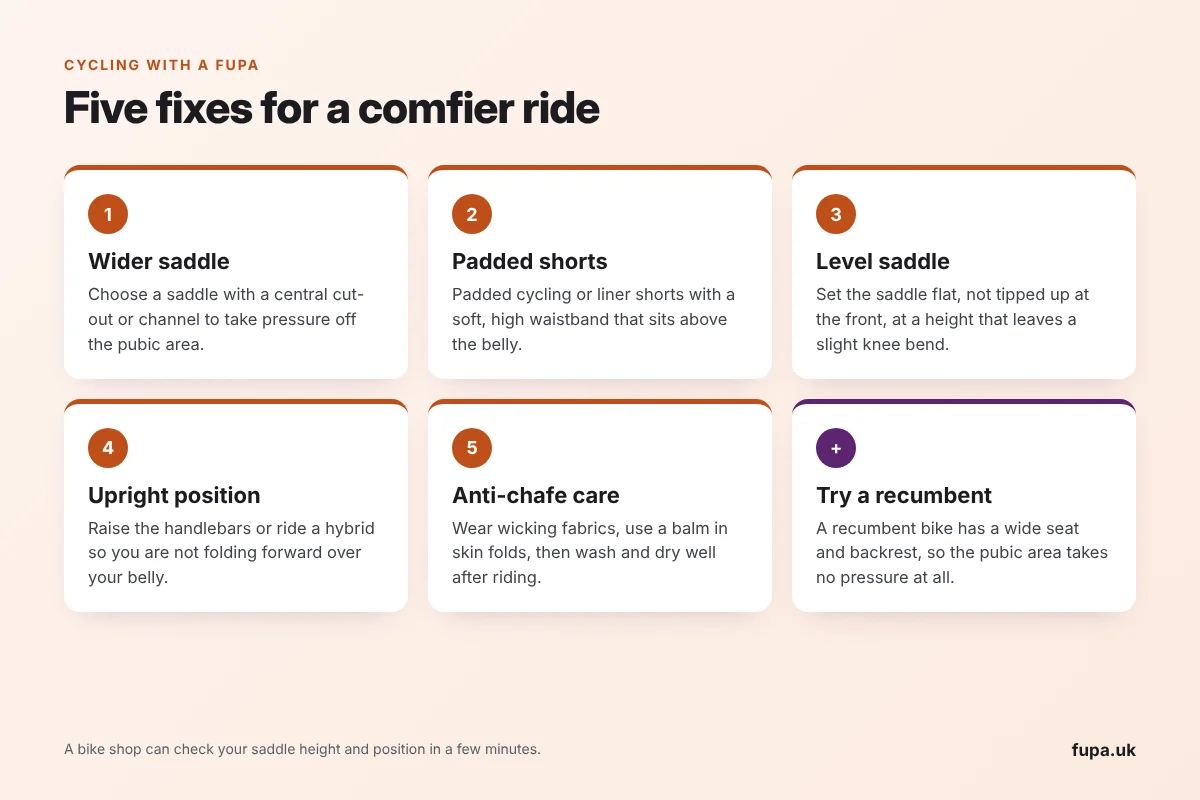
A narrow racing saddle presses on the soft tissue of the pubic area, which is uncomfortable for anyone and more so with a larger fat pad. A slightly wider saddle with a central cut-out or channel takes pressure off. Padded cycling shorts or padded liner shorts reduce rubbing, and a high, soft waistband sits above the lower belly instead of digging into it. Our guide to gym clothes for a FUPA has more ideas.
Set the bike up properly
Set the saddle level, not tipped up at the front. Raise the handlebars or choose a bike with a more upright position so you are not folding over your belly. With the saddle at the right height, your knee should be slightly bent when the pedal is at the bottom. A bike shop can check your fit quickly.
Prevent chafing and irritation
Sweat and friction in the skin folds under the belly and at the top of the thighs can cause soreness and rashes. Wear moisture-wicking fabrics, use an anti-chafe balm, and wash and dry the area well after riding. Our guide to lower belly chafing explains how to stop rubbing before it starts.
Cycling vs Running and Walking for Belly Fat
Cycling vs running
Running at 5mph and cycling at 12 to 14mph burn about the same calories in Harvard’s estimates. Running is easier to fit in with no kit beyond shoes, while cycling is gentler on the joints and the pelvic floor and is easier to keep up for longer sessions. Our guide on whether running burns belly fat covers the other side of the comparison.
Cycling vs walking
Walking is the easiest place to start and still helps. Cycling burns roughly twice as many calories in the same time, so it suits people who are short of time or ready to step up from walking. Many people do both. If you want a low-impact option that also works your upper body, our guide to swimming for belly fat compares time in the pool with time on the bike.
Frequently Asked Questions
Does cycling burn belly fat?
Yes, cycling helps burn belly fat by burning calories and supporting a calorie deficit, which reduces fat all over the body, including the belly. It cannot target belly fat directly, so combine it with sensible eating and strength training for the best results.
Is an exercise bike good for losing belly fat?
Yes. Harvard Health estimates that 30 minutes on an exercise bike at a moderate pace burns about 210 to 294 calories, depending on body weight. Because you can ride indoors whatever the weather, an exercise bike is one of the easiest ways to stay consistent.
How long should I cycle to lose belly fat?
Aim for at least the NHS target of 150 minutes of moderate activity a week, such as 30 minutes on 5 days. More cycling can speed up fat loss, but the changes you can keep up for months matter more than any single week.
Is cycling or running better for belly fat?
Both work. Running at 5mph and cycling at 12 to 14mph burn similar calories in Harvard’s estimates. Cycling is lower impact and often more comfortable for larger bodies, so the better choice is the one you enjoy and will repeat.
Is cycling uncomfortable with a FUPA?
It can be on a narrow saddle, but small changes help. Try a wider saddle with a cut-out, padded shorts, a more upright riding position and anti-chafe balm. A recumbent bike takes pressure off the pubic area completely.
The Bottom Line
Ride often, eat sensibly and be patient
Cycling burns belly fat as part of overall fat loss, not by targeting the tummy. Choose the bike you will use most, whether that is an exercise bike at home, a spin class or a hybrid on the way to work. Build up to the NHS weekly target, add strength work twice a week, keep a modest calorie deficit and make the saddle comfortable. For the full picture of what shifts lower belly fat, read our guide on how to burn lower belly fat, and for a complete week of training see our belly fat workout plan.