
Thyroid Belly Fat: Can an Underactive Thyroid Cause It?
Page Contents
- Key Takeaways
- What Your Thyroid Does
- The thyroid and your metabolism
- Underactive and overactive thyroid
- How common is an underactive thyroid?
- Can an Underactive Thyroid Cause Belly Fat?
- How much weight is linked to the thyroid
- Is there a thyroid belly shape?
- Why it can feel harder to lose weight
- Thyroid Belly Fat: Signs It Could Be Your Thyroid
- Common symptoms of an underactive thyroid
- Why the symptoms are easy to miss
- Thyroid weight or ordinary fat?
- Thyroid Testing on the NHS
- When to see a GP
- The blood tests
- What to say at your appointment
- Treatment and What Happens to Your Weight
- Levothyroxine
- Will treatment shift my belly weight?
- Why more medicine is not the answer
- Losing Lower Belly Fat With a Thyroid Condition
- Get your levels stable first
- Build a sustainable routine
- Women and thyroid changes
- Frequently Asked Questions
- Does an underactive thyroid cause belly fat?
- What does a thyroid belly look like?
- How much weight can you gain with hypothyroidism?
- Will I lose weight once my thyroid is treated?
- Can I get a thyroid test on the NHS?
- The Bottom Line
- Test, do not guess
Thyroid belly fat is a phrase many people search when their lower belly grows and nothing they try seems to shift it. An underactive thyroid can cause some weight gain, but the effect is usually smaller than people expect, and much of it is fluid rather than fat. The thyroid does not choose to store fat on your lower belly. Where extra weight settles is mostly down to your genes, sex, age and hormones such as oestrogen and cortisol.
This guide explains how the thyroid affects weight, the symptoms that point to an underactive thyroid, how it is tested on the NHS and what happens to your weight once it is treated. It is part of our hub on hormonal belly fat.
This guide is general information, not a diagnosis. If you think you might have an underactive thyroid, book a non urgent GP appointment for a blood test. Do not start or stop thyroid medicine without medical advice.
Key Takeaways
- An underactive thyroid (hypothyroidism) slows your metabolism and can cause modest weight gain.
- The American Thyroid Association says most of the weight gained is salt and water, and that for most people about 5 to 10 pounds (roughly 2 to 4.5kg) may relate to the thyroid.
- There is no special thyroid belly shape. Weight gain from the thyroid spreads over the body rather than targeting the lower belly.
- Weight gain alone is rarely the only sign. Tiredness, feeling cold, constipation, dry skin and low mood are common too.
- A simple blood test for TSH and T4 at your GP surgery can confirm or rule it out, and treatment with levothyroxine usually brings weight back towards where it was before.
What Your Thyroid Does
The thyroid and your metabolism
The thyroid is a small, butterfly shaped gland at the front of your neck. It makes hormones, mainly thyroxine (T4) and the more active triiodothyronine (T3), which help set how quickly your body uses energy. A gland in the brain called the pituitary releases thyroid stimulating hormone (TSH) to tell the thyroid how much to make.
Underactive and overactive thyroid
When the thyroid makes too little hormone, it is called an underactive thyroid or hypothyroidism. Many body processes slow down, which can lead to tiredness, feeling cold and some weight gain. When it makes too much, it is called an overactive thyroid or hyperthyroidism, which more often causes weight loss, a fast heartbeat and anxiety. This guide focuses on the underactive type, as that is the one linked with belly weight.
How common is an underactive thyroid?
The NHS describes an underactive thyroid as common. The Society for Endocrinology estimates that about 3.5% of people in the UK have it, and it is especially common in middle aged women. The main cause in the UK is Hashimoto’s disease, an autoimmune condition in which the immune system attacks the thyroid. It usually starts between the ages of 30 and 50, and it is more likely if other people in your family have had a thyroid condition.
Can an Underactive Thyroid Cause Belly Fat?
How much weight is linked to the thyroid
According to the American Thyroid Association, most of the weight gained with an underactive thyroid comes from the body holding on to salt and water. For most people, about 5 to 10 pounds of weight gain may relate to the thyroid, depending on how severe the condition is. That is noticeable, but it does not usually explain several stone of weight gain on its own.
Is there a thyroid belly shape?
There is no medical pattern called a thyroid belly. Fluid retention and weight gain from hypothyroidism tend to spread across the body, and some people notice puffiness in the face, around the eyes or in the hands and feet. A lower belly that is soft, sits over the pubic bone and has built up slowly over years is far more likely to be ordinary fat stored in line with your genes and hormones. Our guide to what causes lower belly fat covers the other common reasons.
Why it can feel harder to lose weight
Before treatment, a slower metabolism, constant tiredness and low mood can all make it harder to stay active and eat well. Constipation and bloating can also make your lower belly feel fuller. These effects tend to ease once thyroid levels are back in the normal range.
Thyroid Belly Fat: Signs It Could Be Your Thyroid
Common symptoms of an underactive thyroid
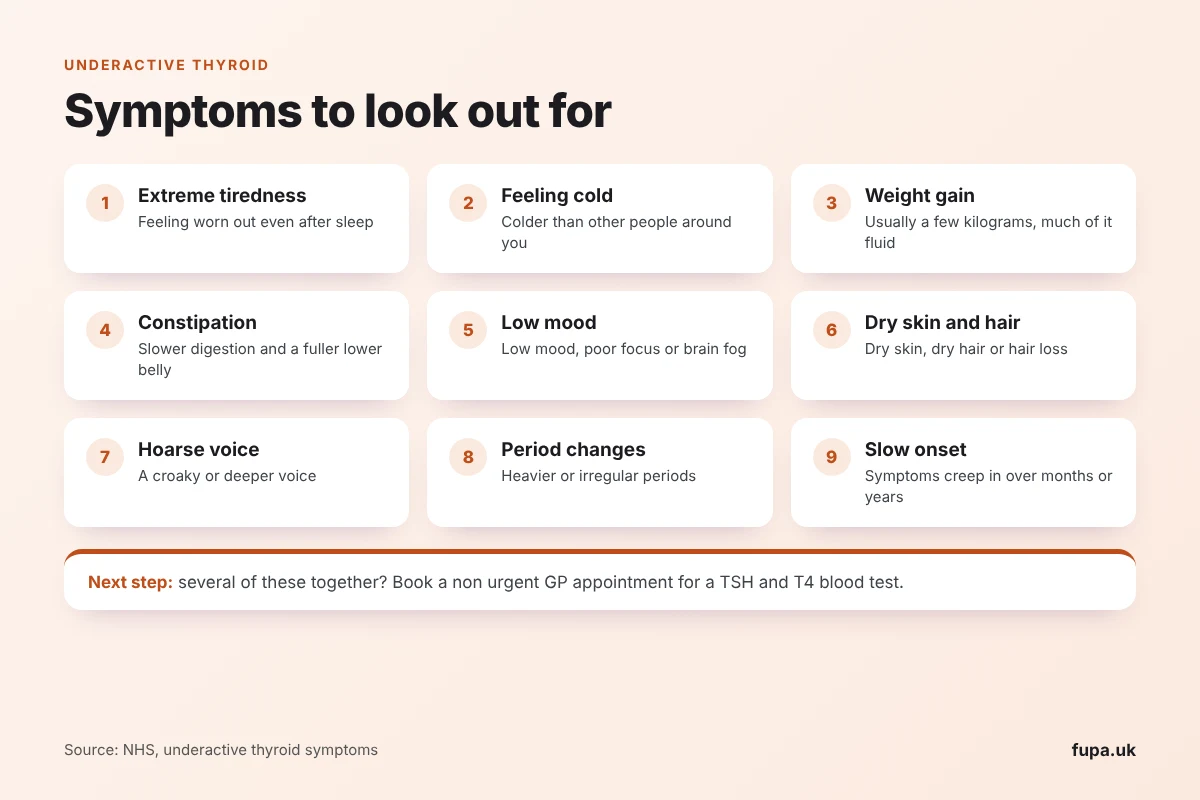
The NHS lists these symptoms of an underactive thyroid:
- Extreme tiredness.
- Feeling colder than usual.
- Putting on weight.
- Constipation.
- Trouble concentrating or thinking clearly.
- Low mood or depression.
- Dry skin, dry hair or hair loss.
- A hoarse, croaky voice.
- Irregular or heavy periods.
Why the symptoms are easy to miss
The symptoms usually come on slowly and get worse over months or years, so many people put them down to stress, age or a busy life. They can also be caused by other conditions such as the menopause, anaemia or depression. That is why a blood test matters more than guessing from symptoms.
Thyroid weight or ordinary fat?
| Feature | More likely thyroid related | More likely ordinary fat |
|---|---|---|
| Amount | A few kilograms, often fairly quickly | Gradual gain over months or years |
| Where it shows | Spread over the body, with puffiness in the face or hands | Lower belly, hips and thighs, in your usual pattern |
| Other symptoms | Tiredness, feeling cold, constipation, dry skin | Usually none, apart from tighter clothes |
| Response to diet | Little change until thyroid levels are treated | Responds to a steady calorie deficit |
Thyroid Testing on the NHS
When to see a GP
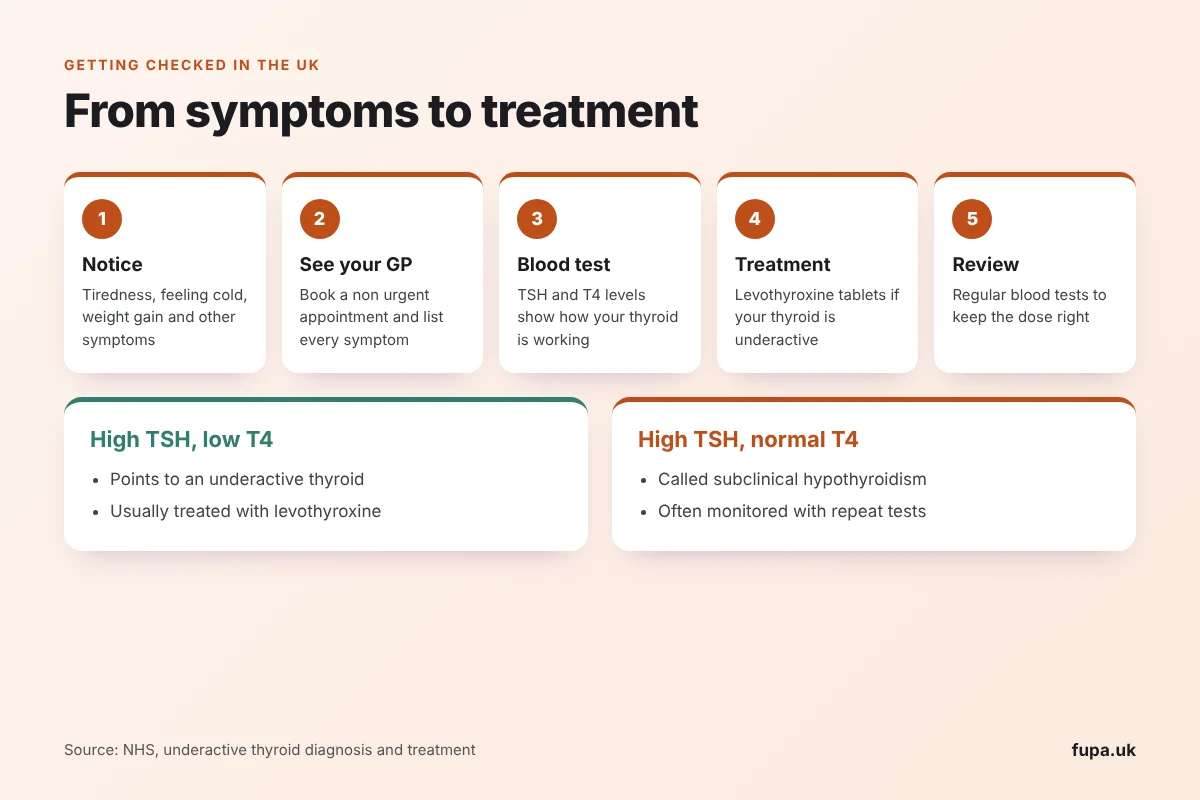
Make a non urgent GP appointment if you have several of the symptoms above, especially if you also have a family history of thyroid or autoimmune conditions, or you have recently been pregnant. It is also worth asking if you are eating and moving in the same way but steadily gaining weight with tiredness and feeling cold.
The blood tests
Your GP will ask about your symptoms and family history and may feel your neck to check whether the thyroid is swollen. The main test is a blood test that measures:
- TSH (thyroid stimulating hormone): a high level suggests the thyroid is not making enough hormone, so the brain is pushing it harder.
- T4 (thyroxine): a low level alongside a high TSH points to an underactive thyroid.
Some people have a raised TSH with a normal T4. This is called subclinical hypothyroidism, and it is often monitored with repeat tests rather than treated straight away.
What to say at your appointment
Describe how much weight you have gained and over what period, plus any other symptoms, even ones that seem unrelated, such as feeling cold or heavier periods. Mention any medicines you take and whether anyone in your family has a thyroid condition.
Treatment and What Happens to Your Weight
Levothyroxine
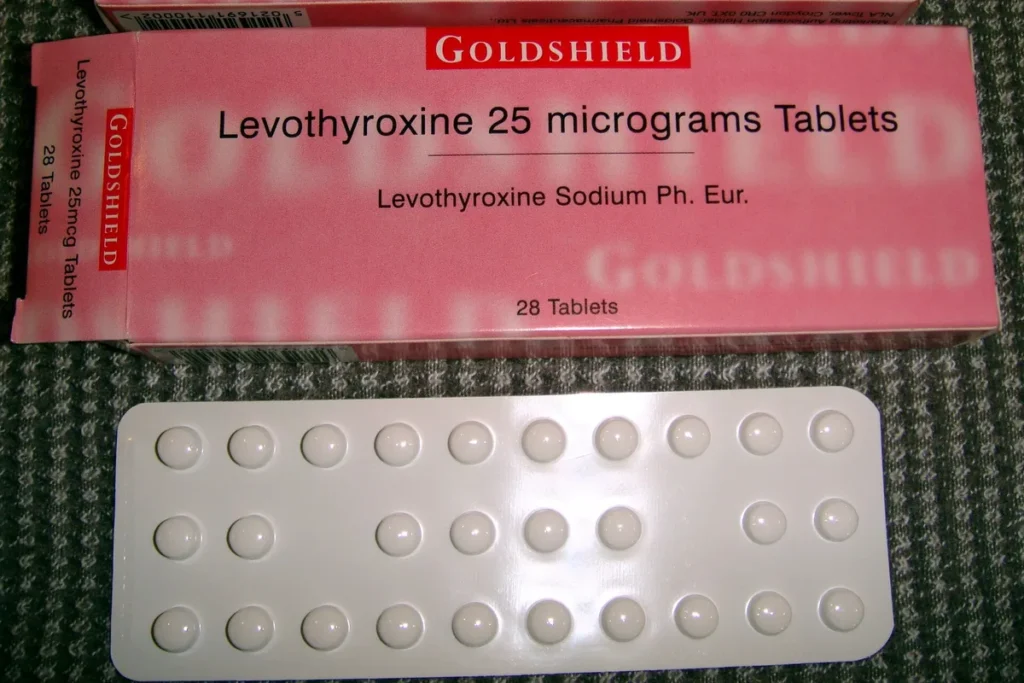
An underactive thyroid is usually treated with levothyroxine tablets, which replace the hormone your body cannot make. Most people take them for life. You will have regular blood tests at first to get the dose right, then usually once a year. Tell your GP if you are pregnant or planning a pregnancy, as the dose often needs to change.
Will treatment shift my belly weight?
The American Thyroid Association says treatment usually returns body weight towards what it was before the thyroid problem started, mostly by clearing the extra fluid. Once your levels are normal, your ability to gain or lose weight is the same as for people without a thyroid condition. If you are still carrying lower belly fat after that, it needs the same approach as anyone else: a steady calorie deficit, regular activity and patience.
Why more medicine is not the answer
Taking more thyroid hormone than you need to lose weight is unsafe. Too much can cause a fast or irregular heartbeat, anxiety, sleep problems and bone thinning over time. Always take the dose your GP prescribes and let them adjust it based on your blood tests.
Losing Lower Belly Fat With a Thyroid Condition
Get your levels stable first
It is much easier to lose fat once your thyroid levels are in range and your energy has returned. Many people find the first few months of treatment are best used for rebuilding routines rather than strict dieting.
Build a sustainable routine
- Calorie deficit: eat slightly less than you burn, with plenty of protein and fibre. Our guide to a calorie deficit for a FUPA shows how to start.
- Activity: aim for at least 150 minutes of moderate activity a week plus strength work on 2 days, as the NHS advises for all adults.
- Sleep and stress: poor sleep and stress make appetite harder to manage, whatever your thyroid is doing.
- Take medicine properly: levothyroxine is usually taken on an empty stomach, and some supplements such as iron and calcium can affect how it is absorbed, so follow the leaflet and ask your pharmacist.
Women and thyroid changes
Thyroid problems are more common in women, and symptoms can overlap with pregnancy, the postnatal period and the menopause. Our guide to a FUPA in women covers how these life stages affect the lower belly.
Frequently Asked Questions
Does an underactive thyroid cause belly fat?
An underactive thyroid can cause modest weight gain, mostly from fluid, but it does not target the belly. Lower belly fat is mainly shaped by genes, sex, age and overall body fat.
What does a thyroid belly look like?
There is no specific thyroid belly shape. Thyroid related weight gain tends to spread over the body, sometimes with puffiness in the face, hands or feet, rather than building up only in the lower belly.
How much weight can you gain with hypothyroidism?
The American Thyroid Association says that for most people about 5 to 10 pounds, roughly 2 to 4.5kg, may relate to the thyroid, depending on how severe it is. Larger gains usually have other causes too.
Will I lose weight once my thyroid is treated?
Treatment usually clears the extra fluid and brings weight back towards where it was before. After that, losing fat works the same way as for anyone else, through a calorie deficit and regular activity.
Can I get a thyroid test on the NHS?
Yes. If you have symptoms of an underactive thyroid, your GP can arrange a blood test for TSH and T4. Book a non urgent appointment and describe all your symptoms, not just weight gain.
The Bottom Line
Test, do not guess
Thyroid belly fat is less common than people think. An underactive thyroid can add a few kilograms, mostly fluid, and it rarely explains a lower belly on its own. If you also feel tired, cold or low, ask your GP for a blood test. Whatever the result, steady habits shift lower belly fat in the end. For the full picture of hormones and weight, see our guide to hormonal belly fat.