Hormonal Belly Fat: Signs, Causes and What Helps

Page Contents
- Key Takeaways
- What Is a Hormonal Belly?
- A popular term, not a diagnosis
- Hormonal belly vs fat belly vs bloating
- Signs Your Belly Fat May Be Hormonal
- Signs that point to a hormone change
- Signs it is more likely everyday weight gain
- Hormones That Affect Belly Fat
- Oestrogen and the menopause
- PMOS (formerly PCOS)
- Insulin resistance
- Cortisol and stress
- Thyroid hormones
- Testosterone in men
- Your cycle and contraception
- Is Hormonal Belly Fat Dangerous?
- Why waist size matters
- The fat pad over your pubic bone
- How a GP Checks for Hormone Problems
- What to tell your GP
- Common tests
- What Helps a Hormonal Belly
- Treat any underlying cause
- Eat in a modest calorie deficit
- Lift weights and keep moving
- Protect your sleep and manage stress
- Cut back on alcohol
- Be wary of hormone balancing supplements
- Frequently Asked Questions
- What does a hormonal belly look like?
- How do I know if my belly fat is hormonal?
- Can you lose a hormonal belly?
- Does HRT help with menopause belly fat?
- Do men get a hormonal belly?
- The Bottom Line
- Look at the whole picture
A hormonal belly is the popular name for fat that builds up around the middle when changing hormone levels alter where your body stores fat. It is not a medical diagnosis, but the idea behind it is real. The menopause, PMOS (the new name for PCOS), insulin resistance, an underactive thyroid, very high cortisol and low testosterone can all make hormonal belly fat more likely, especially around the stomach and lower belly.
This guide explains the signs that point to hormones rather than everyday weight gain, the main hormone changes involved, how a GP checks for them and what actually helps. It is the hub for our hormone and health condition guides, and builds on our page about what causes a FUPA.
This guide is general information, not a diagnosis. If your belly has changed quickly, feels hard or swollen, or you have other new symptoms, speak to your GP.
Key Takeaways
- “Hormonal belly” is a lay term for central weight gain linked to hormone changes. It is not a separate type of fat.
- The NHS lists weight gain around the stomach and upper body as a common symptom of perimenopause and menopause.
- PMOS, insulin resistance, an underactive thyroid, Cushing’s syndrome and low testosterone can all affect weight and fat around the middle.
- The clue is usually other symptoms alongside the belly fat, such as changes to periods, tiredness, feeling cold or low sex drive.
- A GP can check the likely causes with simple blood tests. Lifestyle changes still do most of the work for most people.
What Is a Hormonal Belly?
A popular term, not a diagnosis
You will not find “hormonal belly” in medical guidelines. The phrase became popular on social media to describe a soft, rounded stomach that seems to appear or grow at times of hormone change, such as perimenopause, and that feels harder to shift than fat elsewhere. Doctors would describe the same thing as central or abdominal weight gain, and look for the cause behind it.
Hormonal belly vs fat belly vs bloating
The fat itself is the same whether hormones are involved or not. What differs is the reason it builds up and how it behaves. A hormonal belly tends to appear alongside other symptoms and may resist changes that worked before. A general fat belly usually follows a slow gain in weight across the whole body. Bloating comes and goes over hours or days, often linked to meals or your cycle. Our guide to FUPA vs bloating explains how to tell them apart.
| Hormonal belly | General weight gain | Bloating | |
|---|---|---|---|
| Feel | Soft fat, mostly around the middle | Soft fat spread more evenly | Tight, swollen, can feel hard |
| Timing | Builds over months during hormone change | Builds slowly with habits | Comes and goes within hours or days |
| Other symptoms | Often, such as period changes or tiredness | Usually none | Wind, discomfort, changes with food |
| Main fix | Treat the cause plus lifestyle changes | Lifestyle changes | Diet triggers, gut checks |
Signs Your Belly Fat May Be Hormonal
Signs that point to a hormone change
- Weight gathering around your stomach even though your eating and activity have not changed much.
- Periods that become irregular, heavier, lighter or stop.
- Hot flushes, night sweats or poor sleep.
- Extra hair growth on the face or body, or thinning hair on the head.
- Tiredness, feeling colder than others or constipation.
- Low sex drive or, in men, erection problems.
- Dark, thick patches of skin on the neck or armpits, or new purple stretch marks.
Signs it is more likely everyday weight gain
- You have gained weight steadily over the whole body, not just the middle.
- You have been eating more, moving less, drinking more alcohol or sleeping badly.
- You have no other new symptoms.
Lifestyle and hormones often overlap. Poor sleep, stress and alcohol all affect hormones, and extra weight itself changes hormone levels. That is why a hormonal belly rarely has a single cause.
Hormones That Affect Belly Fat
Oestrogen and the menopause
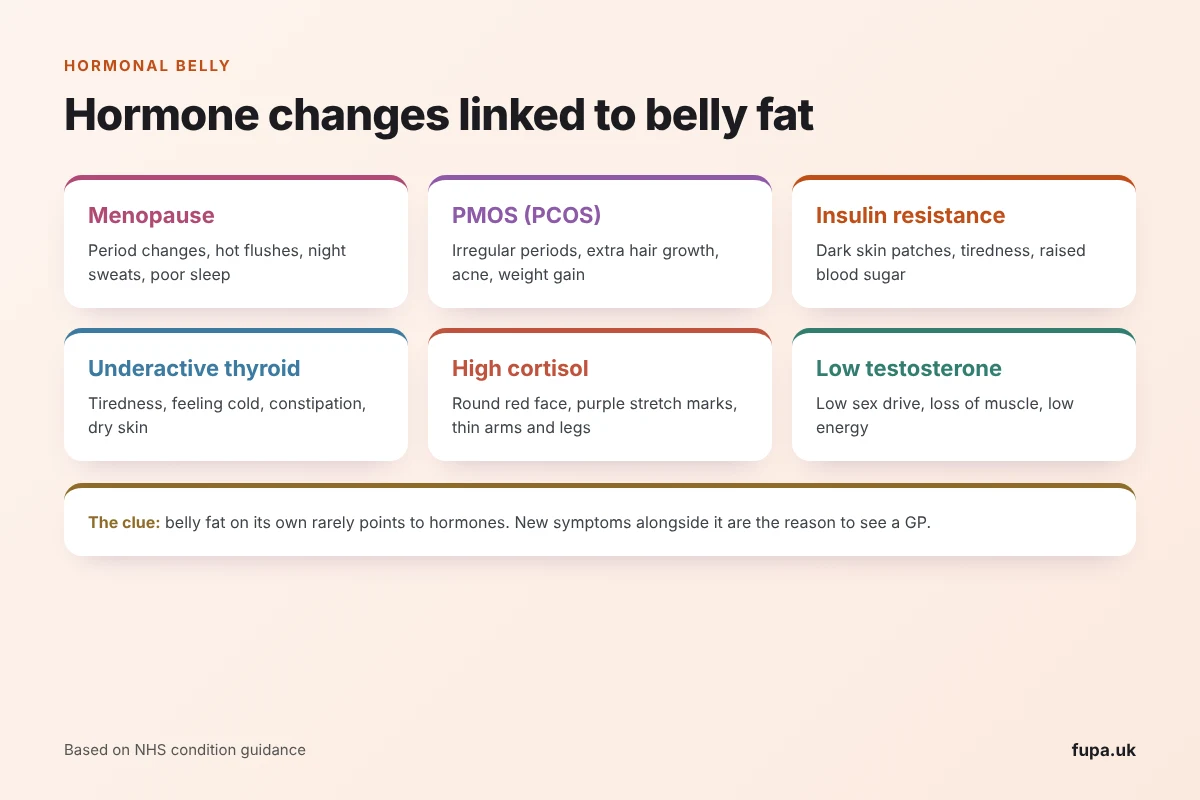
Before the menopause, oestrogen encourages fat storage around the hips, thighs and lower belly. As levels fall during perimenopause, more fat tends to settle around the waist instead. The NHS menopause symptoms page lists weight gain as common, often around the stomach and upper body, and says symptoms usually last 7 to 9 years. The NHS also notes there is little evidence that most types of HRT cause weight gain. Our guide to a FUPA and the menopause covers this stage in detail. A hysterectomy that removes both ovaries brings this change on suddenly, which we cover in our guide to lower belly fat after a hysterectomy.
PMOS (formerly PCOS)
Polycystic ovary syndrome was renamed polyendocrine metabolic ovarian syndrome (PMOS) in 2026 to reflect its effects on metabolism. The NHS lists weight gain or difficulty losing weight among its symptoms, along with irregular periods, excess hair growth and acne. It is thought to involve insulin and testosterone not working properly, which favours fat around the middle. See our guide to FUPA and PCOS.
Insulin resistance
When your cells respond less well to insulin, your body makes more of it, and high insulin levels make it easier to store fat and harder to release it. Insulin resistance is closely linked to belly fat, type 2 diabetes and PMOS, and it often improves with weight loss, activity and better sleep. Read more in our guide to a FUPA and insulin resistance.
Cortisol and stress
Cortisol is the main stress hormone. Very high levels over a long time, a condition called Cushing’s syndrome, cause extra fat on the neck, upper back, chest and tummy with thinner arms and legs. The NHS says the most common cause is taking high doses of steroid medicines for a long time. Everyday stress is different: it mainly affects belly fat through poor sleep, comfort eating and less activity. Our guide to a FUPA and cortisol explains the link.
Thyroid hormones
An underactive thyroid slows your metabolism. The NHS lists putting on weight among its symptoms, alongside tiredness, feeling cold, constipation, dry skin and low mood. The weight gain is usually modest and spread over the body, but it can make an existing lower belly harder to shift. A simple blood test checks your thyroid hormone levels. Our guide to thyroid belly fat explains how much weight an underactive thyroid really accounts for.
Testosterone in men
Testosterone falls by around 1 percent a year from the age of 30 to 40, which the NHS says is unlikely to cause problems on its own. A larger belly, loss of muscle and low energy are more often linked to lifestyle, stress or a condition called late onset hypogonadism, which is more likely in men living with obesity or type 2 diabetes. Low testosterone and belly fat can feed each other. See our guide to FUPA and testosterone.
Your cycle and contraception
Hormone shifts across the menstrual cycle can cause water retention and bloating that make the lower belly look bigger for a few days. Some people also notice weight changes with certain types of contraception. Our guides to your menstrual cycle and contraception and a FUPA cover both.
Is Hormonal Belly Fat Dangerous?
Why waist size matters
Fat stored deep around the organs, called visceral fat, is linked to type 2 diabetes, heart disease and high blood pressure. Hormone changes such as the menopause and insulin resistance tend to increase it. NICE advises keeping your waist measurement to less than half your height as a simple check. Our guide on whether lower belly fat is dangerous shows how to work out your ratio.
The fat pad over your pubic bone
The fat on the mons pubis, often called a FUPA, is mostly subcutaneous fat that sits under the skin and is far less harmful. Oestrogen and genetics strongly influence its size, which our guide to FUPA hormones and genetics explains. If fat on your hips, buttocks and legs feels painful and out of proportion with your upper body, our guide to FUPA and lipoedema explains how to tell the two apart.
A distinct lump that bulges when you cough or shrinks when you lie down is not usually fat, so read our guide on whether it is a FUPA or hernia and speak to your GP.
How a GP Checks for Hormone Problems
What to tell your GP
- When the weight gain started and where it has gone.
- Any changes to your periods, sleep, mood, energy, skin or hair.
- Medicines you take, especially steroids, and any contraception.
- Family history of thyroid problems, diabetes or PMOS.
Common tests
| Possible cause | Typical other signs | Usual check |
|---|---|---|
| Perimenopause or menopause | Period changes, hot flushes, poor sleep | Often diagnosed from symptoms if over 45 |
| PMOS | Irregular periods, extra hair, acne | Blood tests and sometimes an ultrasound scan |
| Insulin resistance or diabetes | Thirst, tiredness, dark skin patches | HbA1c blood test |
| Underactive thyroid | Tiredness, feeling cold, constipation | TSH and T4 blood test |
| Cushing’s syndrome | Round red face, purple stretch marks, thin arms and legs | Specialist cortisol tests |
| Low testosterone | Low sex drive, loss of muscle, low energy | Morning testosterone blood test |
What Helps a Hormonal Belly
Treat any underlying cause
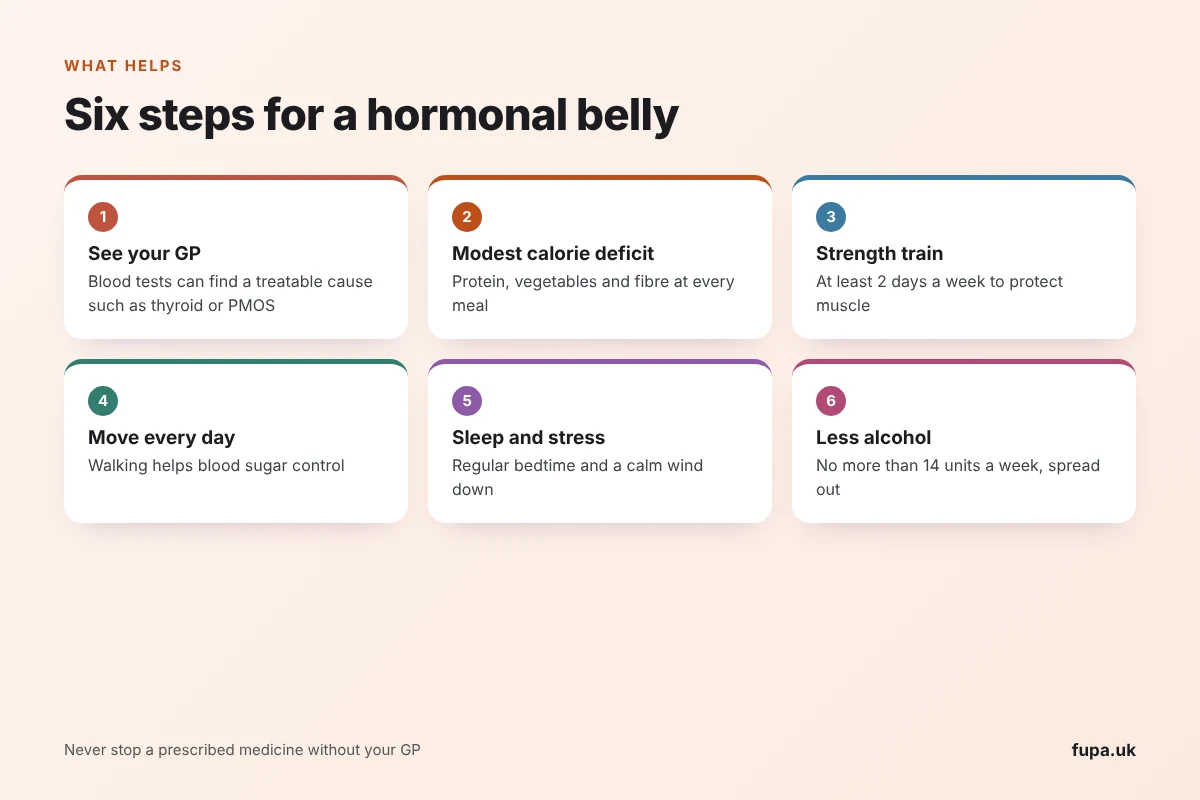
If a test finds a condition, treating it comes first. Thyroid tablets, HRT, treatment for PMOS or a change to steroid medicines can all make weight easier to manage. Never stop or change a prescribed medicine without talking to your GP.
Eat in a modest calorie deficit
Hormones change where fat is stored and how hungry you feel, but losing fat still depends on energy balance. Build meals around protein, vegetables and high fibre foods, and cut back on sugary drinks and ultra processed snacks. Our guides to a calorie deficit for a FUPA and fibre and belly fat show how.
Lift weights and keep moving
Muscle mass falls with age and with low oestrogen or testosterone, which lowers the energy your body uses at rest. Strength training on at least 2 days a week helps protect it, and walking every day helps blood sugar control. See our guide to strength training for belly fat. Our guide to belly fat after 40 explains how muscle loss and other midlife changes add up.
Protect your sleep and manage stress
Short or broken sleep raises appetite and makes blood sugar harder to control, which can add to belly fat. A regular bedtime, less caffeine after midday and a calm wind down routine all help. Our guide to a FUPA and sleep has more practical tips.
Cut back on alcohol
Alcohol adds calories, disrupts sleep and is linked to more fat around the middle. Keeping to the UK low risk guideline of no more than 14 units a week, spread over several days, is a sensible starting point.
Be wary of hormone balancing supplements
Many products promise to fix a hormonal belly, but most have little or no evidence behind them and some can interact with medicines. Our guide to supplements for a FUPA checks the common claims.
Frequently Asked Questions
What does a hormonal belly look like?
It usually looks like a soft, rounded stomach with more fat around the waist and lower belly than before, often with a thicker middle even if your arms and legs have not changed much. It looks the same as other belly fat, so other symptoms are a better clue than shape.
How do I know if my belly fat is hormonal?
Look for other signs that started around the same time, such as changes to your periods, hot flushes, tiredness, feeling cold or low sex drive. If you notice these, ask your GP whether blood tests would help.
Can you lose a hormonal belly?
Yes. Treating any underlying condition, eating in a modest calorie deficit, strength training, sleeping well and drinking less alcohol all reduce belly fat, even when hormones are changing. It may simply take longer than it used to.
Does HRT help with menopause belly fat?
The NHS says there is little evidence that most types of HRT cause weight gain. HRT is prescribed for menopause symptoms rather than for weight loss, but better sleep and fewer symptoms can make healthy habits easier to keep.
Do men get a hormonal belly?
Yes. Low testosterone, insulin resistance, high cortisol and an underactive thyroid can all add fat around the middle in men. Belly fat can also lower testosterone, so losing weight often helps both.
The Bottom Line
Look at the whole picture
Hormonal belly fat is real, but it is usually one part of a bigger picture that includes age, sleep, stress, activity and diet. If you have other symptoms, ask your GP to check for a treatable cause. Then focus on the habits that work for any belly fat, set out in our guide on how to burn lower belly fat.