Fibroids or Belly Fat? Signs Your Lower Belly Swelling Is Something Else
Page Contents
- Key Takeaways
- What Is a Fibroid Belly?
- What fibroids are
- How fibroids change the shape of the tummy
- Who is more likely to get fibroids
- Fibroid Belly vs Belly Fat: The Main Differences
- How it feels
- How it responds to weight loss
- Where it sits
- Fibroid Belly vs Bloating
- Bloating comes and goes
- Fibroids can cause bloating too
- Persistent bloating needs checking
- Other Fibroid Symptoms to Look Out For
- Period changes
- Pressure on the bladder and bowel
- Pain and fertility
- How Fibroids Are Diagnosed
- What happens at the GP
- Ultrasound scan
- Write your symptoms down first
- Treatment and What Helps
- When treatment is not needed
- Medicines
- Procedures and surgery
- Can diet and exercise help?
- When to See a GP
- Book a routine appointment if
- Get urgent help if
- Frequently Asked Questions
- What does a fibroid belly look like?
- How can I tell if my belly is fat or fibroids?
- Can fibroids make you look pregnant?
- Will losing weight get rid of a fibroid belly?
- Are fibroids dangerous?
- The Bottom Line
- Trust what does not change
A fibroid belly can look a lot like ordinary lower belly fat. Many women put a rounder, firmer lower tummy down to age, hormones or weight gain, and try harder with diet and exercise when nothing seems to change. Sometimes the cause is fibroids, which are growths in or around the womb that can make the lower abdomen swell. Knowing the difference matters, because no amount of dieting will shrink a fibroid, and fibroids that cause symptoms can be treated.
This guide explains what fibroids are, how a fibroid belly differs from fat and from bloating, the symptoms that suggest something other than fat, and when to see a GP. It is part of our guide to hormonal belly fat and related conditions.
This guide is general information, not medical advice, and it cannot diagnose fibroids or rule them out. If your tummy is swelling, you can feel a lump, or you have heavy or painful periods, please see your GP. Call 999 or go to A&E if you have sudden, severe tummy pain.
Key Takeaways
- Fibroids are common, non-cancerous growths in or around the womb. They mainly affect women who have not been through the menopause.
- Many fibroids cause no symptoms. Larger fibroids can make the lower tummy swell and feel firm.
- Belly fat is soft and pinchable and changes with your weight. Fibroid swelling does not go away with weight loss.
- Heavy or painful periods, pelvic pressure and needing to pee more often are clues that point towards fibroids rather than fat.
- A GP examination and an ultrasound scan are the only reliable way to know.
What Is a Fibroid Belly?
What fibroids are
The NHS describes fibroids as common, non-cancerous growths that develop in or around the womb. They are made of muscle and fibrous tissue and vary from very small to large. They mainly affect women who have not been through the menopause, although anyone with a womb can get them. Fibroids can grow in the wall of the womb, inside it, or on its outer surface.
How fibroids change the shape of the tummy
Small fibroids make no difference to how your tummy looks. Larger fibroids, or several fibroids together, make the womb bigger. Because the womb sits low in the pelvis behind the pubic bone, an enlarged womb pushes the lower abdomen forward. That is what people mean by a fibroid belly: swelling that sits low and central, sometimes compared to the look of early pregnancy.
Who is more likely to get fibroids
The exact cause is unknown. The NHS says you are more likely to get fibroids if you have not reached the menopause, have never had a full-term pregnancy, are overweight or obese, have high blood pressure or diabetes, are from a Black or Asian background, or have a close relative who has fibroids.

Fibroid Belly vs Belly Fat: The Main Differences
How it feels
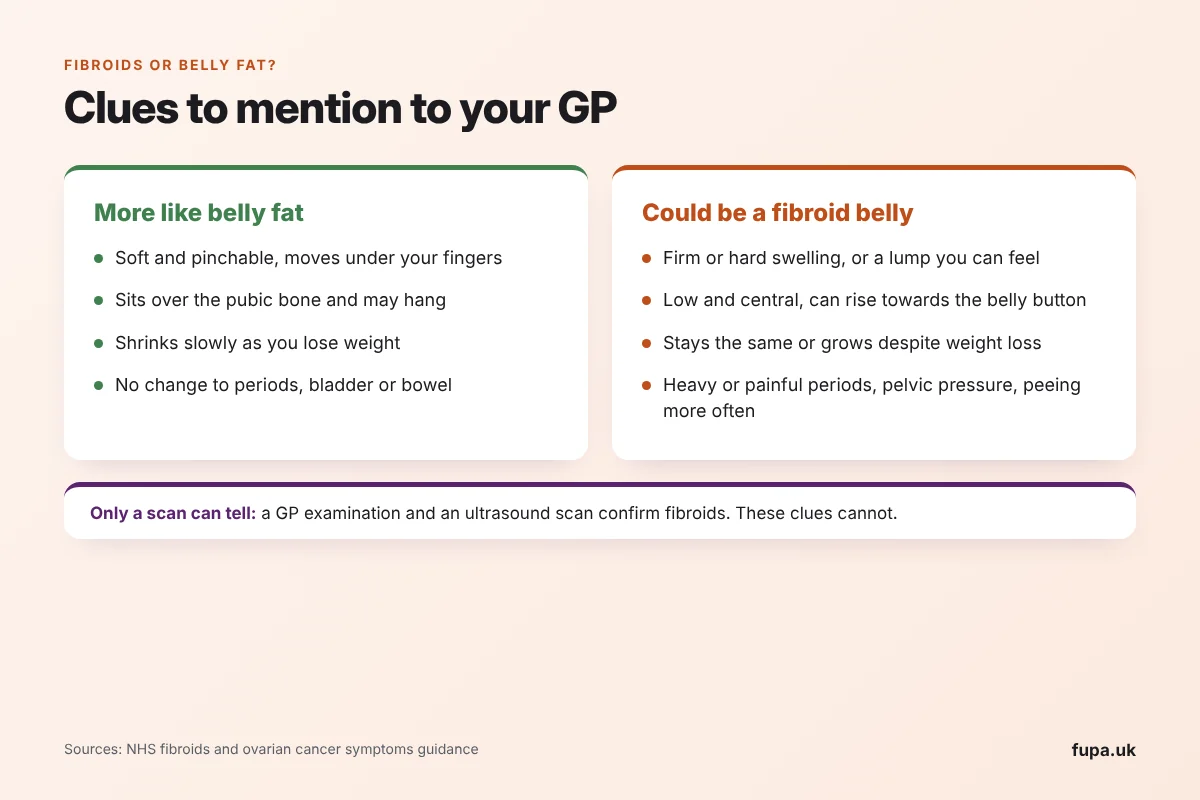
Fat under the skin, including a FUPA, is soft. You can pinch it and it moves when you press it. Swelling from an enlarged womb comes from deeper in the pelvis, so the lower tummy can feel firm or hard, even when you are relaxed. Some women can feel a distinct lump. Our guide to whether a FUPA is normal explains what typical pubic fat looks and feels like.
How it responds to weight loss
Belly fat, including lower belly fat, shrinks gradually as you lose weight. A fibroid does not. If you have lost weight from your face, arms and thighs but your lower tummy has stayed the same size or grown, that is worth mentioning to a GP.
Where it sits
A FUPA sits on the mons pubis, the fatty pad over the pubic bone, and often hangs slightly. A fibroid belly usually rises from behind the pubic bone and can extend up towards the belly button, giving a rounder, firmer bulge in the middle of the lower abdomen.
| Clue | Lower belly fat or FUPA | Possible fibroid belly |
|---|---|---|
| Feel | Soft, pinchable, moves under your fingers | Firm or hard, may feel like a lump |
| Position | Over the pubic bone, may hang | Low and central, can rise towards the belly button |
| With weight loss | Shrinks slowly over months | Stays the same or grows |
| Through the day | Much the same morning and night | The firm swelling stays, though bloating can come and go on top |
| Other symptoms | Usually none, apart from rubbing or sweating in skin folds | Heavy or painful periods, pelvic pressure, peeing more often, constipation |
Fibroid Belly vs Bloating
Bloating comes and goes
Bloating from wind, constipation, food or the menstrual cycle usually changes through the day. Many people have a flatter stomach in the morning that swells by evening, then settles again. Our guide to a FUPA vs bloating explains the usual triggers. If your bloating flares with pain around your period, our guide to endo belly vs a FUPA explains how endometriosis swelling differs from fat.
Fibroids can cause bloating too
The NHS lists problems pooing, including bloating, among fibroid symptoms. Large fibroids can press on the bowel, so a woman with fibroids may have a steady firm swelling plus bloating that comes and goes on top. If your tummy never goes fully flat, even first thing in the morning, mention it to your GP.
Persistent bloating needs checking
A swollen tummy or feeling bloated on most days is also one of the main symptoms of ovarian cancer. The NHS ovarian cancer symptoms page says to see a GP if you frequently have a swollen tummy or bloating, roughly 12 or more times a month, along with symptoms such as feeling full quickly or needing to pee more often. These symptoms are usually caused by something less serious, but they should always be checked.
Other Fibroid Symptoms to Look Out For
Period changes
Heavy periods and painful periods are among the most common fibroid symptoms. Signs that bleeding is heavy include needing to change pads or tampons very often, passing large clots, or bleeding through to your clothes. Heavy bleeding over time can lead to iron deficiency anaemia, which causes tiredness and breathlessness.
Pressure on the bladder and bowel
The NHS lists peeing more often than usual, needing to pee suddenly, problems controlling when you pee, constipation and pain when you poo as possible symptoms. These happen when a fibroid presses on nearby organs.
Pain and fertility
Fibroids can also cause stomach pain, lower back pain, pain or discomfort during sex and difficulty getting pregnant. Our guide to the menstrual cycle and the lower belly explains which changes through the month are normal.
How Fibroids Are Diagnosed
What happens at the GP
Your GP will ask about your symptoms and periods and may examine your tummy and pelvic area. This can include an internal vaginal examination. You can ask for a female doctor or nurse and bring someone with you.
Ultrasound scan
If your GP thinks you might have fibroids, they will usually refer you for an ultrasound scan. The NHS says this can show whether you have fibroids, how many there are, where they are and how big they are. Fibroids are also sometimes found by chance during other scans, such as a pregnancy scan.
Write your symptoms down first
Before your appointment, note when you first noticed the swelling, whether it changes through the day, how heavy and painful your periods are, and any bladder or bowel changes. A simple diary for one or two cycles makes the conversation quicker and clearer.
Treatment and What Helps
When treatment is not needed
The NHS says treatment is not always needed if fibroids are not causing symptoms. Fibroids often shrink after the menopause, and symptoms usually ease.
Medicines
For painful or heavy periods, the NHS lists painkillers such as ibuprofen, naproxen or diclofenac, and tranexamic acid or a hormone medicine such as the combined pill to help with heavy bleeding. Your GP will advise what suits you.
Procedures and surgery
If medicine does not help, fibroids are large or symptoms get worse, options include surgery to remove fibroids (myomectomy), surgery to remove the womb (hysterectomy), endometrial ablation, and uterine artery embolisation, which blocks the blood supply to fibroids so they shrink. If you plan to have children, talk to a doctor first, because some treatments affect fertility. Our guide to belly fat after a hysterectomy covers what can happen to the lower tummy after surgery.
Can diet and exercise help?
Healthy eating and regular exercise will not shrink an existing fibroid. They still help your general health and reduce any fat on top of the swelling, and the NHS lists being overweight as a risk factor for fibroids. If your lower belly is a mix of fat and an enlarged womb, losing weight will reduce the fat part only.
When to See a GP
Book a routine appointment if
- you have a lump in your tummy or your lower tummy is getting bigger without weight gain
- you have stomach pain, bloating or a swollen tummy that does not go away or keeps coming back
- your periods are heavy or painful and affect your daily life, work or relationships
- you need to pee more often, struggle with constipation, or painkillers are not helping
Get urgent help if
Ask for an urgent GP appointment or contact NHS 111 if tummy pain suddenly gets much worse or you have unusual vaginal bleeding with tummy pain. Call 999 or go to A&E if pain starts suddenly and is severe, or you cannot pee at all.
Frequently Asked Questions
What does a fibroid belly look like?
A fibroid belly is a swelling in the lower middle of the tummy that can rise towards the belly button. It often looks rounder and firmer than fat, and some women say it looks like early pregnancy. Small fibroids do not change how the tummy looks at all.
How can I tell if my belly is fat or fibroids?
Fat is soft, pinchable and shrinks slowly with weight loss. A fibroid belly tends to feel firm, does not shrink when you lose weight, and often comes with heavy periods, pelvic pressure or needing to pee more often. Only a GP examination and an ultrasound scan can confirm fibroids.
Can fibroids make you look pregnant?
Large fibroids, or several together, can enlarge the womb enough to make the lower tummy swell in a way some women compare to pregnancy. If your tummy is growing and you are not pregnant, see your GP.
Will losing weight get rid of a fibroid belly?
No. Weight loss reduces fat but does not shrink fibroids. It can make any fat over the swelling smaller, and it supports your general health, but fibroids that cause symptoms need medical treatment. They often shrink naturally after the menopause.
Are fibroids dangerous?
Fibroids are not cancer. Many cause no problems. Heavy bleeding can lead to anaemia, and large fibroids can press on the bladder or bowel, so symptoms are worth treating. Any new lump or lasting swelling in the tummy should be checked by a GP.
The Bottom Line
Trust what does not change
Most lower belly roundness is fat, which is soft, pinchable and slowly shrinks with weight loss. A firm, central swelling that stays the same as you lose weight, especially with heavy periods, pelvic pressure or bladder changes, may be a fibroid belly. Fibroids are common and treatable, and a GP examination and ultrasound scan can give you a clear answer. For other conditions that change the shape of the lower belly, see our hormonal belly fat guide and our page on what causes lower belly fat.